Community Partnership Program Impact
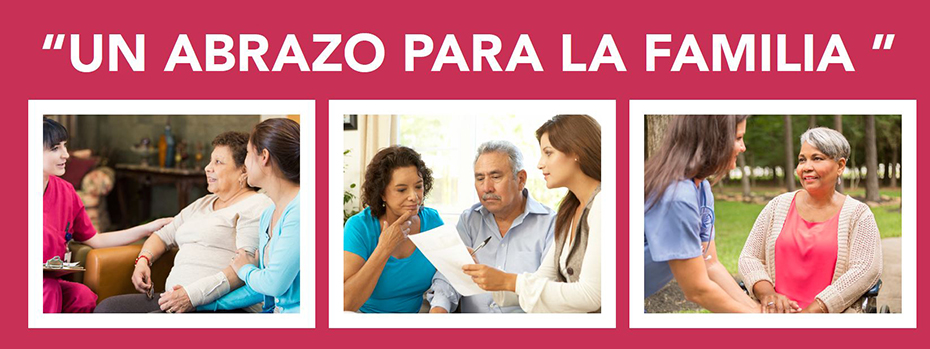
Projects aim to improve the health of Oregonians statewide
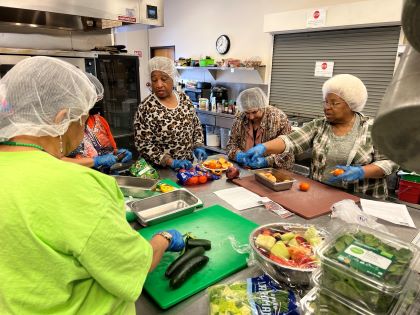
Since inception, the program has invested in community-led initiatives that advance cancer prevention, early detection, treatment support, survivorship, and health equity across Oregon. To celebrate the program's 10th anniversary, we created videos featuring five grantees across the state.
Open 10th anniversary videos on YouTube. Grantees featured in the videos:
- Asian Health and Service Center, Portland
- Chelsea's Closet, Tigard
- Get Outside After School Activity Program, La Grande
- Southern Oregon Friends of Hospice / Celia's House, Medford
- Thadd's Place, John Day
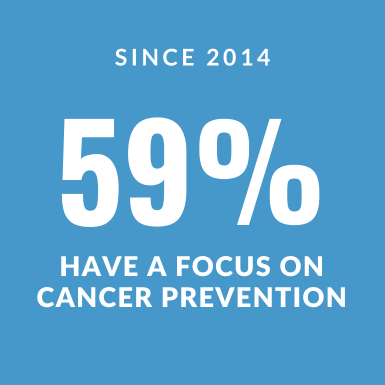
Addressing cancer-related health disparities
Of the 246 funded projects:
- 86 projects focus on a particular race or ethnicity, such as Hispanic/Latino, Black/African American, American Indian/Alaskan Native, Asian American, and Native Hawaiian/other Pacific Islander.
- 90 proposals focus on specific cancers, the three most common being breast, colorectal, and gynecological cancers
- 131 projects have a focus on at least one specific population including cancer patients/survivors, immigrants and refugees, and caregivers
- 17 have a focus on at least one federally designated tribe in Oregon
- 162 include a focus on a cancer-related topic, with the most common being diet/nutrition, patient navigation, physical activity, and psychosocial support.
Funded organizations are located in 46 cities
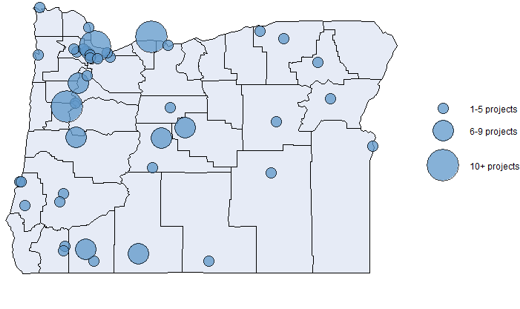
Albany, Aloha, Ashland, Astoria, Baker City, Beaverton, Bend, Boring, Burns, Coos Bay, Cornelius, Corvallis, Eugene, Forest Grove, Glide, Grants Pass, Gresham, Hermiston, Hillsboro, Hood River, John Day, Klamath Falls, La Grande, La Pine, Lakeview, Madras, McMinnville, Medford, Murphy, Myrtle Point, North Bend, Ontario, Pendleton, Portland, Prineville, Roseburg, Salem, St. Helens, Stayton, The Dalles, Tigard, Tillamook, Tualatin, West Linn, Winston and Woodburn.
Funded projects have impacted all 36 Oregon counties. Approximately 38% of projects focus on cancer issues in rural communities, while an additional 41% include both rural and urban communities.
Capacity building
Resources are offered to applicants and grantees to enhance the impact of their projects and create future sustainability. Capacity building opportunities and resources include:
Pre-award resources
Support for project design and evaluation planning
Prior to proposal submission, potential applicants are eligible to receive one hour of evaluation consultation per project to assistance with objectives, deliverables and an evaluation plan.
Informational webinars and other technical assistance
Provided to applicants who seek help with crafting a competitive proposal. Additionally, staff are available to meet one-to-one with applicants to answer questions specific to the application and proposed project concept.
Putting Public Health Evidence in Action training
This workshop has been delivered in partnership with the Cancer Prevention and Control Research Network (CPCRN), with funding from the National Institutes for Health (NIH) and the Centers for Disease Control and Prevention (CDC). Participants gain capacity-building skills to effectively select, adapt and implement evidence-based approaches and policies for chronic disease or cancer prevention and control. (Available pre- and post- award)
Post-award resources
Evaluation
Grantees receive expert guidance to finalize their evaluation plan, select appropriate evaluation tools and develop a strategy for collecting and storing data, if applicable.
Human subjects protection
Grantees receive project-specific technical support to determine if their project is considered human subjects research, either receiving human subjects protection approval and/or oversight by an Institutional Review Board (IRB), as needed.
Networking and collaboration activities
Grantees are offered opportunities to network and collaborate with peers at multiple points during the project period to address common challenges and share experiences around cancer-related topics.
Training opportunities
Grantees have access to workshops and trainings to support the planning and successful implementation of their projects. Topics are driven by the expressed interests of grantees and include data collection methods, data analysis, and project/program sustainability. Go to grantee resources.
Grantee comments on capacity building
Growth
An unanticipated benefit of this project was the growth in our organizational capacity. While recruiting health care professionals was challenging, it led us to invest in staff development. As a result, four staff members obtained certifications in community health work and chronic disease self-management. This strengthened our ability to deliver health education internally and increased our credibility and trust within the community.
Responsive
Knight Cancer Institute staff were incredibly responsive and supported us with problem-solving as we encountered various barriers. The support we received from the OHSU evaluation core was incredibly helpful from the onset of the project. We also appreciated the Human Subjects Research/ IRB assistance, as OSBHA staff working on this project had not previously gone through an IRB application process.
Personalized
The evaluation training was extremely helpful and provided meaningful support throughout our project. It confirmed that we were asking the right questions and focusing on the areas most critical to our goals. The training made the evaluation process feel manageable within our team's capacity. A most beneficial aspect was the opportunity to bring in our own questions. This made the experience personalized and directly relevant to our work. Overall, the training strengthened our ability to collect and interpret data effectively.
Grantee conference fosters connections and learning
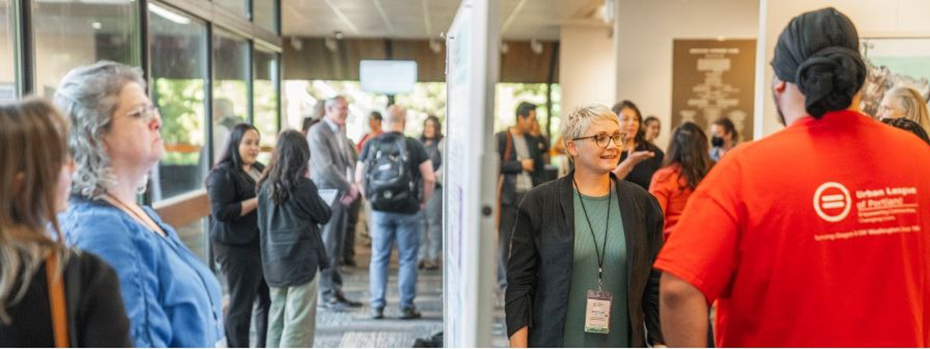
The Community Partnership Program's grantee conference is held annually to help grantees create new connections and potential collaborations with others who are also working to solve cancer needs within their community. Participants have gathered in Eugene, Corvallis, Portland, Salem, Sunriver, and Welches, Oregon for two days to present project findings, share best practices and learn new ways to meet to cancer needs identified within their communities.
Capacity building is a key part of the conference with speakers and group activities designed to help support the development of successful, sustainable projects. Featured speakers have included:
- Adrienne Zell, Ph.D., Director, OHSU Evaluation Core | Assistant Director, OCTRI
- Amanda Bruegl, M.D., Assistant Professor of Obstetrics and Gynecology with OHSU
- Ben Bowman, B.A., Oregon State Representative and House Majority Leader
- Brian Druker, M.D., Knight Cancer Institute physician and scientist
- Cynthia Perry, Ph.D., Senior Advisor for Implementation Science in the Division of Cancer Control and Population Sciences at the National Cancer Institute
- Elizabeth Steiner Hayward, M.D., Oregon State Treasurer
- Linda O. Eckert, M.D., Professor, Dept. of Obstetrics and Gynecology at the University of Washington
- Nathalie Johnson, M.D., Medical Director of Legacy Cancer Institute
- Russell Glasgow, Ph.D., Director, Dissemination and Implementation Science Program, University of Colorado School of Medicine
Collaboration enhances project success
In order to best understand, address and support Oregon communities and their cancer needs, the program encourages collaborations between grantees, outside organizations and various subject matter experts from OHSU. More than 1,000 partnerships have been created and/or supported by this program and have contributed to collaborative research, medical advising, curriculum development and increased expertise working with certain populations
The majority of projects are delivered by a primary grantee working in conjunction with multiple community-based partners. Many of these are first-time collaborations created specifically to support the project, while others are existing relationships that are strengthened through a new collaboration. A few projects are run and delivered by coalitions.
Grantee comments on collaboration
Building relationships
An unexpected benefit has been the success of relationship building, not only with community partners that collaborate to provide care for the same target population but also our volunteers. One of our bilingual volunteers, an RN BSN, was integral in our success with this project and relationship building. She intentionally invited all her collaborators and partner organizations, improving communications and connections for Salem Free Clinics.
Increased engagement
One unexpected benefit was the increased trust and engagement from the community. Many participants of our cancer prevention workshops gained knowledge about navigating the healthcare system and also began referring friends and family to our organization for support. This strengthened our relationships within the community and expanded our outreach efforts. Additionally, we established connections with oncologists who expressed interest in collaborating on future initiatives and facilitating workshops.
Connection
One unanticipated benefit of this project was the emotional support and sense of connection it created for the mentees. Mentees reported feeling less alone in their pediatric cancer journey and appreciated having someone who understood exactly what they were going through. The opportunity to talk openly with someone who had faced a similar experience helped them feel seen, heard, and supported during a very difficult time.
Grant review committee
The Community Partnership Program's review committee is comprised of representatives from academic and community-based institutions throughout Oregon, including OHSU. Reviewers are cancer-related content experts and/or representatives of community organizations. These volunteers review proposals for merit according to NIH standards. Reviewers must recuse themselves from reviewing proposals submitted by organizations with which they have existing relationships that present a real or perceived conflict of interest.
Representatives from the following organizations have donated many hours of time to review grants:
- American Cancer Society
- American Lung Association
- Almatkyzy Research Consulting
- CareOregon
- Central Oregon Health Council
- Columbia County
- Columbia Gorge Health Council
- Columbia Memorial Hospital
- Comagine Health
- Crook County Health Department
- Eastern Oregon Healthy Living Alliance
- Eastern Oregon University
- Good Shepard Health Care System
- Kaiser Permanente Center for Health Research
- Jackson Care Connect
- Killian Pacific
- Legacy Cancer Institute
- Linus Pauling Institute
- Multnomah County Health Department
- Native American Rehabilitation Association of the Northwest, Inc.
- Northwest Family Services
- Oregon Community Health Workers Association
- Oregon Health Authority
- Oregon Health Leadership Council
- Oregon Office of Rural Health
- Oregon State University
- Portland State University
- Portland VA Medical Center
- Providence Health & Services
- Ronald McDonald House Charities of Oregon and Southwest Washington
- Roseburg VA Healthcare System
- SAIF
- Samaritan Health Services
- Sirona Integrative Health
- Southern Oregon Friends of Hospice
- Summit Medical Group
- Susan G. Komen Foundation
- The Roundhouse Foundation
- Third Sector
- Tillamook Medical Group
- Upstream Public Health
- Unite Us
- University of Washington
- Uriel Medical Foundation
- Waterfall Community Health Center
- Western Oregon University