Pediatric Nephrology (Kidney Function)

Care for children with kidney function conditions
OHSU Doernbecher Children’s Hospital cares for children with kidney conditions. We can diagnose problems before a child is born and help your child manage chronic symptoms. Our nephrology team focuses on problems with kidney function.
We are Oregon’s most complete pediatric nephrology (kidney function) program. You’ll find:
- Experts in kidney conditions who specialize in caring for children
- Oregon’s only pediatric kidney transplant center
- Advanced types of dialysis for infants and critically ill children, and peritoneal dialysis for kidney failure
- Counseling and care for kidney conditions even before your child is born
- A dedicated pharmacist and dietitians who focus on pediatric kidney conditions
- Close coordination with pediatric urology's kidney disorder team and other Doernbecher specialists
Understanding kidney conditions
Kidneys are organs that:
- Filter blood to remove water and waste
- Balance the acid the body’s cells produce
- Keep the right amount of water, salts and minerals in the blood
- Produce hormones important to red blood cells, blood pressure and bone health
Kidney Anatomy
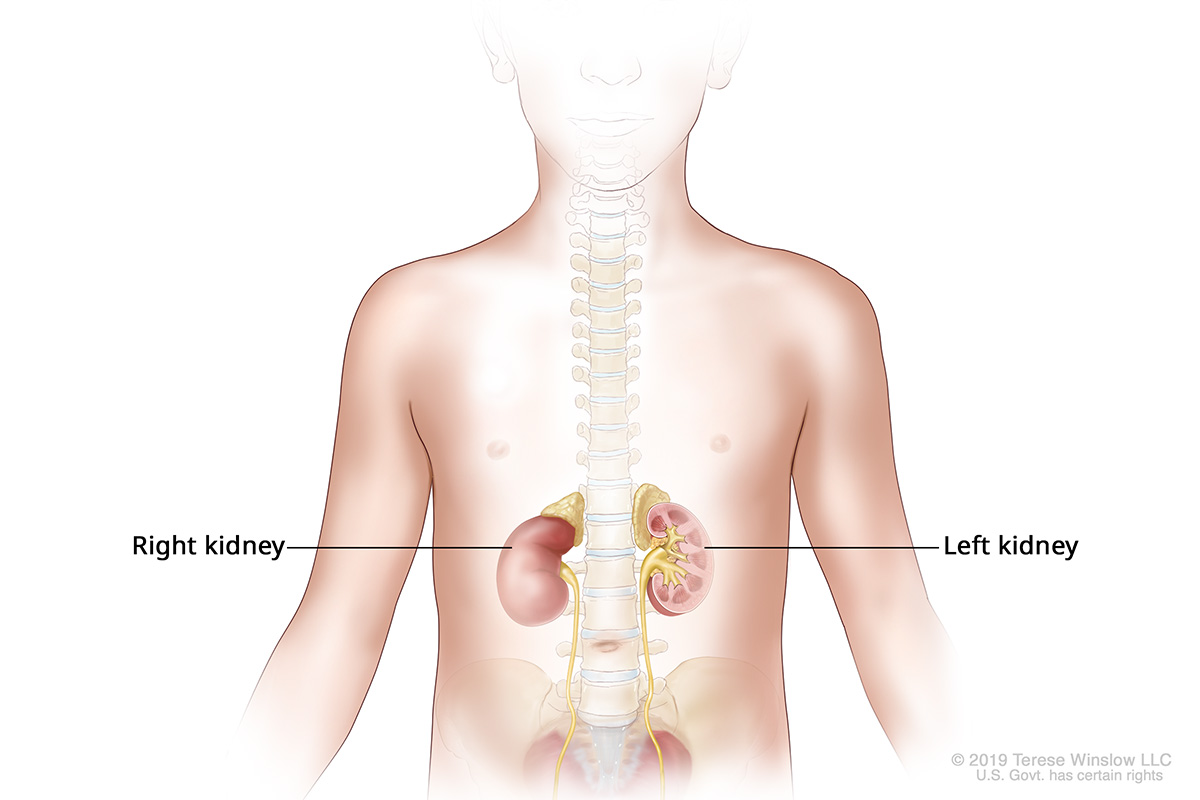
Genetic disorders, infections and injuries can all cause your child’s kidneys not to function normally. Our team treats all kidney function conditions, no matter the cause.
Common kidney conditions we treat
Acute kidney injury is a sudden decrease in kidney function that can be life-threatening. It is often caused by reduced blood flow and oxygen in the kidneys.
Chronic kidney disease causes loss of kidney function over time. It is often linked to problems of the kidneys and urinary tract that a child is born with.
Hematuria (blood in urine) is a sign of a potential kidney problem. Blood may be visible or detected only with a microscope. Kidney stones, kidney injuries and high levels of minerals can all cause blood in urine. In some children, it is normal.
Acidosis can be a symptom of chronic kidney disease. It happens when the kidneys fail to remove enough acid from the blood. It can also happen when the blood loses too much base (the opposite of acid). Untreated, acidosis can cause kidney stones and limit a child’s growth.
High blood pressure can happen at any age and may not be related to kidney issues. It is common in chronic kidney disease and can cause kidney problems over time. Early treatment can prevent long-term health problems.
Kidney stones are pieces of solid material that form in the kidney. This happens when minerals in urine stick together to form a crystal. Kidney stones are most common in teens and can be very painful. We work with Doernbecher’s urology team to treat kidney stones.
Single kidney and kidney structure problems are often congenital. This means a child is born with them. Some problems can be treated with surgery by Doernbecher’s pediatric urology team. In nephrology, we support long-term kidney health and care for chronic kidney disease in children with these problems.
Nephrotic syndrome (protein in urine) happens when the kidneys don’t filter protein normally. It can cause swelling particularly in the legs and around the eyes. For many children and teens, protein in urine is normal. It is important to find the cause.
Polycystic kidney disease is when fluid-filled cysts form in the kidneys. They damage kidney function and can lead to chronic kidney disease or kidney failure over time.
Electrolyte abnormalities can be a symptom of chronic kidney disease. When the kidneys are not working well, levels of minerals in the body can become too high or too low.
Glomerulonephritis is swelling in the part of the kidney that filters waste. The condition can be caused by autoimmune diseases, infections and genetic disorders. Untreated, it may lead to kidney failure over time.
Symptoms of pediatric kidney conditions
Symptoms vary, but can include:
- Swelling of the hands, feet or face
- More or less urine than normal
- Brown or maroon urine (from blood) or foamy urine (from protein)
- Fatigue
- High blood pressure
- Itchy skin
- Weight loss
It’s important to treat kidney problems right away. Over time, they can cause:
- Anemia
- Cardiovascular disease
- Poor nutrition
- Problems with thinking and memory
- Mineral and bone disorders
- Problems with growth
What to expect at your appointment
To become a patient, ask your child’s pediatrician for a referral.
Our goal is to assess your child’s kidney function so we can diagnose problems and recommend treatments. We will review your child’s medical history and order some tests before your visit.
During the visit, we will:
- Discuss your child’s test results
- Check your child’s blood pressure
- Prescribe medication or recommend other treatments
- Connect you with our dieticians, pharmacist or other specialists as needed
Diagnosing kidney conditions
We will use one or more of these tests to find out if your child has a kidney condition.
Genetic tests: We work with OHSU’s fetal care program to offer fetal genetic screening for kidney conditions. We also offer genetic screening for your child at any age.
Blood tests: A blood test can help us see your child’s kidney function and check for signs of kidney failure.
Urine tests: We look for blood or protein in your child’s urine. We can also look for signs of inflammation or infection.
Imaging tests: CT scans, ultrasounds and X-rays help us diagnose kidney conditions children are born with.
Kidney biopsy: We remove a small piece of tissue from the kidney to view under a microscope. Your child will have medication so they sleep through the biopsy and don’t feel pain.
Treating pediatric kidney conditions
We are Oregon’s most complete children’s nephrology program. We offer treatments for all types of conditions that affect kidney function, including treatments you won’t find anywhere else in the state.
We work closely with other teams at OHSU based on your child’s needs:
- Pediatric urology
- Pediatric kidney stone program
- Interventional radiology (for minimally invasive surgeries)
- Fetal care program
Learn more about the treatments we offer below.
Medications
We prescribe medication to treat symptoms of kidney conditions, including:
- Medication to treat high blood pressure
- Medication to treat high blood acid levels
- Treatments to reduce the symptoms of chronic kidney disease
- Injections or iron supplements for anemia (not enough red blood cells to carry oxygen throughout the body)
- Antibiotics to treat infections
- Growth hormone injections for children whose growth has slowed
Nutrition
Children with early chronic kidney disease may need a diet low in protein, sodium and other minerals.
Children with advanced chronic kidney disease that requires dialysis may need a high-protein diet.
We may recommend supplements to replace vitamins and minerals lost due to your child’s kidney condition.
Our team includes certified renal dietitians who are experts in nutrition for children with kidney conditions.
Dialysis
If your child’s kidney function is very poor, they may need dialysis. Dialysis is a treatment that removes waste and fluid from your child‘s blood when their kidneys cannot.
We offer:
Hemodialysis: This is the most common type of dialysis. We use a machine outside the body to filter blood.
Peritoneal dialysis: We are the only hospital in Oregon offering peritoneal dialysis for children with kidney failure. This type of dialysis uses the inner lining of the abdomen to filter blood inside the body. It is more convenient for your family and may allow your child to have a more active lifestyle.
Dialysis for infants (Carpediem): We are the only hospital in Oregon that offers a form of dialysis for newborns and other infants.
Continuous Kidney Replacement Therapy (CKRT): CKRT is dialysis that continues non-stop until the kidneys are stable enough for hemodialysis.
Kidney transplant
In rare cases, children may need a kidney transplant. OHSU’s kidney and pancreas transplant team has performed more than 5,000 transplants since 1959, including hundreds of transplants in children.
Pediatric nephrology team
Our pediatric kidney care experts have advanced training in kidney conditions that affect children. Our team includes a dedicated pharmacist and dietitians with special expertise in treating children with kidney conditions.
-
- Amira Al-Uzri, M.D.
- Accepting new patients
-
- Gina-Marie Barletta, M.D.
- Accepting new patients
-
- Abbie Bauer, M.D., M.S.
- Accepting new patients
-
- Chloe Douglas, M.D. (she/her)
- Accepting new patients
-
- Mark Joseph, M.D.
- Accepting new patients
-
- Emma C. Ordway, PA-C (she/her)
- Accepting new patients
-
- Kelsey Richardson, M.D., M.S.
- Accepting new patients
-
- David J. Rozansky, M.D., Ph.D.
- Accepting new patients
Renal dietitians
-
- Dallas M. Carnahan, M.S., RD, CSP, LD, CD (she/her)
- Accepting new patients
-
- Sofia Gusto, M.S., RD, CSP, LD, CD (she/her)
- Accepting new patients
Pharmacist
For patients
To become a patient, ask your child’s primary care provider for a referral.
Call 503-494-7327 to:
- Make an appointment (current patients)
- Ask questions
Location
OHSU Doernbecher Specialty Clinics, Marquam Hill
Doernbecher Children's Hospital, seventh floor
700 S.W. Campus Drive
Portland, OR 97239
Find other locations across Oregon.
Free parking for patients and visitors
Refer a patient
- Refer your patient to OHSU.
- Call 503-494-4567 to seek provider-to-provider advice.