Children’s Palliative Care FAQ and Resources
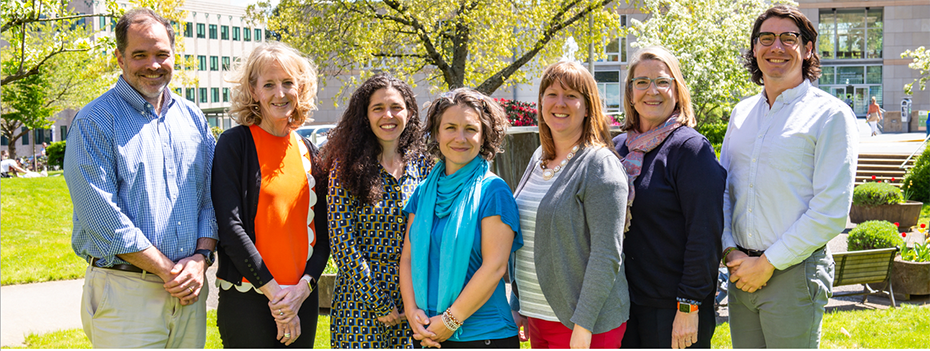
The Bridges Pediatric Palliative Care Program at OHSU Doernbecher Children’s Hospital provides sensitive care for seriously ill children. On this page, you’ll find:
- Answers to common questions about the Bridges program and palliative care
- Support, information and resources for families
Frequently asked questions
-
What can I expect from the Bridges team?
If your care team refers you to the Bridges Program, one or more of our team members will contact you. We’ll introduce our services and answer any early questions.
Next, we’ll schedule a meeting to get to know your child and family. We’ll ask:
- About caregiving routines
- About your child’s interests
- What’s important to your family
- What you hope for
- Whether your family struggles with any part of your child’s care
As we get to know you, we’ll work with you to develop a plan for how our team can help you care for your child.
-
Who might benefit from Bridges?
A range of children and families can benefit from our palliative support. They include children who:
- Have a serious condition that may or may not be cured.
- Have a condition with no cure but who, with treatment, may have a longer life and better quality of life.
- Have a condition that’s not expected to get worse but that can come with life-limiting complications.
- Were born extremely early.
-
Can my child keep other doctors?
Yes. We know how important it is to keep strong relationships with your child’s trusted providers. Our specialists work in coordination with your child’s established care team, whether at Doernbecher Children’s Hospital or another hospital.
-
Does receiving palliative care mean my child will die?
No, it doesn’t. However, we know that parents caring for a child with a serious condition have both hopes and worries about their child’s future. We bring years of experience supporting families in this situation.
If your child is nearing the end of life, we will help you make a plan based on your values. We may recommend hospice care, a specific type of palliative care for the last months of life. We will work with you to arrange details.
-
We live far from Portland. Can my child still receive care?
Yes. We partner with hospitals and hospice agencies in Portland, southwest Washington, western Idaho and sometimes beyond.
-
What makes children’s palliative care different?
- Palliative care for children is newer than for adults. The Bridges Program, started in 2001, is the largest in Oregon. It offers providers with uncommon expertise.
- Our team recognizes that parents face making complex decisions while also caring for and parenting their child. We work to support your whole family.
- We understand that your child’s developmental stage plays a big role in how you and your family cope. We can offer support to help you discuss serious illness with your child and your other children.
- If we recommend hospice care, your child does not need to end other treatments. Your child can receive hospice care alongside treatment for her illness.
-
Can you help me explain things to my other children?
Many parents worry about how to support their other children while parenting a child with a serious illness. Our team will provide support and resources to help you answer difficult questions from your child’s siblings.
-
How can you help at the end of life?
If your child is nearing the end of life, we can help you prepare based on what’s most important to your child and family. Some families prefer to be home to make the most of their time as a family and to avoid invasive procedures. Others prefer to return to the hospital so parents can focus on being parents. Either way, the Bridges team will support your family and work to keep your child comfortable.
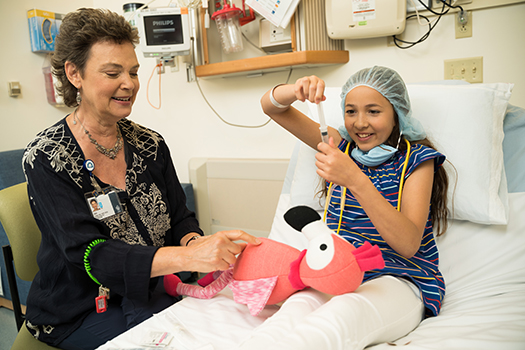
using a stuffed animal. Child life specialists often work with our palliative care providers.
Support, information and resources
-
Pregnancy or infant loss
In-person, phone and online resources
- Brief Encounters, for parents who have lost babies before, during or after birth
- WellMama, for the mental health needs of families after pregnancy
- Star Legacy Foundation, online resources, peer companions and support in English and Spanish
- Rachel’s Gift, virtual support groups facilitated by professional counselors and social workers
- RTZ Hope, virtual support groups for grieving parents
- Postpartum Support International, support for the mental health needs of parents during and after pregnancy
Recommended reading for parents
- “Empty Cradle, Broken Heart: Surviving the Death of Your Baby,” by Deborah Davis
- “An Exact Replica of a Figment of My Imagination: A Memoir,” by Elizabeth McCracken
Recommended reading for children
- “Goodbye Sister: A Sibling’s Book for Infant Loss,” by Kimberly Newton
- “Something Happened: A Book for Children and Parents Who Have Experienced Pregnancy Loss,” by Cathy Blanford
- “Special Delivery,” by Melanie Tioleco-Cheng and Melissa Tioleco-Cheng
- “We Were Gonna Have a Baby, But We Had an Angel Instead,” by Pat Schwiebert
-
Support resources
Virtual resources for kids and siblings
- Apart of Me, free app that lets grieving children create a virtual world where they can feel safe
- Experience Camps, virtual programs for youth grieving the loss of a family member
- Actively Moving Forward, for grieving young adults
In-person and virtual support for families
- Courageous Parents Network, for parents caring for children with life-threatening illness
- The Compassionate Friends, grief support groups and local chapters for parents who have lost children
- Partners in Care, individual, children’s or family counseling in central Oregon
- Hospice of Redmond, grief support including a summer camp
- Courageous Kids, support groups and a summer camp
- Klamath Hospice and Palliative Care, grief support including a summer camp
- The Learning Well, support groups and counselors with specialized grief training in Southern Oregon
- BRITE Box, activities to support grieving children
- Camp Erin, for grieving children ages 6-17
- The Dougy Center, Portland-area nonprofit for grieving children and their parents
- Willamette Vital Health, individual and family counseling, support groups, grief camp
- Wild Grief, supporting the grief experience with the healing power of nature
- Alive Alone, for parents who no longer have living children
- Judi’s House, virtual support groups and parenting workshops
- MISS Foundation, crisis support and long-term aid after the loss of a child
- National Alliance for Children’s Grief, education and resources for those supporting grieving children and teens
-
Information
- What is Pediatric Palliative Care?, Center to Advance Palliative Care
- When a Cure is No Longer Possible for Your Child, National Institutes of Health
- Palliative Care Truths and Myths, National Institutes of Health
-
Recommended books
Beliefs and understandings about loss and grief can differ. Please review these books before sharing them with the children in your life.
For all ages: Not If But When collection
For younger children
- “Badger’s Parting Gifts,” by Susan Varley
- “The Fall of Freddie the Leaf: A Story of Life for All Ages,” by Leo Buscaglia
- “Forever Connected,” by Jessica Correnti
- “I Have a Question About Death: Clear Answers for All Kids, Including Children with Autism Spectrum Disorder or Other Special Needs,” by Arlen Grad Gaines and Meredith Englander Polsky
- “Lifetimes: The Beautiful Way to Explain Death to Children,” by Bryan Mellonie
- “The Good Mourning: A Kid’s Support Guide for Grief and Mourning Death,” by Seldon Peden
- “When Dinosaurs Die: A Guide to Understanding Death,” by Laurie Krasny Brown
- “When Someone Dies: A Children’s Mindful How-To Guide on Grief and Loss,” by Andrea Dorn
- “When Someone Very Special Dies: Children Can Learn to Cope With Grief,” by Marge Heegaard
For older children and teens
- “Fire in My Heart, Ice in My Veins: A Guided Grief Journal for Teenagers and Young Adults,” by Enid Traisman
- “Straight Talk About Death for Teenagers: How to Cope with Losing Someone You Love,” by Earl Grollman
- “The Grieving Teen: A Guide for Teenagers and their Friends,” by Helen Fitzgerald
For parents
- “Dear Parents: Letters to Bereaved Parents from Bereaved Parents,” by Joy Johnson
- “Healing a Parent's Grieving Heart: 100 Practical Ideas After Your Child Dies,” by Alan D. Wofelt
- “How Do We Tell the Children?: A Step-by-Step Guide for Helping Children and Teens Cope When Someone Dies,” by Daniel Schaefer and Christine Lyons
- “Notes for the Everlost: A Field Guide to Grief,” by Kate Inglis
Advance planning
Oregon POLST (Portable Orders for Life-Sustaining Treatment) offers resources for end-of-life planning, if needed. Often this type of planning is more relevant for adults making their own health care decisions.
For families
Please talk with your child’s care team if you have questions or interest in the Bridges Program.
Refer a patient
The Bridges Pediatric Palliative Care Program is a referral center for patients throughout Oregon.