Facility Dogs and Animal-Assisted Therapy
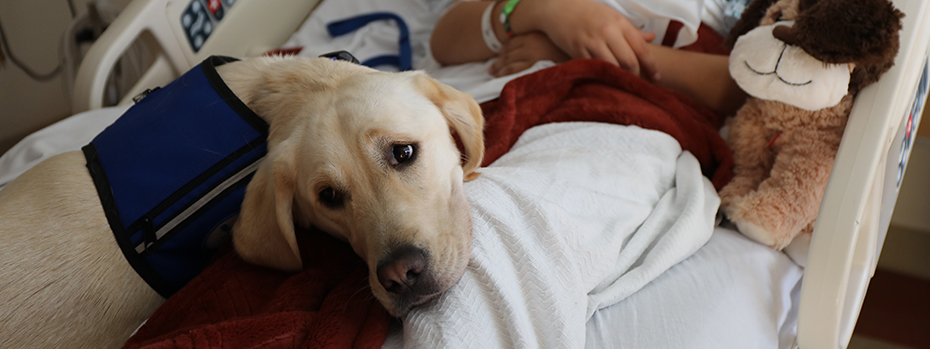
At OHSU, we understand the healing power of dogs and cats. Our animal-assisted therapy services are just one way we provide complete care.
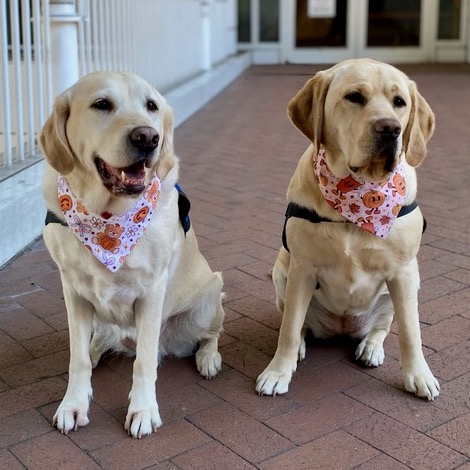
OHSU has three hospital facility dogs — Casey and Darby at Doernbecher Children’s Hospital, and Doc at Knight Cancer Institute clinics. All three bring comfort and promote healing.
Separate animal-assisted therapy teams bring dogs and cats to visit patients at Doernbecher and other parts of OHSU.
How do animals help?
Studies show that therapy dogs can lower stress and distract patients from pain and fear.
At Doernbecher, therapy dogs make the hospital feel less frightening for young patients and their families. This helps our expert doctors, nurses and other providers give children the tests and treatments they need with less stress.
At Knight clinics, patients often ask for Doc each time they visit. Getting to see Doc encourages patients to stick with difficult treatment, improving outcomes.
What are hospital facility dogs?
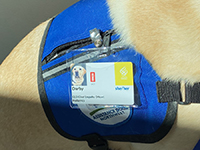
Hospital facility dogs are trained hospital therapy dogs. They respond to commands such as “snuggle” and "high-five." Casey, Darby and Doc are part of our staff, each with a vest and badge. They live with and report to work with OHSU employees who have received training and certification in animal-assisted therapy.
The dogs don’t visit patients with weakened immune systems or who prefer not to be around dogs. Handlers also follow detailed policies on cleanliness for dogs, patients and patient beds.
OHSU began the facility dog program in 2015. The dogs come from Assistance Dogs Northwest, a nonprofit that owns the dogs and partners with OHSU to offer their services.
What are animal-assisted therapy teams?
Volunteers bring therapy-certified dogs and cats to our Marquam Hill campus and other parts of OHSU. The volunteer-and-pet teams visit patient rooms and waiting areas at Doernbecher and OHSU Hospital.
Meet Casey, Darby and Doc
Casey and Darby bring joy and comfort to young patients and their families at our children’s hospital. In patient rooms, they can lie next to a child for petting.
Doc comes to OHSU’s Center for Health & Healing Building 2 to visit adult cancer patients coming in for clinic visits or infusions (slow-drip IVs that deliver medication such as chemotherapy). He brings softness and smiles to patients receiving treatment that makes them feel sick.
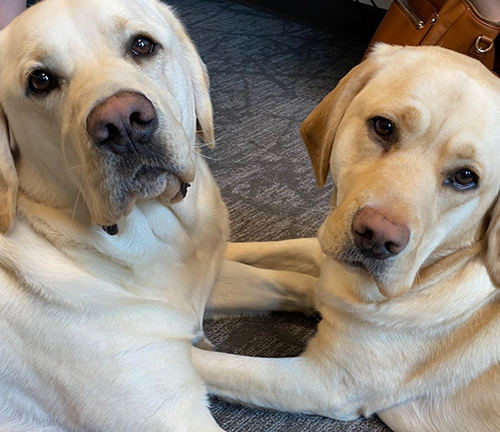
Doc and Darby are siblings. They played until they were exhausted after reuniting at OHSU after about six months apart. The dogs improve staff morale, too.
Off-hours, all the dogs live with their handlers and caretakers.
The Casey file

Handlers: Nikki Wiggins, a nurse manager in Doernbecher’s Neonatal Intensive Care Unit, and Lyndsey Clapier, a clinical social worker in Doernbecher’s Pediatric Intermediate Care Unit
Breed: Labrador-golden retriever mix
Joined OHSU: 2022
Title: “Chief cuddling officer”
Role in therapy: Casey visits children in the hospital. She spends time with families of some of OHSU’s youngest patients, who might be in the Neonatal Intensive Care Unit for months. She snuggles with new parents in the Mother-Baby Unit. She also offers comfort to families who have had a loss in childbirth.
Special moments: One patient was on bed rest while pregnant with twins. After a visit from Casey, she felt a sense of calm and peace that lowered her anxiety and blood pressure. Another patient needed sedation for scans. Then she lay with Casey and petted and talked to her. The girl’s mom said Casey’s help meant the world to them.
Quotable: Casey helps families going through tough times. “She’s already touched so many lives in the short time that she has been at Doernbecher,” Wiggins says.
The Darby file
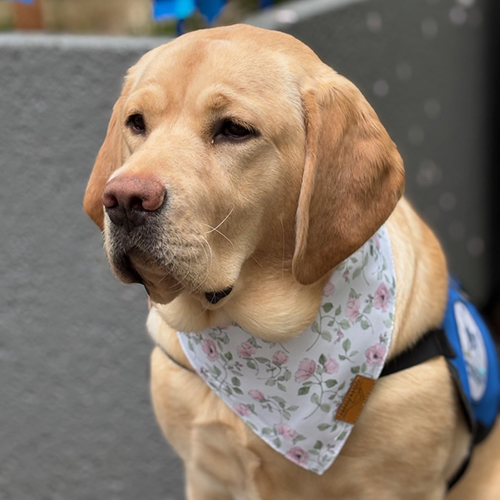
Handlers: Kristin Knight, a licensed clinical social worker in Doernbecher’s Pediatric Intensive Care Unit, and Dr. Dana Braner, Doernbecher’s physician-in-chief.
Breed: Labrador-golden retriever mix (and Doc’s sibling)
Joined OHSU: 2025
Title: “Chief empathy officer”
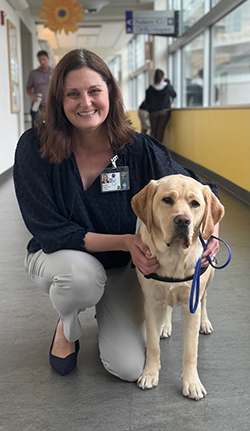
Role in therapy: Darby visits patients and their families in Doernbecher’s Pediatric Intensive Care Unit, providing support, comfort, encouragement and snuggles while promoting healing.
Special moments: Darby was introduced to a school-age patient who was struggling to cope with coming to the hospital. After their visit, the patient shared: “Being able to snuggle with Darby makes being in the hospital OK.” Another patient said: “Darby’s soft fur and cuddles make things less scary and uncomfortable.”
Quotable: “From smiles to snuggles, Darby’s impact on our patients and families is immeasurable,” Knight says. “We are so appreciative that our hospital and community support this extra offering of support.”
The Doc file
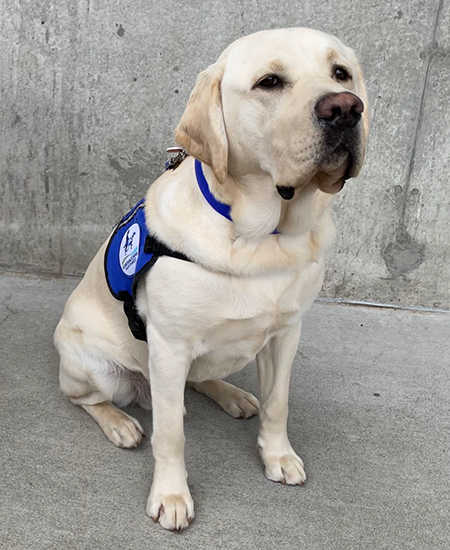
Handlers: Andrea Lehman, the Knight’s senior director for Patient and Family Services, and Trish Silbernagel, Knight infusion nurse manager.
Breed: Labrador-golden retriever mix (and Darby’s sibling)
Joined OHSU: 2026
Title: “Director of cuddles”
Role in therapy: Doc helps patients with everything from fear of needles to coping with treatment. One patient, carrying trauma and worry from prior therapy, wasn’t sure how she would endure a new round. “She said having Doc here totally made her treatment tolerable,” Silbernagel says.
Special moments: Doc gives high-fives and does fist bumps with his nose. He can sit in a lap or chair, and nudges people to give him affection or hold his head up. Lehman shares how he comforted a young couple just after they got bad news: “For that brief moment in time, they stopped crying. Doc provided comfort and gave them a reason to smile.”
Quotable: “He gives patients a moment to focus not on their illness or treatment but on the comfort and joy only animals can provide,” Lehman says. Doc loves when patients ring a bell and staff members applaud at the end of treatment, Silbernagel says: “He thinks they’re clapping for him and gets so excited.”
Animal-assisted therapy teams
Volunteers bring dogs and cats with therapy certification to visit OHSU, including Doernbecher. The pets snuggle with patients and go person to person in waiting rooms.
How the program works
To participate, pets must have a “complex” rating from Pet Partners, DoveLewis animal hospital or an equivalent organization. The certification, renewed each year, ensures the pet has been trained and can handle a busy hospital.
Volunteers agree to visit OHSU at least every other week. Veteran volunteers make sure teams are a good fit before they’re added to the roster.
Request a visit
Talk to your or your child’s care team if you’re interested in a visit from a facility dog or a pet-assisted therapy team. Doctors can prescribe a visit. Nurses also can arrange one.
Volunteering
OHSU can accept more animal-assisted therapy teams. To apply, your pet must have a “complex” rating from Pet Partners, Dove Lewis or an equivalent organization. Learn about: