Pediatric Neuromuscular Disorders
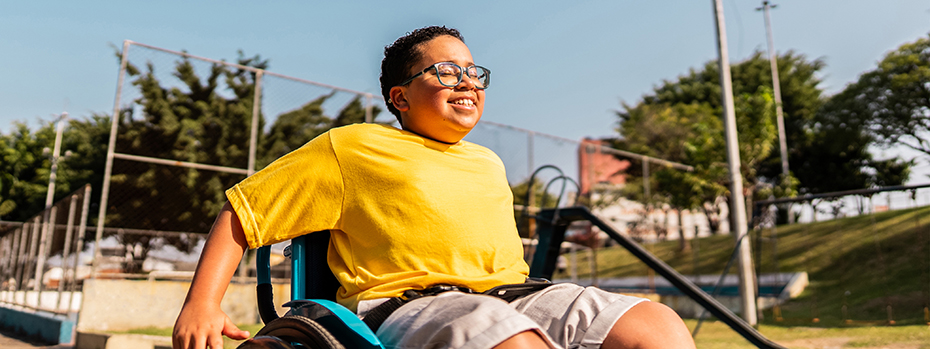
Find care for your child at the Ramberg Ford Pediatric Neuromuscular Disorders Center
OHSU Doernbecher Children’s Hospital has Oregon’s only pediatric neuromuscular program. We are a designated MDA Care Center with experts who care for children with conditions affecting nerves and muscles. At the Ramberg Ford Pediatric Neuromuscular Disorders Center, you will find:
- First-rate providers who trained at top U.S. children's hospitals.
- A team-based approach, with experts in neuromuscular disorders who work together to care for your child.
- Access to clinical trials, breakthrough therapies and leading-edge treatment.
- Patient-centered care to support your child’s quality of life and everyday activities.
Ruth’s story: Living with Ullrich congenital muscular dystrophy
“Ruth is 6 ½ years old, and she’s the strongest person I know. As a parent, you want to fix everything, and there’s nothing more helpless than not being able to. The neuromuscular team has been wonderful. I've cried in their office, and they hugged me. It feels like they’re part of our family. They tell me Ruth is one in a million, and I know the care she’s receiving will give her a better life than I imagined at diagnosis.”
What are pediatric neuromuscular disorders?
Neuromuscular disorders are rare, mostly genetic diseases. They cause a child’s nerves and/or muscles to not work well. This can lead to problems with walking, moving the arms and legs, breathing, and/or eating. As a result, kids may have a harder time playing or doing everyday activities.
These conditions affect muscles, nerves, the connection between muscles and nerves, and motor neurons (nerve cells in the spinal cord).
Who gets pediatric neuromuscular disorders?
Children of all ages get neuromuscular disorders. They are often genetic (passed along in families), but they can also be caused by other medical issues.
Pediatric neuromuscular diseases we treat
Many neuromuscular diseases start in childhood. Our team offers personalized, compassionate care to help children manage symptoms, stay active and enjoy life through adolescence.
Here are some of the most common conditions we treat.
- Duchenne muscular dystrophy (DMD)
- Spinal muscular atrophy (SMA)
- Charcot-Marie-Tooth (CMT) disease
- Becker muscular dystrophy (BMD)
- Congenital muscular dystrophies (CMD)
- Congenital myasthenic syndrome (CMS)
- Congenital myopathies
- Emery-Dreifuss muscular dystrophy (EDMD)
- Friedreich's ataxia (FA)
- Giant axonal neuropathy (GAN)
- Limb-girdle muscular dystrophy (LGMD)
- Myasthenia gravis (MG)
- Myotonia congenita
- Myotonic dystrophy
- Periodic paralysis
- Pompe disease
Duchenne muscular dystrophy (DMD)
Duchenne muscular dystrophy (DMD) is a genetic disorder that prevents the body from making “dystrophin,” a protein that protects muscles from damage.
Signs and symptoms
Signs of DMD may appear in infancy, but most children show symptoms between the ages of 2 and 5. Many children with DMD use a wheelchair by age 12. Look for these signs starting in early childhood:
- Delays in sitting, crawling, walking and climbing
- Worsening muscle weakness in hips, pelvis, thighs and shoulders
- Frequent tripping and falling
- Waddling gait or walking on toes
- Enlarged calf muscles
- Delayed speech and learning difficulties
What causes DMD?
Duchenne muscular dystrophy is caused by mutations in the dystrophin gene on the X chromosome. The mutation makes muscles fragile and likely to break down.
Who gets DMD?
Most children with DMD (about 65%) inherit the mutated gene from a parent. Almost all people with DMD were assigned male at birth because the mutation is on the X chromosome. People assigned male at birth have only one X chromosome, so if they inherit the mutated gene, they will develop the condition. People assigned female at birth may have DMD, but it is rare.
Treatment for Duchenne muscular dystrophy
While there is no cure for DMD, treatments can slow your child’s disease and improve their quality of life.
Our team specializes in caring for children with Duchenne muscular dystrophy. We offer treatments, therapies and support to help your child feel their best.
- Medications and gene therapies
- Neurological and neuromuscular care
- Cardiac (heart) care
- Respiratory (breathing) care
- Physical therapy and rehabilitation
- Orthopedic surgery and support
- Pain management
- Participation in clinical trials
Spinal muscular atrophy (SMA)
Spinal muscular atrophy is a genetic condition that affects muscle movement. In these disorders, nerve cells in the spinal cord do not function properly. This leads to nerve cell loss and muscle weakness and damage.
Theo’s story: Finding joy and movement with SMA
“Knowing Theo is knowing joy. He was seven weeks old when he was hospitalized... and we first heard ‘spinal muscular atrophy’ in the PICU. Treatment has helped Theo gain movement, pick up a toy and move his legs for the first time. [His care team] strongly believes in him and in us as parents. They're not just doctors. They're family.”
Signs and symptoms
Children with SMA struggle to control muscles in their shoulders, hips, back, legs arms and face. That can lead to problems with moving their arms, legs and head as well as eating, swallowing, breathing and coughing.
What causes SMA?
Spinal muscular atrophy is caused by a mutation in the gene called survivor motor neuron 1 (SMN1). If both parents carry the mutated gene, there is a 25% chance their child will inherit and be affected by SMA.
People with one abnormal gene don’t have symptoms, but they are carriers. A child can have SMA even without a family history.
Treatment for spinal muscular atrophy
There is no cure for SMA. Treatments and medication can help manage symptoms, improve movement and extend lives. Our experts specialize in caring for children with SMA. Services may include:
- Medication
- Physical and occupational therapy
- Muscle stretching and strengthening
- Nutrition and feeding support
- Breathing and respiratory support
- Participation in clinical trials
Charcot-Marie-Tooth disease (CMT)
Charcot-Marie-Tooth disease is a group of genetic disorders that affect nerve function in the arms and legs. CMT is also called hereditary motor sensory neuropathy.
Signs and symptoms
CMT is present at birth, but symptoms may not appear until children are older.
- Weakness in the feet, legs, hands and arms
- Loss of sensation in the feet and legs
- Foot and hand deformities, including high arches
- Tripping and trouble walking
What causes CMT?
More than 100 different genes can cause Charcot-Marie-Tooth disease. The abnormal genes damage the insulation around nerves (myelin sheath) or the nerve fiber (axon) that carries signals from the brain to the muscles. This slows down signals from the brain and spinal cord to muscles, leading to weakness.
Who gets CMT?
Charcot-Marie-Tooth disease can be inherited from one or both parents. A child can also have CMT without a family history.
Treatment for Charcot-Marie-Tooth disease
Charcot-Marie-Tooth disease has no cure, but treatments can help children feel better and stay active. Our team creates a personalized care plan for your child that may include:
- Physical therapy
- Occupational therapy
- Orthopedic surgery
- Pain management
Diagnosing pediatric neuromuscular disorders
Neuromuscular disorders share many symptoms. Our specialists review your child’s medical history and do a thorough exam. We also use tests and procedures to find and measure signs of muscle weakness and nerve problems.
- Genetic testing. Tests for genetic mutations that cause neuromuscular disorders. We can do this through blood or saliva (spit).
- Nerve conduction studies (NCS) and Electromyography (EMG): Procedures to measure how electrical signals are traveling through nerves and muscles.
- Nerve and muscle ultrasound: Painless imaging of nerves and muscles to look for a wide range of neuromuscular conditions.
- Muscle biopsy. A procedure that uses a muscle sample to examine muscle function.
- Skin biopsy for epidermal nerve fiber density. A procedure that uses a skin sample to check nerve fiber function and loss.
- Echocardiogram. An ultrasound imaging procedure that looks at your heart.
- EKG. A quick, painless test to check heartbeat and electrical signals.
- Pulmonary function test (PFT). A way to measure lung health and diagnose breathing problems.
Clinical trials for muscular dystrophy and other neuromuscular disorders
Our team leads research and clinical trials that advance health outcomes for children with neuromuscular disorders. Search for research studies and enroll in active studies.
OHSU pediatric neurologist, Erika Finanger, M.D., M.S., is working on clinical trials of next-generation medications to treat muscular dystrophy and spinal muscular atrophy (SMA). With support from the Cole Parker Randall Foundation, Dr. Finanger and her team have participated in clinical trials and now offer groundbreaking treatments for SMA and a dedicated SMA gene therapy clinic.
- See her research projects.
About the Ramberg Ford Pediatric Neuromuscular Disorders Center
The center was established in 2025 thanks to a generous $16 million donation from Cheryl Ramberg-Ford and Allyn Ford. The gift was made in memory of Cheryl’s brother, Douglas Ramberg, who passed away in 1965 from complications of muscular dystrophy.
With the Fords’ support, the center can expand neuromuscular care programs, pursue lifesaving research and offer new gene therapies that help save lives.
In January 2026, the center was named an MDA Care Center by the Muscular Dystrophy Association’s National Care Center Network for our expertise in neuromuscular disease. The distinction allows us to expand care and treatment options and collaborate with national leaders.
Resources
Muscular dystrophy
- Cure CMD (Congenital Muscular Dystrophy)
- Muscular Dystrophy Association, with information about many neuromuscular disorders
- Parent Project Muscular Dystrophy
Spinal muscular atrophy
- Cure SMA (Spinal Muscular Atrophy)
- Spinal Muscular Atrophy Information Page, National Institute of Neurological Disorders and Stroke
Charcot-Marie-Tooth disease
Myasthenia gravis
- Myasthenia Gravis Foundation of America
- Myasthenia Gravis Information Page, National Institute of Neurological Disorders and Stroke
Other neuromuscular disorders
- Friedreich's Ataxia Research Alliance
- Familial Periodic Paralyses Information Page, National Institute of Neurological Disorders and Stroke
- Hereditary Neuropathies Information Page, National Institute of Neurological Disorders and Stroke
Clinical trials
Center news and funding
- Roseburg-based Ford family makes $16 million gift to OHSU Doernbecher Children’s Hospital to advance research and treatment of pediatric neuromuscular disorders
- Cole Parker Randall Foundation supports spinal muscular atrophy groundbreaking research and gene therapies at OHSU Doernbecher Children’s Hospital
Locations
Ramberg Ford Pediatric Neuromuscular Disorders Center
Doernbecher Children’s Hospital
700 S.W. Campus Drive
Portland, OR 97239 map
OHSU Doernbecher Specialty Pediatric Clinics, Cornell West
1500 N.W. Bethany Blvd, Suite 195
Portland, OR 97006 map
Free parking for patients and visitors
Refer a patient
- Refer a patient to Doernbecher.
- Call for provider advice:
503-346-0644.