Health Insurance
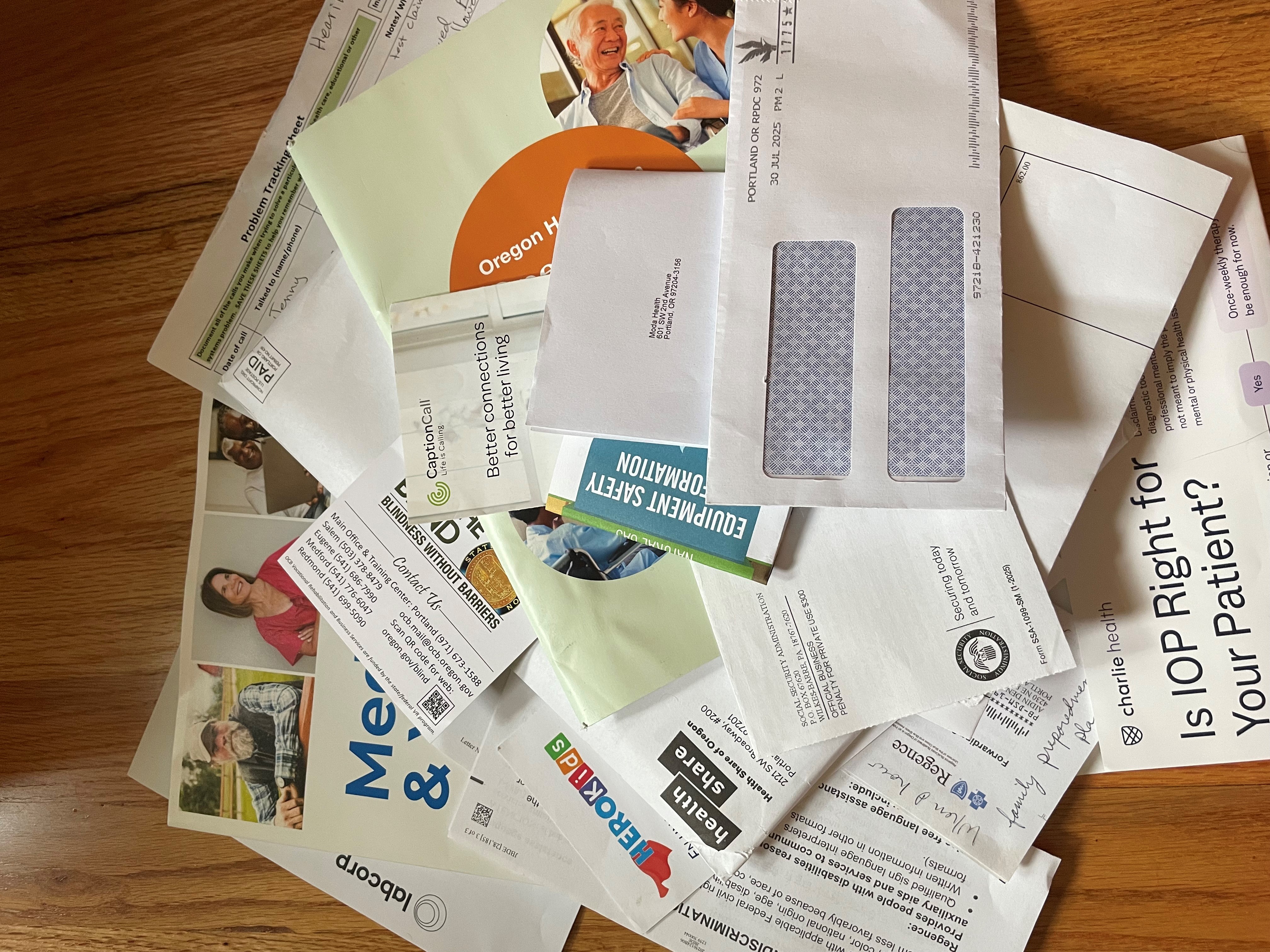
Parents tell us...
"I had no idea Oregon had a department to help solve insurance issues."
"My son turns 26 soon. I don't how to help him find his own insurance."
"Welcome to my other part-time job: Insurance Appeals Expert."
Oregon Health Plan Basics
Eligibility
Your income will determine if you are eligible for OHP. Children with certain developmental disabilities, including Intellectual Disabilities and Autism Spectrum Disorder, may qualify regardless of income under a Medicaid waiver. Learn more about the Oregon Health Plan and how you can get help to apply oregonhealthcare.gov.
OHP coverage for children and youth under age 21
OHP covers regular check-ups, prescriptions, mental health care, addiction treatment, and dental care. For children and youth under age 21 OHP covers all medically necessary and medically appropriate services and treatments. To understand your child's benefits read these important handouts.
OHP coverage for young adults with special health needs
Oregon has developed a YSHCN program that expands Medicaid coverage to young adults with special health care needs. It is currently for those 19-21 with a mental health need, chronic condition, or prescription medication. Check out the YSHCN program page to see if you are eligible.
Flexible services for Oregon Health Plan
The Oregon Health Plan may provide non-covered health related items and services for CCO members. Further information can be found in your member handbook. To apply talk to your child's healthcare provider, or contact your CCO. Pro tip: The process to apply for flex funds can take time. Plan ahead. Flexible Services for Oregon Health Plan
Care coordination help
If your child is enrolled in a Coordinated Care Organization (CCO) and requires a lot of providers, medications, or appointments, you can get help from a CCO care coordinator. Look in your CCO handbook for the number to call to request this help. New rules for OHP CCO care coordination and related definitions were published in 2024.
If your child has OHP but is not in a CCO you may still be eligible for help with care coordination. This free service is offered by Acentra Health.
Denials and appeals
Insurance, including the Oregon Health Plan, sometimes does not cover what you think it should. There is help for you if you have been denied a services you think your child needs. Your denial is not official until you receive a letter from the insurance company. For OHP members a "denial letter" is officially called a "Notice Adverse Benefit Determination". This letter will give you the steps to appeal. The appeals process takes time. Talk to your child's provider about what to do while you are waiting. If you need help understanding the appeal process call us.
- If you have made an appeal but still can not get the care you need ask the OHA Ombudsperson Program
- You can use this form to track conversations with your insurance provider
- Patient Advocate Foundation: Engaging with Insurers: Appealing a Denial
Free medical transportation for OHP visits
Oregon offers free transportation for OHP members to approved medical appointments. In a metropolitan area, this might mean bus tickets, or a taxi ride, but in much of Oregon, it means using one of the brokerage services.
OHP handbooks
Your OHP handbook will tell you everything you need to know about your plan. You can request a paper copy if you need one, but all of them are also published on-line. On-line handbooks are searchable by topic. Your Coordinated Care Organization (CCO) also publishes a handbook. You should have one of each. If you need help finding your handbook on-line, contact the OR F2F HIC
Private Insurance Basics
Employer-provided insurance plans
Even if your employer provides insurance for your family, you may have to pay part of the monthly premium, as well as deductibles and co-pays. Your employer may offer more than one plan to choose from, so compare your choices during the enrollment period. Your employer will let you know when that is. The enrollment period is usually only a few weeks long.
Usually your employer determines what your insurance covers. Decisions about what is covered in your plan are generally made annually. If your company plan does not cover what your family needs, contact your human resources department to make suggestions to improve coverage.
Privately-paid insurance
If you do not qualify for the Oregon Health Plan, or your employer does not provide insurance, you may purchase it from the State of Oregon's Insurance Marketplace.
Care coordination help
If your child requires a lot of providers, medications, or appointments, you may be eligible for assistance from a care coordinator that works for the insurance company. See our tip sheet: Getting to Know Your Care Coordinator.
Denials and appeals
Insurance sometimes does not cover what you think it should. There is help for you if you have difficulties with your provider or insurance company. You have a right to appeal the insurer's decision. Many families succeed in their appeals. The first step is call your insurance company customer service line. Make sure you keep track of who you speak to and what they say. This problem tracker sheet can help you stay organized. There are always people who can help you with an appeal process.
In order to start an appeal, it is important for you to know the type of plan you have. If your employer pays for it, you probably have a "group plan." If you work for a big company that buys their own insurance, it may be called a "self-insured plan." You can find out, which you have by asking the human resources department of your job. The type of insurance you have will determine who will help you with the appeal process.
If you have a group plan, you can get help from the Oregon DCBS Division of Financial Regulation at 1-888-877-4894 or e-mail cp.ins@state.or.us.
If you have a self-insured plan, you can get help from Large Group Plan Online Assistance or call 206-757-6632.
If you do not know what kind of insurance you have, we can help you.
Dual or Double Coverage
Many families with special health care needs have children with two or even three insurance plans. For example, children who receive Community Developmental Disability Program services may have OHP on a Medicaid waiver, as well as a policy from their parents' work. Or, if both parents have insurance through their work, the child may be on both plans. Double coverage is good because, it saves you on deductibles, co-pays and out of pocket expenses, but it can get confusing. Almost always, when there are two policies, the private insurance pays first and then OHP pays second. If you have two or more insurance plans, it is important to let your providers know which insurance pays first and which one pays second. If you do not know which one pays first, contact your employer's human resources department.
Common questions about insurance
-
Who can help me coordinate my child's care?
If your child has Oregon Health Plan (OHP) and requires a lot of providers, medications, or appointments, you can ask for help coordinating that care from your child's Coordinated Care Organization (CCO). Call your child's CCO and ask to speak to the Care Coordination department. If your child has "Open Card" OHP you can call the Oregon Health Plan Care Coordination (OHPCC) program at 1-800-562-4620.
Most private insurance companies can also provide help. Call the number on your child's insurance card and ask, "Is there is someone who can provide care coordination?"
Other options for care coordination include the CaCoon home visiting program or your child's primary care or specialists office.
-
Insurance sometimes does not cover what you think it should. You have a right to appeal the insurer's decision. Many families succeed in their appeals. You should involve your health care provider to make your case. Sometimes all it takes is for the provider to submit the bill with a different code for services.
Patient Advocate Foundation: Engaging with Insurers: Appealing a Denial
For appeals in the state of Oregon. Consumer Guide to Health Insurance Appeals (440-5184) (Oregon.gov)
Below are some general guidelines for appealing an insurance decision, but call us for more detailed information based on your specific situation.
First, make sure you have a denial in writing. Only a representative from your insurance company can issue a denial. If you have the Oregon Health Plan, you will receive that denial in writing in the mail.
Second, call your insurance company's customer service line. You may be on hold for a while, but be persistent and have the denied claim in front of you so you are ready to talk when you are connected. Always write down or record what is said and the name of the person you spoke with. This insurance problem tracker sheet is useful in keeping track of who said what.
Third, if the customer service line does not resolve the problem, there is still help. Call the OR F2F HIC 855-323-6744 (English) or 833-990-9930 (Spanish). We can walk you through the next steps.
-
Resources for those without insurance
You may be able to get some health, mental health, or dental care from one of the following resources:
County public health departments
Other ideas:
Community health fairs may offer free screenings or care on a first-come first-served basis. To find a health fair, you can contact your county public health department or dial 211info
Employee Assistance Programs (EAP): Ask your employer if it provides an EAP. EAPs offer free or reduced-cost mental health services for employees and families.
Many hospitals and clinics offer discounts, so before any procedure, ask for a financial screening to see if you qualify.
You can also pay out of pocket at many Urgent care offices. Many have a flat fee that they charge for office visits and will be transparent about the costs of any x-rays or labs that they might order.
More tips can be found on the OR F2F HIC tip sheet: When Insurance Won't Pay
-
Understanding how insurance works
Insurance is complicated but necessary for you to understand. We have provided some great resources to learn the basics.
Consumer reports: Understanding health insurance
Health Service Resource Administration: "From Coverage to Care"
Healthcare.gov: What is a summary of benefits?
Healthcare.gov: Comparing insurance plans
Healthcare.gov: Re-enrolling or changing insurance in the middle of the year
Family Voices: Insurance Jargon
-
Finding insurance
If you don’t have insurance through an employer, the Oregon Health Authority can connect you with trained insurance assisters to help you find an affordable plan. They can help you find out if your child qualifies for the Oregon Health Plan too.
If your child qualifies for Community Developmental Disability Programs, they may be eligible for the Oregon Health Plan as primary or secondary coverage. Speak to your child's case manager about this.
If you are caring for a child in the foster care system they are eligible for the Oregon Health Plan until they are age 26. If you adopt them out of the foster care system they are eligible until age 18
Youth with special health care needs (19-21) who have not previously had Oregon Health Plan or who have aged out can apply for the YSHCN program.
Youth who are attending college can buy health insurance through their university or college. This can be included in the university or college's financial aid package as an expense.
Disclaimer
Inclusion of resources on our site does not imply endorsement nor does exclusion mean we do not think it is valuable. We work to keep our list of resources current and relevant but it is not exhaustive.
If you have any questions call or email us. 855-323-6744 (English) o 833-990-9930 (español) contact@oregonfamilytofamily.org