Research
Advancing biological discovery to treat disease
Our researchers collaborate with every specialty at OHSU to advance diagnoses and treatment for some of the most complex disease.
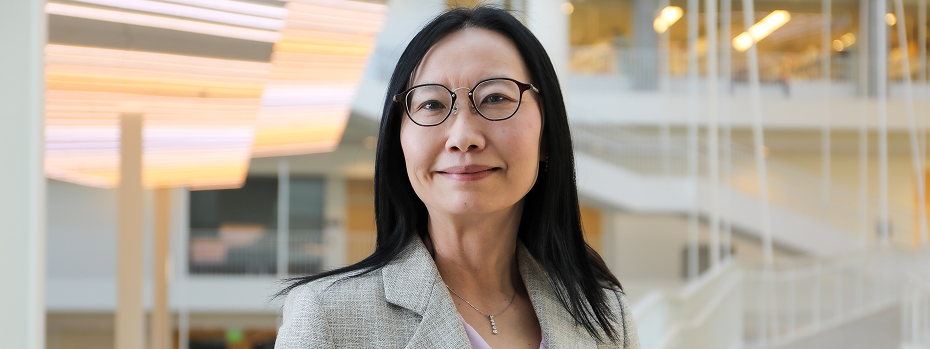
Led by vice chair for research, Yabing Chen, Ph.D., M.B.A., FAHA., our pathologists lead and participate in research in a variety of human diseases. Collaborating across specialties, our research program analyzes human specimens and datasets to uncover disease pathogenesis and drive discoveries that improve patient care.
What we study
Our research faculty investigate:
- Cancer biology: solid tumors, hematologic malignancies and molecular oncology
- Neurodegenerative disease and aging, including Alzheimer's disease and vascular dementia
- Cardiovascular disease and cardiometabolism
- Placental biology and extracellular vesicles for early disease detection
- Biomarker discovery and computational pathology
- Infectious diseases and novel diagnostics
Research by the numbers
- 6,000 tissue samples in the Oregon Brain Bank, supporting research on dementia, Alzheimer’s and aging
- 65 active research faculty working with trainees
- 50+ news stories generated by a single 2017 dietary research finding from the Chen Lab
OHSU pathology breakthroughs
We produce research results with direct implications for how diseases are diagnosed and understood, including vascular biology, molecular oncology, neurodegeneration and computational diagnostics.
Dietary potassium and vascular disease prevention
Research from the Chen Lab demonstrated that dietary potassium can reduce arterial calcification and support cardiovascular health. This finding generated more than 50 news stories worldwide when it was first published.
Learn more about the impact of potassium on cardiovascular health
Extracellular vesicles as early disease markers
The Morgan Research Lab is developing methods to detect changes in extracellular vesicles: cell-derived particles whose molecular characteristics may signal disease. Our goal is to enable earlier diagnosis of conditions, including fetal growth syndrome.
Predicting Parkinson’s disease with tissue biomarkers
In his lab, Greg Scott, M.D., Ph.D., uses informatics and tissue pathology, primarily in GI, to identify biomarkers that predict disease formation. Dr. Scott’s research also explores applications to Lewy body dementia and Parkinson’s disease.
Learn more about fluid and tissue biomarkers of Lewy Body Dementia
In the news
Funding and partnerships
The Department of Pathology and Laboratory Medicine receives research funding from federal agencies, nonprofit organizations and private sources.
The Oregon Brain Bank, with more than 5,600 tissue samples donated by patients and families, serves as a shared research resource for investigators across OHSU and beyond.
Current research areas
Faculty pursue independent research programs and collaborate across campus on their own terms. We conduct research across five areas, drawing on pathology’s direct access to tissue and specimens as the foundation for translational work.
Cancer biology
Faculty pursue independent research programs and collaborate across campus on their own terms. We conduct research across five areas, drawing on pathology’s direct access to tissue and specimens as the foundation for translational work.
Cancer biology
Our pathology faculty investigate the molecular underpinnings of solid tumors and hematologic malignancies.
- Guang Fan, M.D., Ph.D., focuses on translating innovative laboratory technologies into clinical practice. Her work spans artificial intelligence in flow cytometry, next-generation sequencing and digital pathology to advance precision diagnostics for hematologic malignancies and infectious diseases. She also leads community-based screening initiatives aimed at improving access to care and promoting health equity. Through collaboration and clinical implementation of emerging technologies, she advances laboratory medicine to improve patient outcomes and population health.
- Jennifer Dunlap, M.D., analyzes flow cytometry to distinguish lymphoma subtypes.
- Phil Raess, M.D., Ph.D.,investigates the role of molecular events on tumor phenotype and prognosis in lymphoma and leukemia, and development of novel diagnostic modalities for challenging hematopathology cases.
- Wei Xie, M.D., Ph.D., investigates the molecular and epigenetic characterization of hematologic malignancies, with an emphasis on myeloid neoplasms; and implements flow cytometric approaches for the diagnosis of hematolymphoid neoplasms and the enumeration, characterization of CAR-T cells.
Neurodegenerative disease and aging
We work with the Oregon Brain Bank, one of the region’s most significant repositories of donated human brain tissue, to investigate the biological mechanisms of dementia, Alzheimer’s disease and vascular cognitive decline.
- Yabing Chen, Ph.D., M.B.A., FAHA, leads multidisciplinary research programs to uncover mechanisms underlying vascular contribution to cognitive impairments and dementia.
- Randy Woltjer, M.D., Ph.D., directs the Oregon Brain Bank and is the principal and co-investigator on numerous intra- and extramural grants.
- Matthew Wood, M.D., Ph.D., applies next-generation sequencing and advanced molecular testing to the diagnosis of primary CNS tumors.
Cardiovascular disease and cardiometabolism
The Chen Lab studies how vascular changes drive cardiovascular disease, aging and vascular dementia, with a focus on the intersection of diabetes and cardiometabolism. The lab is also applying AI-powered machine learning to tissue morphology analysis, training algorithms to identify disease patterns and uncover mechanisms more efficiently than manual review alone.
Biomarkers and computational pathology
Greg Scott, M.D., Ph.D., uses informatics and tissue pathology to identify biomarkers associated with disease and predict disease formation. His primary focus is gastrointestinal pathology. He also investigates biomarkers related to Lewy body dementia and Parkinson’s disease.
Placental biology and extracellular vesicles
The Morgan Research Lab studies placental tissue to enable early detection of conditions such as fetal growth syndrome. Research focuses on extracellular vesicles, cell-derived particles that may signal disease before symptoms appear. Morgan’s work connects to collaborators across campus and the community.
Contact us
Academic department administration
pathadmin@ohsu.edu
503-494-8276
Surgical Pathology
503-494-6776
Faculty careers
Find pathology faculty jobs at OHSU.
“We want pathology research to be a platform that accelerates discovery and nurtures the next generation of clinicians and scientists. That’s how we promote innovation that eventually leads to clinical application.”
Make a gift
Support our next breakthrough.
Continuing medical education
Find grand rounds and more.
Graduate medical education
Find tools and resources for graduate medical students.

Be part of something bigger
Research labs
Chen Lab
We study the vascular biology of cardiovascular disease, aging and dementia, and apply AI-powered image analysis to accelerate discovery.
Morgan Research Lab
We investigate placental biology and extracellular vesicles to develop earlier, more precise tools for diagnosing fetal and adult disease.
Oregon Brain Bank
As one of the country’s largest brain tissue repositories, we collaborate with investigators across disease areas.
Digital pathology and AI
Our pathologists are using digital pathology and AI to drive tissue image analysis.
Whole slide imaging turns physical slides into high-resolution digital images. We can analyze and share these images remotely and collaborate without being in the lab.
When combined with machine learning algorithms trained on image datasets, digital pathology empowers more consistent pattern recognition across tissue samples. We use these advances to improve identification of rare disease in both clinical care and research.