Chen Lab at OHSU
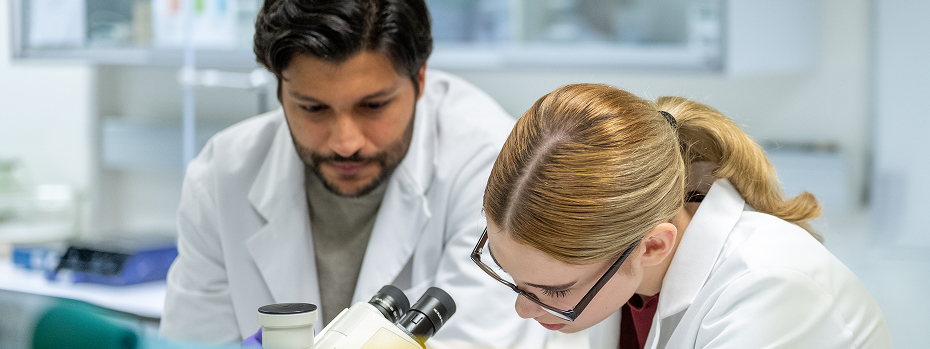
Driving discovery in vascular changes and disease pathogenesis
The Chen Lab, led by Yabing Chen, Ph.D., M.B.A., FAHA, studies how blood vessels change with disease and aging. We explore how these changes affect conditions such as atherosclerosis, vascular calcification, diabetic vasculopathy and dementia.
We combine animal models, human tissue analysis, genetics, multi-omics and AI-driven machine learning to find the signals that drive vascular disease and that could one day be targeted by new drugs.
Based in the OHSU Department of Pathology and Laboratory Medicine, we are committed to building a diverse, equitable lab environment where every member can grow scientifically and advance their career. You will find:
Chen Lab accomplishments
- Dr. Chen received the 2024 Arteriosclerosis, Thrombosis and Vascular Biology Women’s Leadership Committee Award for Outstanding Mentorship of Women from the American Heart Association
- The lab has published more than 80 peer-reviewed manuscripts, with research continuously funded by the National Institutes of Health, the U.S. Department of Veterans Affairs and the American Heart Association.
- Dr. Chen received the Vascular Biology Special Recognition Award from the AHA Council on Arteriosclerosis, Thrombosis, and Vascular Biology (2018), recognizing her contributions to the field of vascular biology.
- Dr. Chen received the 2024 ATVB Women’s Leadership Committee Award for Outstanding Mentorship of Women from the American Heart Association’s Council on ATVB in March 2024. The award recognizes exceptional service in the mentorship, support, advocacy and sponsorship of women in vascular biology fields.
Research projects
Oxidative stress, Runx2 and vascular calcification
When blood vessels are under stress, a protein called Runx2 can push smooth muscle cells to behave like bone-forming cells. The result: blood vessels calcify, stiffen and fail. We investigate how oxidative stress triggers this process in atherosclerosis, diabetes and aging, and what we can do to stop it.
Vascular osteoclast-like cells and atherosclerotic calcification
Inside atherosclerotic plaques, cells that resemble bone-dissolving osteoclasts may help regulate calcification. We study how these vascular osteoclast-like cells form, what they do, and whether targeting them could slow plaque growth and reduce cardiovascular risk.
Protein O-GlcNAcylation and diabetic vascular injury
Diabetes alters how cells modify their proteins, including through a process called O-GlcNAcylation. These changes push vascular smooth muscle cells into a disease state that drives calcification and vessel injury. We investigate this pathway to find new ways to protect blood vessels in people with diabetes.
Vascular smooth muscle cell phenotypic switching and cognitive impairment
Aging changes blood vessel walls in ways that can harm the brain. We study how changes in smooth muscle cells across different vessel types contribute to cognitive decline and dementia. Our work links vascular disease to one of the biggest unsolved challenges in aging.
Studies and publications
Find more publications by Dr. Chen through OHSU Elsevier Pure.
Zhang W, Sun Y, Yang YF, Chen Y. Impaired intracellular calcium homeostasis enhances protein O-GlcNAcylation and promotes vascular calcification and stiffness in diabetes. Redox Biology, 2023.
Sutton NR, Malhotra R, St Hilaire C, Aikawa E, Blumenthal RS, Gackenbach G, Goyal P, Johnson A, Nigwekar SU, Shanahan CM, Towler DA, Wolford BN, Chen Y. Molecular Mechanisms of Vascular Health: Insights from Vascular Aging and Calcification. Arteriosclerosis, Thrombosis, and Vascular Biology, 2022.
Chen Y, Zhao X, Wu H. Arterial Stiffness: A Focus on Vascular Calcification and Its Link to Bone Mineralization. Arteriosclerosis, Thrombosis, and Vascular Biology, 2020.
Sun Y, Byon CH, Yang Y, Bradley WE, Dell ‘Italia LJ, Sanders PW, Agarwal A, Wu H, Chen Y. Dietary potassium regulates vascular calcification and arterial stiffness. JCI Insight, 2017.
Heath J, Sun Y, Yuan K, Bradley WE, Litovsky S, Dell ‘Italia LJ, Chatham JC, Wu H, Chen Y. Activation of AKT by O-GlcNAcylation Induces Vascular Calcification in Diabetes. Circulation Research, 2014.
Sun Y, Byon CH, Yuan K, Chen J, Mao X, Heath JM, Javed A, Zhang K, Anderson PG, Chen Y. Smooth muscle cell-specific Runx2 deficiency inhibits vascular calcification. Circulation Research, 2012.
Byon CH, Javed A, Dai Q, Kappes JC, Clemens TL, Darley-Usmar VM, McDonald JM, Chen Y. Oxidative stress induces vascular calcification through modulation of the osteogenic transcription factor Runx2 by AKT signaling. Journal of Biological Chemistry, 2008.
Meet our faculty
Yabing Chen, Ph.D., M.B.A., FAHA, leads the Chen Lab. We are a collaborative team working at the intersection of vascular biology, aging and translational pathology, and we are actively growing. Email chenyab@ohsu.edu to learn more.
Wonmo Ahn, Ph.D., postdoctoral fellow
ahnwo@ohsu.edu
Chengyun Tang, M.D., postdoctoral fellow
tangch@ohsu.edu
Erandi Velazquez-Miranda, Ph.D., postdoctoral fellow
velazqer@ohsu.edu
Yong Sun, M.S., Ph.D. candidate
sunyo@ohsu.edu
Zhehao Zhu, M.S., Ph.D. student, biomedical engineering
zhuz@ohsu.edu
Srisankalp Gaddam, research assistant
gaddams@ohsu.edu
Lynette Hieber, medical student
Contact us
Email chenyab@ohsu.edu to:
- Ask questions
- Partner with us
- Inquire about collaboration
Richard Jones Hall, Room 1386
3222 SW Research Dr
Portland, OR 97239
Make a gift
Support our next breakthrough.
Faculty careers
Find pathology faculty jobs at OHSU.
Continuing medical education
Find grand rounds and more.
Graduate medical education
Find tools and resources for graduate medical students.