Fractures and Dislocations
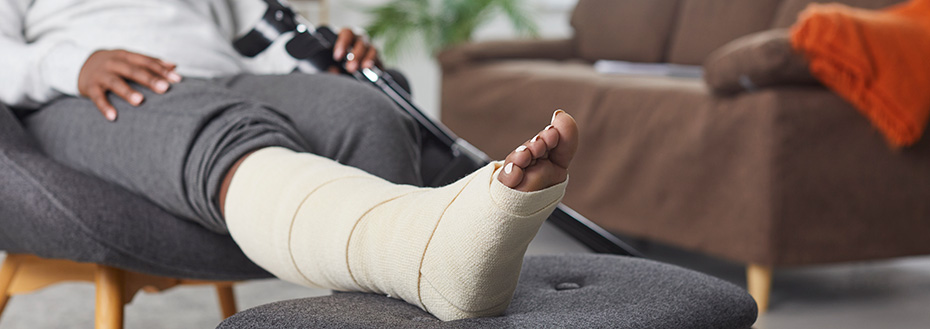
A broken bone or serious injury can happen without warning. Whether you were hurt in a fall, car crash or another accident, getting the right treatment early can make a big difference in your recovery.
Our orthopedic trauma specialists treat fractures, dislocations and other bone and joint injuries. At OHSU:
- We care for everything from common broken bones to the most complex injuries, creating a treatment plan that's right for you.
- If you need surgery, we use the latest techniques to help your bones heal correctly and restore your movement.
- We also care for patients with fractures that aren't healing properly, injuries that need reconstruction and people seeking a second opinion.
From your first evaluation through rehabilitation, our team works together to help you heal and return to the activities that matter most to you.
Complete care
In orthopedics, "trauma" refers to injuries to bones and joints caused by falls, sports injuries and accidents. These injuries can include fractures (broken bones) and dislocations, which is when a joint is forced out of its normal position.
We provide the highest level of orthopedic trauma care in Oregon and are one of only two Level 1 trauma centers in the state.
Being a Level 1 trauma center means we:
- Treat all aspects of your injury, including rehabilitation and prevention
- Stabilize breaks and dislocations, including in the pelvis and hip socket
- Help advance trauma care through research, education and prevention
- Share our findings with regional hospitals to improve trauma care for everyone
Treating traumatic fractures and dislocations
Many patients come to OHSU after receiving emergency care at another hospital. You may be transferred to OHSU the day of your injury or after your condition has been stabilized.
Once you arrive, our team will examine your injury, review any imaging tests and develop a treatment plan to help your bones and joints heal properly.
Types of fractures and dislocations we treat
Our orthopedic trauma surgeons are experts in treating broken bones and dislocations, including injuries to your:
- Spine
- Neck
- Ribs
- Pelvis
- Hips
- Collarbone
- Shoulder
- Arm
- Wrist
- Hand and fingers
- Legs
- Knee
- Ankle
- Foot
We also treat:
- Joint dislocations and fractures, including to the shoulder, hip, knee and elbow
- Open or compound fractures, which is where a broken bone pierces the skin
- Multiple injuries to several body parts or organ systems (polytrauma)
Treating broken bones that didn’t heal
Our doctors can also repair broken bones that didn’t heal correctly. These injuries, also called non-union fractures, can cause pain, frailty, deformity, poor blood supply and infection.
The major causes of non-union fractures are:
- Breaks that weren’t stabilized well, so the bones didn’t come together
- Conditions that cause new bone to keep forming, so the break doesn’t heal
- Infection at the fracture site – bacteria can break down bone and prevent bone growth
To fix a non-union fracture, your doctor may recommend:
- Surgery
- Metal implants
- Bone grafts, which uses bone or a bone-like material to help repair, strengthen or rebuild a damaged bone so it can heal properly
- Rehabilitation
- Medicine
Your doctor may also use gentle electrical pulses or low-intensity ultrasound waves to help the bone's natural healing process, especially when a fracture is healing slowly or not healing as expected.
Surgery for broken bones and dislocations
You may come to our team when your broken bone, dislocation or multiple injuries need surgery.
Our surgeons realign the bone or joint and repair damaged muscles and ligaments. We may use plates, screws or a rod inside the bone. We use state-of-the-art X-ray machines and implants.
You may need multiple surgeries over time. We treat the most dangerous injuries first and schedule other treatments so your body can recover. We also use non-surgical treatments when possible.
What to expect with surgery
Before surgery, you'll be stabilized either at OHSU or another emergency department to make sure you're ready for treatment.
Your trauma team carefully plans your surgery using advanced 3D CT imaging to understand your injuries and choose the best approach.
After surgery, you'll recover in the intensive care unit (ICU), a hospital room, or, in some cases, at home. Your recovery time will depend on the type and severity of your injuries.
Rehabilitation begins as soon as it's safe to help you regain strength, restore movement and reduce the risk of complications.
You may wear a cast, brace or external frame to keep your bone in the correct position while it heals.
Throughout your recovery, our experienced nurses and physician assistants work closely with your surgeons to provide expert care, answer your questions and support your healing every step of the way.
A team of experts
From the moment you arrive at OHSU through your recovery, a team of specialists works together to help you heal, manage pain and regain independence.
Depending on your injuries and recovery needs, your care team may include experts in:
- Imaging (radiology)
- Critical care
- Plastic surgery
- Physical therapy
- Occupational therapy
- Speech-language pathology
- Respiratory therapy
- Pain management
- Psychiatry
- Trauma social work
By coordinating your care across specialties, we can treat both your injuries and the challenges that come with recovery, helping you return to your daily life as safely and confidently as possible.
Fracture and dislocation research
Research is a core part of our orthopedic trauma care. Our surgeons study injury healing, recovery and ways to reduce complications. We share our findings to improve trauma care across the region.
Our research focuses on:
- Improving fracture healing and recovery: We study how bones heal, how long healing takes and how surgical techniques affect long-term joint health and function.
- Reducing complications after traumatic injury: We research blood loss, anemia, infection risk and surgical approaches that lower complications and support safer recovery.
- Advancing trauma care across hospitals: We work with other hospitals and researchers on studies that shape trauma care.
- Using new technology to track recovery: We study mobile health tools like Apple Health data to better understand recovery after lower extremity fractures.
Locations
OHSU Orthopedics Clinic, South Waterfront
S. Bond Avenue
Portland, OR 97239
Center for Health & Healing, Building 1, 12th floor
OHSU Beaverton
15700 S.W. Greystone Court
Beaverton, OR 97006
OHSU Health Orthopedics at Adventist Health Portland
East Pavilion, 10000 SE Main Street, Suite 250
Portland, OR 97216
Refer a patient
- Refer your patient to OHSU.
- Call 503-494-4567 for provider-to-provider advice.