Emergency Simulation Training Prepares Teams for High-Risk Scenarios
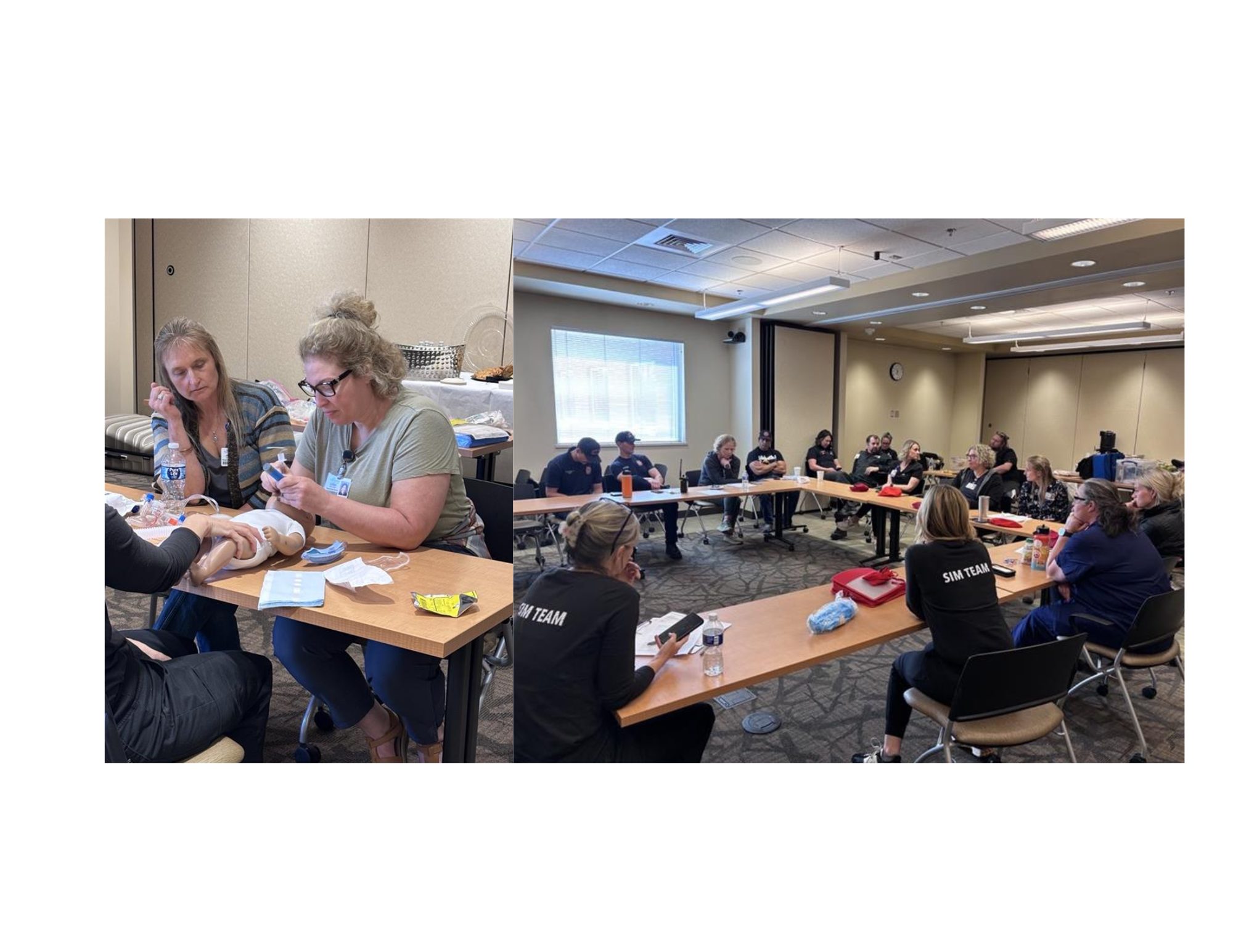
When a 20-year-old Prineville woman fell while walking in early May, she immediately called 911 after returning home. She was 37 weeks pregnant and in severe pain after landing on her abdomen. Emergency responders took her to St. Charles Prineville, a Critical Access Hospital (CAH), where she immediately delivered her baby. The woman began hemorrhaging soon after delivery, and her condition rapidly deteriorated. The medical team had to quickly identify the cause and begin treatment to save her life.
While this scenario was not real, it was designed to feel life-like during a hands-on simulation training provided by Healthcare Safety Solutions and ORH. Similar simulation trainings were also held for health care workers and emergency responders at St. Charles Madras in May and at PeaceHealth Cottage Grove Medical Center in April. Read more about the April simulation here.
Stephanie Sayegh, the field services program manager for rural hospital quality at ORH, said the trainings help rural health care teams and emergency responders maintain readiness for these rare but high-stakes situations. They were supported through funding from the Health Resources and Services Administration (HRSA) and the Federal Office of Rural Health Policy’s (FORHP’s) Small Rural Hospital Improvement Program (SHIP).
“These in‑situ simulations with Healthcare Safety Solutions give the rural hospital, local EMS and air support team the opportunity to put their specific protocols and training into practice, while also providing a valuable chance to come together afterward and debrief,” she said.
Postpartum hemorrhage is one of the leading causes of maternal morbidity and mortality in the U.S., so the ability to recognize and manage maternal and neonatal emergencies is critical. The trainings are designed to strengthen communication, coordination and clinical response protocols before a real emergency occurs, helping providers practice working together under pressure in realistic scenarios. In post-training evaluation surveys, participants said the exercises were highly beneficial for strengthening rural emergency response processes, interprofessional collaboration and identifying opportunities for system improvement.
In rural communities, obstetric emergencies can quickly become life-threatening, especially as recent maternity ward closures across Oregon force some expecting mothers to travel longer distances to reach care. When a community loses access to obstetric services, rural emergency responders are at times called on to fill the gap and prepare for more high-risk maternal and neonatal emergencies. The strain on rural emergency responders, hospitals and clinics could intensify in the coming years. The federal budget reconciliation package known as the "One Big Beautiful Bill Act" or H.R. 1, is expected to reduce Medicaid spending over the next decade. Rural hospitals and clinics, many of which already operate on thin margins, are expected to be disproportionately affected.
To help offset some of the impact on rural health, the federal bill established the Rural Health Transformation Program (RHTP), a $50 billion nationwide investment in rural health. Oregon’s RHTP efforts are divided into two phases: the first provides swift support for ready-to-go projects, while the second will award larger, competitive grants for longer-term regional initiatives aimed at transforming the health care system. Healthcare Safety Solutions was selected as a recipient of the Oregon program’s first Immediate Impact Awards and will continue to expand its work, delivering up to 12 emergency medical services simulation trainings across the state. In addition, the Oregon Perinatal Collaborative also plans to deliver maternal-specific simulations through a separate Oregon RHTP Immediate Impact Award. You can find more information about RHTP on ORH’s website or the Oregon Health Authority’s (OHA’s) RHTP webpage.