IVC Filter Clinic at OHSU

Treatment for deep vein thrombosis and pulmonary embolism
Our highly specialized experts use IVC (inferior vena cava) filters to treat patients with blood clots. We combine leading technology with a patient-centered approach to provide safe, effective care. You’ll find:
- Training in IVC filter placement, retrieval and ongoing support
- Board-certified interventional radiologists using advanced, minimally invasive procedures
- Multidisciplinary specialists with decades of combined experience
- Referrals for complex IVC filter cases and expert consultation
Learn more about:
What you can expect
We have deep expertise using IVC filters to treat blood clots. You can count on:
- Safe, minimally invasive procedures tailored to your needs
- Support both in the clinic and at home
- Partnership with your primary care provider and other specialists
How to get care
You will need a referral from your doctor or specialist to get care at our clinic. If you have questions, please call 503-418-6725
Preparing for your treatment
Before you arrive, review these steps to help your experience go smoothly:
- Make a list of your medications and allergies
- Get a blood test or imaging before the procedure if needed
- Tell your provider if you are pregnant or might be pregnant
- Eat a light dinner the night before; do not eat after midnight
- You may drink clear fluids until 2 hours before arrival
- Most medications can be taken as usual (some diabetes medicines may change)
- Plan to be at the hospital most of the day
- Arrange for someone to drive you home after the procedure
Conditions we treat
We care for patients with blood clots related to deep vein thrombosis (DVT) and pulmonary embolism (PE).
According to the CDC, DVT and PE affect up to 900,000 people in the United States each year. Risks may include:
- Age: Being over age 50
- Lifestyle: Smoking or prolonged inactivity, such during long flights or bed rest
- Medical conditions: Health issues, like obesity, cancer, heart disease, injury and recovering from surgery
- Hormone changes: Estrogen therapy, birth control pills or pregnancy
- Race: People of African American and European decent
What is deep vein thrombosis?
DVT is a blood clot that forms in a deep vein, often in the leg or pelvis. These clots can cause swelling and pain. If the clot travels up to the lungs, it can cause pulmonary embolism, a serious and potentially life-threatening condition.
DVT symptoms
Not everyone has symptoms, but possible signs include:
- Swelling, pain or warmth in one leg
- Leg heaviness
Diagnosing and treating DVT
Check with your doctor if you think you have DVT. They may run tests or prescribe blood-thinners or minimally invasive treatment, like an IVC filter, if you have a blood clot.
Diagnostic tests for DVT can include:
- D-dimer blood test to check for blood clots
- Duplex ultrasound to visually identify clots in the legs
- Venogram, a gold standard for DVT diagnosis. We inject contrast dye into a vein and use X-rays to show clots inside the veins.
What is pulmonary embolism?
A pulmonary embolism (PE) is a serious condition. It happens when a blood clot, often in the leg, travels to the lungs and blocks blood flow. This can reduce oxygen in the body, damage lung tissue and strain the heart.
According to the CDC, roughly 1 in 10 hospital deaths are related to PE.
PE symptoms
Symptoms can appear suddenly and may include:
- Sudden cough
- Shortness of breath
- Chest pain, especially when breathing deeply
- Rapid heartbeat
- Palpitations
- Wheezing
- Lightheadedness or fainting
Diagnosing and treating PE
If you have DVT, you may be at risk for pulmonary embolism. Check with your doctor to get tested and find care.
Diagnostic tests for PE can include:
- Chest X-ray to rule out other lung problems
- EKG to rule out heart problems
- Arterial blood gas (ABG) blood test to measure lung activity and oxygen levels in the arteries
- CT scan to confirm PE or other causes
- Pulmonary angiogram using contrast dye and X-rays to see clots in the lungs
Treatment options
Our specialists offer comprehensive diagnosis and care for DVT and PE. We use advanced technology to test for blood clots and place IVC filters to stop them from causing harm.
IVC filters
We use minimally invasive, image-guided techniques to insert, treat and remove IVC filters. You’ll be in a private procedure room and may be sedated to keep you comfortable.
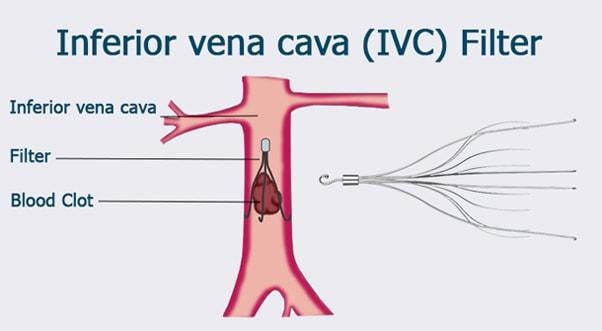
What is an IVC filter?
An IVC filter is small device inserted in the inferior vena cava, a large vein in the abdomen. It traps large blood clots so they don’t travel to the heart or lungs, causing pulmonary embolism.
Our specialists use IVC filters to treat blood clots in the legs, called deep vein thrombosis, when blood thinners don’t work.
Risk from IVC filters
IVC filters are generally safe and effective, but risks include:
- Bleeding or infection
- Rare movement, tilting or damage to the vein
- Clots in or around the filter
- Rare reactions to contrast dye used during the procedure
Your doctor can explain the benefits and risks for your condition.
Preventing DVT and PE
These habits can help you prevent blood clots at any age:
- Stay active: Move around every few hours, take a short walk or move your feet up and down (like pressing on a gas pedal) while sitting, especially if you are on a long car or airplane ride.
- Consider medications, like anticoagulants. Ask your doctor what’s right for you.
- Wear compression stockings: These help blood move from your lower legs back up to your heart.
- Ask your care team how they prevent blood clots during hospital stays.
- If you’re in the hospital, move around and wear compression stockings if your doctor approves.
- Request patient education materials about IVC filters, blood clots and blood thinners.
For families
Call 503-418-6725 to:
- Request an appointment
- Seek a second opinion
- Ask a question
Weekdays, 8 a.m. - 4 p.m.
Location
3181 SW Sam Jackson Park Road
Portland, OR 97239-3011
Free parking for patients and visitors
Refer a patient
- Refer your patient to OHSU.
- Call 503-494-4567 to seek provider-to-provider advice.