Peripheral Neuropathy
Millions of Americans have a peripheral neuropathy, a form of nerve damage that can cause pain, numbness and other symptoms. It’s important to know:
- These disorders are rarely life-threatening but can lead to disabling symptoms if left untreated.
- Early diagnosis and treatment are important. A “wait and see” approach can lead to permanent nerve damage.
- Nerves can become injured by disease, infection, accidents and other causes.
Learn about:
- Diagnosing nerve disorders
- Nerve disorder treatments
- Care for inherited, illness-related and other neuropathies at our ALS and Neuromuscular Disease Center
What are peripheral neuropathies?
Peripheral neuropathies are nerve disorders that affect the peripheral nerves. Peripheral nerves branch throughout the body, radiating to your fingers and toes. They carry sensory data, instructions and other messages to and from the central nervous system (the brain and spinal cord).
Peripheral neuropathies can range from mild to severe. They may weaken muscles or limit sensation in the arms, hands, legs or feet. Mild forms may go undiagnosed. More serious types can affect walking, breathing, swallowing and talking.
Some peripheral neuropathies cannot be cured, but treatment can lessen pain, reduce symptoms and increase quality of life.
Who gets peripheral neuropathies?
An estimated 20 million to about 30 million people in the U.S. have peripheral neuropathy. Numbers vary because so many cases go undiagnosed.
Risk factors include:
- Age: People older than 50 are at higher risk for most peripheral neuropathies.
- Family history: Some rare neuropathies are caused by genetic defects that are passed down in families.
- Having another condition: Peripheral neuropathy is often linked to other conditions, such as diabetes, HIV/AIDS, kidney failure or cancer.
- Certain jobs or activities: The same repetitive motion over a long time, such as working on an assembly line, can injure nerves.
What causes peripheral neuropathies?
Many conditions and circumstances can damage peripheral nerves. They include:
- Illnesses such as diabetes
- Autoimmune disease such as Guillain-Barré syndrome, lupus and rheumatoid arthritis
- Infections such as HIV and West Nile virus
- Injuries from accidents or repeated motions
- Tumors
- Chemotherapy
- Vascular problems
- Liver or kidney failure
- Genetic defects passed down in families
- Exposure to toxins
- Hormone imbalances, such as from an underactive thyroid
- Alcohol abuse
- Lack of vitamins
In many cases, though, the cause is unknown or can’t be pinned down. This is called idiopathic neuropathy.
Symptoms
Peripheral Neuropathy Signs and Symptoms
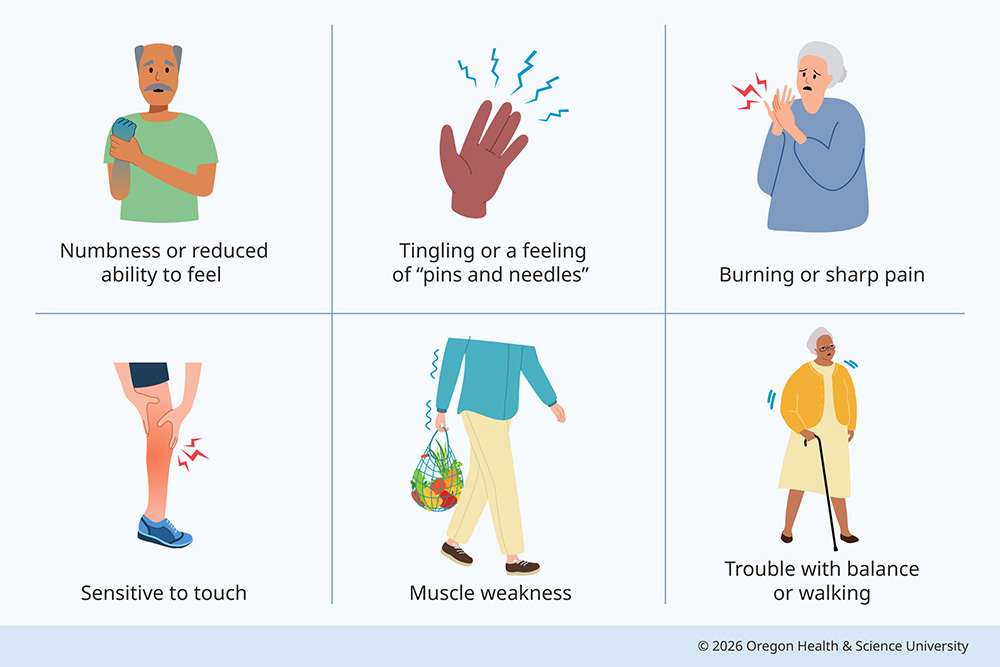
If you have symptoms of peripheral neuropathy, it’s important to see a doctor. Treatment may be effective for only a limited time. Symptoms vary by the type of neuropathy but can include the following:
- Numbness
- Burning, stabbing, freezing or tingling pain
- Muscle weakness, especially in legs, feet, arms or hands
- Unusual or increased sensation, or extreme sensitivity to touch
- A feeling that you’re wearing socks or gloves when you’re not
- Difficulty walking, running or controlling arm movements
- Trouble with balance and coordination
- Difficulty holding things
- Foot dragging, also called foot drop
- Unusually high arches
- Curled toes (hammer toes)
Types of peripheral neuropathy
Scientists have identified more than 100 types of peripheral neuropathy. Neuropathies are classified in many ways, including:
Acquired or hereditary
Most neuropathies are acquired, meaning they develop sometime after birth as the result of infection, illness or injury.
Hereditary neuropathies are caused by genetic changes passed down in families. Though people who have a hereditary neuropathy were born with it, symptoms may not develop until the teen years or adulthood.
Nerve types affected
Neuropathies can be described by the type of nerve affected. Some types mainly affect one or two types of nerves, but most affect all three:
Motor nerves: These nerves control voluntary muscle movement.
Sensory nerves: These nerves carry information from the senses — vision, hearing, smell, taste, touch — to the brain.
Autonomic nerves: These nerves help regulate functions you don’t consciously control, such as heartbeat, digestion and breathing.
Number of nerves affected
Neuropathies are also described by how many nerves they affect.
Mononeuropathy: This type affects only one nerve. It’s usually caused by injury or repeated stress.
Multiple mononeuropathy: This type affects two or a few nerves or nerve areas in different parts of the body.
Polyneuropathy: This type affects many or most nerves. It is the most common type.
Neuropathies related to illness, injury and other conditions
Many neuropathies are defined by their underlying cause. Here is a sampling:
Charcot-Marie-Tooth disease: CMT is the most common hereditary neuropathy. It’s a group of at least 30 disorders named after the three doctors who discovered them. It affects about 1 in 2,500 people in the United States. CMT is classified into subtypes: CMT1, the most common subtype, affects nerves’ myelin sheath (protective covering). Learn more about our care for CMT.
Chemotherapy-induced peripheral neuropathy: Some chemotherapy medications can damage nerves, making neuropathy one of the most common side effects of cancer treatment. Radiation therapy for cancer can also damage peripheral nerves.
Chronic inflammatory demyelinating polyneuropathy (CIDP): This nerve disorder causes weakness in the arms and legs. It's progressive, meaning it gets worse over time. CIDP can come with pain, fatigue, numbness and tingling. It’s a type of autoimmune neuropathy, occurring when the immune system attacks the covering (myelin sheath) that protects nerves.
Diabetic neuropathy: This is the most common peripheral neuropathy. It affects many people with diabetes. It happens when high blood sugar damages nerves. Diabetic neuropathy often causes numbness in the feet or legs, making it harder to notice sores or infections. If these infections aren't treated, they can become severe and sometimes lead to foot or lower-leg amputation.
Guillain-Barré syndrome: In this rare autoimmune neuropathy, the body’s immune system attacks nerves, often after an infection. Guillain-Barré causes weakness or a change in sensation starting in limbs. It can progress to paralyzing the entire body. Most patients make a full recovery with early treatment.
Hereditary neuropathy with liability to pressure palsies: HNPP is rare, affecting only two to five people out of 100,000. It occurs when one copy of the PMP22 gene is missing. This gene makes a protein that is a key part of myelin, the nerve sheath. People with HNPP are extremely sensitive to physical pressure. Even crossing the legs or carrying heavy bags can be a problem.
HIV-related neuropathy: HIV and medications used to treat HIV/AIDS can damage nerves. About one-third of people who have HIV also have HIV-related neuropathy.
Hormone imbalances: Hormone imbalances, such as when your thyroid doesn’t make thyroid hormone, can cause tissues to swell and press on nerves.
Kidney and liver failure: The liver and kidneys remove waste and toxic substances from the body. When these organs aren’t working properly, these substances can build up and damage nerves, leading to neuropathy.
Sciatica: A pinched sciatic nerve can cause pain that starts in the lower back and runs down one or both legs. A burning, shooting pain often comes with tingling or leg weakness. Learn more about sciatica and about radiculopathy, or pinched nerves along the spine.
Thoracic outlet syndrome: This uncommon and often-missed condition is a compression of the nerves between the collarbone and first rib.
Toxins: Exposure to toxins such as lead, arsenic and other heavy metals can cause nerve damage that leads to peripheral neuropathy.
Tumors: Growths from cancer or another cause can invade or press on nerves. Learn more about nerve tumors.
Vasculitic neuropathy: A condition called vasculitis causes blood vessels to become inflamed, robbing nerves of the blood flow they need to work properly.
Learn more
- Peripheral Neuropathy Information Page, National Institute of Neurological Disorders and Stroke
- What Is Peripheral Neuropathy? The Foundation for Peripheral Neuropathy
- What is Hereditary Neuropathy? Healthline
- Hereditary Neuropathies Information Page, National Institute of Neurological Disorders and Stroke
- Hereditary Neuropathy with Liability to Pressure Palsies, Hereditary Neuropathy Foundation
- Hereditary Neuropathy Disorders, The Foundation for Peripheral Neuropathy
For patients
Referral: To become a patient, please ask your doctor for a referral.
Locations
Parking is free for patients and their visitors.
We offer clinics for nerve conditions on our Marquam Hill and South Waterfront campuses.
Refer a patient
- Refer your patient to OHSU.
- Call 503-494-4567 to seek provider-to-provider advice.
Related OHSU services
- ALS and neuromuscular conditions, including many peripheral neuropathies
- Facial pain (trigeminal neuralgia)
- Genetic counseling and testing
- Children’s neuromuscular disorders