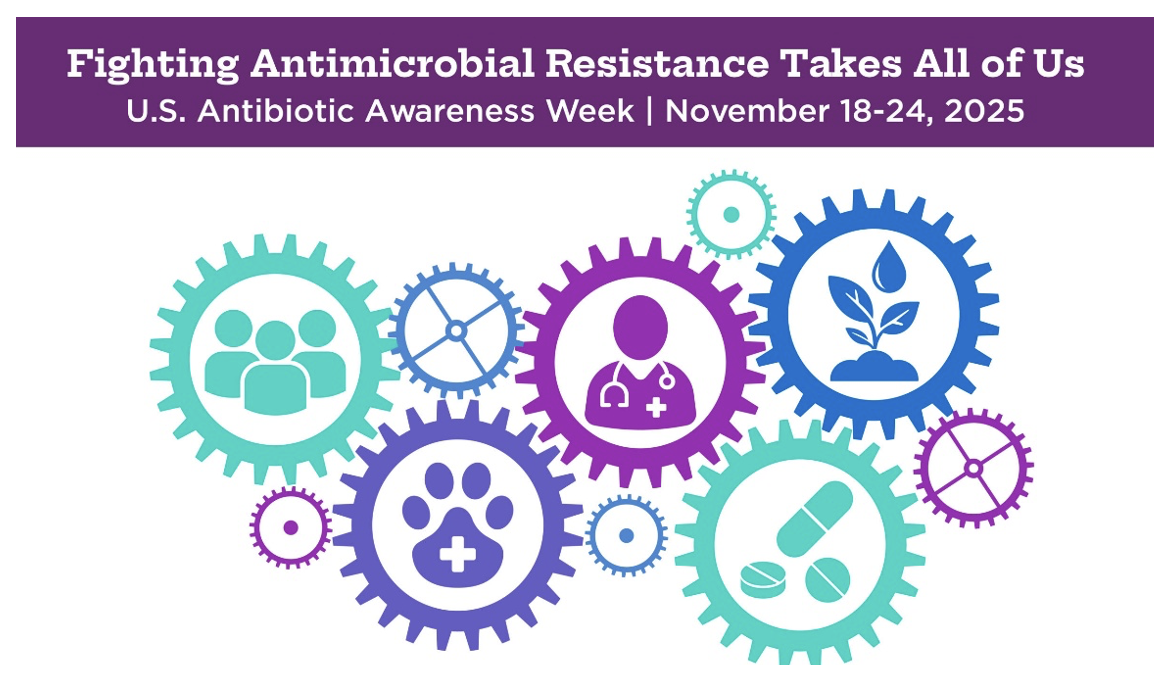
U.S. Antibiotic Awareness Week (USAAW) is an annual observance from Nov. 18-24 that gives organizations and health care professionals an opportunity to raise awareness of the threat of antibiotic resistance and the importance of appropriate antibiotic use.
According to the Centers for Disease Control and Prevention (CDC), at least 2.8 million people in the U.S. become infected with antibiotic-resistant bacteria, leading to more than 35,000 deaths each year. The single most important factor leading to antibiotic resistance is the use of antibiotics. Data have shown that 30% of antibiotics prescribed in hospital settings and 28% prescribed in emergency departments were inappropriate. Find more statistics on antibiotic use here.
Facilities can use Antibiotic Awareness Week to review local prescribing practices and reinforce antibiotics education for patients and staff. Resources below provide guidance on developing and enhancing stewardship programs and providing education to clinicians and patients.
Key Information
- The CDC’s guidance on implementing antibiotic stewardship programs in small and Critical Access Hospitals offers practical strategies to implement all seven core stewardship elements; and
- The Agency for Healthcare Research and Quality’s (AHRQ’s) Toolkit to Improve Antibiotic Use in acute care includes resources for developing or enhancing a hospital’s stewardship program, creating a safety culture around antibiotic prescribing and disseminating best-practice guidelines for common infectious syndromes. It features practical checklists, presentations and strategies that can be especially useful for quality improvement (QI) teams in small hospitals.
Facility Resources
- The Oregon Antimicrobial Stewardship Network (ORASN) is a network fostering collaboration among Oregon hospital stewardship programs;
- The Oregon Antimicrobial Stewardship Honor Roll recognizes Oregon hospitals that have shown exceptional dedication to improving antimicrobial use and patient safety. You can apply to have your facility recognized; and
- Guidelines on how to implement an antibiotic stewardship program from the Infectious Diseases Society of America and the Society for Healthcare Epidemiology of America can be found here.
Clinician Education
- The Oregon Health Authority (OHA) provides stewardship data, including reports on antibiotic prescribing patterns in Oregon;
- OHA’s Oregon Alliance Working for Antibiotic Resistance Education (AWARE) program provides resources for health care professionals, including antibiotic prescribing guidance and communication resources;
- The CDC offers a variety of educational materials for health care providers; and
- OHA’s Healthcare Associated Infections (HAI) Program provides guidance on patients with penicillin allergies, who are more likely to be treated with broad-spectrum antibiotics that have been associated with the development of antimicrobial resistance. Read more about penicillin allergy de-labeling in this HAI newsletter. You can subscribe to the HAI newsletter for regular updates on antimicrobial stewardship, resistance and HAI topics.
Outreach and Social Media
- CDC's Be Antibiotics Aware Partner Toolkit offers ready-to-use graphics, banners, and key messages to involve staff and the public in showing support;
- CDC’s Patient Education Resources clearly explain when antibiotics are not needed and why overuse can be harmful; and
- Oregon AWARE’s brochures, posters and coloring books to raise patient awareness.
Email HAI with any questions or suggestions.