Knee Pain
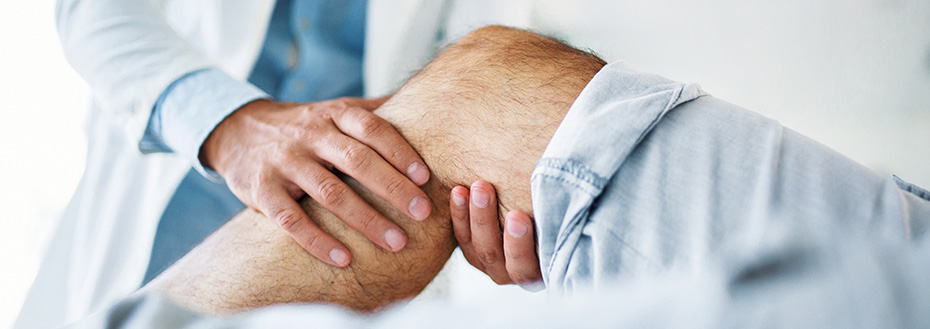
Knee pain is common in adults. It can happen as your joints age or after an injury. At OHSU, our bone and joint team can treat knee pain so you can feel better and stay active.
We offer:
- Care for arthritis and injuries
- Imaging to find the problem
- A team approach to your care
- The latest surgery options
Complete care for knee pain
At OHSU, surgeons, sports medicine specialists, physical therapists and other experts work together throughout your care.
You benefit from:
- Early therapy to help you move better
- Pain control that fits your needs
- Clear recovery goals at each step
If you need surgery, we work with you to find the best option. Most people go home the day of or day after surgery.
Diagnosing knee conditions
During your first visit, your provider will:
- Ask about your pain and past injuries
- Check how your knee moves
- Look for swelling
- Watch how you walk
Tests may include:
Knee conditions we treat
We treat all types of knee problems, including:
- Knee arthritis
- Rheumatoid arthritis (RA)
- Torn meniscus
- Torn ligaments
- Bursitis
- Baker's cyst
Knee arthritis: The cushion in your knee wears away over time, causing pain, swelling and stiffness. It's most common in adults over 50. We treat it with therapy, injections or surgery.
Torn meniscus: This happens when the cushion in your knee tears. It's common in active adults. Your knee may catch, lock or feel unstable. Treatment can include rest, therapy or surgery.
Torn ligaments: The ACL (anterior cruciate ligament), MCL (medial collateral ligament) and PCL (posterior cruciate ligament) help keep your knee stable. When they tear, your knee may give out. Athletes often tear these ligaments. You may benefit from therapy, braces or surgery.
Treating knee pain without surgery
Most knee pain gets better without surgery, so we may recommend one of these options first:
Physical therapy: Exercise makes your leg muscles stronger to support your knee better. You'll also work on balance and flexibility.
Shots: Medication can reduce swelling and pain. Options include steroids for inflammation and gel shots to cushion joints.
Other treatments: We provide treatments when the evidence shows they are usually better than no treatment, and once insurance pays for them. For example, we may provide platelet-rich plasma in some cases through OHSU Sports Medicine.
Lifestyle changes: Sometimes rest is needed to allow tissue to heal. Other times, more activity is the best thing for your joints. Braces give extra support when you need it.
Surgery for knee pain
Surgery can help when other treatments don't work. Benefits include:
- Less pain
- Better movement
- More stable joints
- Return to activities
Arthroscopy: We use small cuts and a camera to look inside your knee and treat the problem. You usually go home the same day. Recovery takes a few weeks.
Knee replacement: We replace part or all of your knee joint. This helps with severe arthritis. You'll start therapy right away. Full recovery takes about 12 weeks.
Learn more about knee pain
- OHSU Sports Medicine
- Arthritis of the Knee, OrthoInfo, American Academy of Orthopaedic Surgeons
For patients
Call 503-418-8889 to:
- Request an appointment
- Ask questions
- Get a second opinion
Outside of business hours, go to urgent care if you need help right away. If your concern isn’t urgent, you can leave us a message or send one through MyChart.
Locations
OHSU Orthopaedics Clinic, South Waterfront, Center for Health & Healing Building 1, 12th floor 3303 S. Bond Ave. Portland, OR 97239
OHSU Orthopaedics Clinic, Beaverton, 15700 S.W. Greystone Court Beaverton, OR 97006
OHSU Health Orthopaedics at Adventist Health Portland East Pavilion, Suite 250 10000 S.E. Main St. Portland, OR 97216
Free parking for patients and visitors.
Refer a patient
- Refer your patient to OHSU.
- Call 503-494-4567 for provider-to-provider advice.