Glaucoma Fellowship
Program overview
The OHSU Casey Eye Institute Glaucoma Fellowship is a one-year, AUPO-certified clinical and surgical fellowship that trains future leaders in glaucoma care for children and adults.
Founded in 1945, the Department of Ophthalmology was then part of the University of Oregon Medical School -- now OHSU. The Casey Eye Institute opened its doors in 1991, and expand to include the Elks Children's Eye Clinic building in 2020. Since its opening, Casey Eye Institute has become a strong national and international leader — in our pioneering research, our expert clinical care and innovations, and our teaching.
Beginning in 2027, the glaucoma fellowship is fully based at Casey Eye Institute, building on a long-standing partnership with Legacy Devers Eye Institute that began in 1999. This transition reflects the growth of Casey’s glaucoma service and our commitment to providing a focused, immersive training experience within our academic environment.
Fellows train as active members of the care team—managing patients, performing surgery, teaching learners, and developing the skills needed for careers in academic medicine or private practice.
Fellowship Goals
Our fellowship is designed to:
- Train highly skilled glaucoma specialists prepared for careers in academic medicine and comprehensive private practice
- Provide progressive independence in clinic, surgery, and teaching
- Develop strong competency in MIGS, trabeculectomy, tube shunt surgery, and pediatric glaucoma care
- Support wellness and long-term career development that promotes work-life balance
Program highlights
Casey Eye Institute offers a glaucoma fellowship grounded in strong clinical training, thoughtful teaching, and a collaborative culture. Fellows are treated as junior colleagues and supported as they grow into confident, independent glaucoma specialists.
- Full immersion model: Fellows work closely with all glaucoma faculty across clinic and surgery
- Wide surgical exposure: Experience the full spectrum from MIGS to complex trabeculectomy and bleb revisions
- World-renowned research environment: Nationally recognized work in OCT/OCTA, AI, big data, and basic science
- Structured education: Rigorous didactics, wet lab training, and case-based learning
- Meaningful outreach opportunities: Opportunities to serve global and local underserved communities
- Exceptional support staff: Skilled technicians and coordinators maximizes educational focus
- Excellent work-life balance: Portland, Oregon is a vibrant city boasting an unmatched food scene with easy access to mountains, coast, and rivers
Clinical training
Fellows function as independent comprehensive ophthalmologists with advanced glaucoma training. They spend approximately 3 days per week in clinic, with a mix of adult and pediatric glaucoma.
As a tertiary referral center for adult and pediatric glaucoma, we have a catchment area that includes six states (OR, WA, ID, MO, WY, AK), allowing one to participate in care of rare diseases on a regular basis.
Our outstanding technicians and office staff are highly trained and help us with everything from prior authorizations to triaging calls and messages. We could not do this job without them and past fellows have mentioned that they had much less “scut work” as a result of our strong technician and administrative team.
Clinical experience
- Dedicated continuity clinic one half day per week
- One-on-one attending supervision
- Exposure to broad pathology from a five-state referral base
- Weekly pediatric glaucoma clinic with Drs. Edmunds and Gale
Our clinics typically see 30–40 patients per day, allowing for a breadth of types of glaucoma seen, yet also time to slow down to have a long discussion with a patient and/or faculty about a complex case.
Clinics are designed to operate independently, allowing fellows flexibility to participate in additional clinics or in interesting cases in the operating room for high-yield learning opportunities.
Conditions treated
- Primary open-angle glaucoma (including normal tension glaucoma)
- Angle-closure glaucoma
- Pseudoexfoliation and pigmentary glaucoma
- All other secondary glaucomas, including uveitic, steroid-induced, and traumatic glaucoma
- Pediatric glaucoma (weekly dedicated clinic)
Surgical experience
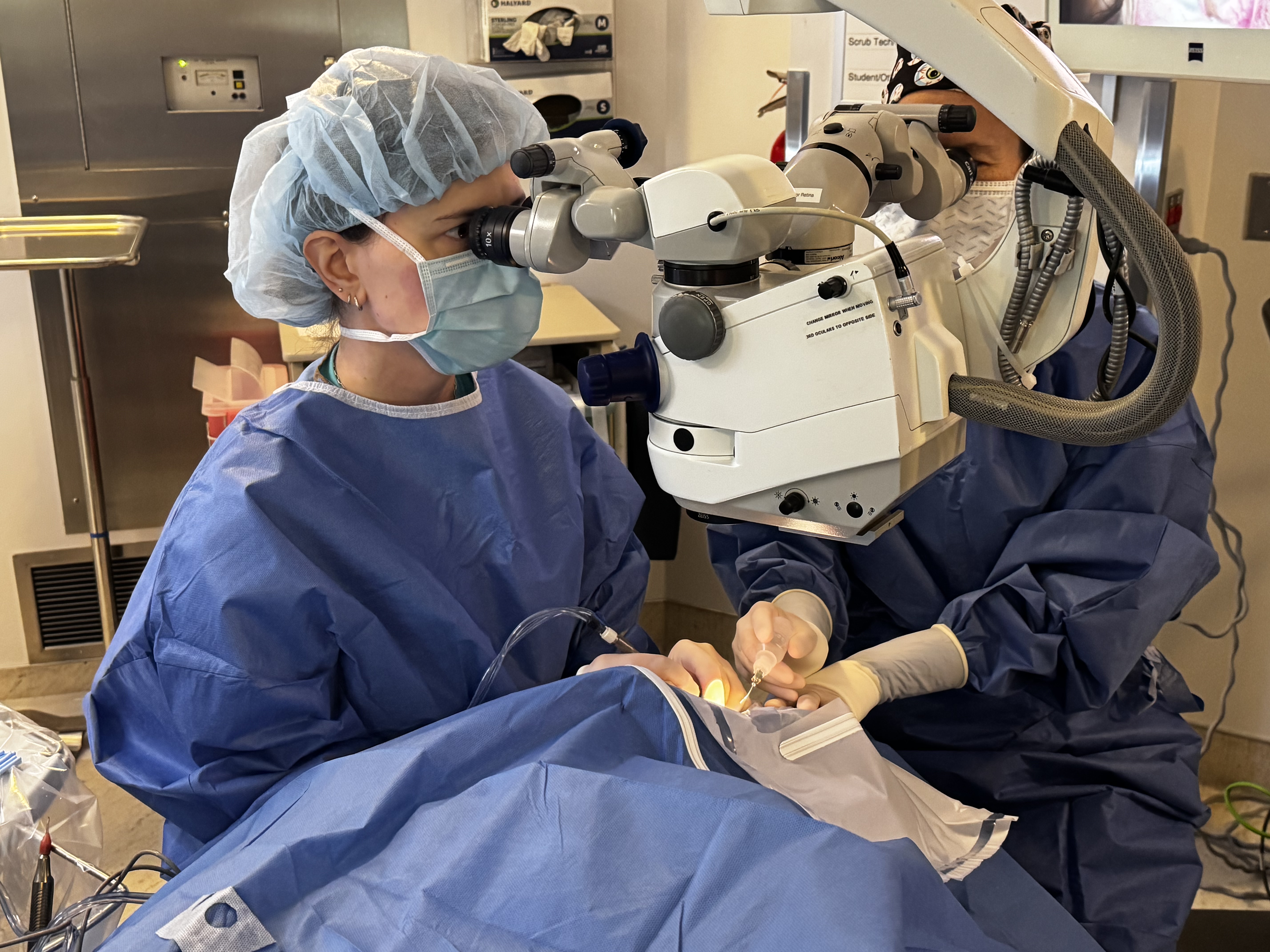
Surgical training is a cornerstone of the Casey glaucoma fellowship, with extensive hands-on experience and direct faculty mentorship.
Operating room experience
- Two scheduled OR days per week, plus frequent add-on and urgent cases
- One-on-one attending supervision, separate from resident cases
- Dedicated continuity clinic OR time
- Video recording for review and feedback
Surgery is typically performed one-on-one with attending faculty, with progressive autonomy and opportunities to staff residents as skills advance.
Core procedures
- Trabeculectomy: Fornix-based, limbus-based, Moorfields safer surgery techniques; primary and revision cases
- Glaucoma drainage devices: Baerveldt, Ahmed, ClearPath, pediatric valves
- MIGS procedures: KDB, OMNI, VIA360, iTrack, Hydrus, iStent, Xen; trabecular bypass stents are frequent among mild glaucoma and many will be performed in your own continuity clinic operating day.
- Cataract surgery: standalone and combined; routine and complex cases, with and without MIGS, is often half of the surgery day.
- Pediatric glaucoma surgery: Cases are done weekly, including goniotomy, trabeculotomy, pediatric tube shunts, CPC
- Laser procedures: SLT, LPI, YAG capsulotomy, CPC, micropulse, ECP; procedures done in the clinic or OR
Due to the high prevalence of normal tension glaucoma in the region, fellows gain significant experience in primary and complex trabeculectomy, bleb revisions and needling.
Call schedule
We have a full-time hospital service that takes care of daytime consults and surgery. Fellows participate in a limited call schedule, including:
- Two weeks of trauma call per year, consistent with Casey faculty
- In the evenings and after hours during the two weeks of call, fellows staff residents on open globes and see hospital consults on the weekends
Casey’s residency program is consistently ranked among the top programs nationally, and having an active teaching role is really fun for both faculty and fellows.
Research
Research is an integral component of the glaucoma fellowship, supported by strong institutional infrastructure. Learn more about how Casey Eye Institute is advancing vision research.
Areas of focus
- OCT and OCTA imaging (COOL Lab with David Huang, M.D., Ph.D.)
- Artificial intelligence and big data (EHR, SOURCE, COSMOS)
- Basic science research in optic nerve and trabecular meshwork biology
- Outreach and population health research
Expectations and support
Fellows are involved in clinical trials and basic research, and are encouraged to design their own project.
- Submission of at least one abstract to a national meeting, per AUPO guidelines
- Presentation at Casey Eye Institute Research Day in the spring
- Access to statisticians and informatics specialists
Education and didactics
Fellows are both learners and teachers throughout their training. Fellows regularly teach residents and medical students in clinic and conference settings.
Core activities
- Attend weekly Grand Rounds as appropriate
- Attend glaucoma and interdisciplinary journal clubs
- Present 15 minute case presentations at grand rounds a few times per year
- Participate in wet lab and surgical simulation training, which includes access to a local eye bank
- Attend monthly small-group discussions with senior faculty covering topics such as the history of surgical techniques, present day controversies in glaucoma, and more.
Additional opportunities include attending national meetings such as AAO, AGS, and ARVO, as well as regional conferences such as the Annual Casey Eye Symposium, Research Day, and the Oregon Academy of Ophthalmology Annual Meeting. During Glaucoma Day, we bring all device companies together to do wetlabs for glaucoma surgeries.
Outreach opportunities
Fellows are encouraged to participate in outreach activities that broaden understanding of rural, underserved, and global glaucoma care. Participation is optional and tailored to fellow interests.
Fellows may participate in:
- The Casey Community Outreach Program, a mobile clinic providing free eye care in Portland and across rural Oregon
- Global health initiatives, including partnerships in American Samoa
Application process
The Glaucoma Fellowship participates in the AUPO San Francisco Match Program.
- Applications submitted through SF Match at www.sfmatch.org
- Applicants must have completed an ACGME-accredited ophthalmology residency
- Applicants must be eligible for Oregon medical licensure
- Interviews typically held in September or October
Program Leadership
-
-
Appointments and titles
- Associate Professor of Ophthalmology, School of Medicine
- Glaucoma Fellowship Director
-
Specialty
- Ophthalmology
- Glaucoma
-
-
- Aiyin Chen, M.D.
- Head of the Glaucoma Division
-
Appointments and titles
- Associate Professor of Ophthalmology, School of Medicine
- Head, Glaucoma Division
- Fred P. and Joan Thompson Family Endowed Professor
- Associate Glaucoma Fellowship Director
-
Specialty
- Ophthalmology
- Glaucoma
Casey Eye Institute Glaucoma Faculty
-
-
Appointments and titles
- Professor of Ophthalmology, School of Medicine
- International Glaucoma Fellowship Director
-
Specialty
- Ophthalmology
- Glaucoma
- Pediatric Glaucoma
-
-
-
Appointments and titles
- Assistant Professor of Ophthalmology, School of Medicine
- Associate Residency Program Director
-
Specialty
- Ophthalmology
- Glaucoma
- Pediatric Glaucoma
-
-
- John C. Morrison, M.D.
- Jennie P. Weeks Professor
-
Appointments and titles
- Professor of Ophthalmology, School of Medicine
-
Specialty
- Ophthalmology
- Glaucoma
Life in Portland
Portland offers easy access to mountains, coast, and outdoor recreation—all within about an hour of the city. Fellows enjoy a strong sense of community, a vibrant food scene, and a balance between training and life outside of work.

Frequently Asked Questions
-
One fellow is accepted per year, allowing for individualized mentorship, consistent surgical exposure, and progressive independence.
-
No. Starting in 2027, the Casey Eye Institute Glaucoma Fellowship is an independent program. All clinical training, surgery, and mentorship takes place at OHSU.
-
As a tertiary referral center for adult and pediatric glaucoma, we have a catchment area that includes five states, allowing one to participate in care of rare diseases on a regular basis.
The fellowship provides comprehensive training in the medical, laser, and surgical management of glaucoma, including MIGS fellowship training, advanced trabeculectomy techniques, glaucoma drainage devices, and pediatric glaucoma surgery,
Despite national declines in trabeculectomy volume, Casey maintains a strong emphasis on primary trabeculectomy, revisions, and bleb management.
Fellows gain broad exposure to angle-based and bleb-based MIGS, performed as standalone procedures and in combination with cataract surgery.
-
Yes. Fellows participate in a dedicated weekly pediatric glaucoma clinic and assist in the operating room.
-
Surgical cases are typically performed one-on-one with faculty, with increasing responsibility as the year progresses.
-
Fellows are actively involved in surgery every week, with two dedicated OR days and additional cases. You will gain experience across a wide range of glaucoma procedures with increasing independence.
-
Fellows participate in 2.5-3 days of clinic per week, and are designed to be flexible so the fellow is able to join another clinic or the OR to participate in interesting patient cases. Continuity clinic is held one half day a week.
Academic clinics have about 30 - 40 patients per day, allowing for a breadth of types of glaucoma seen, yet also time to slow down to have a complex discussion with a patient or about a case with faculty.
Adult clinics include normal tension glaucoma, classic high tension POAG, juvenile glaucoma, PXG, PDG, UGH uveitic and steroid induced glaucoma.
Pediatric clinic is held weekly with Drs. Edmunds and Gale. In general, the fellow and resident are in separate clinics, so the trainee can work one-on-one with the attending.
-
Yes. Fellows work one-on-one with faculty in both clinic and surgery, allowing for direct teaching, feedback, and mentorship.
-
Yes. Research is encouraged and supported, with access to strong infrastructure and mentorship. Research is an important component of our fellowship program, and per AUPO guidelines, every fellow will submit at least one abstract to a major conference and will present at the Annual Casey Research Day. Fellows can be involved in clinical trials and basic research and are encouraged to design their own project.
-
Yes. Fellows regularly teach residents and medical students and may take on increasing teaching responsibility over the year.
-
Casey offers a highly collaborative, teaching-focused environment with strong support staff, broad clinical exposure, and meaningful surgical experience—all within a respected academic center. Training includes:
- Sustained emphasis on trabeculectomy training, including complex cases, bleb management, and revisions
- Balanced exposure to both MIGS and traditional glaucoma surgery across disease severity
- Meaningful participation in pediatric glaucoma care through dedicated clinic and operating room experience
- Close, one-on-one clinical and surgical mentorship with approachable academic faculty
- Access to internationally recognized research programs in OCT/OCTA imaging, artificial intelligence, and big data
- Exceptional technician and administrative support, allowing fellows to focus on learning and patient care
- A work‑life balance that reflects Casey’s values and the advantages of living in Portland, Oregon
- A genuine commitment to outreach, global ophthalmology, and care for underserved communities