Grand Rounds
Learn through lectures
Attend the Department of Surgery grand rounds to connect with our surgical team and earn continuing medical education credit.
We hold grand rounds conferences in the OHSU auditorium every Monday, typically from 7:30 to 8:30 a.m. Other exceptions are noted in the schedule below.
Many conferences begin with a brief discussion to spotlight topics in research, quality and cultural humility. The spotlight and grand rounds topics are advertised weekly in the Surgical Bulletin and the Chair’s Update email.
Attend grand rounds virtually via Webex.
For more information, contact DoSEvents@ohsu.edu.
Upcoming Grand Rounds
Date: September 7, 2026
Cancelled for Labor Day holiday
Date: September 14, 2026
Topic: “State of the Department”
Presenter: Ken Azarow, MD, FACS, FAAP, Mackenzie Professor and Chair, Department of Surgery and Professor of Surgery, Division of Pediatric Surgery, School of Medicine, OHSU
Date: September 21, 2026 | Trunkey Lecture
Topic: TBD
Presenter: Seth J. Karp, MD, Chair Section of Surgical Sciences, H. William Scott Jr. Chair in Surgery, Professor of Surgery, Biomedical Ethics & Society, and Anesthesiology Surgeon-in-Chief, Vanderbilt University Medical Center
Date: September 28, 2026
Topic: TBD
Presenter: Jeffrey Albright, MD, MBA, FACS, FASCRS, Associate Professor of Surgery, Division of Gastrointestinal and General Surgery, School of Medicine, OHSU
Previous grand rounds and lectures
-
July 6, 2026 | "Pediatric Esophageal and Airway Disease: From Historical Challenges to Modern Reconstruction" | Shawn Izadi, M.D., M.P.H.,General Surgery Resident, Department of Surgery
July 13, 2026 | “The Missing Piece in Surgical Care: Understanding the Microbiome" | Robert Martindale, M.D., Ph.D, Professor of Surgery, Division of Gastrointestinal and General Surgery, Medical Director, Hospital Nutrition Services, Member, Hernia & Abdominal Wall Center (HAWC), Graduate Programs in Human Nutrition
July 20, 2026 | "Clinical Artificial Intelligence at OHSU: Where We Are and Where We Are Headed" | Chris Kelly, M.D., MS, MSMI, MSDS, FAMIA, Chief Health Information Officer, OHSU
July 27, 2026 | "How Can We Propose a Solution When We Don’t Understand the Problem? Addressing the Increased Risk of Primary Liver Cancers in Native Communities" | Skye C. Mayo, M.D., M.P.H., FACS, Professor of Surgery, Division of Surgical Oncology, School of Medicine, Director of Hepatic Arterial Infusion for Advanced Liver Malignancies, OHSU Knight Cancer Institute, School of Medicine
August 3, 2026 | "Mitigating Stereotype Threat in the Medical Education Continuum" | Sunny Nakae, MSW, PhD, Senior Associate Dean for Equity, Inclusion, Diversity, and Partnership, Professor of Medical Education, California University of Science and Medicine
August 10, 2026 | EDUCATION ROUND TABLE | "Resident Research” | Sandy Fang, MD, FACS, FASCRS, Resident Research Director, and Associate Professor of Surgery, Division of Gastrointestinal and General Surgery, School of Medicine, OHSU | “Updates from UME” | Alexandra Bolognese, MD, PhD., FACS, Assistant Professor of Surgery, Division of Abdominal Organ Transplantation, School of Medicine, OHSU | "EPA Summary for General Surgery Training" | John Stowers DO, FACOS, FACS, Assistant Professor, and Associate Program Director, Simulation Education and Robotics, OHSU | "Updates in Clinical Competency Committee” | Raphael Sun, MD, FACS, FAAP, Co-Director of the Fetal Surgery Program, Surgical ECMO Director, PICU Surgical Director, and Associate Professor, Division of Pediatric Surgery, School of Medicine, OHSU
August 17, 2026 | "Surgery, Fix Your Learning Environment! Why Mistreatment of Students is More than Just a Clerkship Problem" | Justin Wagner, MD, FACS, FAAP, Associate Professor, Division of Pediatric Surgery, Co-Chair, Surgery Clerkship, David Geffen School of Medicine of UCLA
August 24, 2026 | FACULTY DEVELOPMENT | "Delivering and Receiving Effective Feedback: Strategies from Positive Leadership" | Marie Soller, MD, Associate Professor of Psychiatry, Director of the Resident and Faculty Wellness Program (RFWP) and the SoM Peer Support Program, School of Medicine, OHSU
August 31, 2026 | FACULTY DEVELOPMENT | "Turning Your Teaching into Scholarship: A 5-step Approach for Surgical Educators" | Lalena M Yarris, MD, MCR, Professor, OHSU Department of Emergency Medicine, DEM Vice Chair for Education, Emergency Medicine Education Scholarship Fellowship Co-Director, Co-Director, Education Scholars Program, Deputy Editor, Journal of Graduate Medical Education, School of Medicine, OHSU
-
July 7, 2025 | “Surgery for Melanoma: Past, Present, and Future” | John Vetto, M.D., FACS, FASA, Professor of Surgery, Division of Surgical Oncology, School of Medicine, Professor of Dermatology, School of Medicine, OHSU
July 14, 2025 | “Eat Well, Heal Well: Top 10 Nutrition Strategies for Surgical Patients and Surgeons in 2025” | Robert Martindale, M.D., Ph.D, Professor of Surgery, Division of Gastrointestinal and General Surgery, Medical Director, Hospital Nutrition Services, Member, Hernia & Abdominal Wall Center (HAWC), Graduate Programs in Human Nutrition, School of Medicine, OHSU
July 21, 2025 | “Lessons from Mentors: On Career Satisfaction, Happiness, and Avoiding Really Bad Central Venous Complications” | Timothy Liem, M.D., M.B.A., FACS, Professor of Surgery, Division of Vascular Surgery, School of Medicine, OHSU
July 28, 2025 | “We Want to Put the WOW in OHSU’s Obesity Care: Weight Optimization & Wellness” | Nancy Puzziferri, M.D., M.S., D.A.B.O.M., FACS, Associate Professor of Surgery, Division of Bariatric Surgery, Director, Medical Weight Loss Management Program, Surgery, Division of Bariatric Surgery, School of Medicine, OHSU; Jaymey Sweeney, R.N., M.N., F.N.P.-C., Instructor of Surgery, Division of Bariatric Surgery, School of Medicine, OHSU
August 4, 2025 | FACULTY DEVELOPMENT | “From Monologue to Dialogue: Activating Learners in Large Group Settings” | Leila Zuo, M.D., Associate Professor & Associate Residency Program Director, Department of Anesthesiology & Perioperative Medicine, OHSU
August 11, 2025 | FACULTY DEVELOPMENT | “From Reaction to Reflection: Reframing Feedback with Practical Tools for Surgical Faculty and Trainees” | Giana Davidson, M.D., M.P.H., Professor of Surgery, Health Systems & Population Health Section Head, Emergency General Surgery, and Interim Associate Dean for Faculty Affairs, School of Medicine, University of Washington
August 18, 2025 | FACULTY DEVELOPMENT | “Carving a Path in Academic Medicine: Tips, Tools, and Resources” | Andrea Cedfeldt, M.D., FACP, Associate Dean for Faculty Development and Professor of Medicine, Division of General Internal Medicine and Geriatrics, School of Medicine, OHSU
August 25, 2025 | “Reading, Researching, and Writing – Lessons Learned” | Walter L. Biffl, M.D., FACS, Division Head, Trauma/Acute Care Surgery, N. Paul Whittier Chair of Trauma, Vice Chair of the Department of Surgery, Scripps Clinic Medical Group
September 1, 2025 | Cancelled for Labor Day holiday
September 8, 2025 | “State of the Department” | Ken Azarow, M.D., FACS, FAAP, Mackenzie Professor and Chair, Department of Surgery and Professor of Surgery, Division of Pediatric Surgery , School of Medicine, OHSU
September 15, 2025 | FACULTY DEVELOPMENT | “The Hidden Curriculum of Trust: Cultivating Interpersonal Excellence in Surgery” | Gurjit Sandhu, Ph.D., Professor of Surgery & Learning Health Sciences, Director, Center for Surgical Training and Research, Director, ASE Surgical Education Research Fellowship, Michigan Medicine, University of Michigan
September 22, 2025 | “School of Medicine Update and Q&A” | Nathan Selden, M.D., Ph.D., FACS, FAAP, Professor of Neurological Surgery, Dean, Office of the Dean, School of Medicine, and Executive Vice President, OHSU
September 29, 2025 | “Crucial Conversations” | Richard Birke, J.D., Senior Vice President at JAMS & Executive Director of JAMS Institute
October 6, 2025 | “Management of Type B Dissection in 2025” | Chad Hughes, M.D., Professor and Chief, Section of Aortic Disease, Divisions of Thoracic and Cardiovascular Surgery & Vascular and Endovascular Surgery, Director, Duke Center for Aortic Disease, Surgical Director, Duke Center for Structural Heart Disease, Duke University Medical Center Durham, NC
October 13, 2025 | “Transplant Oncology Converging Old Barriers with New Solutions” | Maria B. Majella Doyle, M.D., MBA, FRCS, Mid-America Transplant / Department of Surgery Distinguished Endowed Chair in Abdominal Transplantation, Section of Transplant Surgery, Director of Clinical Faculty Development, Executive Vice Chair, Department of Surgery, Washington University, and Director of the Liver Transplant Program, Barnes-Jewish Hospital and St. Louis Children’s Hospital
October 20, 2025 | “Surgical Considerations in Extreme Premature Infants” | Mubeen Jafri, M.D., FACS, FAAP, Professor and Head of the Division of Pediatric Surgery, School of Medicine, OHSU
October 27, 2025 | TRUNKEY LECTURE | “From Boston to Baghdad: Top 10 Lessons for Mass Casualty / Disaster Scenarios” | Matthew Martin, M.D., FACS, Director of Acute Care Surgery Research and Chief of Emergency General Surgery, Division of Trauma and Acute Care Surgery, Los Angeles County + University of Southern California Medical Center
November 3, 2025 | Trauma lecture | "How to Create Evolution & Win Your Quality Initiative" | Justin Regner, M.D., FACS, Associate Professor, Trauma Medical Director & Head, Division of Trauma, Critical Care and Acute Care Surgery, School of Medicine, OHSU
November 10, 2025 | PROFESSIONALISM WEEK | "Professionalism begins with you" | Moderator: Andreas Lauer, M.D., Professor and Chair of Ophthalmology, Director of the Casey Eye Institute, School of Medicine, OHSU | Panelists: Kate Renkosiak, M.D., Urogynecology fellow, OHSU | Amanda Amling, M.S.N., RN, CNOR, Director of CEI Perioperative Services, OHSU | Banning Hendriks, M.B.A., Vice President, Patient Experience and Relations, OHSU | Cristian Valenzuela, M.D., FACS, FSSO, Assistant Professor of Surgery, Division of Surgical Oncology, School of Medicine, OHSU | Brandon Togioka, M.D., Associate Professor and Vice Chair for Clinical Research, Anesthesiology and Perioperative Medicine, School of Medicine, OHSU
November 17, 2025 | KRIPPAEHNE LECTURE | "The Surgical Education Matrix—Collaborating to Improve Outcomes in Training" | Amit Joshi, M.D., FACS, Associate Dean for GME / Designated Institutional Official and Professor of Surgery, Cooper Medical School of Rowan University and Editor-in-Chief of the American Board of Surgery’s Surgical Council on Resident Education
November 24, 2025 | "What We Know About Diverticulitis" | Liana Tsikitis, M.D., M.B.A, M.C.R., FACS, FASCRS, Professor of Surgery, Division of Gastrointestinal and General Surgery, School of Medicine, OHSU
December 1, 2025 | “Expectations - An Integral Part of Surgical Outcomes” | Jens Berli, M.D., M.B.A., Associate Professor and Head of Plastic & Reconstructive Surgery, School of Medicine, OHSU
December 8 , 2025 | “Current Management of Rectal Prolapse” | Kim Lu, M.D., FACS, FASCRS, Professor of Surgery, Division of Gastrointestinal and General Surgery, School of Medicine, OHSU
December 15, 2025 | "Congenital Diaphragmatic Hernia - Consistently Inconsistent: How Can We Do Better?" | Raphael Sun, M.D., FACS, FAAP, Associate Professor of Surgery and Fetal Surgery Program Co-Director, Division of Pediatric Surgery, and Associate Professor of Surgery, Obstetrics and Gynecology, School of Medicine, OHSU
December 22, 2025 | "Trends in Emergency General Surgery" | Jacinta Robenstine, M.D., Assistant Professor of Surgery, Division of Trauma, Critical and Acute Care Surgery, School of Medicine, OHSU
December 29, 2025 | "Updates on Surgical Clerkship" | Alexandra Bolognese, M.D., Ph.D., F.A.C.S., Assistant Professor of Surgery, Division of Abdominal Organ Transplantation, School of Medicine, OHSU
January 5, 2026 | Abdominal Wall Surgery lecture | Maggie Bosley, M.D., Assistant Professor of Surgery, Division of Gastrointestinal and General Surgery, School of Medicine, OHSU
January 12, 2026 | Vascular Surgery lecture | Neal Barshes, M.D., M.P.H., Associate Professor of Surgery, Division of Vascular Surgery & Endovascular Therapy and Program Director of the Vascular Surgery Independent Fellowship Program, Michael E. DeBakey Department of Surgery, Baylor College of Medicine, and Chief of Vascular Surgery Section , Michael E. DeBakey VA Medical Center
January 19, 2026 | Cancelled for Martin Luther King, Jr. holiday
January 26, 2026 | "Unseen Particles, Unseen Consequences: Microplastics and Disease Risk" | Robert Martindale, M.D., Ph.D, Professor of Surgery, Division of Gastrointestinal and General Surgery, Medical Director, Hospital Nutrition Services, Member, Hernia & Abdominal Wall Center (HAWC), Graduate Programs in Human Nutrition, School of Medicine, OHSU
February 2, 2026 | Research Fair I | Moderated by Sandy Fang, M.D., FACS, FASCRS, Resident Research Director, Associate Professor of Surgery, Division of Gastrointestinal and General Surgery, School of Medicine | Presented by Residents (TBD)
February 9, 2026 | Research Fair II | Moderated by Sandy Fang, M.D., FACS, FASCRS, Resident Research Director, Associate Professor of Surgery, Division of Gastrointestinal and General Surgery, School of Medicine | Presented by Residents (TBD)
February 16, 2026 | Cancelled for Presidents’ Day holiday
February 23, 2026 | Community Access & Engagement lecture | Harry Papaconstantinou, M.D., Colon and Rectal Surgeon, Baylor Scott & White Health | Tony Picchioni, Ph.D., Baylor University Medical Center, Baylor Scott & White Health
March 2, 2026 | An Update from the Vice Chairs: Research, Quality & Operations at VA Portland Health Care System, Community Access and Engagement, Regional Strategy & Surgical Operations, and Research presented by Jonathan Brody, Ph.D., Vice Chair of Research, Associate Director of the Brenden Colson Center for Pancreatic Care, Co-Leader of Healthy Oregon Project, Gerlinger Surgical Chair, and Professor of Surgery, Department of Surgery, School of Medicine; Daniel Clayburgh, M.D., Ph.D., FACS, Vice Chair of Quality & Operations at VA Portland Health Care System and Associate Professor of Otolaryngology, Head and Neck Surgery, School of Medicine; Tatiana Hoyos Gomez, M.D., Director of Community Access and Engagement and Assistant Professor of Surgery, Division of Trauma, Critical Care & Acute Surgery, School of Medicine; Sherene Shalhub, M.D., M.P.H., FACS, DFSVS, Vice Chair of Regional Strategy & Surgical Operations, John Porter, M.D. Endowed Professor in Vascular Surgery, Co-Director of OHSU's Heart and Vascular Service Line, and Professor & Head of Vascular Surgery, School of Medicine; OHSU
March 9, 2026 | Thoracic Surgery lecture | Jeffrey Velotta, M.D., Kaiser Permanente Oakland Medical Center, and Clinical Assistant Professor, Department of Surgery, UC San Francisco School of Medicine
March 16, 2026 | An Update from the Vice Chairs: Advanced Practice Providers, Education, Quality & Operations, and Administration presented by: Mindy Hamilton, PA-C, Vice Chair of Advanced Practice and Instructor of Surgery, Division of Trauma, Critical Care & Acute Care Surgery, School of Medicine; Farah Husain, M.D., FAC, FASMBS, Vice Chair of Education, Professor of Surgery, Division of Foregut and Metabolic Bariatric Surgery, School of Medicine; Sanjay Krishnaswami, M.D., FACS, FAAP, Vice Chair of Quality & Operations, Educational Director & Associate Program Director for the Pediatric Surgery Fellowship, Surgeon-in-Chief of Doernbecher Children's Hospital, and Professor of Surgery, Division of Pediatric Surgery, School of Medicine; Liana Tsikitis, M.D., M.B.A., M.C.R., FACS, FASCRS, Vice Chair of Quality & Operations, Professor of Surgery, Division of Gastrointestinal and General Surgery, School of Medicine, Mark Valadez, M.S, Vice Chair of Administration, Departments of Surgery & Urology, School of Medicine, OHSU
March 23, 2026 | “Gamma Prime Fibrinogen: The Clot Thickens...” | David Farrell, Ph.D., F.A.H.A., Founder and Chief Scientific Officer of Gamma Therapeutics Inc., and Professor of Surgery, Division of Trauma, Critical Care and Acute Surgery, School of Medicine, OHSU
March 30, 2026 | Surgeon-Scientist Dyad - " Intraoperative Nerve Visualization Utilizing Nerve-Specific Near Infrared NT-024 to Guide Rectal Cancer Surgery” | Sandy Fang, M.D., FACS, FASCRS, Resident Research Director, Associate Professor of Surgery, Division of Gastrointestinal and General Surgery, School of Medicine, OHSU | Summer Gibbs, Ph.D., Professor of Biomedical Engineering, Douglas Strain Professorship, Biomedical Engineering Graduate Program, OHSU Knight Cancer Institute, School of Medicine, OHSU
April 6, 2026 | “Personal Finance Fundamentals & Common Mistakes to Avoid” | Krishna Bandi, M.D., Assistant Professor of Diagnostic Radiology, School of Medicine, OHSU | Katherine Barton, M.D., Associate Professor of Diagnostic Radiology, School of Medicine, OHSU
April 13, 2026 | “The Surgeon, Humanist and Technician: A Contemporary Paradox” | Fabrice Jotterand, Ph.D., M.A., Director, Center for Ethics in Health Care, Cornelia Hayes Stevens Endowed Chair, and Professor, Medical Ethics, Academic Affairs, OHSU
April 20, 2026 | LIU LECTURE | “From Cutting Surgical Edge to Systemic Therapy: Contemporary iCCA Management" | Tim Pawlik, M.D., Ph.D., MPH, Surgeon-in-Chief and Surgical Oncologist, Ohio State University Wexner Medical Center
April 27, 2026 | NW Collaborative Visiting Professor | “How to Train Your (Attending) Dragon: Developing Successful Programs in Complex Aortic Surgery” | Marko Boskovski, M.D., MHS, MPH, Associate Program Director of the Thoracic Surgery Residency Program, Director of Ross and Aortic Valve Preserving Surgery, Assistant Professor, Department of Surgery, School of Medicine, UCSF
May 4, 2026 | "Lymphedema: From Origins to Intervention —and What Comes Next" | Laura Tom, M.D., Clinical Associate Professor of Surgery, Division of Plastic and Reconstructive Surgery, School of Medicine, OHSU
May 11, 2026 | "Necessity is the Mother of Invention: Innovation and Health Challenges from COVID-19 to Bionic Arms" | Sherene Shalhub, M.D., M.P.H., FACS, DFSVS, Professor and Head of Vascular Surgery, Co-director of OHSU’s Heart & Vascular Service Line, and Vice Chair of Regional Strategy & Surgical Operations, Division of Vascular Surgery, School of Medicine, OHSU
May 18, 2026 | Schwartz Rounds
May 25, 2026 | Cancelled for Memorial Day
June 1, 2026 | "Age Friendly Health Systems implementation at OHSU" | Elizabeth Eckstrom, M.D., MPH, Professor of Medicine, Division of General Internal Medicine and Geriatrics, and Helen Jo Whitsell Endowed Professorship in Geriatric Medicine, School of Medicine, OHSU | Katie Schenning, M.D., MPH, MCR, Perioperative Medicine Clinic Assistant Director, and Associate Professor of Anesthesiology and Perioperative Medicine, School of Medicine, OHSU
June 8, 2026 | "EUS-Guided Gallbladder Drainage: Are We Ready for Prime Time?" | Emily Jonica, M.D., Assistant Professor of Medicine, Division of Gastroenterology and Hepatology, School of Medicine, OHSU
June 15, 2026 | "Introduce the PEMSTAR Trauma project and its initial results to the rest of the Department" | Lucas McDuffie, M.D., Assistant Professor of Surgery, Division of Pediatric Surgery, School of Medicine, OHSU
June 22, 2026 | CAMPBELL LECTURE | "Competence: You Know It When You See It" | Cynthia Downard, M.D., Director of Surgical Critical Care at Norton Children’s Hospital, Hirikati S. Nagaraj Endowed Professor in Pediatric Surgery, University of Louisville
June 29, 2026 | "A New Era of Improved Treatment for Advanced Pancreatic Cancer - Can We Translate This Into More Cures?" | Michael J. Pishvaian, MD, PhD, Associate Professor of Surgery, Department of Oncology, John Hopkins University, School of Medicine, Washington DC
Endowed Lectureships
-
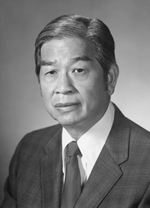
Dr. Sam Liu arrived to the United States from his native China at age 14 in 1925. Sam and his brother settled in Portland where he began his education at Shattuck School. His first priority was to learn English. Sam graduated from Portland’s Lincoln High School in 1932, at the height of the depression, and worked a paper route to help make ends meet. One of his teachers at Lincoln helped him obtain a scholarship and he enrolled at Reed College, majoring in biology and chemistry.
It was less expensive for Dr. Liu to live off campus. That, coupled with the fact that biology majors worked long hours in the basement, meant he didn’t have much of a social life during his college years. But he still had his paper route. Dr. Liu wanted to attend medical school but didn’t know how he’d pay for it. The answer came when he and his brother got summer jobs at a fish cannery in Ketchikan, Alaska after his second year at Reed. Dr. Liu returned to Alaska every summer throughout medical school and that paid the bills.
When he graduated from OHSU (then, the University of Oregon Medical School) in 1939, Dr. Liu discovered that the medical school had not arranged an internship for him. He found his own at the Jersey City Medical Center in New Jersey and stayed on for his surgical training. With America’s entry into World War II, Dr. Liu knew he would be drafted like some of his classmates, so he enlisted. He was assigned to the surgical section of the U.S. Army 60th Station Hospital, which was attached to the Air Force’s 42nd Bomber Wing. They landed in Oran, Algeria, and were deployed to Tunis where they established a hospital at the Northern edge of the Sahara Desert. When asked about his most vivid memory of those days, Dr. Liu stated, “Boy, was it hot there!”
His unit stayed in the Mediterranean theater for two and a half years. After the surrender of Germany, his unit was ordered to the Philippines via the Panama Canal for the invasion of Japan. Dr. Liu and the members of the hospital unit were extremely disappointed at not being allowed to go home. With the surrender of Japan shortly after their arrival in the Orient, they re-boarded the ship and returned through the Canal, sailing at long last into Boston Harbor. “Well,” said Dr. Liu, “you can imagine what a welcome sight that was, to see Boston after such a long journey.”
Dr. Liu returned to Portland after his discharge where he and his wife Betty raised and educated four children. In 1987, Dr. Liu retired from his successful private surgical practice in Portland and moved to Tiburon, Calif. with his wife where they enjoyed traveling, bird watching and reading. Dr. Liu passed away in 2005 at the age of 93 years.
Always a generous supporter of the OHSU School of Medicine, Dr. Liu was a member of the 1887 Society and funded the Sam Liu endowed lectureship in the Department of Surgery in 2001. “I always valued education,” Dr. Liu commented, “and I wanted to give students and doctors another opportunity to learn.”
Previous lecturers
2025 | Peter J. Allen, M.D., FACS, Cancer Services Duke University | "Transitioning from Early Detection to Prevention to Interception: The Opportunity of IPMN"
2024 | Sharon S. Lum, M.D., M.B.A., F.A.C.S., Loma Linda University School of Medicine | “The Parallel Histories of Breast Cancer Treatment and Health Policy: Lessons for Leadership”
2023 | Cancelled
2022 | Charles Yeo, M.D., F.A.C.S., Philadelphia University and Thomas Jefferson University | “Thomas Eakins’ Masterpiece: The Gross Clinic”
2021 | Julie Ann Sosa, M.D., M.A., F.A.C.S., University of California, San Francisco
2020 | Herbert Chen, M.D., F.A.C.S., University of Alabama at Birmingham | "Top Ten Strategies for Success in Academic Surgery"
2019 | David P. Jaques, M.D., F.A.C.S., Washington University (retired) | "Be Your Own Triple Threat: A Primer for Young Attending Surgeons"
2018 | David W. Mercer, M.D., F.A.C.S., University of Nebraska Medical Center | "Attributes of a Surgical Leader"
2017 | Samuel R.G. Finlayson, M.D., M.P.H., F.A.C.S., University of Utah School of Medicine | "Surgery and the Triple Aim"
2016 | Richard D. Schulick, M.D., M.B.A., F.A.C.S., University of Colorado Anschutz Medical Campus | "Pancreatic cancer and surgery: What's new"
2015 | Selwyn M. Vickers, M.D., University of Alabama | "Update on pancreatic cancer translational research UAB/MINN pancreatic SPORE"
2014 | Han-Kwang Yang, M.D., M.S., Ph.D., Seoul National University College of Medicine | "Redefining gastric cancer surgery: Open, laparoscopic vs. robotic"
2013 | Mark A. Talamini, M.D., Stony Brook School of Medicine | "Future of surgery"
2012 | Mark A. Malangoni, M.D., F.A.C.S., Associate Executive Director, American Board of Surgery | "The path of surgical education: What direction will we take?"
2011 | Stephen F. Lowry, M.D., M.B.A., UMDNJ-RWJ Medical School | "Allostasis on my mind: New concepts in the assessment of inflammatory risk"
2010 | Michael J. Zinner, M.D., Harvard Medical School | "Evolution of Healthcare in America: Where did we come from and where are we going?"
2009 | Tom R. DeMeester, M.D., University of Southern California School of Medicine | "The evolution of esophagectomy"
2008 | John L. Cameron, M.D., Johns Hopkins University School of Medicine | "John Shaw Billings: An unsung hero in American surgery"
2007 | Alden H. Harken, M.D., University of California, San Francisco | "Anyone can treat cardiac arrhythmias"
2006 | Carlos A. Pellegrini, M.D., University of Washington School of Medicine | "Immigration and surgery in America: Lessons about life and the pursuit of happiness"
2005 | C. Wright Pinson, M.D., M.B.A., Vanderbilt University School of Medicine | "History of transplantation"
2004 | John Wong, M.D., University of Hong Kong | "Challenges in managing esophageal cancer: Lessons learned from 2,400 patients"
2003 | Heidi Nelson, M.D. Mayo Clinic | "Rectal cancer: Current management strategies and sorting through the options"
2002 | Thomas J. Fogarty, M.D., Stanford Medical School | "Progress in the treatment of peripheral vascular disease"
2001 | Ira M. Rutkow, M.D., M.P.H., Ph.D., The Hernia Center | "Hernia surgery in the new millennium"
-
The early years
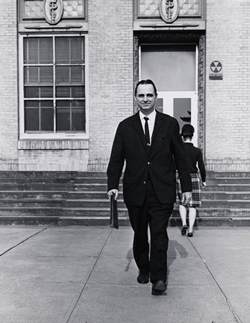
Rooted in the Pacific Northwest, William Wonn Krippaehne was born November 3, 1917 in the thriving gold mining town of Douglas, Alaska, located a few miles south of Juneau. His father was a gold mining engineer, and his mother a nurse. By the time William was four years old the gold mine had closed, and the family moved to Puyallup, Washington. As a boy, William acquired a love for fishing that remained a source of recreation and relaxation for the remainder of his life. He showed early skill with his hands, and learned machine tooling. When he started at the University of Washington he was an engineering student. During college he worked at Boeing Industries in Seattle where he, despite only being in his early 20’s, demonstrated his leadership skills, and was appointed to head a group of 50 men who were tooling the first production model of the B-17 bomber. Although successful as an engineering student, William Krippaehne was attracted to zoology, the study of which led him into teaching. He reported 15 years later that “I have always been interested in academic work, having taught Zoology Laboratories at the University of Washington.” While in his junior year at the University of Washington he decided to become a physician, and one day during his senior year at the University of Washington he drove down to Portland, successfully interviewed and started what would be a 40-year relationship with the University of Oregon’s Medical School.
“There were mornings when he and the other nascent military medical officers would march in their uniforms behind Mackenzie Hall.”
William Krippaehne graduated from the University of Washington in 1943, the middle of the Second World War, and like most of his generation was inducted into the Army. Thus he entered the Pacific Northwest’s only medical school, the University of Oregon, as an army enrollee. There were mornings when he and the other nascent military medical officers would march in their uniforms behind Mackenzie Hall. With the war, there was a three year accelerated medical school curriculum, and he graduated in June 1946. Following graduation he was appointed an intern at the University of Oregon Medical School & Clinics working at the Multnomah County Hospital.
“He was the only doctor for 7,000 soldiers and dependents.”
In the summer of 1947, as the 30-year-old William Krippaehne, M.D. completed his internship, he was commissioned as Lieutenant in the U.S. Army. For the only time in his professional life, he left Oregon. For eighteen months he was a battalion surgeon assigned to the 3rd Battalion, 6th Armored Cavalry garrisoned in occupied Germany at Degerndorf, close to the Austrian border. He was the only doctor for 7,000 soldiers and dependents. With a promotion to Captain in the last six months of his military service, he was transferred to the 250th Medical Station Hospital and was more involved in surgery. His service in the Army ended in the summer of 1949 as tensions eased from confrontation with the Soviets during the time of the Berlin Airlift.
From Student to Chairman
Dr. Krippaehne returned to the University of Oregon Medical School in July 1949 and applied for a surgery training position under Chairman of Surgery Dr. W.K. Livingston. Dr. Livingston was the first “full time” chairman of surgery at Oregon, appointed in 1948, although some would describe him as a “desk surgeon.” For the next four years Dr. Krippaehne learned the art and science of surgery working in the hospitals and clinics located on the hill overlooking Portland.
An important event during those years was William Krippaehne’s marriage on November 19, 1949, to Dr. Marion C. Larsen, a graduate of the University of Oregon Medical School in 1948. Dr. M. Krippaehne was a pioneer in her own right, pursing a medical career at the University of Oregon in experimental medicine (hematology) and then practicing internal medicine until she retired as full Professor in 1988. Throughout the Krippaehne’s marriage they lived in homes close to the University Hospitals where they both worked, and raised seven children, all of whom went on to complete post-graduate levels of education in diverse fields.
In June 1953, Dr. Krippaehne completed his residency. He had acquired an interest in oncology, and he hoped to move to New York and study at Memorial Hospital for Cancer and Allied Diseases. However, Dr. Livingston convinced him to remain and join the faculty as an Instructor in Surgery. In 1955 he was promoted to Assistant Professor. In the winter of 1958, Dr. J. Englebert Dunphy, a Professor of Surgery at Harvard Medical School, was convinced to accept the position of Chairman of Surgery by Dean David W.E. Baird, M.D. Dr. Dunphy requested from the faculty a letter describing their “present activities and plans for future activities.” Dr. Krippaehne wrote to Dr. Dunphy, who was still in Boston, “During the last five years my knowledge and experience in surgery has broadened through close work in a 75-bed surgical ward. Insight and administration and its problems have been learned and experience gained as a result of tutoring by Dr. Livingston and Dr. Peterson (the interim chair of surgery after an illness compelled Dr. Livingston to step down) and by their willingness to pass on a part of their load. Teaching experience has been gained by instructing freshman and sophomores during Dr. Livingston's illness and currently by teaching junior and senior courses."
"Dr. Paxton reported that when Dr. Dunphy was asked who ran the Department in his absence he responded, 'Why Bill Krippaehne, the same fellow who runs it when I am in town!'"
Chairman Dunphy not only retained Dr. Krippaehne on the faculty but soon depended upon him. Dr. Harold Paxton, the Chief of the Division of Neurosurgery within the Department of Surgery from 1967 to 1991, recalled that Dr. Dunphy was frequently away from Oregon during his tenure as chairman attending to national surgical business, including year-long events related to his appointment in 1964 as the President of the American College of Surgeons. Dr. Paxton reported that when Dr. Dunphy was asked who ran the Department in his absence he responded "Why Bill Krippaehne, the same fellow who runs it when I am in town!" After five years as chairman, Dr. Dunphy left Oregon to become chairman at the University of California, San Francisco. Dr. Dunphy recommended to Dean Baird that Dr. Krippaehne be appointed Acting Head of the Department of Surgery. Within one year Dr. Krippaehne was promoted to full Professor, and appointed Chairman on July 15, 1964, a position he held for 20 years. Thus, within 11 years of joining the faculty Dr. Krippaehne had risen to the position of the Kenneth A. J. Mackenzie Professor and Chairman of Surgery.
The Art of Establishing the Diagnosis
Dr. Krippaehne loved to teach. One observer described him as an “indefatigable teacher,” delivering countless lectures to students. The graduating medical student class three times, in 1961, 1965 and 1971, voted Dr. Krippaehne the recipient of the Allan J. Hill, Jr. Teaching Award. Dr. Krippaehne’s principal goal was to inculcate students and residents with not only the skills of accurately evaluating a patient, but also with the intellectual rigor that enabled them to organize a rational list of differential diagnoses. One reason many of his trainees recall Dr. Krippaehne as an extraordinary teacher was that he communicated to the student a shared interest in learning. No one recalls Dr. Krippaehne ever being dismissive or derogatory with a student or resident. Those who learned from Dr. Krippaehne had the sense he was a teacher striving to help them to learn. He made it clear the importance of their mutual educational endeavor was that it directly determined the trainee’s capacity to care for patients. For many of the surgeons trained by Dr. Krippaehne it was his steadfast teaching at the bedside and patient guidance in the operating room that had the greatest influence on their professional development.
"The hallmark of Dr. Krippaehne as a teacher was his morning rounds."
Students and residents attended his early morning teaching conference for over thirty years and learned by his demonstration the art of establishing the diagnosis. Dr. Krippaehne's teaching rounds occurred every weekday on one of the surgery wards in Multnomah County Hospital or University Hospital. Dr. Krippaehne would arrive at 7 a.m., and the surgery team, under the direction of the Chief Resident, would present a case to the Professor. Facing the serious and fully attentive Dr. Krippaehne, the student or junior resident would present a patient he or she currently was treating, summarizing the medical history and findings upon physical examination. Dr. Krippaehne would often visit the bedside where, through questions or observations, the Professor's gentle reassuring manner would regularly lead to the patient providing additional pertinent information that had been missed by the surgical team. Teaching rounds would culminate with Dr. Krippaehne at the chalk board recording the team's list, in order of probability, of differential diagnoses. He would say: "Now if what you have reported is correct then the diagnosis should be..." Dr. Krippaehne was a master diagnostician. Dr. Robert DuPriest (chief resident, 1974-75) recalls that at these one hour morning rounds, "Dr. Krippaehne assumed that you knew the surgical literature. What he really cared about was how one reasoned, how you solved clinical problems in a rationale manner." These morning rounds were identified by many of his residents as fundamental in preparation for their careers.
Leading with a 20-year vision
Dr. Krippaehne considered training surgeons as his most important educational endeavor. He was universally respected and in many cases beloved by the residents because they knew he cared about them and he wanted them optimally prepared to accomplish the careers they chose. Dr. Krippaehne was not the type of surgical professor who tried to mold and direct his trainees along a prescribed career pathway. Instead, Dr. Krippaehne inspired many of the surgery residents and played a pivotal role in helping them select their careers. He was invariably polite, plainly fair and genuinely respectful with the residents. Dr. Quentin MacManus (chief resident, 1977-78) recalls Dr. Krippaehne as, "A kind, engaging and compassionate man, patient with students and residents, and remarkably humble despite being one of the smartest men I have ever known."
Dr. Krippaehne's influence on education at Oregon's Medical School was more than as a teacher; he was a leader in modifying the curriculum for medical students. As Chairman of the Curriculum Committee in the first half of the 1970's, Dr. Krippaehne was instrumental in the transition of medical student education from the old method of teaching, which linked individual topics to various Departments (i.e. biochemistry, pharmacology), to a new method that taught students to understand pathologies as they relate to organ systems. This transition was contentious, but Dr. Krippaehne's prestigious vision and steady leadership enabled consensus to be achieved among the faculty and the innovative curriculum implemented. Dr. Krippaehne's contribution to the transition of the curriculum at that time was seen as an enormous achievement; in a letter to Dr. Krippaehne dated July 13, 1977, Dr. Robert Stone expressed his sincere appreciation for Dr. Krippaehne who has been "instrumental in guiding the Curriculum Committee through the most recent major change that has operated very successfully." Dr. Krippaehne was not only a great teacher who could inspire with his individual attention to a single student, he was a visionary in preparing medical students for the rapidly changing practice of medicine he saw in their future.
Dr. Krippaehne made substantial contributions to the training of surgeons in Oregon, not only in his daily interactions with the residents, but also as a Chairman in marshalling a sustained effort over 20 years to foster the Department's growth. He was successful at recruitment and retention of an outstanding surgical faculty. Two of the major recruitments that occurred during his tenure as Chairman were, 1) the recruitment in 1967 of Dr. John Campbell, a fully trained Pediatric Surgeon, who as the Chief of Pediatric Surgery helped establish within the Doernbecher Children's Hospital a fully implemented tertiary care pediatric facility including a pediatric oncology program; and 2) the recruitment of Dr. John Porter who established a Division of Vascular Surgery in the Department of Surgery at Oregon that achieved a worldwide reputation for outstanding clinical research.
In addition to the recruitment of pivotal faculty, he worked to guide the Department of Surgery in the 1970's toward integration of the two independent surgical residencies in Portland at Good Samaritan and St. Vincent Hospitals into the University of Oregon's residency, thereby enhancing the residency program and broadening the educational opportunity of the residents at the University. Dr. Krippaehne was a leader in the training of surgeons because he assiduously husbanded the resources and opportunities to enable the residents to acquire the skills and experiences needed to be successful surgeons. He was a leader as Chairman of the Department because he believed in allowing others to develop their own careers. In the words of his wife Marion, "He trusted people he respected. And in turn, he allowed them a lot of leash to do what they felt needed to be done. And I don't think he made too many mistakes."
"He trusted people he respected. And in turn, he allowed them a lot of leash to do what they felt needed to be done. And I don't think he made too many mistakes." - Dr. Marion C. Krippaehne
Previous lecturers
2025 | Amit Joshi, M.D., F.A.C.S., Cooper Medical School of Rowan University | "The Surgical Education Matrix—Collaborating to Improve Outcomes in Training"
2024 | Jacob Greenberg, M.D., Duke University School of Medicine | “Surgical Psychology 101”
2023 | Brenessa Lindeman, M.D., University of Alabama at Birmingham | “Entrustable Professional Activities: Our Once-In-A-Generation Opportunity to Advance Surgical Education”
2022 | Jamie Coleman, M.D., University of Louisville, Kentucky | "Stress, Sleep, and Surgery: What it means for the surgeon"
2021 | John D. Mellinger, M.D., Southern Illinois University School of Medicine | “Character Matters: A Reflection on Personal Formation for the Surgeon”
2020 | Patricia Turner, M.D., M.B.A., F.A.C.S., The University of Chicago | "Leadership and Systemic Change in Turbulent Times"
2019 | Carla Pugh, M.D., Ph.D., F.A.C.S., Stanford University School of Medicine | "The Quantified Surgeon: Implications for Longitudinal Tracking Using Sensor Technology"
2018 | P.J. Schenarts, M.D., F.A.C.S., University of Nebraska College of Medicine | "The Education of the Modern Learner"
2017 | Jo Buyske, M.D., American Board of Surgery | "With Great Power Comes Great Responsibility: Impacting Surgical Education both Locally and Nationally"
2016 | Rebecca M. Minter, M.D., UT Southwestern Medical Center | "Would I Trust You to Do My Whipple? Progressive Entrustment and Entrustability in the Operating Room"
2015 | Timothy C. Flynn, M.D., F.A.C.S., University of Florida College of Medicine | "Surgeon: What Kind of Job is That?"
2014 | Hilary A. Sanfey, M.B., B.Ch., F.A.C.S., Southern Illinois University School of Medicine | "Assessment and Remediation of Operative Performance"
2013 | Thomas H. Cogbill, M.D., F.A.C.S., Gundersen Health System | "General Surgery Training - Where Are We Now and Where Are We Headed?"
2012 | Mary E. Klingensmith, M.D., Washington University School of Medicine | "Surgical Education: Current Challenges and Future Opportunities"
2011 | Sherry M. Wren, M.D., Stanford University School of Medicine | "There and Back Again: My Journey Through Surgical Education"
2010 | Steven C. Stain, M.D., Albany Medical Center | "How to Best Restructure Surgical Residency Training"
2009 | Gerald M. Fried, M.D., F.A.C.S., F.R.C.S.(C), McGill Centre for Medical Education | "Learning to Operate: From Lab Coats to Simulators to Patients"
2008 | Gary L. Dunnington, M.D., Indiana University | "Measuring Performance in Surgical Education or Bowling Without Pins?"
2007 | Gunnar Ahlberg, M.D., Ph.D. and Stig Ramel, M.D., Stockholm, Sweden | "Integrating Skills Training in Formal Surgical Education"
-
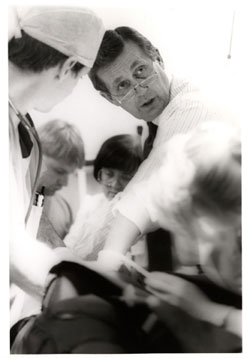
Donald D. Trunkey was born in 1937 in the town of Oakesdale, Washington in the heart of the Palouse region. Early work included farming, mining, hod carrying and carpentry. He attended Washington State University for his undergraduate degree and then went on to medical school at the University of Washington, receiving his medical degree in 1963. Uncertain about medicine or surgery as a career, Dr. Trunkey chose to do a rotating internship at the University of Oregon School of Medicine. After one month on the surgical service, he had no question on what career to pursue.
Dr. Trunkey led an extraordinary life and leaves behind a legacy. His impact at OHSU is only surpassed by the magnitude of his influence on 20th century American surgery.
Up until just a couple years ago, members of the Department of Surgery could find Dr. Trunkey rummaging around his Mackenzie Hall office; he was affectionately known as the pack rat of the department. His quarters were overwhelmed by stacks of journals and texts, various knickknacks and gifts from surgical societies, and filing cabinets full of his life’s work. His bursting-at-the-seams office offered a poignant visual of what 60 years in the field of medicine, surgery and research could amount to.
Dr. Trunkey led and advanced the Department of Surgery as Mackenzie Professor and chair from 1986 to 2001. OHSU successfully recruited him from the University of California, San Francisco, in 1986 to head the department, which was something of a homecoming for Dr. Trunkey. During his early medical training he completed an internship at the University of Oregon Medical School (OHSU’s predecessor) and then trained under Dr. Engelbert Dunphy in California following Dr. Dunphy’s departure as chair in Oregon.
At the time of recruitment, Dr. Trunkey was already an internationally renowned trauma surgeon. He was chief of surgery at San Francisco General from 1977 to 1986 and had established a laboratory to study mechanisms of shock at the cellular level. Like Chair Dr. William Krippaehne, he was commissioned with the U.S. Army and had spent two years in Germany as a general medical officer.
Dr. Trunkey was appointed to the chair role at the same time the state of Oregon was in the midst of developing a statewide trauma system. Five Portland health care institutions were vying to become a designated state trauma center. Dr. Trunkey’s appointment provided a significant boost to OHSU’s application and in 1987, OHSU and Legacy Emanuel were designated as Portland’s only Level 1 trauma centers.
Five years into his term leading the department, the Army activated Dr. Trunkey to serve in the first Gulf War in 1991. He was stationed in Riyadh, Saudi Arabia, during Operation Desert Storm and Desert Shield. He dealt with a number of operational and cultural obstacles that prompted him to publish a commentary in the March 1993 edition of Archives of Surgery called “Lessons Learned.” This document paved the way for how the U.S. Department of Defense trains its trauma personnel today.
Dr. Trunkey’s influence on trauma care was not confined, however, to the military sphere, but was based on a persistent advocacy for optimal treatment of injured patients.
A critical moment in Dr. Trunkey’s career was when he published a paper in 1979 on death rates of trauma patients in the more rural Orange County, California, compared to those in San Francisco County. It was one of the earliest, most persuasive pieces of evidence on the effectiveness of trauma centers. His message was unwavering: injured patients deserve the best trauma care available, and the best care includes an organized trauma system.
Dr. Trunkey’s 15-year leadership tenure led to many achievements for the Department of Surgery. One major development was the extension of the already successful kidney transplantation program to include pancreas and liver transplantation. He led the department’s national growth in stature and in reputation – which continues today.
Dr. Trunkey will be remembered by many in the OHSU community who had the personal pleasure of working with him. Known not only for his deftness in surgery and leadership, but for his pokerfaced sense of humor and characteristic candor, he was well-loved, well-respected and exerted an immeasurable influence.
Previous lecturers
2025 | Matthew Martin, M.D., F.A.C.S., Los Angeles County and University of Southern California Medical Center | “From Boston to Baghdad: Top 10 Lessons for Mass Casualty / Disaster Scenarios”
2024 | Mary Brandt, M.D., Baylor College of Medicine and Tulane University School of Medicine | “Wellness 3.0 – It’s Time for a Revolution”
2023 | Sharmila Dissanaike, M.D., Texas Tech University Health Sciences Center | “Trauma & Burn – Ever Evolving Specialties”
2022 | Douglas W. Hanto, M.D., Ph.D., M.B.E., Harvard Medical School | “Healthcare Reparations for African Americans: Bioethical Rationale and Practical Framework”
2021 | Peter Angelos, M.D., Ph.D., F.A.C.S., M.A.M.S.E., University of Chicago | Towards a New Era in Surgical Ethics"
2020 | Andre Campbell, M.D., F.A.C.S., F.A.C.P., F.C.C.M., University of California San Francisco | "Disparities in Trauma Care In the COVID-19 Era with Reflects on the Pipeline Issues in the Surgical Workforce"
2019 | Amy J. Goldberg, M.D., F.A.C.S., Lewis Katz School of Medicine at Temple University | "From Bench to Bedside: Changing Practice and Saving Lives"
2018 | John Fildes, M.D., University of Nevada Las Vegas School of Medicine | "The One October Shooting in Las Vegas"
2017 | Douglas Wood, M.D., F.A.C.S., F.R.C.S.Ed., University of Washington | "Lung cancer screening: guidelines, policy development and access"
2016 | Leigh Neumayer, M.D., M.S., The University of Arizona Cancer Center | "Regionalization, standardization and the next generation"
2015 | Gregory J. Jurkovich, M.D., University of Colorado School of Medicine | "2,500 trauma deaths: Lessons learned from Surgery M&M Conference"
2014 | David S. Mulder, M.D., M.Sc., F.R.S.C., F.A.C.S., McGill University | "Current management of airway trauma"
2013 | Anna Ledgerwood, M.D., Detroit Receiving Hospital | "Myths in surgical care - A personal perspective"
2012 | Wendy Moore, Freelance Journalist and Author, London, England | "John Hunter (1728-93): the Scottish surgeon who changed the face of American medicine"
2011 | William P. Schecter, M.D., F.A.C.S., F.C.C.M., University of California, San Francisco | "The surgery of poverty"
2010 | LaSalle D. Leffall, Jr., M.D., F.A.C.S., Howard University | "The President's cancer panel - role and impact"
2009 | C. William Schwab, M.D., University of Pennsylvania Medical Center | "Firearm injuries in America: Where are we?"
2008 | J. Wayne Meredith, M.D., Wake Forest University School of Medicine | "Chest trauma for the general surgeon"
2007 | Haile T. Debas, M.D., University of California, San Francisco | "The influence of surgery in the 21st century"
2006 | F. William Blaisdell, M.D., University of California, Davis | "The medical and surgical advances during the Civil War"
2005 | Frank R. Lewis, Jr., M.D., Ph.D., Executive Director, American Board of Surgery | "J. Engelbert Dunphy: An icon in surgical education"
2004 | George Sheldon, M.D., University of North Carolina at Chapel Hill | "John Hunter and the American School of Surgery"
2003 | Julie M. Fenster, Author | "Demonstration of surgical anesthetics"
-
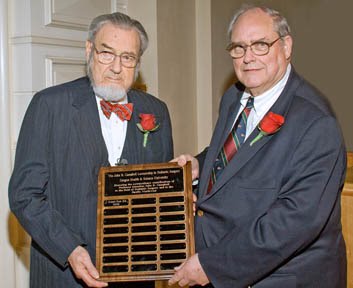
The John R. Campbell, M.D., Lectureship in Pediatric Surgery was established in 2008 as a tribute to an outstanding teacher and the first pediatric surgeon in the state of Oregon.
John "Jack" Campbell was born in 1932 in Pratt, Kansas. His father was a general practitioner, and as a child Campbell often spent time with his father on rounds and in the office. That early experience led Campbell to pursue a medical career of his own, receiving his medical degree from the University of Kansas School of Medicine in 1958. He then graduated from the University of Kansas Medical Center general surgery residency (1959-63) and went to the Children's Hospital of Philadelphia (1965-67) to receive his training in pediatric surgery under Dr. C. Everett Koop (pictured right with Dr. Campbell at the inaugural Campbell Lecture). In 1967, Dr. Campbell came to Oregon looking for opportunity and found it as he established Pediatric Surgery at the University of Oregon Medical School. He later served as Acting Chair of the OHSU Department of Surgery (1984-86) and as Vice Chair (1986-95). Campbell was the first Surgeon-in-Chief of the new Doernbecher Children's Hospital, from 1998-1999. He retired from OHSU in 2000.
During his esteemed career, Dr. Campbell played a significant role in establishing Doernbecher as the premier children's hospital in Oregon and achieving its nationwide recognition. Following his arrival in 1967, he found that the concept of a pediatric surgeon was unknown in the Portland medical community. In educating his colleagues in the pediatric surgical worlds, Dr. Campbell continued to push and advocate for better pediatric surgical care for the entire northwest region. His efforts worked to establish Oregon's first neonatal intensive care center in 1968 and he saw the hospital through its transition into a Level 1 trauma center in the 1980's, which dramatically expanded the scope of patient care, both adult and pediatric. Two years before his retirement, in 1998, Dr. Campbell saw the completion of Doernbecher's new state-of-the-art medical complex on Marquam Hill to replace the original children's hospital, which had been constructed in 1926.
As Oregon's first pediatric surgeon and a trailblazer in advanced pediatric healthcare, Dr. Campbell readily emphasizes the importance of exchanging knowledge and teaching the next generation. The annual Campbell Lectureship is an effort to continually bring new ideas and thinking in pediatric surgery to OHSU Doernbecher Children's Hospital.
Previous lecturers
2026 | Cynthia Downard, MD, MMSc, Hirikati S. Nagaraj, MD Endowed Professor in Pediatric Surgery, Director, Division of Pediatric Surgery, Surgeon-in-Chief, Norton Children’s Hospital Program Director, Pediatric Surgery Fellowship | "Competence: You Know It When You See It"
2025 | Gretchen Jackson, M.D., Ph.D., F.A.C.S., F.A.C.M.I., F.A.M.I.A., Vanderbilt University Medical Center | “Understanding and Using Artificial Intelligence (AI) in Healthcare”
2024 | Kasper S. Wang, M.D., F.A.C.S., F.A.A.P., The University of Toronto Temerty Faculty of Medicine | “Biliary Atresia: a Journey for Impact”
2023 | Michael Harrison, M.D., University of California, San Francisco | “Innovation in Pediatric Medical Devices”
2022 | Andrea Hayes, M.D., Howard University College of Medicine, Washington, DC | “Refractory Abdominal Tumors in Children; Does Hyperthermic Intraperitoneal Chemotherapy (HIPEC) Really Work?”
2021 | Victor Garcia, M.D., F.A.C.S., F.A.A.P., University of Cincinnati | "The End of Progress Towards Racial Equality: Why it Matters, Why We Can’t Wait, Where Do We Go From Here"
2020 | Cancelled due to Covid-19 restrictions
2019 | Marjorie J. Arca, M.D., Medical College of Wisconsin | "Fostering Surgical Curiosity While Challenging Dogmas"
2018 | Anthony D. Sandler, M.D., George Washington University and Joseph E. Robert Jr. Center for Surgical Care | "Neuroblastoma: Tumor Vaccination and Adaptive Immune Resistance"
2017 | Michael P. LaQuaglia, M.D., F.A.C.S., F.A.A.P., F.R.C.S. (Edin.), Memorial Sloan Kettering Cancer Center | "Pediatric Liver Tumors: Clinical Management and Recent Discoveries"
2016 | Thomas M. Krummel, M.D., Stanford University School of Medicine | "The best way to predict the future...is to invent it!"
2015 | Rebecka L. Meyers, M.D., University of Utah and Primary Children's Medical Center | "COG gets CHIC and goes to PLUTO: What's happening with liver tumors in children"
2014 | Kenneth Azarow, M.D., F.A.C.S., F.A.A.P., Oregon Health & Science University and Doernbecher Children's Hospital | "Leadership in medicine: Developing the mentor relationship"
2013 | Heinz Rode, M.Med., F.R.C.S., F.C.S., Professor Emeritus, Red Cross War Memorial Children's Hospital and University of Cape Town, South Africa | "HIV/AIDS and the surgical care of children in Africa"
2012 | Keith Georgeson, M.D., University of Alabama Children's Hospital | "Pioneers, cowboys and desperados: A brief history of the struggle against Hirschsprung disease"
2011 | Jay Grosfeld, M.D., Professor Emeritus, Indiana University School of Medicine | "Long-term outcomes in childhood cancer: the unintended consequences of success"
2010 | W. Hardy Hendren III, M.D., Harvard Medical School | "John Hunter, 1728-1793, the Father of Scientific Surgery"
2009 | James A. O'Neill, Jr., M.D., J.C., Vanderbilt University | "Is complicated surgery in childhood worthwhile?"
2008 | C. Everett Koop, M.D., Professor Emeritus, University of Pennsylvania School of Medicine and Children's Hospital of Philadelphia | "Pediatric surgery: a 62-year perspective from the nation's oldest children's hospital"
Questions?
Email us at DoSEvents@ohsu.edu.
Faculty careers
Find professor, physician and APP faculty jobs at OHSU.
Search faculty
Meet our team.
Graduate medical education
Find tools and resources for graduate medical students.