Ultrasound Section
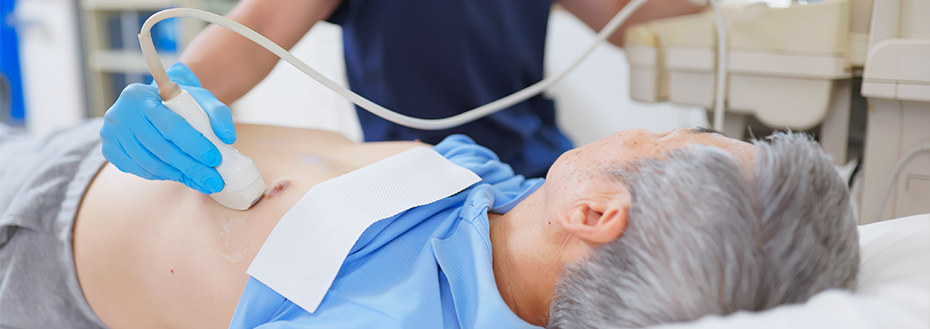
OHSU has been using ultrasound in emergency medicine since 2000. The section of emergency ultrasound includes 3 dedicated EM Faculty responsible for medical student, resident and faculty education as well as quality assurance and coordination of the Ultrasound Fellowship. We use ultrasound for all core and advanced uses in emergency medicine. Our emergency ultrasound faculty meets weekly for video review with residents and students.
Ultrasound Resident Rotation Goals and Guidelines
Rotation Overview and Goals
The primary goal of the Emergency Ultrasound (EUS) rotation is to provide a practical and didactic experience that enables residents to become proficient in routine EUS applications as specified by ACGME requirements. Residents gain an understanding of both the indications and limitations of EUS and learn to incorporate ultrasound into future clinical practice.
By the completion of the rotation, residents are expected to demonstrate competency in:
- Basic ultrasound physics
- Image generation
- Image acquisition and interpretation
Residents should complete the rotation confident in their ability to utilize EUS in patient care.
Educational Objectives
Residents will:
- Demonstrate proper technique and utilization of ultrasound equipment in the ED
- Apply ultrasound physics principles to enhance image acquisition
- Demonstrate competency in routine emergency ultrasound applications, including:
- FAST
- AAA
- Cardiac
- Gallbladder
- Renal
- DVT
- First Trimester
- Soft tissue
- Central and peripheral IV access
- Procedural guidance
- Recognize adequate vs. inadequate studies for CQI
- Correctly interpret EUS findings
- Complete and document 150 scans (minimum 10 per indication)
- Complete pre- and post-rotation examinations
Clinical Experience (Residents)
Residents will complete eight 8-hour ED shifts performing EUS scans.
- Four shifts will be supervised directly by rotation directors.
- Remaining shifts will be scheduled with ultrasound-facile faculty.
- Whenever possible, exams should be performed on patients undergoing confirmatory imaging (X-ray, CT, or radiology ultrasound).
Didactic Experience (Residents)
Residents will participate in:
- Two dedicated didactic days (lectures, video review, CQI, literature discussion)
- Required reading from Ma and Mateer, Emergency Medicine Ultrasound
- Instructional videos and handouts
- Teaching one fourth-year medical student ultrasound lab
Evaluation and Feedback (Residents)
Residents are evaluated:
- In real time during scanning shifts
- Through direct faculty feedback
- Via standard end-of-rotation evaluations
- Through written pre- and post-rotation exams
Residents also evaluate faculty and the rotation using standard evaluation tools.
Ultrasound 4th Year Medical Student Rotation
Objective
To expose fourth-year medical students to bedside point-of-care ultrasound.
Overview
This 2–4 week hands-on rotation serves as an introduction to emergency bedside ultrasound. Students are introduced to core Emergency Medicine ultrasound applications, including:
- FAST
- Cardiac
- RUQ
- Renal
- DVT
- Thoracic
- Pregnancy
- Procedures
Students receive training in:
- Basic ultrasound physics and principles
- Image acquisition
- Image interpretation
By the end of the rotation, students are expected to demonstrate competency in all three areas. The skills gained are applicable not only in the Emergency Department but also in other specialties utilizing bedside ultrasound.
Rotation Guidelines and Curriculum
The rotation consists of three components: clinical time, formal didactics, and self-study.
Clinical Time
- 6–8 hour supervised scanning shifts in the ED
- 4 shifts per week
- Goal of completing 250 ultrasounds by the end of the rotation
- Supervision provided by the rotation director, ED faculty, and residents
Didactics
- Weekly lectures covering core principles and applications of emergency ultrasound
- Weekly QA and image review sessions to provide instruction and assess progress
Self-Study
Students are expected to:
- Complete assigned readings from emergency ultrasound textbooks
- Review instructional DVDs
- Deliver a 15-minute presentation on a selected topic
- Complete a written test at the end of the rotation
Evaluation (Medical Students)
The rotation is graded on a pass/fail basis, determined by overall performance across all components of the rotation.
Contact Us
Prospective applicants are welcome to contact the Fellowship Director through the Program Coordinator at regner@ohsu.edu. Please attach your CV to your initial communication.