Powering Innovation and Translational Science with OCTRI Informatics

Mission and goals
OCTRI Informatics accelerates translational research by providing a full suite of informatics tools for bench-to-bedside, clinical, and health care systems research. The program achieves its objectives by:
-
Helping researchers leverage EHR/Epic data for studies.
-
Developing software and customized databases for clinical research data collection and management.
-
Assisting researchers with the storage, retrieval, sharing, and optimal use of biomedical information, data, and knowledge.
We encourage you to meet with program staff early in the study planning stage to ensure an appropriate solution design and budget. Please submit a request for an informatics consultation.
For more information on this program's mission and goals, please review the OCTRI Informatics Strategy document.
Innovation Core: Custom applications and research repositories to meet complex needs
The OCTRI Informatics Innovation Core supports investigators and projects using an array of innovative technologies and expertise. Review our services and how to access them below.
-
Custom applications to manage clinical research data
The Innovation Core can create custom applications to manage clinical research data. Features include:
- A web interface for quick browsing and entry of data
- Custom imports to bring spreadsheets into a structured and auditable format with security and regular backups built in
- Integration with other resources to pull in demographics, labs, and genomics data automatically
- Data pipelines in R or Python to perform analysis or build reports
Novel research applications to support your unique research needs
If your study requires an application to support either the data collection or exploration of a domain, we can deliver a custom solution that meets OHSU regulatory and security guidelines.
Web-based patient/participant interventions
We can develop applications to support participant interventions, either for recruitment, participant-reported outcomes, or other purposes.
These interventions provide participants with the tools to participate in your study either by collecting responses or sharing important details regarding the study.
-
Research repositories and registries
The Innovation Core builds custom research repositories and registries. Benefits and options include:
- Access controls to ensure that only your team can log in, with roles and permissions controlling what each member can see and do.
- A source of truth for published results
- Insights into the study population through reports and exploration
- Population with data from the EHR and regular updates as new encounters occur in Epic
-
Data driven dashboards
The Innovation Core will work with you to structure and visualize your data.
Read more about data dashboards or see the Project Spotlight below for a project with an OHSU faculty member.
-
How to access Innovation Core services

To reach the Innovation Core, please contact an OCTRI Navigator:
or complete the OCTRI Resource Request Form.
Details on working with the Innovation Core
Our team works in an agile development environment, collaborating closely with you to design the best solution for your project. We can provide an estimate to support your grant application, including longer term collaborations funded by FTE on a grant.
Common features we consider for all projects
- User roles and permissions
- Integrations with other systems, including FHIR applications
- User controlled managed content
- Reporting functionality
- HIPAA compliance and IRB expiration monitoring
Advantages to working with us
- Hosting/Maintenance
- Secure coding practices
- Authentication/Security*
- Auditing*
- Expertise in navigating OHSU regulatory and security requirements
(*) required by OHSU
Innovation Core Project Spotlight
Health of Oregon Adults with Disabilities - Medicaid Data
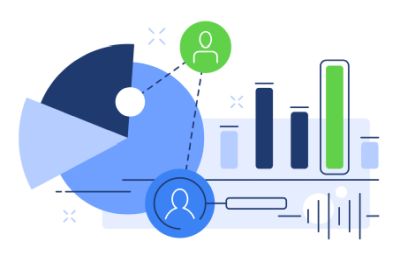
The Innovation Core built a dashboard for the OHSU University Center for Excellence in Developmental Disabilities to visualize Medicaid claims data about the health of individuals with intellectual and developmental disabilities in Oregon. The goal of the project is to identify and close policy gaps to improve the health and quality of life of individuals with disabilities.
Review the full story and dashboard examples in the Project Spotlight Summary
Research Data Services
Using Epic® data for research purposes
OCTRI maintains a repository of Epic data from patients and research subjects. This valuable resource, called the Research Data Services (RDS), provides access to over 2.5 million patient records with 20 million patient encounter records and more than 40,000 data points. OCTRI staff can act as your guide through this complex data.
-
RDS research uses
You can use the RDS for a broad range of research purposes, including:
- Deidentified data sets for epidemiological studies
- Data sets that identify potential study participants or gather retrospective data on current participants
- Automated data marts and/or data feeds that provide up-to-date population demographics for individual research projects
- Natural language processing applications for electronic health record notes
- Deidentified data sets for epidemiological studies
-
Data types and counts
Data Type RDS Count OMOP Count* Total patients 4M 3.9M Inpatient encounters 285K 406K Emergency encounters 627K 614K Outpatient encounters 107M 80.5M Lab results 340M 209M Microbiology 3.5M NA Medication results 69M 76M Total diagnoses 206M 84M Total procedures 243M 127M -
OHSU's OMOP repository
The RDS leverages an Observational Medical Outcomes Partnership (OMOP) Common Data Model (CDM) repository to access extensive electronic health record notes for usage in Natural Language Processing (NLP) applications.
The OMOP CDM is an open community data standard, designed to standardize the structure and content of observational data and to enable efficient analyses that can produce reliable evidence (OHDSI.org).
Recent enhancements to the OHSU OMOP repository have included augmenting the data with demographic data (REALD) and other valuable data sets. We are in the process of implementing software tools to allow access to the data, perform analysis, and generate visualizations.
Implemented note types
The OMOP repository has both the raw note text, as well as data structures for NLP artifacts. Implemented note types include:
- Progress notes
- Discharge Summaries
- ED notes
- H&P
- Op Note
- Procedures
- EEG Reports
- Solid tumor pathology reports
- Hematopathology reports
- Radiology reports (X-ray, CT scan, MRI scan readings)
-
How to access RDS services
To reach the RDS team, please complete the OCTRI Resource Request Form or email: octri@ohsu.edu
TriNetX: A cohort-building and discovery tool
OCTRI Informatics, in collaboration with the Information Technology Group (ITG) and Office of the Chief Research Information Officer (CRIO), supports access to TriNetX, a sophisticated cohort-building and discovery tool. TriNetX maintains the broadest federated network of real-world healthcare data. Study teams can use TriNetX to explore and analyze OHSU patient data, as well as data from over 235 TriNetX member organizations. This includes clinical data on 2 million OHSU patients, in addition to over 145 million patients in the Research Network.
For cancer-related studies, note that the detailed oncology, lab, and genomic data you need may not be available in the TriNetX platform. Please reach out to the Knight Data Operations Team (zheng@ohsu.edu) for support with custom datasets.
To gain access to TriNetX, you must first complete the required training in Compass.
-
Use cases and accessing data
The OHSU data in TriNetX is de-identified. Data from all OHSU clinical sites is included in TriNetX; genetic opt-out patients and affiliate data are excluded. TriNetX users can build queries and obtain patient counts from OHSU and other participating sites prior to Institutional Review Board (IRB) approval. Searchable taxonomies include demographics, diagnoses, procedures and surgeries, medications, laboratory results, patient visits, and vital signs.
Researchers can use TriNetX to:
- Assess the feasibility of a study
- Identify patients meeting inclusion/exclusion criteria
- Begin study planning prior to submission to the Institutional Review Board
After building a cohort, investigators can request row-level patient data or an identified OHSU patient list from the OCTRI RDS team with proper IRB approval. To learn more or to request a dataset, contact octri@ohsu.edu.
-
Data Type Caboodle Count TriNetX Count Total Patients* 2,094,582 2,025,480 Diagnoses 158M 153M Procedures 145M 136M Medications 223M 526M^ Lab Results 362M 293M *This count excludes patients who have opted-out of genetic research. Patients who have only been seen at an OHSU Affiliate location (Hillsboro Medical Center, MCMC, or Adventist) are likewise excluded. To be included in this count, patients must have at least one ambulatory, emergency, inpatient, or virtual visit at OHSU.
^The TriNetX definition of medication is expansive and includes the following: ordered meds; meds dispensed in an outpatient setting; meds administered in an inpatient setting; and immunizations.
-
TriNetX Training Program
TriNetX Training Program – This robust, comprehensive training program offers additional live and pre-recorded training videos, answers to FAQs, and guidance on common topics. (Note: Requires OHSU TriNetX training and account to access.)
TriNetX Research Planner
TriNetX Research Planner – This interactive chatbot, designed by researchers at University of California Riverside, is designed to help medical students and faculty plan their TriNetX research projects.
TriNetX Data Dictionaries
TriNetX Data Dictionaries – This page contains downloadable data dictionaries for each of TriNetX’s main subject areas (demographics, medications, procedures, etc.). (Note: Requires OHSU TriNetX training and account to access.)
Partner with OCTRI on clinical research data initiatives
OCTRI Informatics and the OHSU Knight Cancer Institute have formal collaborations around clinical research data enhancement and natural language processing that leverage the RDS, as well as expertise and strengths within each institute.
If you are interested in developing a partnership for your center, department, or division, then please contact Dr. Mohammad Adibuzzaman, Director of OCTRI Informatics: adibuzza@ohsu.edu
RDS Project Spotlights
Opioid treatment
Customized database of patients with opioid use disorder to identify potential treatments
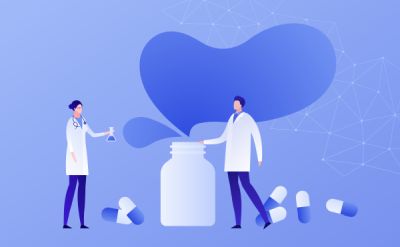
The OCTRI RDS team collaborated with Dr. Ryan Cook, OHSU additiction medicine expert, to build a database of 10,000+ patients with opioid use disorder containing information on medical services, lab tests, medications, hospital stays, clinical notes, social determinants of health, and more.
This database will be used to identify which interventions may most effectively reduce drug use and promote engagement in substance use disorder care.
Read the full story in the Project Spotlight Summary.
Maternal health
Customized dataset for study of postpartum maternal health
The OCTRI RDS team helped DMICE faculty, Dr. Nicole Weiskopf, and her trainee, Ayo Babatunde, an OHSU researcher, assess data requirements necessary to answer research questions related to maternal health during the postpartum period and supported the data extraction process.
This data set will be used for a retrospective study to identify and understand threats to validity when studying maternal morbidity.
Read the full story in the Project Spotlight Summary.
Leadership and Teams

Mohammad (Adib) Adibuzzaman, PhD (he/him)
Director, Informatics
adibuzza@ohsu.edu
-

Dan Bendelic (he/him)
Program Manager
bendelic@ohsu.edu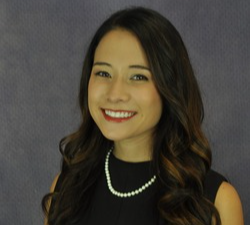
Izabelle Humes (she/her)
Senior Research Project Manager
humes@ohsu.edu
Danny Wilmer (he/him)
Informatics Project Coordinator
wilmer@ohsu.edu -

Erik Benton (he/him)
Research Engineer, Sr / Technical Lead
benton@ohsu.edu
Rumel Mahmood
Research Engineer, Sr
mahmoodr@ohsu.edu
Imogen Bentley (they/them)
Systems and Applications Analyst
Heath Harrelson (he/him)
Research Engineer
Matthew Lawhead (he/him)
Research Engineer, Sr
Vijet Muley, MS (he/him)
Research Engineer
Amy Yates (she/her)
Research Engineer -
OCTRI
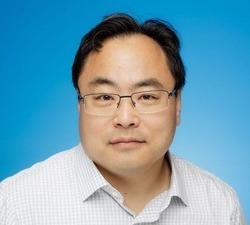
Jiro Inoue
Research Engineer, Sr / RDS Analyst Lead
inouej@ohsu.edu
Alina van Lunteren, MPH (she/her)
Research Data Services Analyst
Tim Kilgore (he/him)
Research Engineer, Sr
Sara Marinucci-Seevers (she/her)
Research Data Services AnalystOHSU Business Intelligence & Advanced Analytics
Susan Myers (she/her)
Application Engineer, Research Analytics & Big Data
Rodney Payne (he/him)
Application Engineer, Research Analytics & Big DataOCTRI-Knight Cancer Institute Partnership
David McCoy
Data analyst
Ocean Murff
Application Engineer
Contact an OCTRI Navigator to connect with research resources

Need to cite OCTRI?
Please contact the OCTRI Navigator for grant numbers and sample language.
Navigator email: octri@ohsu.edu

Research Data Concierge at OHSU
Get help accessing and working with research data at OHSU.
Epic for Research Team - an OHSU Information Technology Group
Separate from the RDS, researchers can also use Epic directly for research-related activities.
For more information, see the Epic for Research Team’s SharePoint site.