Pediatric Sleep Disorders
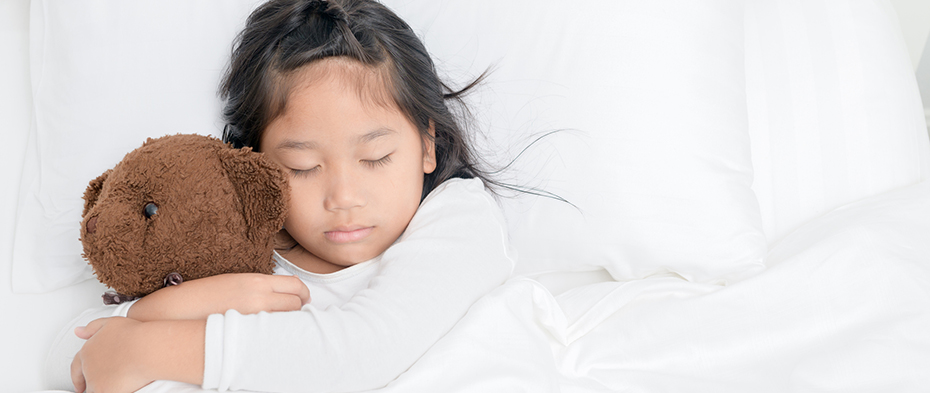
A good night’s sleep is essential for your child’s well-being. When sleep is disrupted, children may have health, behavior and development problems. At OHSU Doernbecher Children’s Hospital, doctors will give your child the most effective treatment in a caring environment.
You’ll find:
- Experienced sleep specialists who do about 1,000 sleep tests a year
- Four convenient locations and both video and in-person visit options
- A coordinated team of child specialists in:
- Sleep medicine
- Behavioral sleep medicine (psychology)
- Dentistry
- Pulmonology (the respiratory system)
- Otolaryngology (ear, nose and throat)
- Craniofacial surgery
- Sleep tests in a homelike setting where you can stay with your child
- Sleep tests at Doernbecher for children on ventilators or who can’t be in a regular bed
Understanding sleep disorders
What are sleep disorders?
Sleep disorders are problems with sleep that happen due to medical, behavioral, and environmental factors. There are many different types of sleep disorders and symptoms. Some symptoms of sleep disorders include trouble falling asleep, waking up frequently overnight, gasping and pauses in breathing overnight, and feeling sleepy during the day. Sleep disorders can happen because of medical problems like blocked airways or low iron levels. Neurological disorders, behavioral problems, or differences in the sleep environment can also contribute to sleep disorders. Left untreated, sleep disorders can cause your child to have a hard time functioning and develop other health problems.
Why is sleep so important?
Children who don’t get enough sleep at night become fatigued and irritable. They may have problems with attention, learning, and behavior at home and at school. Poor sleep can also affect a child’s growth, blood sugar levels and immune system.
Types of sleep disorders
The most common are:
Sleep apnea: Up to 4% of children, typically ages 2 to 8, have sleep apnea. The two types are:
- Obstructive sleep apnea: The most common type occurs when soft tissue at the back of the throat blocks the upper airway. This cuts off oxygen for a few seconds until the child wakes up and breathes normally.
- Central sleep apnea: This happens when the brain stops signaling a child to breathe, sometimes for a minute or longer. It’s usually linked to other conditions that involve the central nervous system (brain and spinal cord).
Insomnia: Your child has trouble falling asleep, wakes frequently overnight, or wakes up too early. Younger children may also have tantrums at bedtime. Causes can be poor sleep habits, bedtime fears, stress or anxiety. Children with neurological or behavioral problems are also more likely to have insomnia symptoms. Between 10 and 20% of children and adolescents have insomnia.
Insufficient sleep: Getting less sleep than age-based guidelines for total nighttime and daytime sleep is common in children. In the U.S., more than 60% of adolescents don’t get enough sleep on school nights, according to National Sleep Foundation.
Delayed sleep phase syndrome: This chronic disorder, common among teens, occurs when they go to bed two or more hours later than other teens their age, and have trouble falling asleep when they try to get into bed earlier. This makes it hard to wake up the next morning, especially when school starts early. On the weekends or when out of school, teens with delayed sleep phase syndrome may sleep for most of the day and stay up most of the night.
Signs and symptoms of sleep disorders
If your child has any of these symptoms, see your child’s doctor. Your child may need to see a sleep specialist.
- Difficulty falling asleep
- Waking frequently
- Noisy, choppy breathing
- Tossing and turning all night
- Pauses in breathing while sleeping
- Gasping or snorting during sleep
- Nightmares
- Waking up screaming
- Sleep walking
- Trouble settling at bedtime, or the urge to move legs at bedtime
- Bedwetting after 6 years of age
- Irritability
- Falling asleep in class or in other settings during the day
- Overweight (this increases risk for sleep apnea)
- Attention problems and hyperactivity
Tests for sleep disorders
Your child’s sleep specialist will gather his or her medical and sleep history to determine the best test. Tests include:
- Sleep study: A polysomnogram or PSG is an overnight study in our sleep lab to measure and record how your child is sleeping. The test is used to diagnose sleep apnea and other disorders. You can stay with your child through the night.
- Multiple sleep latency test: This test is used for unexplained sleepiness and to diagnose narcolepsy. It measures brain activity and eye movement to see how quickly your child falls asleep during a series of naps.
- Actigraphy: Your child wears a watch-like device with a sensor that measures sleep and wake patterns. It can be helpful when your child is being evaluated for narcolepsy or circadian rhythm sleep-wake disorders.
- Blood test: This can find iron deficiencies. Low iron levels have been linked to periodic limb movement disorder and restless legs syndrome.
Preparing for a sleep study
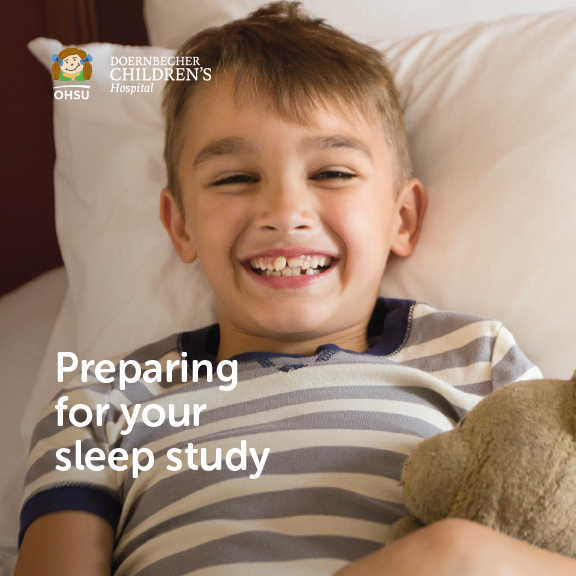
We’ve created a fun, interactive booklet for you to read with your child. It details:
- What you need to bring
- What to expect
- What happens the next morning
Sleep Lab location:
The Residence Inn by Marriott at RiverPlace
2115 S.W. River Parkway, fifth floor
Portland, OR 97201
Treatments for sleep disorders
A range of specialists will confer about your child’s specific sleep disorder. Treatment will vary by diagnosis.
-
Surgery: Surgery to remove enlarged tonsils and adenoids is the first-line recommended treatment for children with obstructive sleep apnea. If a child has unusual facial anatomy, we may consider other options, such as craniofacial surgery.
Nonsurgical treatments: We’ll consider nonsurgical options if a child:
- Is not a good candidate for surgery
- Has central sleep apnea
- Has some remaining obstructive sleep apnea after surgery to remove the tonsils and adenoids
Nonsurgical options include:
- CPAP (continuous positive airway pressure): A CPAP machine improves breathing at night. The child wears a mask over the nose that’s connected by a hose to a machine that gently blows air. Your child’s doctor determines the correct air pressure to keep the airway open.
- BPAP (bilevel positive airway pressure): This machine, similar to a CPAP, helps some children exhale. It uses higher air pressure for inhaling and lower pressure for exhaling.
- Medication: Nasal steroids and other medications may be prescribed to help open airways and ease your child’s breathing.
-
Medications: There are no FDA-approved medications specifically for children’s insomnia. Our doctors generally discourage using over-the-counter medicines for children with insomnia, but they can review all options with you.
Behavior therapy: Your child’s doctor will work with you to develop strategies and routines to help your child fall asleep and stay asleep. They include:
- Setting regular times for your child to go to bed and wake up every day.
- Developing a regular bedtime or wind down routine.
- Limiting the amount of time in bed without sleeping.
- Avoiding caffeine and too much sugar.
- Minimizing use of electronics (smartphones, television, or video games) before bed or while falling asleep.
- Relaxation strategies, including deep breathing.
- For families that want their child to sleep on their own, helping their child learn to fall asleep without a parent or another caregiver present
- Environmental changes, such as blackout curtains to help signal bedtime and a “good morning” light to signal when it’s time to get out of bed.
- Positive feedback and reward charts for good bedtime behaviors and/or for learning to fall asleep independently.
-
Medications/supplements: Melatonin supplements or medications may be prescribed for a short time along with behavior therapy and/or bright light therapy.
Behavior therapy: Your child’s doctor will work with you to develop strategies that help get your child’s body clock back “on time,” including:
- Setting regular times for your child to go to bed and wake up every day, or helping your child gradually wake up earlier to shift their sleep schedule.
- Avoiding caffeine and too much sugar.
- Minimizing use of electronics (smartphones, television, or video games) before bed or while falling asleep.
- Developing a regular bedtime or wind down routine.
- Reducing or eliminating daytime naps.
Bright light therapy: Exposure to a special light box or to natural sunlight early in the morning can help reset your child’s body clock.
-
Supplements: Iron supplements may be prescribed if your child has low iron levels.
Behavior therapy: Your doctor will work with you to develop strategies including:
- Setting regular times for your child to go to bed and wake up every day.
- Avoiding caffeine and too much sugar.
- Minimizing use of electronics (smartphones, television, or video games) before bed or while falling asleep.
- Developing a regular bedtime or wind down routine.
- Increasing physical activity.
- Avoiding food or medication that may worsen the condition.
-
Supplements: Iron supplements may be prescribed if your child has low iron levels.
Behavior therapy: Your child’s doctor will work with you to develop strategies including:
- Setting regular times for your child to go to bed and wake up every day.
- Avoiding caffeine and too much sugar.
- Minimizing use of electronics (smartphones, television, or video games) before bed or while falling asleep.
- Developing a regular bedtime or wind down routine.
- Increasing physical activity.
- Avoiding food or medication that may worsen the condition.
-
Behavior therapy: Your child’s doctor will work with you to develop strategies including:
- Setting regular times for your child to go to bed and wake up every day.
- Making sure your child is getting enough nighttime sleep, because insufficient sleep can worsen parasomnias.
- Avoiding caffeine and too much sugar.
- Minimizing use of electronics (smartphones, television, or video games) before bed or while falling asleep.
- Developing a regular bedtime or wind down routine.
- Increasing physical activity.
- Avoiding food or medication that may worsen parasomnias.
- Working with your family to:
- Stay calm when your child has a sleep terror or is sleepwalking.
- Avoid waking your child during an episode.
- Keep the environment safe so your child can’t hurt him or herself.
-
Medications: Your sleep provider may prescribe medications that can help manage symptoms of narcolepsy.
Behavior therapy: Your child’s doctor will work with you to develop strategies including:
- Scheduling nap times.
- Setting regular bed and wake times.
- Avoiding activities when not alert, such as swimming or driving.
- Exercising.
- Coping with narcolepsy symptoms.
- Learning how to communicate with family, friends, and teachers about narcolepsy.
- Working with your child’s school to make sure there is a clear school plan for narcolepsy management.
Learn more
- Children and Bedtime Fears and Nightmares, National Sleep Foundation
- Baby Sleep Advice by Experts, Pediatric Sleep Council
- Pediatric Sleep-disordered Breathing, American Academy of Otolaryngology
- Information About How to Help Kids Sleep Better, KidsHealth
- Phone App for Teen Sleep Problems, Dozeapp
- Information About Starting School Later to Help Teens Sleep Longer, Start Schools Later
- Resources for Learning About Narcolepsy and Hypersomnia, Project Sleep
Location
Parking is free for patients and their visitors.
Doernbecher Children’s Hospital
700 S.W. Campus Drive
Portland, OR 97239
Map and directions
Physicians Pavilion
3270 SW Pavilion Loop
Portland, Oregon 97239
Map and directions
Find other locations across Oregon and in southwest Washington.
Refer a patient
- Refer your patient to OHSU Doernbecher.
- Call 503-346-0644 to seek provider-to-provider advice.