Predoctoral/ Postdoctoral Training
Predoctoral (PhD) Track
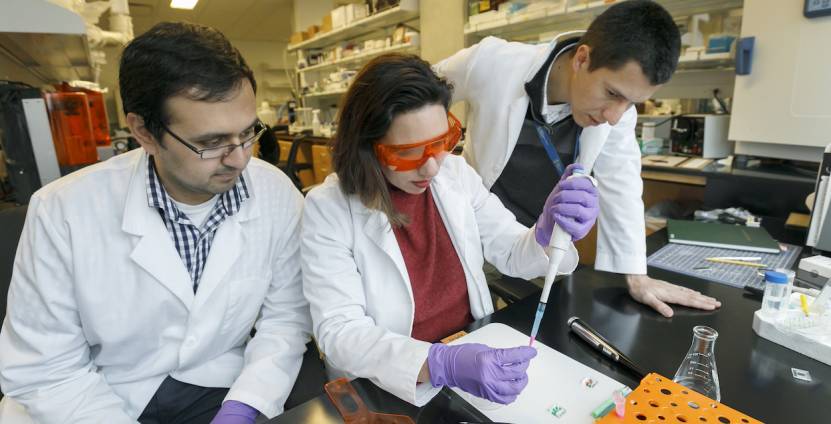
PhD students in Biomedical Engineering or Biomedical Sciences conduct mentored research in key areas, including biomaterials and regenerative medicine, microbiology and the oral microbiome, and translational science related to TMJ and pain.
Postdoctoral Training
Postdoctoral scholars may pursue either a traditional research track with intensive lab-based experience or a combined research and master’s program in Clinical & Translational Research or Community Health. Both options help build research skills and support career growth.
Dual Degree (DMD/PhD) Track
This seven-year program combines dental training with PhD research through the School of Dentistry and OHSU graduate programs. It prepares students to become clinician-scientists who lead research to improve oral health.
Please consult with your current or potential research mentor(s) before completing the application form. See more application information below.
Diverse Research Focus Areas
Trainees work on projects spanning:
- Craniofacial development and regenerative biology
- Microbiome science and oral-systemic health
- Digital imaging, AI, and informatics
- Health equity, aging, and chronic disease prevention
- Community-based and translational research
Additional Training Grant resources
NIH Research Training and Career Development | OHSU Graduate Program in Biomedical Sciences (PBMS) | OHSU Graduate Program in Biomedical Engineering (BME) | OHSU Office of Research Development
Who Is Eligible to Participate
We welcome predoctoral and postdoctoral trainees who are interested in research on oral, dental, and craniofacial health.
Predoctoral trainees must be enrolled in the OHSU Graduate Program in Biomedical Sciences (PBMS), the OHSU Graduate Program in Biomedical Engineering (BME), or a regional graduate program that works directly with an OHSU-affiliated lab. To qualify, research must clearly focus on oral or craniofacial health.
Postdoctoral trainees must already be actively engaged in research within an OHSU lab or a laboratory formally affiliated with the OHSU School of Dentistry. At this time, external postdoctoral candidates not currently embedded in these environments should reach out to investigators listed on our lab page to explore opportunities to join an affiliated lab.
Application information
Please upload the following documents:
- CV/resume
- Statement of your research interests
- Your mentor's Biosketch
- Your mentor's Other Support document showing their external grants and funding sources
- Two letters of support: one from your mentor and at least one additional letter of support or recommendation from a previous mentor or faculty member familiar with your research and interests.
Please consult with your current or potential research mentor(s) before completing the application form.
The form requests that you provide a statement of your research interests (3 pages max), including:
- Introduction
- Statement of the problem/significance
- Objectives
- Approach
- Project relevant to the PORT focus areas (Oral and Craniofacial Health; Biomaterials or Tissue Engineering; Microbiology and Immunology; and/or Community Health).
Program Requirements and Activities
PORT trainees in all tracks will be expected to participate in PORT activities that will advance their knowledge and experience in research, including:
- Establishment of an Individual Development Plan, in consultation with PORT program mentor;
- Participation in the PORT journal club;
- Presentation of an abstract at the PORT Trainee Seminar Series;
- Presentation at the SOD's annual Research Day in March;
- Training in the Responsible Conduct of Research;
- Participation in a grant writing program;
- Submission of an NIH individual fellowship application (e.g. F30 or K99/R00).
Mentorship-Centered Culture
Mentorship is the foundation of our research training model. Each trainee is paired with experienced faculty mentors who support their development in research design, scientific writing, and career planning. Just as important, trainees are encouraged to serve as mentors themselves—supporting junior trainees and fostering a collaborative, inclusive research environment.
Our faculty mentors include recipients of K01, K08, and K99/R00 career development awards, as well as R01-funded investigators—offering strong, evidence-based guidance throughout the research career trajectory.
NIH-Funded Training Programs
Our research training enterprise is supported by multiple NIH mechanisms, including:
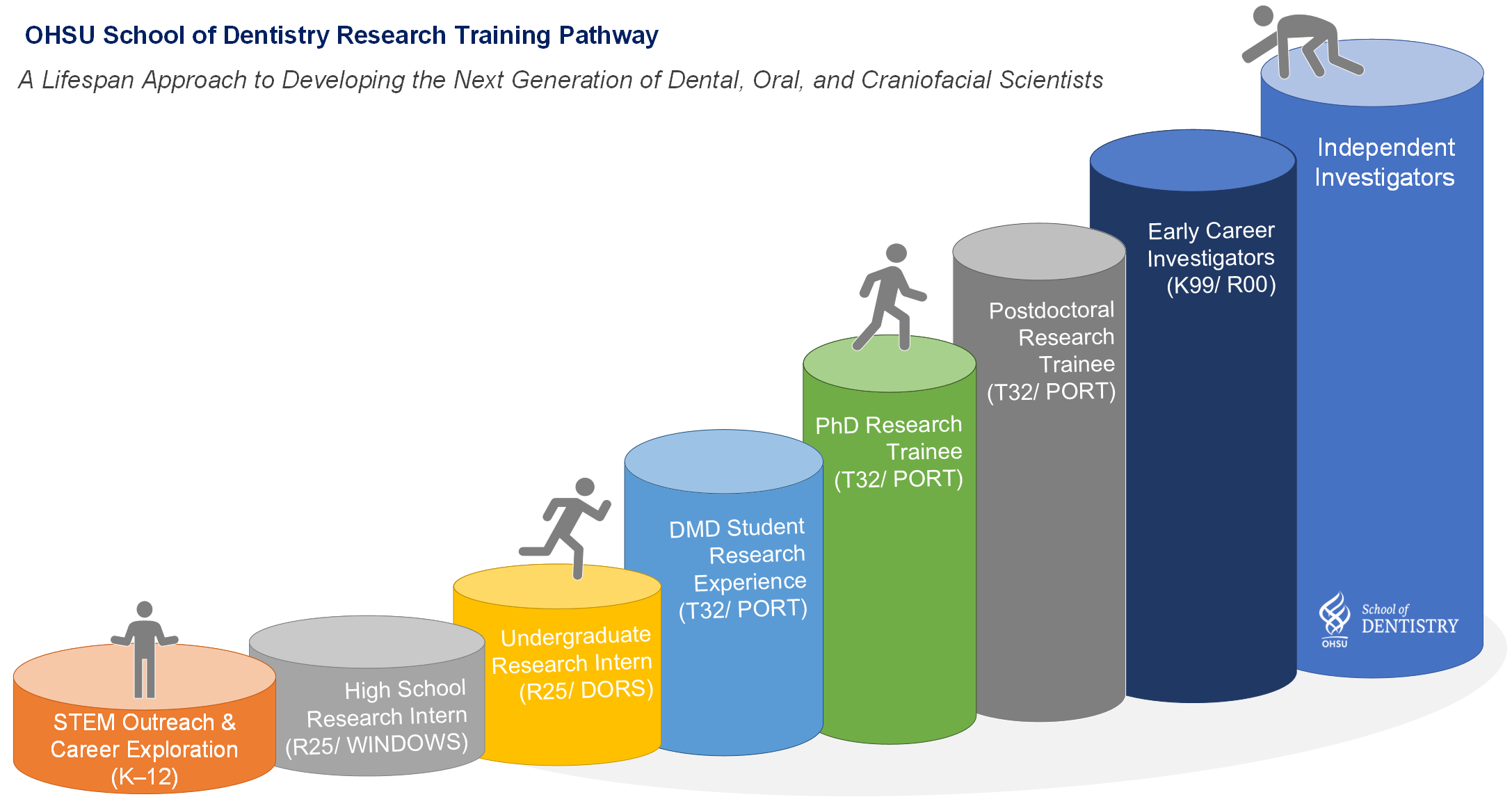
- T90/R90 Training Grant: Supports predoctoral students (DMD and PhD), postdoctoral scholars, and internationally trained dentists engaged in collaborative, interdisciplinary research. Trainees work closely with research mentors across OHSU, Oregon State University, and the University of Oregon.
- T32 Training Grant: A new application has been submitted to further expand research training capacity for pre- and postdoctoral scientists.
- R25 Research Education Programs: Provide early exposure to scientific research for high school students, undergraduates, and pre-matriculation DMD students—creating multiple on-ramps into the research pipeline.
We are also preparing to launch dedicated DMD/PhD dual-degree training opportunities, advancing our capacity to develop future clinician-scientists.