Tracks & Pathways
We offer a variety of tracks and pathways that allow residents to individualize their training by pursuing an area of interest. These opportunities provide focused experiences while maintaining the breadth of categorical training. The Physician-Scientist Training Program has a dedicated NRMP program code; all other tracks and pathways are available to residents as part of our categorical match. Learn more about these opportunities below.
-
Director: Maureen Lyons, MD
Overview
The mission of our Primary Care Track (PCT) is to cultivate humanistic, patient-centered, and resilient primary care physicians who are exceptional clinicians and transformative leaders poised to innovate and advocate for all people within their communities. Applications are solicited in the fall of PGY-1, and all interested residents are welcome to apply.Components
The foundation of this track is a robust categorical ambulatory curriculum designed to develop well-rounded, highly skilled general internists. Between elective time and required rotations outlined below, PCT residents can choose to spend over 50% of their clinical time in the ambulatory setting during PGY-2 and PGY-3.R2 Immersive Primary Care Preceptorship
This is a three-week outpatient rotation designed to highlight primary care in a setting off the hill. We have partnerships with a variety of sites:- Alaska Native Medical Center - AK
- Chemawa Indian Health Center - Salem, OR
- Indian Health Service - Tuba City, AZ
- Old Town Clinic Community Health Center - Portland, OR
- Samaritan Lincoln City Medical Center - Lincoln City, OR
- VA Community Based Outpatient Clinics - Portland, OR
- Virginia Garcia Community Health Center - Hillsboro, OR
- Winding Waters Clinic - Bend, OR
R3 Primary Care Rotations
The R3 primary care rotations are two separate three-week blocks during PGY-3. These include both core clinical experiences along with individualized training tailored to each unique resident's interests and needs.Examples include dermatology, sports medicine, women's health, procedure clinics, time in the human performance lab, pre-op medicine, teaching, co-precepting in your continuity clinic, and scholarship. The PCT directors meet individually with each resident in advance of this rotation to ensure the block is optimized for each resident's education and needs.
PCT Workshop
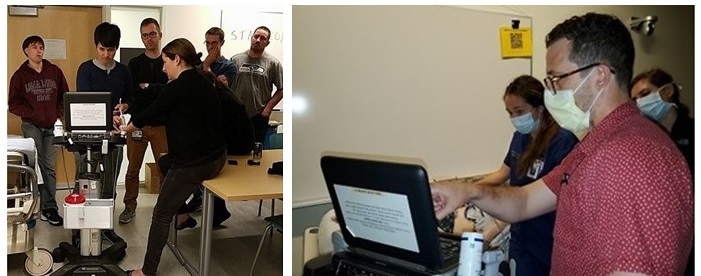
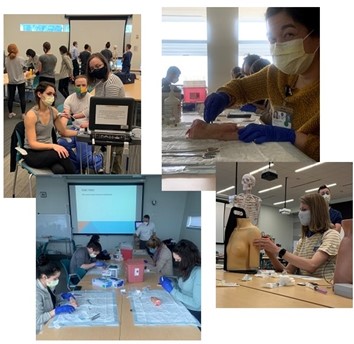
This annual workshop is held each spring and is designed to address topics requested by current and former PCT residents. Content areas include procedural skills training (e.g., Nexplanon placement, joint injections); communication skills (such as improve-based exercises focused on managing uncertainty and relationship-building); medical knowledge (with deeper dives into care for vulnerable populations, including undocumented patients, survivors of trauma, and transgender patients); advocacy training; as well as opportunities for networking and mentorship. -
Director: Ted Braun, MD, PhD
Philosophy
The OHSU Department of Medicine and the Internal Medicine Residency Program view physician-scientists as essential to the advancement of medicine, bridging expertise in clinical care and biomedical research. Our Physician-Scientist Training Program supports aspiring physician-scientists through the ABIM Research Pathway, which allows a resident to satisfy training requirements for certification in internal medicine and a chosen subspecialty while completing additional dedicated years of mentored research. The program is designed to launch successful, independent research careers. We look forward to supporting your continued growth and success as a physician-scientist.Participating subspecialties for the 2026-27 cycle: We are currently accepting PSTP applications only in Hematology and Medical Oncology. We anticipate expanding to additional subspecialties in future years.
Overview
- ABIM Research Pathway: The PSTP is built on the American Board of Internal Medicine Research Pathway, an accelerated route into a physician-scientist career. Residents who satisfy minimum training requirements may transition to subspecialty fellowship after 24 months of internal medicine residency, with dedicated research training integrated alongside clinical training. The pathway leads to board eligibility in internal medicine and in your chosen subspecialty.
- Longitudinal Mentorship: Mentorship begins on day one and continues through residency, fellowship, and your transition to faculty. You will be supported by a longitudinal mentorship team that includes the PSTP Program Director, your subspecialty fellowship Program Director, and a physician-scientist mentor from outside your division or outside OHSU. Early on, this team provides individualized academic and career guidance and helps to identify your primary OHSU research mentor. Together, they support your development throughout the program.
- Protected Research Time: Three years of 80% protected research time during the research phase, with remaining effort devoted to a continuity clinic and focused clinical activity. This provides sustained, uninterrupted time to generate preliminary data, publish, and compete for career-development funding.
- Guaranteed Fellowship: Matching into the PSTP guarantees acceptance into an OHSU subspecialty fellowship upon satisfactory completion of residency requirements, allowing you to commit to your research trajectory from day one without worrying about a separate fellowship match.
- Career Development Support: The PSTP prepares and supports trainees to compete for career-development funding throughout the pathway. With guidance from your mentorship team, you will be positioned to apply for institutional career-development mechanisms and extramural funding opportunities, including NIH K-series awards, as well as young investigator and career-development awards from relevant professional societies.
- A Research-Intensive Environment: Trainees pursue mentored research spanning a broad range of basic, translational, and clinical investigations, with research mentors drawn from across OHSU's research community.
Application Logistics
Candidates should apply to the PSTP using the following NRMP Program Code: 1599140C2Due to the highly competitive nature of this program, we encourage applicants who are interested in training at OHSU to also apply to our Categorical Track.
Applications for the PSTP are reviewed by a dedicated selection committee, and interviews are conducted over two days. Please see our Application Information page for additional details, including a complete list of application requirements.
-
Director: Noriyuki Murakami, MD
The mission of the Global Health Scholars Program (GHSP) is to supplement and enrich resident training with focused clinical and didactic opportunities in global health, social medicine, and care for underserved populations. We endorse a broad definition of global health rooted in interdisciplinary collaboration to improve planetary and population health worldwide. In this framework, "global" refers to the scope of the problem rather than the location of practice. Applications for the GHSP are solicited shortly after Match Day.
Residents in the GHSP use elective time in PGY-2 and PGY-3 to rotate at one or more global health sites, with a wide variety of options available locally, domestically, and internationally. While any resident may request these electives, priority is given to GHSP participants.
Local and Domestic Rotations
Global health encompasses more than just international service. Our program provides residents with skills to care for underserved and vulnerable populations within their local communities. Global health residents may select from diverse clinical sites within the Portland metropolitan area and across the country.Residents who select a local global health elective rotate through a combination of the following clinics in the Portland metropolitan area:
- Virginia Garcia Memorial Health Center, an FQHC serving migrant and farm workers and others with barriers to care
- Multnomah County Health Department which includes a refugee intake clinic
- Community Resource and Referral Center, caring for Veterans without housing
- Bridges Clinic, and OHSU student-run free clinic
- Corrections Medicine
Residents who select a domestic global health elective can choose from one of the following sites serving American Indian/Alaskan Native populations:
- Alaska Native Medical Center in Anchorage, AK (Fact Sheet)
- Tuba City Regional Health in Tuba City, AZ (Fact Sheet)
- Chemawa Health Center in Salem, OR
International Rotation (Botswana)
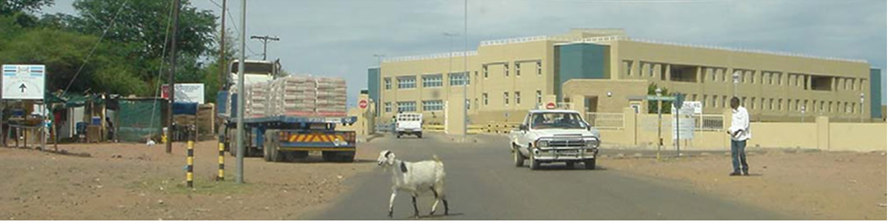
Our program is dedicated to building healthcare capacity in Botswana through clinical stewardship, medical education, and collaborative quality improvement. We have a longstanding partnership with Scottish Livingstone Hospital (SLH), the Botswana Ministry of Health, the Botswana-Harvard AIDS Institute Partnership, and Beth Israel Deaconess Medical Center. This collaboration offers OHSU IM residents, as well as residents and fellows from other U.S. training programs, the opportunity to contribute to capacity building and by working alongside local medical students, interns, medical officers, and nursing staff in Botswana.Residents can elect to spent four weeks in Botswana during PGY-3, working primarily on the inpatient wards and SLH with a focus on education and supporting healthcare delivery. We send approximately ten residents per year and have had more than 100 IM residents participate to date. Dr. Kese Chabaesele, the local site director for the rotation, provides on-site orientation and supervision to residents. In addition, the Departments of Medicine, Anesthesia, and Obstetrics & Gynecology each maintain full-time U.S. faculty presence in Botswana.
GHSP Curriculum
In addition to the curated independent study materials, residents in the GHSP engage in a comprehensive didactic curriculum addressing core global health topics, including structural violence and competency, systemic racism, Native health, infectious diseases, social justice, advocacy, and more. The curriculum is integrated throughout all three years of training and delivered through the following educational experiences:- Quarterly, in-person global health didactic sessions
- Four global health-themed noon conferences annually
- Bimonthly, resident-led journal club
- One-on-one discussions as part of the local global health rotation
- Pre-departure briefings and post-travel debriefing for the Botswana rotation
Financial Support
We recognize that finances are tight during residency. The Department of Medicine reimburses travel to and from Botswana, and donor-supported funding may cover travel and housing expenses for select domestic clinical experiences. -
Directors: Nilan Schnure, MD and Aaron Silver, MD
This longitudinal pathway occurs during PGY-2 and PGY-3 and is designed for residents interested in developing advanced POCUS proficiency. It consists of monthly hands-on scanning sessions, independent learning modules, dedicated conferences, and image portfolio development with formative feedback. Participants receive longitudinal mentorship from General Medicine Ultrasound Fellows and POCUS faculty, with the goal of graduating fully entrusted to perform POCUS in clinical care and prepared to serve as future leaders in POCUS education. Applications are solicited during June of PGY-1.