Cardiovascular Disease Fellowship

Our three-year, ACGME-accredited Cardiovascular Disease Fellowship program combines rigorous clinical training, structured curriculum and close mentorship across a wide variety of care settings to ensure you are prepared for modern cardiovascular practice.
This fellowship offers you unparalleled depth of clinical exposure. Given its unique geographic position, OHSU represents a referral center for the region’s most complex pathologies, allowing you to care for a diverse, high-acuity patient population, including patients with:
- Complex adult congenital heart disease
- Valvular heart disease
- Advanced heart failure requiring advanced therapies, including cardiac transplantation
Our faculty are leaders in the field, serving in all major academic cardiac societies. OHSU is also a pioneer in research, participating in numerous clinical trials advancing the field of cardiology.
Fellowship objectives
The Cardiovascular Disease Fellowship within the Division of Cardiovascular Medicine aims to train outstanding clinicians in the field of cardiovascular medicine, to nurture interest in scientific investigation and to help you reach your ultimate career goals in cardiology practice.
The educational program is based on curriculum, mentorship and experiences in a variety of settings including:
- Inpatient cardiovascular services
- Outpatient cardiovascular practice
- Clinical laboratory and procedure-based services
- Conferences
- Research laboratory
Fellowship clinical training curriculum
As a fellow, you will work with all areas of cardiology at OHSU Knight Cardiovascular Institute and the Portland VA Medical Center. You’ll work with cardiology subspecialties including:
- Cardiac imaging (echocardiogram, nuclear, CT, MRI)
- Interventional cardiology
- Structural heart disease
- Clinical cardiac electrophysiology
- Adult congenital heart disease
- Preventive cardiology
- Cardiac critical care
You will also have a close relationship with our internal medicine department, and you’ll interact with all other clinical and surgical services through cardiology consult services. You also have elective opportunities in other areas, like ECMO, anesthesia and community cardiology at Hillsboro Medical Center.
Cardiology consult service
Working on the OHSU and VA consult services will give you the opportunity to evaluate and follow patients on all non-cardiology services including medical, surgical and psychiatric services. The consultation services are also responsible for the evaluation of emergency department and ED observation patients referred for further cardiovascular assessment.
The goal of the rotation is to improve your ability to perform a cardiovascular history and physical exam, interpret and analyze the appropriate cardiologic tests and integrate these findings into a concise diagnosis and management plan. Key competencies include evaluating and triaging critically ill cardiac patients. This rotation will also help you develop the time management skills that are essential for a general cardiologist.
Cardiac catheterization laboratory
The OHSU and VA cardiac catheterization laboratory rotations will teach you the core knowledge of cardiac anatomy, physiology and pathophysiology. You'll also learn technical catheterization skills, how to analyze hemodynamics and how to interpret angiographic images.
Our faculty and the Interventional Cardiology fellow will help you develop your procedural skills. You will be supervised and provided with varying levels of autonomy based on progressive training and development of competency. You will participate in assessing the indications for catheterization, consenting process, pre- and postprocedural evaluation and management, including recognizing and managing periprocedural complications.
Cardiac electrophysiology
The OHSU electrophysiology rotation gives you exposure to the inpatient consultative service, along with the opportunity to perform device interrogations, ECG and heart monitor interpretations and participate in EP lab cases and procedures. You will also have the option to participate in the outpatient EP clinic and device clinic.
Echocardiography and nuclear cardiology
The OHSU and VA echocardiography and nuclear laboratories give you the resources to develop knowledge, experience and skills in echocardiography and nuclear cardiology. You will have access to ultrasound equipment and workstations to perform and interpret:
- 2D and 3D transthoracic and transesophageal echocardiography
- Doppler echocardiography
- Contrast echocardiography
- Stress echocardiography
- Strain imaging
- Nuclear cardiology studies
Intraprocedural echocardiography, including intraoperative, interventional and electrophysiology laboratory procedures, is also available.
CT/MRI
The OHSU cardiac CT and MRI program provides imaging services for the full range of cardiovascular health and disease. Our service is comprised of cardiologists with dedicated cardiac MRI and CT training and radiologists specialized in cardiothoracic imaging.
Cardiovascular intensive care unit
This rotation will give you the opportunity to care for patients in a multidisciplinary cardiovascular intensive care unit (CVICU). You will work closely with the general cardiologist or critical care cardiologist to provide care to patients with a broad mix of diseases.
Cardiology patients are admitted to the CVICU either through the emergency department, through transfer from a cardiology or non-cardiology inpatient service or through direct transfer from an outside hospital. As a quaternary care hospital, OHSU serves as a referral hospital for many hospitals in the Pacific Northwest.
Cardiology patients in the CVICU have a broad range of diseases, including:
- Acute myocardial infarction
- Congestive heart failure and cardiogenic shock
- Valvular heart disease
- Atrial and ventricular arrhythmias
- Pericardial or myocardial infiltrative disease
- Pulmonary hypertension
- Hypertrophic cardiomyopathy
- Adult congenital heart disease
You will also provide consultative care to cardiac surgical, vascular surgical and other patients in the CVICU with cardiac complications.
Advanced heart failure and transplant
The Knight Cardiovascular Institute heart failure and transplant team cares for a wide variety of patients across the heart failure disease spectrum. This rotation includes exposure to patients requiring:
- Critical care
- Post-operative care following cardiac surgery, including temporary and durable mechanical circulatory support
- ECMO
- Cardiac transplantation
The heart failure consultative team will also participate in the care of patients in all non-cardiology services and the emergency department.
Adult congenital heart disease
The adult congenital heart disease rotation provides experience in the outpatient clinic and inpatient consultation and management of all aspects of adult congenital heart disease, including perioperiative, periprocedural and pregnancy care. You will also have an opportunity to rotate in the cardio-obstetrics clinic during your ACHD rotation.
Outpatient clinic
You will be able to participate in the continuity clinic at OHSU and the Portland VA Medical Center, attending a half day per week, alternating between both clinics. As a third-year fellow, you may switch your OHSU general cardiology clinic to one of our subspecialty clinics:
- Valve
- Electrophysiology
- ACHD
- Interventional cardiology
- Heart failure
- HCM/amyloid
- Pulmonary hypertension
- Cardio-oncology
- Preventative cardiology
Call
You will have in-house call for OHSU and the Portland VA Medical Center. Calls on the weekdays are from 5 p.m. to 8 a.m., and on the weekends and holidays are from 8 a.m. to 8 a.m., with a fully protected post-call day. You will take calls through your three years of training, being on call once or twice per month, on average.
Research
You have a total of six months of dedicated research blocks during your three years of fellowship. Research opportunities include working in a large animal laboratory, clinical and bench research and involvement with clinical trials.
Didactic curriculum
Our fellowship program provides a structured educational experience. Each year, our chief fellows and program leadership revise the curriculum, based on direct feedback from fellows in the program, and constantly incorporate learning opportunities into our education program.
With many conferences and learning opportunities every week, our didactic curriculum include:
Multidisciplinary conference: An interactive and collaborative conference where you will present clinical cases and challenges. Along with our faculty, we discuss our diagnostic reasoning, analyze each case and dissect the primary evidence in the literature for optimal patient care.
Journal club: A monthly conference where you will present a landmark study or high-impact trial, guiding a robust analysis of the primary evidence, study design and statistical methodology. These conferences include an open discussion with faculty, fostering a collaborative environment to interpret the findings and apply current literature to clinical practice.
Integrative physiology: A weekly conference where we analyze and dissect the fundamental literature that has shaped cardiovascular medicine, providing you with a comprehensive foundation in the principles that guide our understanding of cardiac pathophysiology and clinical decision making.
Electrophysiology/device conference: A weekly conference led by our electrophysiology fellows and faculty, where we will dive into electrocardiograms, intracardiac electrograms, different EP techniques and procedures and challenging clinical cases. Along the way, we will cover basic and advanced concepts in electrophysiology.
Interventional conference: A weekly conference led by our interventional fellow and faculty, where we analyze and discuss various interventional topics through real cases, offering insights into the decision making, techniques and advancements in the field.
Imaging conference: A conference that offers a comprehensive exploration of various imaging modalities in cardiovascular medicine, essential for diagnosis and management. Through discussions about echocardiography, CT, MRI and nuclear imaging, you will obtain a well-rounded understanding of the principles of different imaging modalities and their applications in clinical practice.
Research conference: A weekly conference where members of the Knight Cardiovascular Institute, including fellows, share their research projects. This provides a unique platform for collaboration, learning, discussion and academic growth.
Didactic conference: A weekly faculty-led conference about a variety of cardiovascular topics, including diagnosis and management of different cardiac pathologies and topics in general cardiology, advanced heart failure, cardiac critical care, adult congenital heart disease and others.
KCVI grand rounds: A periodic conference where a guest speaker, including leaders in cardiovascular medicine, share their insights, experiences and latest advancements, providing fellows with invaluable perspectives and guidance to enhance their clinical practice, career plans and academic pursuits.
How to apply
Submit your application through the Electronic Residency Application Service (ERAS) and register with the National Resident Matching Program (NRMP).
We use program signaling in our application review process. Program signaling is an option for applicants to express interest in our program through the MyERAS application. Signals will be one of several factors considered when determining our interview invitation list.
Eligibility requirements
Applicants must be completing or have completed an ACGME-accredited internal medicine residency to be eligible for consideration.
Your ERAS application must include:
- Personal statement
- Letter(s) of recommendation
- USMLE transcript
- COMLEX-USA transcript (if applicable)
- Medical Student Performance Evaluation (MSPE or “dean’s letter”)
- Medical school transcript
- Photo
International medical graduates must also submit an ECFMG status report.
Important dates
The fellowship begins annually on July 1. Applicants should follow ERAS application timeline. Interviews are conducted on Fridays in September and October.
Fellowship leaders
Program director
-
-
Appointments and titles
- Assistant Professor of Medicine, Division of Cardiovascular Medicine, School of Medicine
-
Associate program director
-
-
Appointments and titles
- Assistant Professor of OHSU Knight Cardiovascular Institute, School of Medicine
-
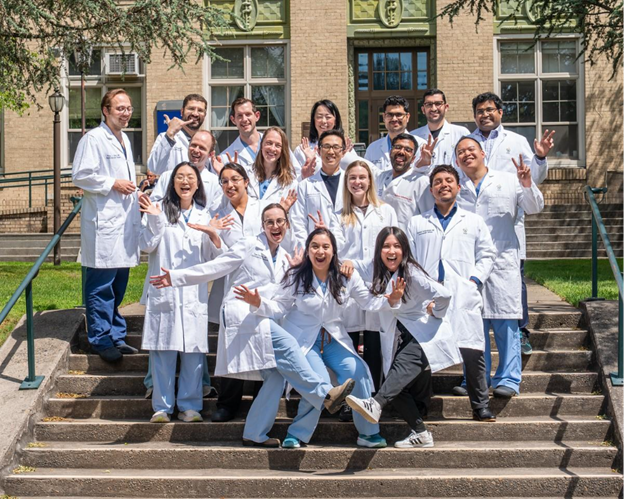
Current fellows
The culture at OHSU
We are proud to maintain a close-knit, familial atmosphere, where professional training is balanced with personal well-being. Our fellows form a cohesive community, supporting one another through the demands of clinical training and celebrating successes together. This sense of connection is reinforced by our faculty, who promote a culture of mentorship.
A standout feature of our program is the “Young Attending Mentorship Group,” a dedicated initiative where early career faculty provide fellows with spaces that allow for approachable guidance on career development, research and work-life integration.
To sustain this culture, we organize periodic wellness initiatives and social activities outside of the hospital that take advantage of the Pacific Northwest. This spirit of collaboration extends to the national stage, where our fellows are highly active in academic conferences.
Apply now
Apply through ERAS and register with the National Resident Matching Program.
Contact us
Ana Martin
Education Manager
plesiaa@ohsu.edu