T32 Training in Translational Science and Cardiovascular Research
Train with national leaders at OHSU’s pioneering Knight Cardiovascular Institute
The Knight Cardiovascular Institute’s postdoctoral T32 program offers you an exceptional opportunity to combine cardiovascular research with a clinical perspective. You’ll train with national leaders in cardiovascular medicine and research.
Our two-year Training in Translational Science and Cardiovascular Research program offers you rigorous training tailored to your career goals. The program accepts three fellows each year and is funded by the National Heart, Lung, and Blood Institute.
Program objectives
Our goal is to prepare you for a high-achieving career in cardiovascular research. You’ll work with scientists and physician-scientists at the Knight Cardiovascular Institute, a longtime pioneer in cardiovascular innovation:
- OHSU’s Albert Starr (1926-2024) developed the world’s first artificial heart valve.
- Charles Dotter (1920-1985), the "Father of Interventional Radiology," performed the first angioplasty on a peripheral artery. Together with Andreas Grüntzig, Dotter was nominated for the Nobel Prize in Physiology or Medicine for the invention of balloon angioplasty.
- Melvin Judkins (1922-1985) developed the transfemoral approach for coronary angiography.
- William E. Connor (1921-2009) and Sonja Connor's work on omega-3 fatty acids, such as fish oil, influenced the public's perception and led to the establishment of dietary guidelines regarding the omega-3 fatty acids consumption and their role in preventing heart disease.
Your training will focus on:
- Heart and vascular physiology and mechanisms of disease
- Bench-to-bedside translation and innovation
- Scientific leadership
- Responsible conduct in research
You’ll work with the program director, the T32 administrator and clinical and research mentors. Training will provide access to state-of-the-art imaging such as MRI, PET, CT, angiography, ultrasound, OCT, EM and two-photon microscopy.
As a researcher, you’ll join a team seeking to answer clinically important questions. For example, how can a skin biopsy predict the risk of a ruptured aneurysm?
Program curriculum
The Training in Translational Science and Cardiovascular Research program offers you learning opportunities across a range of subjects paired with a deep dive in a specific focus area related to your project.
You’ll join the Knight Cardiovascular Institute’s collegial culture, with seamless interactions between physicians and scientists. Each May, T32 fellows join a retreat to present their work, build relationships and discuss research.
Core curriculum
- Scientific writing
- Ethics of science
- Leadership training
- Entrepreneurship
- Rigor and reproducibility
- Scientific basis of cardiology
- Research design and biostatistics
- Genetic foundations in cardiovascular biology
Focus areas
You’ll choose from three training hubs that correspond to research areas:
- Cardiovascular regulation, including physiological regulation, ischemia-reperfusion injury and hypertension
- Cardiovascular inflammation, including atherosclerosis, diabetes, thrombosis and viral infections with relevance to cardiovascular disease
- Cardiovascular development, including cardiovascular genetics, genomics and fetal programming
Electives
- BIP-Corp
- Bioinformatics
- Grantsmanship
- Clinical research design
- OCTRI Design Studio
- People management for PIs
- Legal and ethical aspects of conducting research
Ongoing T32 Research Projects
You will work alongside researchers in a center that has published hundreds of high-impact scientific articles. Examples of our recent and ongoing research projects include:
- Sodium and calcium transport in the kidney
- Myocardial perfusion imaging in hypertrophic cardiomyopathy
- Circadian rhythm disturbance and cardiovascular disease
- Cell-free DNA as a biomarker in hypertrophic cardiomyopathy
- Pericyte diversity and phenotypic switching after stroke
- Intracardiac echocardiography in transcatheter tricuspid valve procedures
- AI-assisted definition of expertise and skill acquisition in cardiac angiography interpretation
- Impact of socioeconomic status and amphetamine use on outcomes of pulmonary arterial hypertension
- Nanoparticles for delivering therapeutics in aneurysm repair
- Role of epicardial and perivascular adipose tissue in control of coronary microcirculation
Didactics
- Journal club
- Grand rounds
- Research seminars
- Cardiovascular physiology course
How to apply
To apply, email application materials in a single PDF to Nabil Alkayed, M.D., Ph.D., at alkayedn@ohsu.edu.
Include:
- Curriculum vitae
- Statement of research experience, proposed science and career goals (two pages maximum)
- Letter of reference from proposed mentor and two letters of recommendation
- Medical school or graduate school transcript (external candidates only)
Eligibility requirements
- Graduate degree: M.D., D.O., Ph.D., D.V.M., Pharm.D., D.D.S., etc.
- U.S. citizen, noncitizen national or permanent resident of the U.S.
Important dates
Application deadlines and start dates:
- April 30 for a July start date
- Oct. 30 for January of the following year
Interview process
The Program Recruitment and Selection Committee will interview selected applicants.
Program leaders
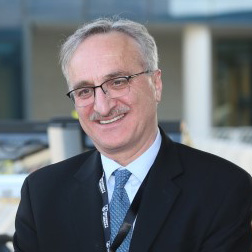
Nabil Alkayed, M.D., Ph.D., is the T32 program director. He is a professor and director of research at the Knight Cardiovascular Institute.
-
-
Appointments and titles
- Professor of Anesthesiology and Perioperative Medicine, School of Medicine
-
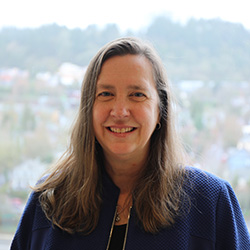
Monica Hinds, Ph.D., co-directs the program. She is a professor of biomedical engineering and assistant dean of graduate student affairs at the OHSU School of Medicine.
Apply now
Email application materials in a single PDF to Nabil Alkayed, M.D., Ph.D., at alkayedn@ohsu.edu.
Questions?
Email Nabil Alkayed, M.D., Ph.D., at alkayedn@ohsu.edu.