Breaking the cycle of nearsightedness
Every parent knows the routine: your child squints at the board at school, you schedule an eye exam, and they come home with a new pair of glasses. A year later, the prescription is stronger and the cycle repeats.
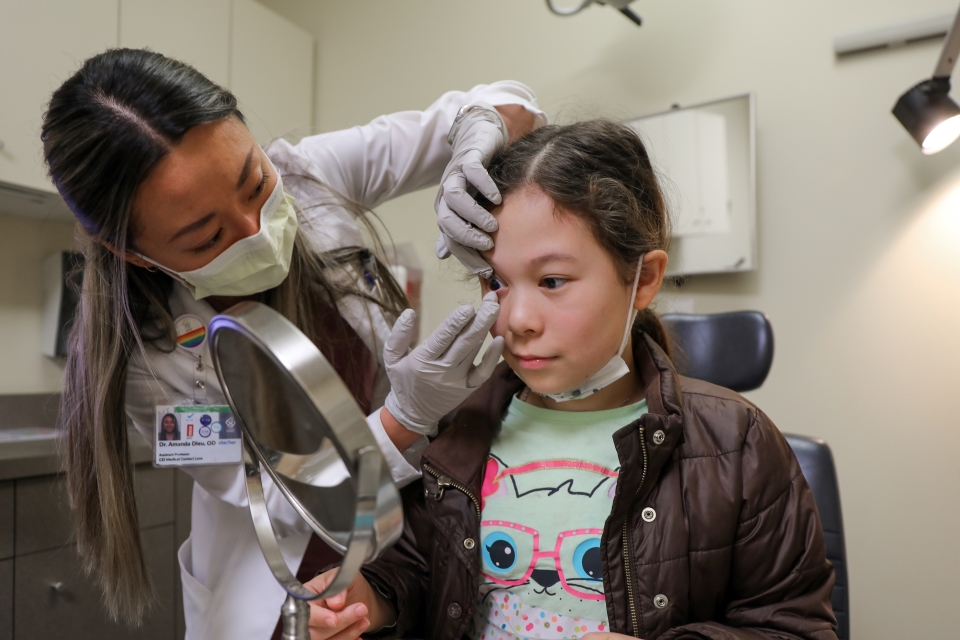
At OHSU Casey Eye Institute, Drs. Amanda Dieu and Margaret Overstreet have created a myopia management program that's breaking this cycle of progressive nearsightedness and transforming children's lives.
Understanding the growing problem
Myopia, or nearsightedness, happens when a child's eyeball grows too long, making distant objects blurry. It's not just an inconvenience—it's a rapidly growing health crisis.
"By 2050, half the world's population will have myopia," explains Margaret Overstreet, O.D., assistant professor of ophthalmology in the Elks Children’s Eye Clinic at Casey Eye Institute. "When the eyeball stretches too much, it raises lifelong risks for glaucoma, retinal detachment, and other vision-threatening conditions.” The culprits? More time indoors and increased screen time.
For Marisela Schwarck's son Adam, the problem revealed itself unexpectedly. "Because of his young age, he simply assumed that was how everyone saw the world," she recalls. “It wasn't until Adam mentioned to his pediatrician that he couldn't see the vision chart that we realized something was wrong.” The news was alarming: Adam's myopia was progressing rapidly.
A different approach to treatment
Traditionally, children simply received stronger glasses each year. Casey Eye Institute's program takes another approach: slowing progression before it accelerates.
"We intervene in early childhood to slow myopia progression," says Dr. Overstreet. "We want to make sure they have clear vision now as well as good long-term eye health."
The program uses three proven treatments. Low-dose atropine eye drops at bedtime to slow eyeball growth. MiSight® contact lenses provide clear vision while limiting eyeball elongation. Overnight contact lenses temporarily reshape the eye's surface.
Studies have shown that these treatments could cut myopic progression by as much as half—a dramatic difference that protects their long-term vision.
Real results for real families
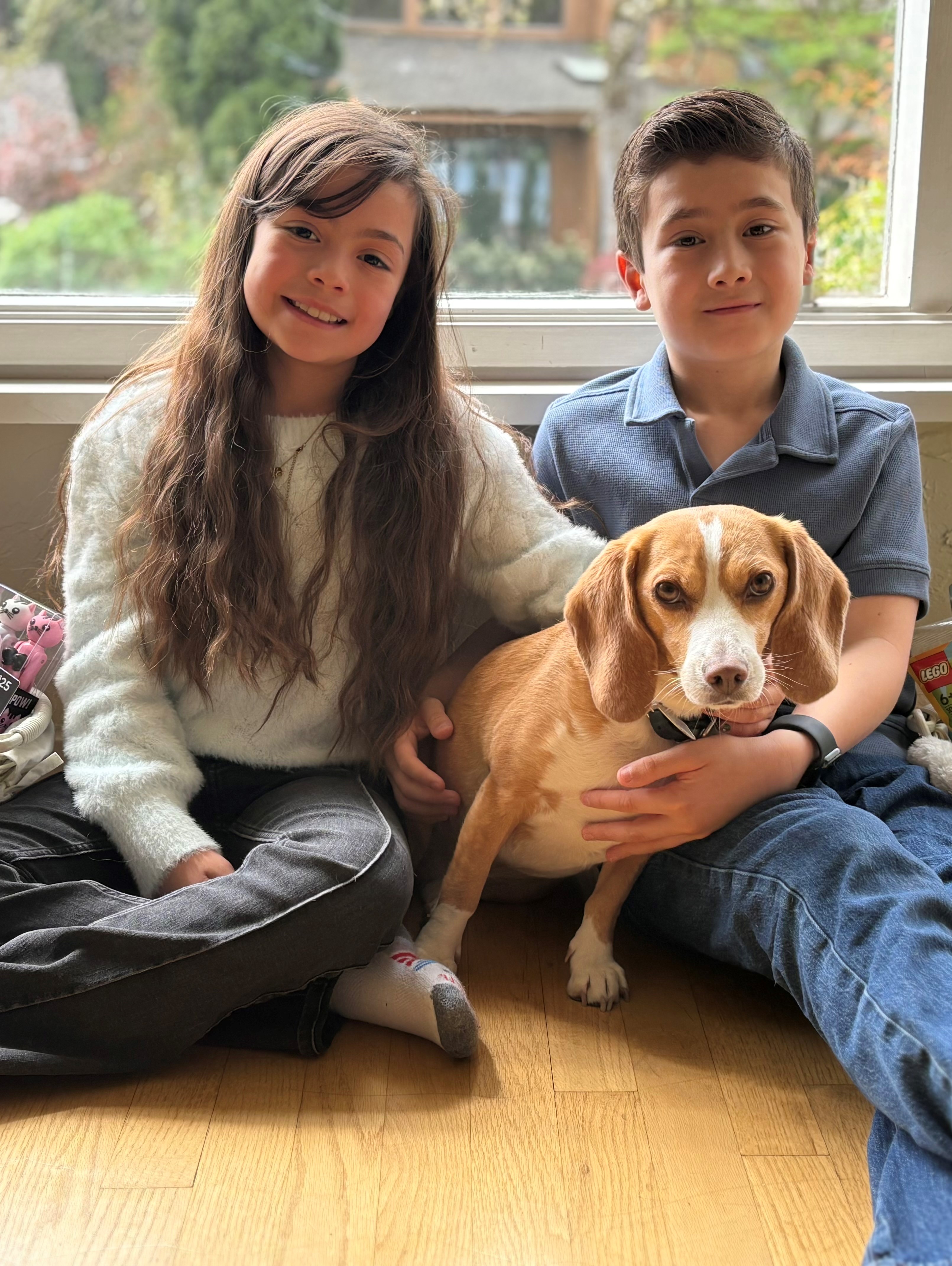
When Adam's optometrist referred the family to OHSU, they found more than just treatment—they found hope. The energetic 11-year-old was struggling with heavy and uncomfortable glasses, while his 9-year-old sister Luna wasn't happy wearing glasses, especially while reading.
The impact has been transformative. “Adam and Luna have been on the swim team for years but never enjoyed wearing prescription goggles,” Marisela says. “Now with clear vision throughout the day, they fully enjoy playing swimming, tennis, or just running around—without the hassle of glasses. They absolutely love it."
What makes Casey's program different
While many eye doctors now offer myopia treatments, Casey Eye Institute provides comprehensive care and monitoring under one roof.
"We measure every child's eyeball length every six months, using specialized equipment that most practices don't have," explains Dr. Dieu. "This lets us track whether treatments are actually improving vision and preventing the eye from growing too long, therefore reducing future risks for vision loss."
The program draws patients from across Oregon, Washington, and Idaho to access this level of specialized care.
Removing barriers to care
The program's biggest challenge isn't medical—it's financial. MiSight® contact lenses can cost more than $1,000 a year, while atropine eye drops cost $125 every few months. Most insurance plans don't cover these preventive treatments.
Thanks to support from The Clark Foundation, the clinic has been able to provide some free care to low-income families. This philanthropic support is enormously helpful when it is available.
"The gratitude from families is immense. Parents understand they're not just getting help with glasses—they're protecting their child's vision for life," shares Dr. Dieu.
An investment in the future
Many children in the program continue treatment through college before transitioning to regular contacts. “Myopia management is not just helping kids right now – it’s helping them 30 years from now. This treatment has a lifetime impact,” says Dr. Overstreet.
The program has two goals: continuing to offer treatment based on evolving research, and expanding access to as many patients as possible. Now that effective treatments are available for the problem of myopia, this program represents hope for a generation of children.