What Vision Means to Me: A Photo Essay
Celebrating 35 Years of Vision at Casey Eye Institute
At the OHSU Casey Eye Institute, every story begins with a moment of human connection—patients seeking answers, clinicians offering hope, researchers pursuing new discoveries, and trainees learning what it means to save sight. In honor of Casey Eye Institute’s 35th anniversary, What Vision Means to Me celebrates these moments and the people behind them.
Since its founding in 1991, the OHSU Casey Eye Institute has been committed to saving sight through excellence in clinical care, scientific innovation, education, and community service. Our breakthroughs matter because of the lives they touch. These photo essays share the voices of patients whose courage inspires us, faculty and researchers advancing the future of eye care, staff keeping our mission moving, alumni carrying Casey’s values into their careers, and donors ensuring that discoveries continue.
This collection of photo essays celebrates 35 Years of Vision—and the people who give that vision meaning. Together, we see what’s possible.
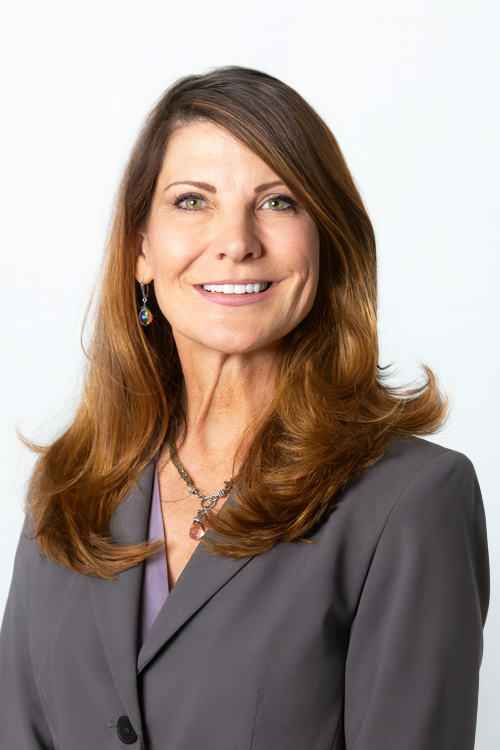
Patricia Buehler, M.D.
Class of '95
As a medical student at Johns Hopkins, what drew me to ophthalmology was that the eyeball was the only place in the body where you can literally see the anatomy and pathology in front of you, operate at a small scale, and see immediate, life-changing results. I had a remarkable mentor, Dr. Stuart Fine, who involved me in ophthalmology research and patient care and showed me how grateful people were for their vision. That combination of beauty, complexity, and immediate meaningful impact had me hooked.
My path to Casey Eye Institute was shaped by both opportunity and life. My husband is from Oregon and wanted to return home, which led me to Casey for residency. During my training, I was deeply influenced by the faculty, especially Dr. Joe Robertson. He modeled lifelong learning, efficiency, and service, and those values stayed with me.
What I love most about my work is restoring vision with cataract and refractive surgery, and restoring confidence with eyelid surgery. Even after 30 years, I still get a thrill out of seeing a patient’s happiness when they realize they can see clearly again.
Casey’s commitment to caring for people who lack access to care also shaped my career. That culture inspired my involvement in providing uncompensated care, international surgical training, and conducting research to advance innovation. Even as a community ophthalmologist, and now an inventor of a medical device for eyelid surgery, I’ve always felt supported by Casey through collaboration and shared purpose.
Being a Casey alumna means carrying the values of compassion, innovation, and service forward. I’m proud to be part of Casey’s lasting impact on eye care.
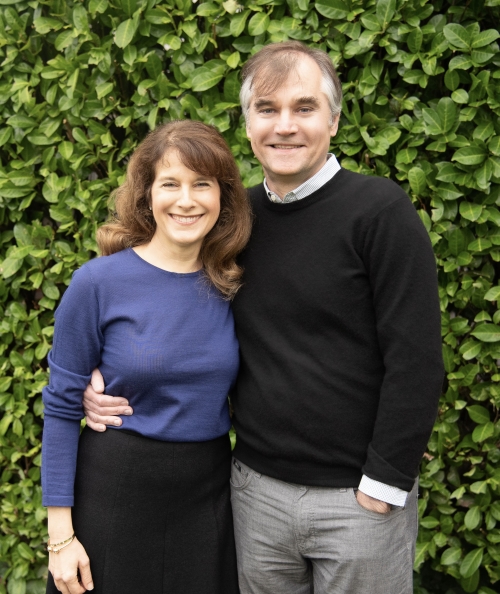
Elizabeth and Thomas Gewecke
Donors
After our son was diagnosed with an ocular melanoma, we consulted with doctors across the country. Everyone we talked with guided us right back to Oregon.
Dr. Alison Skalet and her team at Casey Eye Institute is one of the best in country, and the care they provide is life changing. Clinic, surgery, research, all in one place, all world-class, all in Oregon.
We support Casey Eye Institute so Dr. Skalet’s work can continue to lead the way in ocular oncology. We are forever grateful.
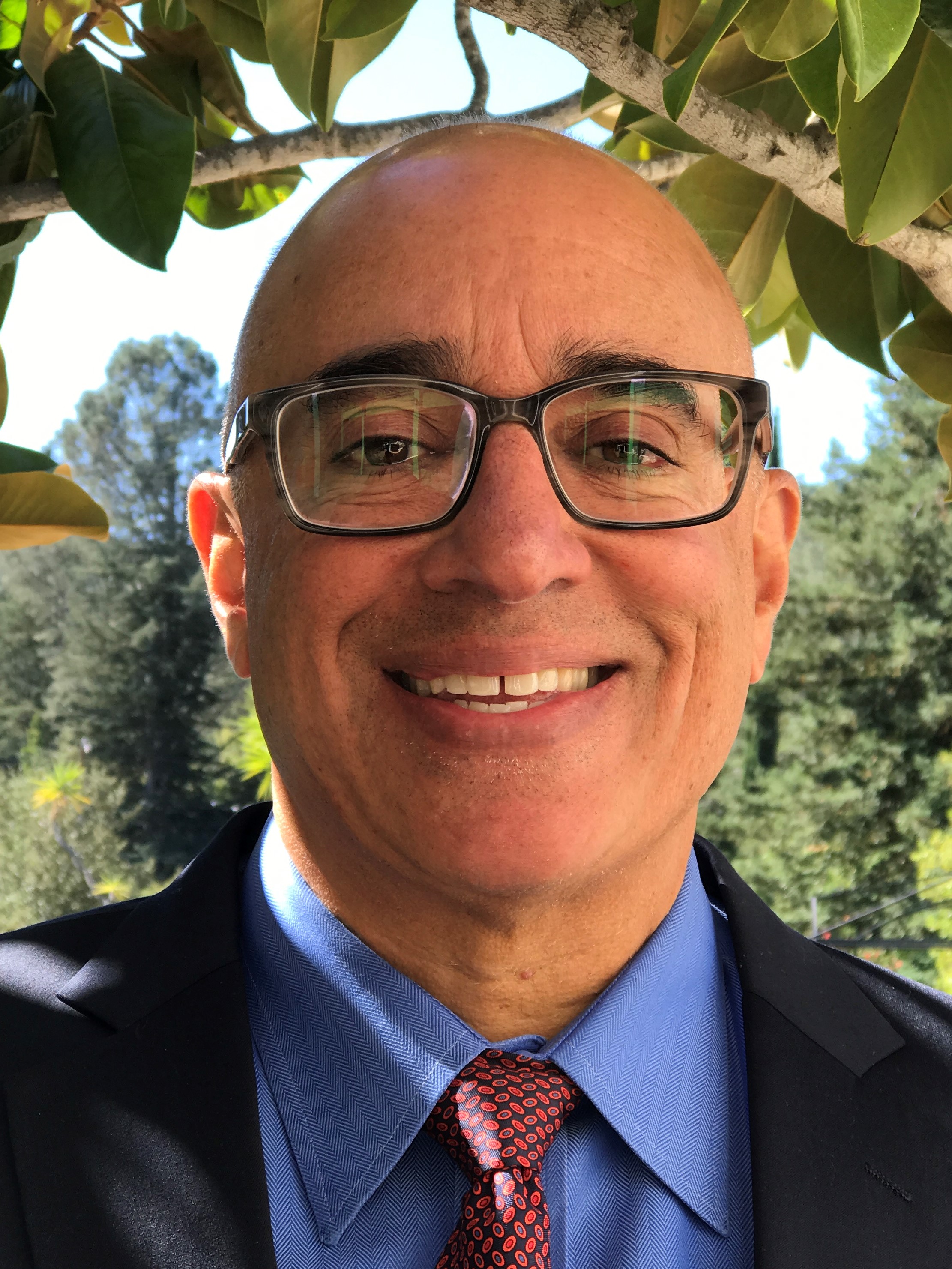
Kuldev Singh, MD
Class of ‘91
My connections to both ophthalmology and to the Casey Eye Institute developed during medical school at Johns Hopkins. The original interest in ophthalmology grew out of public health, when I discovered the large unmet need to address global blindness. During this time, I also developed close friendships with David Wilson and John Morrison, who had trained at OHSU and were fellows at Johns Hopkins when we met. David and John both returned to Oregon and were very important in my education and career development both in Baltimore and Portland. I was part of the first residency class to graduate from the Casey Eye Institute building, and from the beginning, it felt like a place committed not just to excellence, but to people.
The lessons learned at Casey Eye had a greater influence on my career as a practicing ophthalmologist than those at any other institution. The one-on-one mentorship, patience, and genuine interest in career development was truly unique. The humility with which the faculty approached patient care, teaching, and research has shaped how I practice medicine to this day.
I am grateful to Casey Eye for the strong foundational clinical training that emphasized transformational over transactional care. I learned to treat every patient like a neighbor or family member. This egalitarian approach, which is so characteristic of the Casey community, has stayed with me throughout my career and has deeply influenced how I view the patient-doctor relationship.
As alumni, we carry Casey’s legacy with us. Wherever we practice, we become ambassadors for the values we learned here—excellence, humility, and patient-centered care—values I strive to uphold every day.
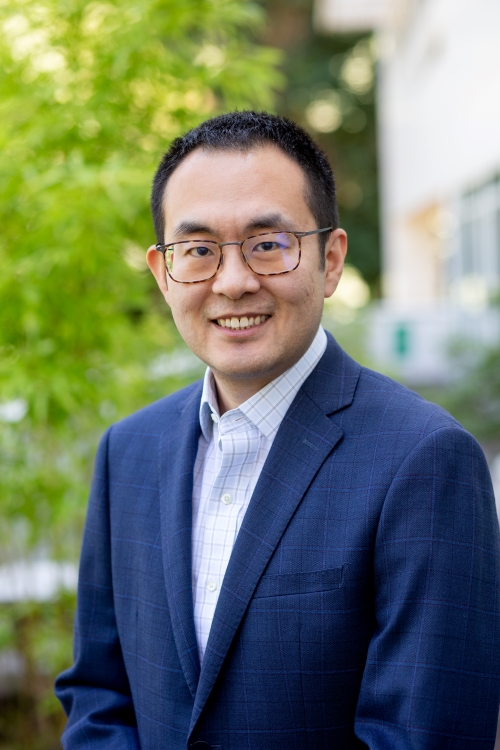
Yifan Jian, Ph.D.
Researcher, Associate Professor of Ophthalmology and Biomedical Engineering
I thought being able to visualize living cells in a human was one of the coolest things I could imagine, so that’s what drew me to pursue high-resolution retinal imaging research as a career.
One of the systems I created was designed to image the retinas of premature babies at risk of retinopathy of prematurity, a major cause of childhood blindness. It wasn’t until we started using the prototype with real patients that we understood how difficult this disease is to see and diagnose. Comparing our images to what was available at the time made it clear how useful the new technology could be to help doctors treat these babies. Seeing the impact firsthand made me appreciate how well integrated translational research and clinical care are at Casey Eye Institute, and that what we do really matters.
Because my research focuses mostly on very young children, I think that if we could do something now to help save their vision for a lifetime, that really means the world to me. Seeing how patients' lives are impacted by our research propels us to discover methods to make the technology better, more accessible, and more affordable.
The amount of research that has been done at the Casey Eye Institute is tremendous. So many leaders in the field are here, strengthening Casey’s legacy every day. Vision is one of our most important senses, and anything we can do to preserve, improve, or rescue it is important.
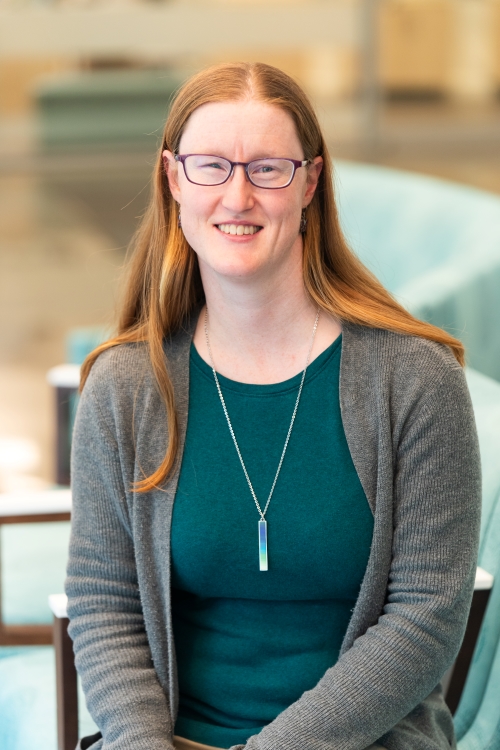
Kathryn Marxen Simonson, MSOT, OTR/L, CLVT
Occupational therapist in the Vision Rehabilitation Center
I’ve lived with vision loss my whole life, even though for years I wanted to hide it. When I was 12 weeks old, I had emergency cryotherapy for retinopathy of prematurity – a treatment pioneered by Dr. Earl Palmer at Casey Eye Institute. When my family moved to Oregon when I was eight, I was lucky enough to become one of Dr. Palmer’s patients. He treated my life, not just my eyes.
A defining moment in my career came in graduate school, when I received equipment from a state service for the blind but didn’t get the training to use it well. That’s when I discovered how powerful occupational therapists could be — teaching others not just what tools to use, but how to use them with proficiency and confidence.
Now as an occupational therapist, I see every day how the little things make a big difference. Showing someone a new tool and seeing them light up, or hearing a client say, “I have my fingerprint back,” because they stopped burning themselves filling up a cup of hot coffee — that’s what keeps me going. Helping people live a more independent, safe, and satisfied life is incredibly rewarding.
I wouldn't be here today without Casey's legacy of excellent patient care and research. I benefited from Casey’s vision-saving research as a baby, received care as a child, and now I get to share my knowledge and experience to help my clients live their life to the fullest. It’s a full circle moment.
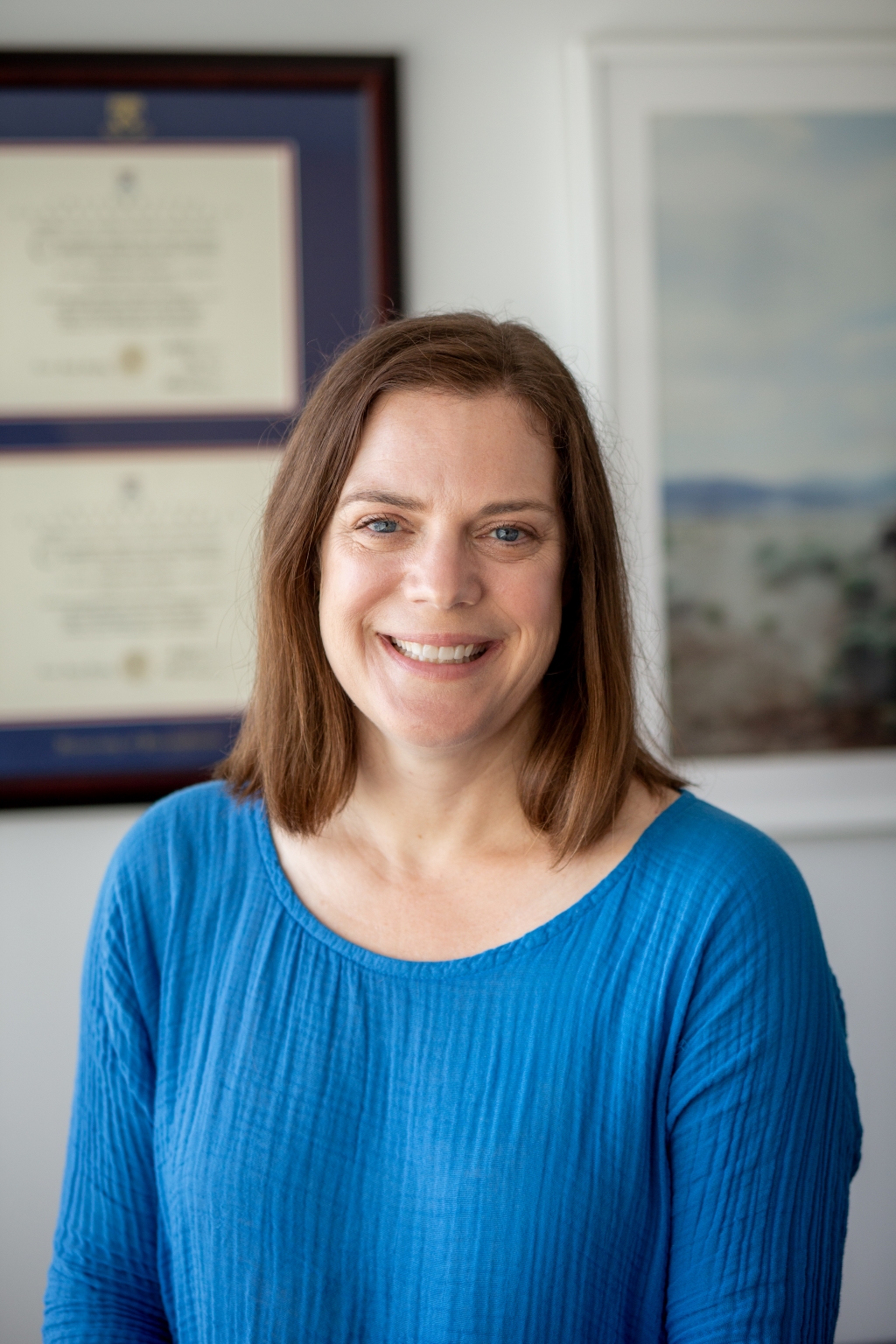
Alison Skalet, M.D., Ph.D.
Physician-Scientist, Professor of Ophthalmology, Paul H. Casey Chair in Ocular Oncology
My journey to becoming a doctor started when I was a child in my grandmother’s attic, where I discovered stacks of nursing magazines. I fell in love with science and medicine and knew that was what I wanted to do.
I originally planned to become a medical oncologist because cancer touches everyone. My grandmother had cancer when I was a child, and I was also fascinated by cancer biology. However, during my M.D./Ph.D. training, I realized I loved surgery. I chose ophthalmology because I love that it combines the skillset of an ophthalmologist with the mindset of an oncologist.
Now as an ocular oncologist, I treat eye cancers in both adults and children. I like taking action and fixing things when I can, but I especially value the long relationships I develop with patients, some I’ve known for 15 years. We meet at a stressful time in their lives, and we often form a lasting bond.
My research with OHSU colleagues focuses on new ways to diagnose and treat eye cancers using blood tests and advanced imaging. I hope that 20 years from now, I’m treating this disease completely differently. I want treatments that cure this cancer while preserving vision.
I know we make a meaningful difference for patients. My clinical team takes good care from the first phone call through every follow-up treatment—and patients are genuinely grateful, which makes a huge difference.
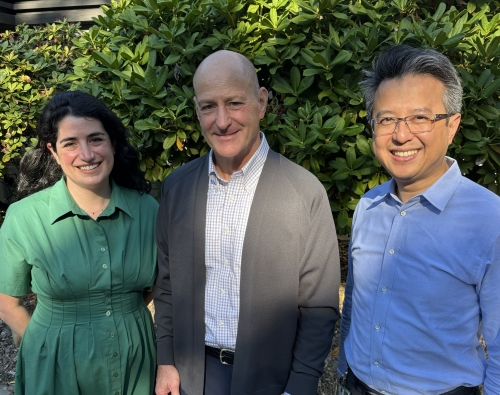
Joe Whittinghill
Donor and Patient
One of my favorite places is where the Stillwater River in southern Montana spills down from the Beartooth Mountains. Late last September, I paused to look at the fly rod in my hand, the rocks beneath the rippling current, the layers of cottonwoods along the river. I thought, “Boy, it would really be a sad day if I wasn’t able to see this.”
In 2015, I began experiencing worrying symptoms with my sight. By 2016, my peripheral and night vision had been almost entirely compromised. Despite seeing several specialists in Seattle, no one could pinpoint the cause behind my progressive eyesight loss. Those doctors went above and beyond to get me referred to Dr. Mark Pennesi in the ophthalmic genetics clinic at OHSU, where I also met Dr. Paul Yang.
At first, they were stumped too — until they reached a definitive diagnosis: non-paraneoplastic autoimmune retinopathy, a rare autoimmune disease in which the immune system attacks the retina. Dr. Yang is one of the few people studying this, which is pretty stunning.
Thanks to my treatments, my vision loss has stopped progressing and is now stable. My experience at OHSU inspired us to establish a one-year fellowship in Ophthalmic Genetics, which will help support the next generation of physicians training at OHSU and the Casey Eye Institute.
Supporting Casey Eye Institute through philanthropy feels significant. It feels exciting to be a part of participating with others who saw the need and stepped up to do something. When you go to Casey Eye, you can feel how important private support has been to the institute.
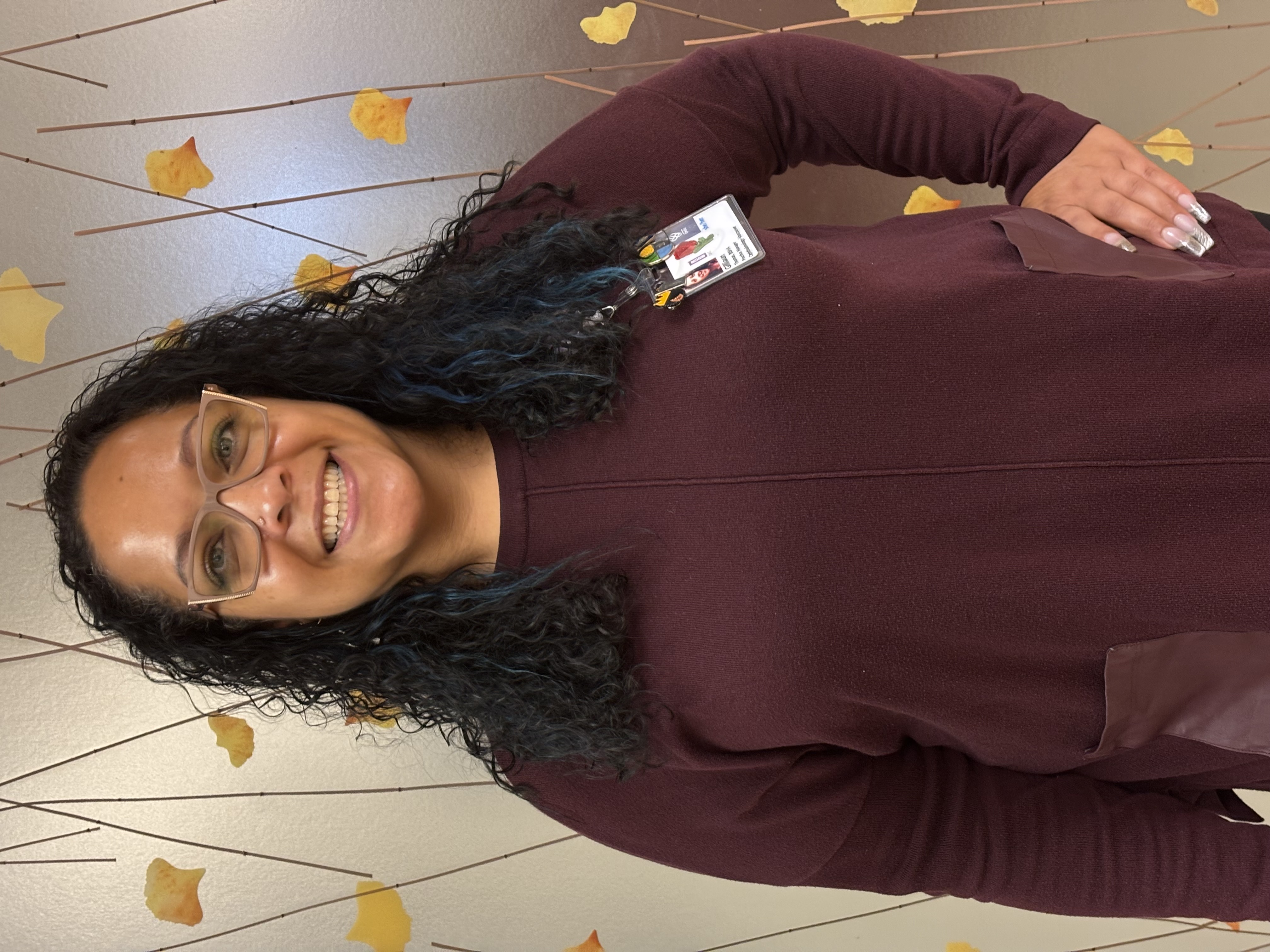
Gilliaun Thomas
Staff, Vancouver, WA
I started working in an eye clinic right out of high school, long before I knew what I wanted to do. Even though I didn’t know much about eyes, I knew I wanted to help people. Healthcare felt like the right place to start. What I didn’t expect was that it would become my career and I’d still be here twenty years later.
What makes Casey special is the “Sigrid way.” As the department’s original associate director, Sigrid Button built a culture of caring that has kept me here for two decades. It feels good to work in a place that carries on her legacy of taking care of one another and remembering that patients are the reason why we are here.
Helping people navigate a complicated healthcare system is where I find the most joy. I want people to leave our clinic feeling like I made their life better. I’m always advocating for Casey in the community because I truly believe in what we do: providing the best eye care, improving access to care, and finding new treatments to save sight.
As a person of color, I feel fortunate that I am in a position to speak to other people of color about OHSU and Casey Eye Institute. We are here for everybody, no matter where you come from, how you got here, or where you're going—we are going to help you.
Being part of Casey’s 35-year legacy inspires me to keep going, keep learning, and keep helping. We’ve come so far, and there’s still so much more we can do.
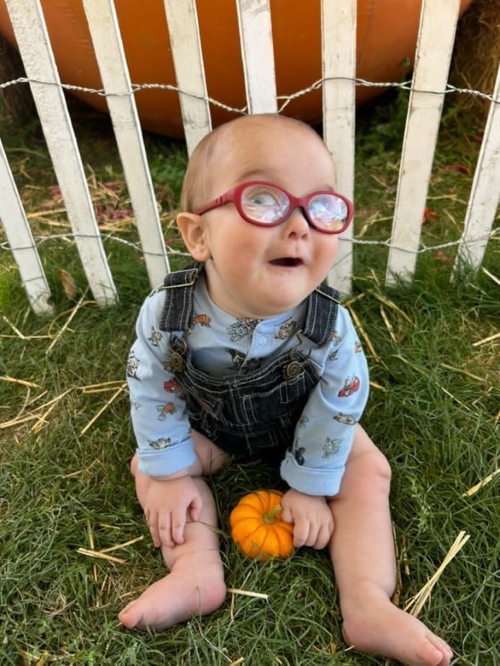
Ellie Morris
Mom of Silas, 2
My family and I are filled with overwhelming gratitude for the care, dedication, and hope that OHSU Casey Eye Institute have brought into our lives. Because of them, Silas has been given a gift that feels nothing short of miraculous: the gift of sight.
When he was born with bilateral sclerocornea, a rare congenital condition in which the corneas are cloudy and opaque, we were told he would likely remain blind. But thanks to the expertise, compassion, and innovative treatments provided by the team at Casey Eye Institute, that prognosis changed.
Over the last couple years, he has undergone multiple full-thickness corneal transplants. The progress has been astounding: the moment he reached out and grasped a toy he could see for the first time is forever etched in our hearts.
We know there are more challenges ahead. But thanks to the support and ground-breaking work of OHSU, Casey Eye Institute, and VisionGift, we are hopeful, because we know he is in the hands of people who care deeply — people who are pushing what’s possible in vision science with generosity and heart.
To the doctors, surgeons, nurses, vision researchers, and all the staff at OHSU Casey Eye Institute — thank you for giving our son something that most of us take for granted, but which means everything to our family: seeing the world.
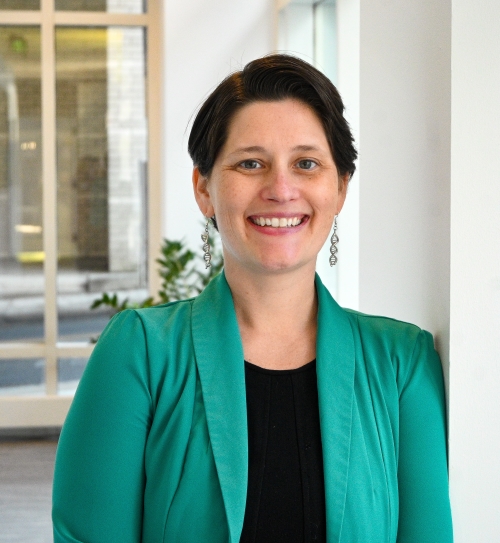
Renee Ryals, Ph.D.
Researcher, Associate Professor of Ophthalmology
I was inspired to pursue vision science when I watched a cataract lens replacement video as a young teenager. Everybody else was covering their eyes, but I thought it was so cool to see something that intricate happening in the eye.
My path into research began in Dr. William Hauswirth’s lab at the University of Florida, where the first FDA-approved gene therapy for retinal degeneration was developed. Being part of that work made me excited about trying to cure incurable diseases. I thought, Here's an impossible problem—sign me up!
Today, I develop and evaluate novel cell- and gene-based therapies for inherited retinal diseases, but working closely with physicians keeps me connected to our patients. When I hear how much hope our research gives them, I’m reminded that we’re not doing this for ourselves but for a whole community of people.
Offering hope is one of the reasons I’m so proud to work at Casey Eye Institute. Dr. Richard Weleber built this clinic when no therapies existed. Now, 35 years later, Casey is one of the top gene therapy clinical trial sites in the country, offering treatments that weren’t possible before. I feel so grateful to be part of this ophthalmic genetics team.
I focus on translational science—therapies that can realistically move into the clinic. It’s very exciting and motivating when my data helps launch a clinical trial. My goal now is to make something at Casey that we can truly translate to our patients, and I’m not going to give up until we do.
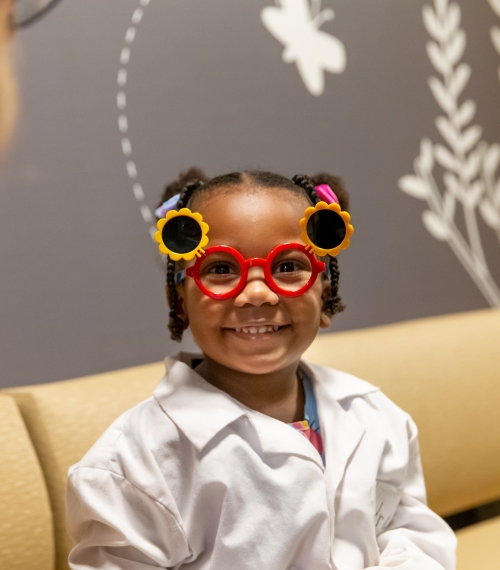
Jasmine Wilder
Mom of Zaedra, 6
When my daughter Zaedra was two and a half, we started noticing her right eye drifting when she was tired. Because of my own history with vision problems, I’ve always been hyper-aware of anything related to eye health so I wanted to get her checked out right away.
Dr. Summers was amazing. She evaluated Zaedra and set her up in an eye patching study to help fix her eye alignment. Zaedra did such a great job wearing her patches every day. Within weeks, I could see a real difference — her eyes were more aligned, she could focus better, and she had a new sense of confidence.
I think the main thing that always stood out to me was the level of care Zaedra received at Casey Eye Institute. Dr. Summers didn't seem like she was just doing her day-to-day job. The whole team really listened to Zaedra, were patient, and made sure she felt part of her own care. Seeing her realize that her voice mattered was really important for both of us.
Now she’s thriving in school, making friends easily, and is so proud of the work she put into her vision. I am grateful and thankful that we could get her care at Casey Eye Institute.