Myopia
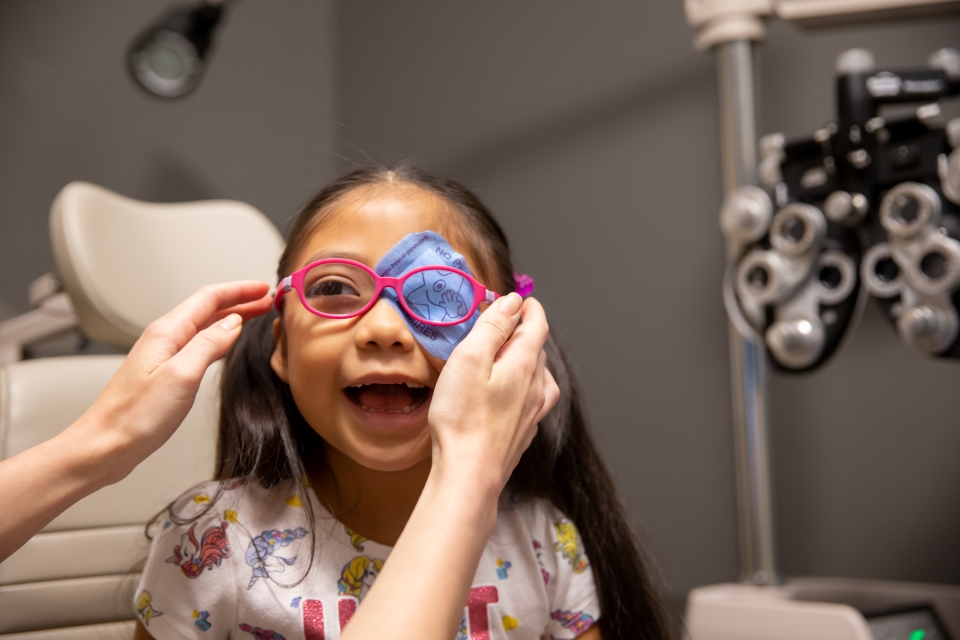
Myopia on the rise, especially among children
Myopia, also known as nearsightedness, is on the rise in the U.S. and around the world—particularly among children. The World Health Organization predicts that, if the current trend continues, half of the world’s population will be nearsighted by 2050 — with up to one-fifth at an increased risk of blindness due to complications of severe myopia. Casey clinicians and researchers are exploring several potential solutions to preventing and slowing this troubling trend.
Why is it happening?
There is a growing scientific consensus that at least one contributor to the epidemic is an increase in the amount of time we spend indoors on phones and computers (known as ‘near work’) versus time outdoors, in natural light.
How does that happen?
When children spend time looking up close, a significant part of the image is not focused properly on the edges of the retina, the light-sensing part of the eye. This blurred image causes the eye to grow longer, which leads to increased levels of myopia. Researchers are investigating what chemical or physical process is controlling this eye growth, as understanding why it is happening may allow us to control the process in the future.
Another factor that may be contributing to myopia is the growing amount of time children spend indoors. Studies have shown that children who spend more time outside are less likely to develop myopia than those who spend more time indoors. While we don’t yet understand exactly why, most pediatricians would agree that spending more time outdoors is good for everyone’s physical and mental well-being. Genes also play an important role in myopia. Children with one or both nearsighted parents are more likely to become myopic. But something else is happening — genes take many centuries to change, yet the prevalence of myopia in the U.S. increased from 25 percent in the early 1970s to nearly 42 percent just three decades later. It’s clear that something in the environment is driving the current uptick in myopia.
“Nearsightedness is increasing worldwide as people spend more time indoors and in front of screens,” said Margaret Overstreet, O.D., an assistant professor of ophthalmology in the OHSU School of Medicine and a pediatric optometrist at the OHSU Casey Eye Institute. “Not only are kids needing to get glasses sooner, but the more time people spend indoors and doing near work can increase the rate of myopia progression.”
What’s at stake?
Myopia affects a child’s academic success. Large studies have shown that children who have myopia, but don’t have corrective glasses, fall behind in school, because they can’t see the white board or Smart board at the front of a classroom, among other challenges. The problem goes beyond fitting more children with glasses. "People with nearsightedness have a higher risk for developing other eye conditions, such as glaucoma, cataracts and retinal detachment — severe cases of which can cause blindness,” says Overstreet.
Casey researchers pursue solutions
Casey is participating in a national, multi-center clinical trial that involves using a medication called atropine to delay and slow the progression of myopia in children. The medication takes the form of nightly eyedrops. It is widely used to slow myopia in adults, but it’s still not clear which dose is effective for slowing the rapid progression in children. The research is in early days, but the preliminary results are promising and further studies will help determine the ideal dose and timing. Right now, the only FDA-approved treatment for myopia progression is the use of specially-made soft contact lenses. Children as young as six can start wearing them, and research shows they slow myopia’s progression. One drawback is that the lenses are costly, and not yet covered by health insurance. Fredrick predicts that, once FDA approved for children, the atropine eyedrops may be even more effective than contact lenses. While drops are less expenses than contacts, they are not currently covered by health insurance, either.
Early screening is key
Thanks to a grant from the Oregon State Elks Association, the Elks Children’s Eye Clinic provides free vision screenings for preschoolers all over the state through its Preschool Vision Screening Program. The program collaborates with Head Start programs and public libraries to prevent vision loss in children by screening over 8,000 kids annually, referring over 700 kids every year to an eye doctor to be checked for a potential vision problem, like myopia.
Educating parents and pediatricians
Now that the research connecting myopia to time indoors and near work has become so clear, Casey clinicians are talking to parents and pediatricians about the importance of spending time outdoors and seeing an eye doctor. "Treatment in early childhood to slow the progression of myopia is so important to help save a child's vision for life," says Overstreet. "It's not just helping the problem right now, but it's helping them 30 years from now. This is a lifetime impact."