What is a PA (Physician Assistant/Associate)?

Physician associates, also called physician assistants or PAs, are medical providers who diagnose and treat patients. They prescribe medication, perform exams and work in many areas of medicine.
You’ll find PAs in clinics, hospitals and community settings working closely with doctors and other providers.
What do PAs do?
PAs care for, diagnose and treat patients of all ages. What they do depends on where they work. In hospitals and clinics they often:
- Talk with patients and review their medical histories
- Perform physical exams
- Diagnose health conditions
- Create treatment plans and follow up with patients
- Order and review tests
- Prescribe medications
- Perform minor surgical procedures like suturing wounds and setting fractures
- Assist in major surgeries and procedures
- Counsel patients on preventive care and wellness
PAs also help patients understand their care and make decisions. They work closely with doctors and also see patients independently. In Oregon, PAs can practice without direct supervision and consult doctors as needed.
How to become a physician assistant (physician associate)
Step 1: Start with a bachelor's degree in any field
Earn a bachelor’s degree in any field. Most PA programs also require prerequisite science courses such as anatomy, physiology, chemistry, microbiology and statistics.
Step 2: Gain direct patient care experience
Most PA programs require hands‑on patient care experience before you apply. Common roles include EMT, medical assistant, paramedic, certified nursing assistant or registered nurse.
At OHSU, you need at least 2,000 hours of healthcare experience. Explore OHSU’s healthcare experience requirements.
Step 3: Complete a Master of Physician Assistant/Associate Studies (MPAS) degree
Earn a master’s degree from an accredited PA program.
OHSU offers a 26-month, full-time program leading to a Master of Physician Associate Studies degree. You’ll train through coursework and clinical rotations across Oregon, preparing you to work in many specialties.
Step 4: Pass the national certifying exam (PANCE) and get state licensure
After you graduate, you’ll take a national certifying exam called the PANCE.
Once you pass, you can apply for a license through the Oregon Medical Board to practice as a PA in Oregon.
Over the past five years, 92% of first‑time test takers from the OHSU PA program passed the PANCE. Review OHSU’s PANCE performance.
PA salary
PAs earn between $95,000 and $182,000 per year, with a median annual wage of $133,000, according to the U.S. Bureau of Labor Statistics. Your salary depends on your specialty, experience, setting and location. PAs in surgical specialties and underserved areas often earn the most.
Physician assistant / physician associate jobs
The PA profession is one of the fastest-growing healthcare careers in the U.S.
PA graduates work in primary care, specialty medicine and community‑based practices, including rural and underserved areas where access to healthcare is limited.
You can work in settings such as:
- Hospitals and medical centers
- Primary care and family medicine clinics
- Emergency departments
- Surgical centers and operating rooms
- Specialty practices
- Community health centers
- Academic institutions
- Military and federal agencies
Learn more about the profession:
Frequently Asked Questions (FAQs)
How many years does it take to become a PA?
It usually takes six to eight years after high school. This includes a bachelor's degree, patient care experience and a PA master’s program.
The OHSU Master of Physician Associate Studies program takes 26 months to complete.
How much does a physician assistant make?
Physician assistants/associates earn competitive salaries nationwide. According to the U.S. Bureau of Labor Statistics, PAs earn between $95,000 and $182,000 per year, with a median annual wage of $133,000. Salaries vary by experience, specialty and location.
What is the difference between a physician assistant and a physician associate?
Physician assistant and physician associate refer to the same profession. The title is changing nationally to better reflect the role PAs play as skilled, independent clinicians rather than assistants. You may see both terms used during this transition. At OHSU, the program trains physician associates under the historical physician assistant designation as the profession transitions to the new name.
What is the difference between a PA and a nurse practitioner?
PAs and nurse practitioners both diagnose and treat patients, prescribe medication and manage care.
The main difference is their education and training. PAs train broadly in medicine and can work in many specialties. Nurse practitioners train through a nursing pathway and usually focus on a specific patient group, such as family care, pediatrics or adult care.
Both roles offer strong career opportunities, similar responsibilities and comparable salaries. Your choice often depends on your background and the type of care you want to provide.
OHSU offers both a PA program and programs to become a nurse practitioner.
Can a physician assistant prescribe medication?
Yes. Physician assistants/associates can prescribe medications, including controlled substances, in all 50 states. Specific prescribing authority is determined by state law.
Do physician assistants need a doctor present?
In Oregon, PAs do not need a doctor on site. They work under a collaboration agreement and consult doctors when needed.
Why choose OHSU’s PA program
Learn how our curriculum, clinical experiences and faculty mentorship prepare graduates for practice.
Join an online information session
Learn about the program, admissions and more from faculty and current students.
Contact us
- Email: paprgm@ohsu.edu
- Call: 503-494-3633
Meet Emily Sabins, PA alum making an impact
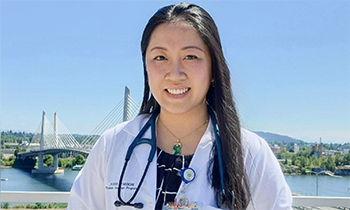
Emily Sabins discovered her passion for the PA role by shadowing clinicians in high school. Today, as an OHSU PA alum, she brings that passion to rural Oregon, serving communities with limited access to care.