Preparing for Your IUD Placement
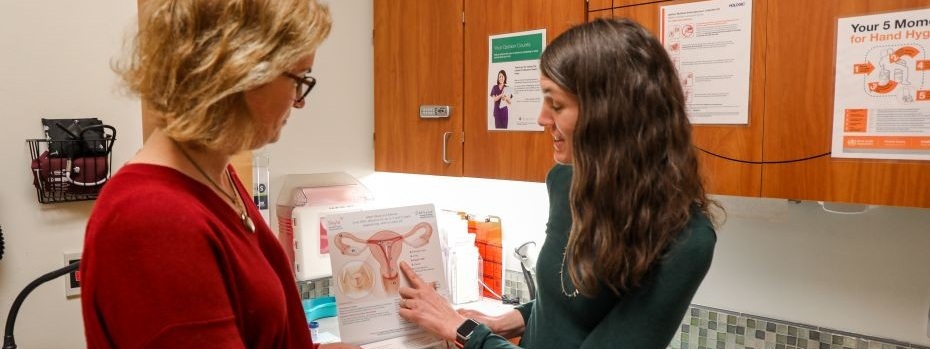
We want your IUD (intrauterine device) placement at the OHSU Center for Women’s Health to be a positive experience. Please read the information below about your options and plans for your visit, including:
Choose a type of IUD
There are 5 different IUDs available: 1 with no hormones and 4 with a single progestin hormone. None of the IUDs have estrogen. If you are unsure which IUD to get, schedule a separate appointment to discuss the options with your clinician. You can also visit this website for more information.
Prepare for your visit
A little planning is helpful for a successful visit. Please review these tips.
Prevent pregnancy. You cannot be pregnant or at risk of pregnancy when you get an IUD. Before your IUD visit, follow one of these methods to make sure you are not at risk of pregnancy.
- Use condoms or birth control correctly and consistently until your IUD placement.
- If you are having an IUD removed and replaced, use a condom or don't have sex for the 5 days before your appointment.
- Don't have sex after your last menstrual period until your IUD placement.
- Have your IUD placement appointment within the first 7 days of your normal menstrual period.
The day of the visit:
- Eat a light meal.
- Drink a lot of water.
- Wear comfortable clothes and underwear that can fit a sanitary pad. We have pads for you to use.
- If recommended by your clinician, take over-the-counter pain relief medicine 1 hour before the visit.
Rides and rest
- You can drive yourself home unless you are taking an antianxiety oral medication or having moderate/deep sedation.
- Some people find having a support person in the room during the procedure or for a ride home helpful.
- You can go back to your activities, but some people find it helpful to rest for the remainder of the day and prefer not to have anything important scheduled for later in the day.
- There are no limitations on physical activity after your IUD placement.
What to expect during the visit
For most people, IUD placement takes about 5-10 minutes.
Here are the main steps:
- We may ask you to get a urine sample for a pregnancy test. Ask if this is needed before you use the bathroom at the clinic. If a pregnancy test is not needed, it is helpful to pee before your procedure.
- Your clinician will explain the steps of the IUD placement so that you feel comfortable and prepared. They will also tell you what to expect after an IUD placement.
- You will sign a consent form after you get answers to your questions.
- You will undress from the waist down. We will give you a drape to stay covered.
- You will put your feet in footrests. Your clinician will do a pelvic exam to find the position of your uterus. The clinician will place a gloved finger in the vagina and a hand on your lower abdomen.
- The next step is to place the speculum. This is a device that holds the walls of the vagina open so the clinician can see the cervix. They clean the cervix with antiseptic soap.
- The clinician will use a medical tool to help steady and straighten the cervix.
- The clinician will then pass a thin tool through the cervix to measure the length of the uterus.
- The last step is to place the IUD into the uterus.
- The clinician trims the IUD strings and removes all tools from the vagina.
- After the placement, you will have a chance to rest.
Your pain relief options
Please tell your clinician if you have concerns or questions about pain relief. We can help you set up a separate visit to discuss your options. We want you to have a good experience with this process.
Getting an IUD can be almost pain-free for some people or cause intense cramping for others. Many people find the IUD placement to be less painful than expected. For example, you may have less pain if you have had a baby by vaginal delivery. Other people might have more pain, including those who have pain during pelvic exams or sex, painful periods or a history of anxiety or trauma.
We have a variety of options to help with pain relief. But some options need extra planning before your IUD visit.
No planning needed
- Over-the-counter pain relief medicines
- Numbing gels
- Numbing blocks
- Heating pads
- Relaxation aides
Extra planning needed
- Nitrous oxide (or laughing gas)
- Antianxiety oral medication (relaxed)
- Moderate sedation (semi-awake)
- Deep sedation (asleep)
Read more about each option below.
-
Pain relief options available at any time
Nonsteroidal anti-inflammatory drugs (NSAIDs) may decrease pain with IUD placement and help with cramping after placement. We recommend one of the following:
- Naproxen (available over the counter): Take 2 tablets (440 mg) 1 hour before your appointment. Take it with food or milk.
- Ibuprofen (available over the counter): Take 4 tablets (800 mg) 1 hour before your appointment. Take it with food or milk.
- Ketorolac: This is a stronger prescription medicine. You can take it as a pill before the visit or as a shot during your visit. Let us know if you would like a prescription to take the pill ahead of time. If you want a ketorolac injection at your visit, do not take any other NSAIDs.
- If you cannot take an NSAID or want to take additional pain medication, we recommend taking acetaminophen 975-1000 mg (3 tablets of 325 mg or 2 tablets of 500 mg) 1 hour before your appointment.
Numbing gels can be helpful if the placement of a speculum is painful. We can put the numbing gel inside the vagina and at the opening of the vagina before the pelvic exam. This can make the pelvic exam and speculum exam more comfortable.
Numbing creams can be used on the cervix to help numb the cervix. This can make the IUD placement more comfortable.
Numbing blocks can decrease pain but do not take it completely away. There are two kinds of blocks, and both use shots to numb an area, which can cause short pain until the numbing works. One block involves shots of numbing medicine into the area next to the cervix. The other type of block involves shots of a numbing medication into the cervix. Numbing blocks can make the IUD placement more comfortable.
Heating pads can help with cramping and are available in the exam room.
Relaxation aides like playing music, following meditation, dimming the lights or having a support person with you during the visit can also help. Please let us know if there are any other ways we can make your exam or procedure more comfortable.
-
Pain relief options that need extra planning
Please let our clinic know if you are interested in any of these options before your visit so we can schedule you correctly. We may need to reschedule your visit to accommodate your request. You can eat and drink normally before your IUD placement.
Nitrous oxide (or laughing gas): A quick-acting inhaled gas to help you relax, but you stay awake. You can do everyday activities, such as walking and driving, without delay. You can drive yourself home.
Antianxiety oral medication: You take a single antianxiety oral medication, such as midazolam (Versed) or lorazepam (Ativan), to help you relax. You remain awake, but you will need a ride home.
-
Pain relief options that need a pre-visit
Please let our clinic know if you are interested in any of these options before your visit so we can schedule you correctly. You will need a ride home and a separate appointment to prepare for this visit. You will need to follow specific instructions not to eat or drink before your IUD placement.
Moderate sedation: You receive pain medication (fentanyl) and an antianxiety medication (midazolam) through an IV in our sedation clinic. You may feel drowsy, but you can wake up when spoken to.
Deep sedation: You remain asleep in a procedure room or operating room for the entire procedure.
For patients
Call 503-418-4500 to learn more about options or make an appointment.
Location
Center for Women’s Health
Kohler Pavilion, 7th floor
808 S.W. Campus Drive
Portland, OR 97239
Free parking for patients and visitors
Pain management matters
Pain should never be a barrier to getting the care you need. We have pain control options for gynecologic procedures.