Online Master's Degree Program in Food Systems and Society
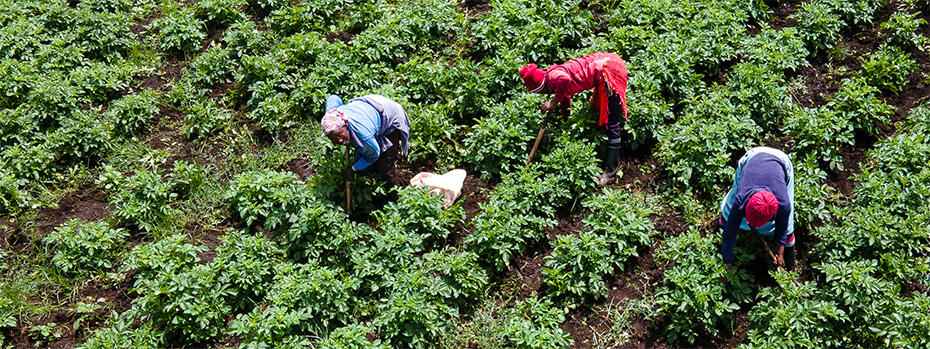
Earning your M.S. in Food Systems and Society from OHSU helps you shape a more just food system by learning how to identify, assess and address social justice problems.
Why choose OHSU for your M.S. in Food Systems and Society?
- Focus on social justice. Dive into the systemic challenges of the food system and learn how to create equitable solutions.
- 100% online program. Complete all classes online, on your schedule, with mostly asynchronous coursework.
- Meaningful research. Conduct text-based research on a food systems and society–related social justice issue to better understand the problem and inform future action.
- Career-ready graduates. Past graduates work in education, research, health care, policy, sustainability, journalism, government and nonprofit leadership.
Scholarships available
OHSU offers a variety of scholarships that can help fund your education.
Admission and application requirements
Admissions requirements
To apply, you need:
- A bachelor’s degree in any field
- A GPA of 3.0 or higher
- U.S. citizen residing within the U.S.
How to apply
- Create an online account and select “Food Systems and Society”
- Submit transcripts, a personal statement and two references
- Answer application questions
- The application portal opens Dec. 1, 2026, and closes May 24, 2027.
- Summer classes start August 9, 2027.
Tuition and scholarships
- Cost: $772 per credit for Oregon residents and non-residents. View full estimated costs, including living expenses, books, supplies and other education costs.
- Scholarships: Scholarships are available to help you fund your education, including program-specific awards and opportunities from outside organizations.
Degree requirements
You need 50 credits to earn your M.S. in Food Systems and Society. This includes foundation, practicum and capstone courses.
- Length: 2 years full-time or 3 years part-time
- GPA: 3.0 to graduate
View the student handbook for full requirements and cost of attendance details.
-
M.S. in Food Systems and Society student learning objectives
- Apply concepts in critical social science to identify and evaluate how social, political, economic, and policy systems condition opportunities and outcomes in food systems and society.
- Reflect on and critically analyze the roles of race-ethnicity, class, gender, personal experience, and agency in social justice in food systems and society.
- Reflect on and critically analyze knowledge, scholarship, and experience to understand diverse perspectives and interpret academic literature in order to answer research questions, draw logical conclusions, and construct defensible arguments.
- Apply concepts in critical inquiry and systematic research methodologies to identify, evaluate, and address social justice in food systems and society.
- Create and deliver oral presentations and written reports to engage with diverse audiences on social justice in food systems and society.
- Constructively engage colleagues to collaboratively synthesize, reflect on, and communicate key concepts and approaches to social justice and social change in food systems and society.
Capstone research
Your capstone research gives you the chance to explore the issues that matter most to you. Students research diverse topics that explore how class, gender and race and ethnicity intersect in food systems and society.
Examples of past capstone topics:
- Labor justice in food systems
- Social movements for food justice
- Gender justice in food systems
- Diet-related health disparities
- Food politics and public health
- Oppression and food discourse
Sample class schedule
| Summer (classes start 6/29/26) | Fall | Winter | Spring |
|---|---|---|---|
| FSS 500: Food Systems Inquiry | FSS 501: Concepts and Contexts in FSS | FSS 511: Food Systems and Culture | FSS 520: Food Systems Theories and Methodologies |
| FSS 502: Academic Foundations | FSS 510: Food Policy and Politics | FSS 503: Critical Text-based Research | FSS 504: Capstone Preparation |
| Summer | Fall | Winter | Spring |
|---|---|---|---|
| No courses offered in summer term | FSS 598A: Capstone 1 | FSS 598B: Capstone 2 | FSS 598C: Capstone 3 |
| No courses offered in summer term | FSS 560: Economic Justice in FSS | FSS 550: Social Movements in FSS | FSS 580: Scholarship and Social Change |
| FSS 506: Capstone Completion |
Class descriptions
-
Course title Description Credits FSS 500: Food Systems Inquiry Provides a foundation for advanced study in food systems and society, with a focus on social problems, critical thinking and taking action. 4 FSS 501: Concepts and Contexts in Food Systems and Society Discusses the history and root causes of today’s food system issues through the lenses of class, race-ethnicity and gender. Helps you understand how language, beliefs and knowledge shape what we see as problems and solutions. 4 FSS 502: Academic Foundations Helps you build skills for thoughtful discussion, critical reading and clear, graduate-level writing. 1 FSS 503: Critical Text-based Research Teaches how to search for information, manage sources and cite them properly using a critical, social science approach. 1 FSS 504: Capstone Preparation Prepares you for your capstone research. You’ll use key ideas from the program to pick a social problem and develop your research question. 1 FSS 506: Capstone Completion You’ll present your findings, talk about other students’ research and finalize your Capstone Research Synthesis document. 1 FSS 510: Food Policy and Politics Explores why social justice problems happen in the food system and what can be done about them, through research, policy and real-world practice. 4 FSS 511: Food Systems and Culture Looks at how race-ethnicity, class and gender intersect and how power and privilege show up in the food system. 4 FSS 520: Food Systems Theories and Methodologies Draws on theories from a range of disciplines to help you think critically about food systems and society. You’ll learn how to use these frameworks to ask sharper questions and build stronger, justice-focused research. 4 FSS 550: Social Movements in Food Systems and Society Covers how social movements in and outside the food system work and what we can learn from them to create change. 4 FSS 560: Economic Justice in Food Systems and Society Explores political and economic systems behind food injustice. 4 FSS 580: Scholarship and Social Change Explores how research and scholarship can help make the food system fairer. 4 FSS 590: Capstone Independent Study Work one-on-one with a faculty mentor to carry out your capstone research. You can take this more than once for credit. 1 FSS 598A: Capstone 1 In Capstone 1, you’ll define your research problem, choose your frameworks and decide how you’ll do your research. 5 FSS 598B: Capstone 2 In Capstone 2, you’ll collect data, analyze it and start writing. 5 FSS 598C: Capstone 3 In Capstone 3, you’ll pull everything together into a final written capstone paper. 4 FSS 598D: Capstone Continuation If you need more time after Capstone 3, you can continue your work with instructor approval. 2 Total required credits 50
M.S. in Food Systems and Society degree program FAQs
What is the study of food systems?
The study of food systems explores how food production, policies, distribution and eating habits relate to larger issues like sustainability, equity and health. The M.S. in Food Systems and Society at OHSU prepares graduates to address social justice in food systems and society.
What can I do with a master’s in Food Systems and Society?
A master’s in Food Systems and Society can help you advance your career by preparing you to address the root causes of food inequities.
Possible roles include:
- Food policy advisor. Shape policies that impact food access, labor practices and public health at local, state or national levels.
- Nonprofit director. Lead organizations focused on food justice, community food security and anti-hunger advocacy.
- Food systems researcher. Study the relationships among food, equity, environment and policy in academic or nonprofit settings.
- Community organizer. Mobilize communities to push for equitable and sustainable food systems at the grassroots level.
- University program leader. Develop and lead academic programs focused on food systems and society.
This degree also supports careers in teaching, consulting, journalism or further graduate study in fields like public health, sociology or policy.
How will an M.S. in Food Systems and Society prepare me to solve local and global food challenges?
The M.S. in Food Systems and Society helps you understand the systems behind global social justice problems, focusing on how class, gender and race and ethnicity intersect. You’ll study how policy, culture and power influence food systems. The program equips you with tools to understand, assess and address real-world food systems issues.
How long does it take to earn an M.S. in Food Systems and Society?
You can complete the program in two years if you study full-time, or three years if part-time.
What’s the difference between an M.S. in Food Systems and Society and an M.S. in Human Nutrition?
An M.S. in Food Systems and Society focuses on the broader issues affecting food systems, using a critical social science lens. You’ll explore social justice, policy, sustainability and the cultural impacts of food. It prepares you to address challenges such as food insecurity, climate change and equity within food systems.
An M.S. in Human Nutrition focuses on the science of food and its impact on human health, using a biophysical science approach. This degree prepares you to work with individuals or communities to promote healthy eating habits, manage diet-related health issues and develop nutrition programs.
While both degrees explore food and food systems, an M.S. in Food Systems and Society emphasizes systemic social issues and an M.S. in Human Nutrition focuses on individual health and dietary practices.
Hear from students
“I was able to use this degree to leverage a sharp turn in my career. Now I am a policy director with the California Food and Farming Network and I pull from my FSS experience every day.”
- Elizabeth Smoker, FSS graduate
“This program changed my life. It changed how I see and understand the world. It changed everything I understood about how to do my work as a dietitian — how to incorporate social justice work into my role as a dietitian. Food systems affect everything we do as dietitians.”
- Kathleen Hahn, FSS graduate
“As a Legislative Coordinator for the State of Oregon, I engage with the food system by working on state public policy that connects Oregonians and helps communities thrive.”
- Kayla Byers Hootsmans, FSS graduate
Earn your M.S. while completing a Dietetic Internship
If you want to become a registered dietitian, OHSU's combined program lets you earn your M.S. in Food Systems and Society and complete your Dietetic Internship at the same time, preparing you to sit for the RD exam.