Infectious Diseases Fellowship

The two-year Infectious Diseases Fellowship at OHSU prepares you to diagnose, treat and prevent infectious diseases across diverse patient populations and care settings. A third year is available for fellows who pursue advanced research or specialized clinical training.
The Division of Infectious Diseases oversees the fellowship at OHSU Hospital, Portland VA Medical Center and partner sites throughout the Pacific Northwest.
You will train in a program that is unusually broad and deep, with opportunities that span:
- HIV medicine
- Transplant infectious diseases
- Mycobacterial disease
- Medical education
- Substance use and ID
- Public health
You can pursue a dedicated HIV pathway with focused continuity clinic and mentored research, gain advanced experience in solid organ and stem cell transplant ID alongside a large team of transplant specialists, or build expertise in tuberculosis and nontuberculous mycobacterial infections through OHSU’s regional referral clinic and collaborations with county TB programs.
If you're interested in medical education, you can work with career educator-faculty who lead courses and national conferences. If you're drawn to public health and epidemiology, you can partner with the Oregon Health Authority and the OHSU–PSU School of Public Health on major surveillance and outcomes projects.
Across all pathways, you will balance complex clinical work with structured mentorship and funded scholarly activity, preparing you for academic, public health and private practice careers.
Fellowship objectives
OHSU is an academic quaternary care setting where you will see a wide range of infectious diseases, from common to rare. During your fellowship, you will:
- Diagnose and manage a broad spectrum of infectious diseases in hospitalized and ambulatory patients
- Provide expert consultation for complex medical and surgical cases
- Apply antimicrobial stewardship and infection prevention principles in daily practice
- Lead and participate in multidisciplinary rounds and conferences
- Design and complete at least one mentored scholarly or quality improvement project
- Communicate effectively with patients, families and interprofessional teams
- Develop skills to lead antibiotic stewardship, infection prevention and OPAT programs
- Prepare for careers in academic medicine, public health or clinical practice
You will work closely with infectious diseases faculty, pharmacists, infection prevention specialists and experts in transplantation, mycobacterial diseases and public health.
Each fellow works closely with a faculty mentor starting in the first year. Mentors help you refine your career goals, choose a training pathway and design scholarly work that fits your interests.
Fellowship curriculum
Clinical training
You will rotate through inpatient and outpatient services at:
Inpatient training includes general ID and transplant ID consultation services. Outpatient training includes a weekly longitudinal HIV continuity clinic, subspecialty clinics (transplant ID, mycobacterial diseases, STI) and elective experiences at partner hospitals.
Professional development and pathways
You will have dedicated professional development blocks in both years of fellowship. These blocks support:
- Time to design and complete scholarly projects
- Participation in local and national conferences
- Focused work in antibiotic stewardship, infection prevention and control and quality improvement
- Skills building aligned with your chosen pathway
Available training pathways include:
- Medical education
- Transplant and immunocompromised host ID
- Mycobacterial diseases
- Clinical ID practice
- Basic science
How to apply
We offer three fellowship positions each year. Submit your application through the Electronic Residency Application Service (ERAS). All positions are filled through the National Residency Matching Program (NRMP).
You will need:
- Completed ERAS application
- Personal statement
- Letters of recommendation (a minimum of three, maximum of four, including one from your current program director)
- Dean's letter or Medical Student Performance Evaluation (MSPE)
- Medical school transcript
- USMLE transcript or COMLEX scores
Eligibility requirements
You are eligible to apply if:
- You have completed an ACGME-accredited residency in internal medicine
- You are legally able to work in the United States, or you can obtain work authorization
International medical graduates should be ECFMG certified by the NRMP ranking deadline.
Important dates
The fellowship runs from July 1 to June 30. Virtual interviews for the 2026-2027 recruitment season will be held on the following dates:
- Thursday, August 27
- Monday, August 31
- Thursday, September 3
- Thursday, September 10
- Thursday, September 17
- Monday, September 21
- Thursday, September 24
- Monday, September 28
- Thursday, October 1
- Monday, October 5
Virtual interview days typically include:
- Opening orientation and Q&A with program leadership
- Three one‑on‑one interviews with ID faculty
- A meet and greet with current fellows
- Observation of fellowship or divisional conferences (depending on the day)
- Closing check‑in with fellowship leadership
We also hold two optional virtual happy hours during the interview season that are led by fellows.
Invitations are issued on a rolling basis beginning in mid-August.
Fellowship leaders
Program director
-
-
Appointments and titles
- Professor of Medicine, Division of Infectious Diseases, School of Medicine
-
Areas of interest
- Internal Medicine, Infectious Diseases
- Medical education methods and outcomes in the undergraduate and graduate settings
-
Associate program director
-
-
Appointments and titles
- Associate Professor of Medicine, Division of Infectious Diseases, School of Medicine
- Associate Professor, OHSU-PSU School of Public Health
-
Areas of interest
- Mycobacterial infections (tuberculous and nontuberculous mycobacteria)
- Staphylococcus aureus infections
- Infective endocarditis
- Infectious in individuals with substance use disorders
- Graduate medical education
- Structural determinants of health and health equity
-
Current fellows
Meet our current Infectious Diseases fellows.
-
First-year fellows

Karen Bryan received her M.D. from UCLA and completed a residency at the University of Michigan. Her favorite hobbies include hiking and camping. Her favorite restaurant is Sol Food in San Rafael, California, although the Portland restaurant scene has some close contenders. Dr. Bryan’s favorite microbe is Staphylococcus aureus. She is currently reading “Golden Son” by Pierce Brown.

Jonathan Estaris received his M.D. from the Ateneo School of Medicine and Public Health and completed his internal medicine residency at the University of Hawaii. He loves any activity involving the mountains or beach, including running and hiking. His favorite restaurant is Dagon in Honolulu, which serves the best Burmese food he’s had to date. Cytomegalovirus is Dr. Estaris’ favorite microbe. He’s currently reading “Nocturnes for the King of Naples” by Edmund White.
-
Second-year fellows
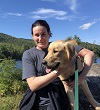
Ellen Earle received her M.D. from Drexel University College of Medicine and completed a residency at Beth Israel Deaconess Medical Center. Her favorite hobby is hiking with her dog, and her favorite restaurant is Ilona in Boston. Dr. Earle's favorite microbe is clostridioides difficile. She's currently reading "Tomorrow, and Tomorrow, and Tomorrow" by Gabrielle Zevin.

Kate Finneran received her M.D. and MPH from Emory University School of Medicine and completed a residency at Washington University/Barnes Jewish Hospital. She loves all things (musical) theatre. Her favorite restaurant is Sugar Shack in Ocean Isle Beach, North Carolina, and her favorite microbe is T. Palladium. She's currently reading the D&D Players Handbook, 5th Edition (2024).

Patrick Mallea received his M.D. from University of Utah School of Medicine and completed a residency at University of Iowa Hospitals and Clinics. His favorite hobby is fly fishing, and his favorite restaurants are Pullman in Iowa City and Cobble Hill in Cedar Rapids. His favorite microbe is Mycobacterium tuberculosis. He's currently reading "This Land: How Cowboys, Capitalism and Corruption are Ruining the American West" by Chris Ketcham.
Testimonials
“My ID fellowship at OHSU provided me with the experience and educational background to confidently enter clinical practice. I had the opportunity to see a wide range of infections, receive excellent training in transplant ID and explore research interests. Now, more than five years out from fellowship, I reflect on specific lessons from rounds and didactics at OHSU each day as I see patients.”
– Sara Gore, M.D., Rocky Mountain Infectious Diseases
The culture at OHSU
We take both patient care and education seriously, and we value a collegial, team-based culture. Fellows, residents and faculty work closely together on busy services and often spend time together outside work enjoying the outdoors, food and arts that Portland and Oregon offer.
Our diversity commitment
We value diverse perspectives and welcome everyone. Our application season uses a holistic review process, and the fellowship curriculum rigorously integrates social determinants of health.
We are constantly expanding our community collaborations to better serve our varied patient populations.
Apply now
Contact us
Yuki Harry
Fellowship coordinator
idfellowship@ohsu.edu
503-494-7735

Be part of something bigger
Learn about OHSU’s Graduate Medical Education program and our special place in the Northwest.