Wolf Lab
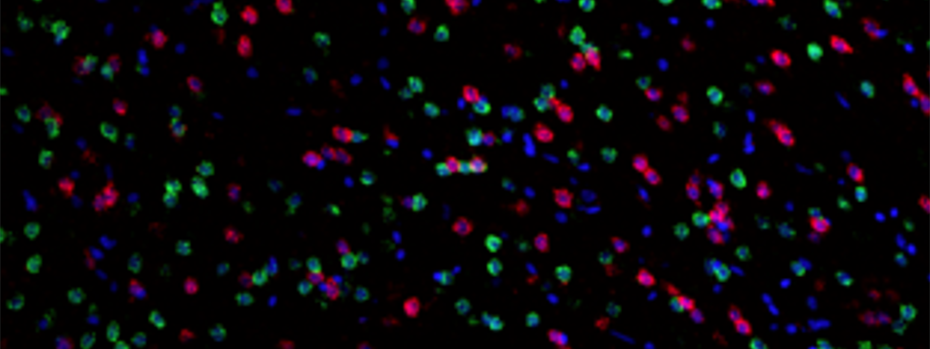
A major challenge in treating substance use disorder is that persons with this disorder remain vulnerable to drug craving and relapse even after long periods of abstinence. The goal of the Wolf lab is to understand synaptic plasticity in the nucleus accumbens and related circuits that underlies this persistent vulnerability. We use the ‘incubation of drug craving’ model in which cue-induced drug craving in rats progressively intensifies (incubates) over the first weeks of abstinence from drug self-administration and then remains high for months. This model has translational relevance because incubation of craving also occurs in humans. Our experiments involve electrophysiology, chemogenetics, fiber photometry, translating ribosome affinity purification, and behavioral assessments. Specific projects are described under Lab Members. The lab is supported by two R01 grants from NIDA.
-

Marina E. Wolf, Ph.D., Principal Investigator
Marina Wolf has been a pioneer in studying the role of synaptic plasticity in the actions of drugs of abuse. She received her Ph.D. in Pharmacology from Yale in 1986 and trained as a postdoctoral fellow at the Center for Cell Biology, Sinai Hospital of Detroit. She was Assistant Professor of Psychiatry at Wayne State University before moving to the Chicago Medical School in 1992 where she rose through the ranks, serving as Chair of Neuroscience from 2003-2018. She moved to OHSU in 2018. Her lab has been continuously supported by NIDA since 1992, with past awards including an R37 (Merit Award). Dr. Wolf was elected Fellow of the American Association for the Advancement of Science in 2017. She served as President of the American College of Neuropsychopharmacology in 2019 and was the 2022 recipient of the Julius Axelrod Prize from the Society for Neuroscience. She has also served on many NIH advisory committees and study sections. Dr. Wolf founded a company in 2021 to develop therapeutics to facilitate abstinence in persons recovering from stimulant use disorder.
Lab members
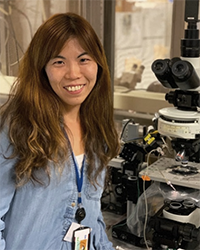
Eun-Kyung Hwang, Ph.D., Senior Research Associate
Eun-Kyung received her Ph.D. in neuroscience from Ewha Woman’s University in South Korea, where she focused on slice electrophysiology and conducted research on monoaminergic modulation of glutamatergic transmission in the rat lateral habenula. She did her postdoctoral research in Carl Lupica's Lab at NIDA in Baltimore, where she worked on the effects of chronic cannabinoid exposure (Δ9-THC) on brain reward circuits using cellular, circuit, and behavioral approaches. Eun-Kyung joined the Wolf Lab in 2020, examining pathway and cell type specific synaptic plasticity in nucleus accumbens in a rat model of relapse in drug addiction by combining electrophysiology, optogenetics, and behavioral experiments. During her free time, she enjoys traveling, spending time with her family and watching her baby girl grow up.
Alex B. Kawa, Ph.D., Postdoctoral Fellow
Alex received his B.S. at the University of Maryland and his Ph.D. at the University of Michigan. He joined the Wolf lab in 2018. Alex’s projects have been aimed at understanding the role of protein translation in incubation of cocaine craving. His postdoctoral NRSA work identified a role for the Integrated Stress Response in mediating a unique form of LTD that reverses incubation-associated plasticity and thereby reduces cocaine seeking. In an ongoing project, he has combined translating ribosome affinity purification (TRAP) and RNA-seq to investigate gene expression changes that may underlie incubation of cocaine craving. Most recently, with support from a K99 award, Alex is investigating the role that cholinergic interneurons of the striatum play in incubation of cocaine craving. Outside of lab, Alex enjoys exploring Portland’s restaurants and hiking with his wife and dog.
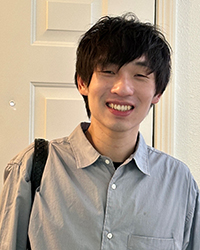
Tin Long Yiu, Postdoctoral Fellow
Tin received his B.Sc. from University College London before pursuing his Ph.D. in Neuroscience at OHSU in Haining Zhong’s lab. His doctoral research focused on understanding cognitive signaling in cerebellar Purkinje cells during decision-making using two-photon calcium imaging and optogenetics. After completing his graduate studies, Tin switched fields to study drug addiction and joined the Wolf Lab as a postdoctoral fellow in 2025. He plans to explore how specific input pathways as well as cell-type-specific PKA activity in the nucleus accumbens contribute to the incubation of methamphetamine craving. Outside the lab, Tin enjoys traveling and discovering tasty food around Portland.
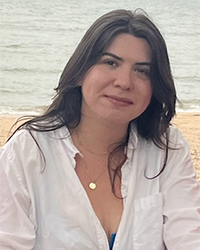
Laura Huerta Sanchez, Postdoctoral Fellow
Laura received her B.S. in Biopsychology, Cognition, and Neuroscience from the University of Michigan, Ann Arbor in 2019 and her Ph.D. from the University of California, Santa Barbara in 2025. Her Ph.D. work in Dr. Karen Szumlinski’s lab largely centered on exploring the role of ionotropic glutamate receptor and CaMKII signaling within the medial prefrontal cortex in incubated cocaine, methamphetamine, and sucrose craving using neuropharmacological and immunoblotting approaches. Laura joined the Wolf Lab in 2025 to determine what cell types, brain subregions, and pathways are involved in the expression of incubated oxycodone craving using chemogenetic approaches as well as fiber photometry. In her free time, Laura enjoys long distance running, doing yoga, and watching medical tv shows.

Hayley M. Kuhn, Ph.D. student
Hayley received her B.S. in Neuroscience from Michigan State University in spring of 2022. At Michigan State, she worked in the Robison lab investigating how cocaine regulates gene expression in ventral hippocampal neurons that synapse onto nucleus accumbens (NAc) neurons, as well studying how lateral entorhinal cortex neurons that project to the NAc mediate drug seeking and reward. With a strong interest to continue substance abuse research, Hayley matriculated in fall of 2022 to the Behavioral and Systems Neuroscience Ph.D. Program at OHSU. In the Wolf lab, she is using slice electrophysiology to characterize mechanisms underlying incubation of oxycodone craving by examining pathway specific and cell type specific plasticity in the NAc core and shell subregions. During her free time, Hayley likes to explore the outdoors, work out, and cozy up with a good tv series and her cat.

Gillian S. Driscoll, Ph.D. student
Gillian graduated from Hamilton College in 2021 with a B.A. in Neuroscience. After graduating, she joined Dr. Elena Chartoff’s lab as a research assistant, where she explored the role of projections from the paraventricular nucleus of the thalamus (PVT) to the nucleus accumbens (NAc) shell in oxycodone withdrawal-associated negative affective states, as well as sex differences in oxycodone self-administration and reinstatement. Gillian joined the Wolf lab in 2024 and plans to use fiber photometry and chemogenetics to explore the role of cell type- and pathway-specific synaptic plasticity in the NAc core in the expression of incubated methamphetamine craving. Outside the lab, Gillian enjoys hiking, knitting, and spending time with her cats and a good book.

Madelyn M. Beutler, Research Assistant
Madelyn graduated from Washington State University in 2022 with a B.S in Psychology. At Washington State University, she volunteered in Dr. Michael Morgan’s lab investigating the effect of testosterone exposure on pain-related behavior. Madelyn joined the Wolf lab as a Research Assistant in 2022. She is currently managing the transgenic breeding colony and assisting graduate students and postdocs with drug self-administration and other procedures.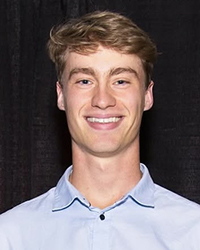
Jonathan Westlake, Research Assistant
Jon graduated from Lewis and Clark College in 2025 with a B.A. in Psychology. At Lewis and Clark, he worked in the Detweiler-Bedell lab studying sleep quality and habits as it relates to self-efficacy and chronotype among young adults. Jon joined the lab as a volunteer in 2023, eventually transitioning to a non-student OHSU worker role, and finally to a Research Assistant in 2025. He helps to manage the transgenic rat breeding colony, oversees purchasing, and assists other lab members with drug self-administration, behavioral testing, histology and other procedures. In his free time, Jon enjoys golfing or exercising with friends, and eating at Portland’s many restaurants.

Luke Tepe, Research Assistant
Luke graduated from Oregon State University with a Bachelor of Science in Psychology and a minor in Biological Data Science. He worked in the BEAVERS Lab (Biology and Emotion of Addiction Via Experimental and Reproducible Science), studying frequent drinkers’ psychophysiological responses to alcohol. In 2025, he joined the Wolf lab as a Research Assistant. He is assisting with drug self-administration experiments and management of the lab’s transgenic rat colony. In his free time, Luke enjoys long-distance swimming, exercise, playing the violin, and spending quality time with friends.
-

Sophia J. Weber, Ph.D. student
Sophia graduated from University of Washington in 2017 with a B.S. in Biology. During her undergraduate career she worked first as a volunteer and then as a technician in Dr. Jeremy Clark’s lab investigating the effect of adolescent alcohol exposure on adult decision making. After graduation she obtained a postbaccalaureate internship in the NIDA IRP program, working in the lab of Dr. Bruce Hope where she assisted postdoctoral fellow Dr. Rajtarun Madangopal on his various projects that sought to selectively study and manipulate active neurons during drug related behaviors. In the Wolf lab Sophia used fiber photometry with dopamine biosensors combined with behavioral pharmacology to investigate the role of dopamine in the expression of incubation of cocaine craving. Sophia received her Ph.D. in June 2024 and is presently a postdoctoral fellow in Dr. Marco Venniro’s lab at the University of Maryland.

Amanda M. Wunsch, Ph.D., Senior Research Associate
Amanda received her Ph.D. in Neuroscience from the University of Washington. She joined the Wolf lab as a postdoctoral fellow in 2016. With initial support from an individual postdoctoral NRSA, Amanda investigated the role of retinoic acid dependent homeostatic plasticity in the incubation of cocaine craving. She also used chemogenetic and fiber photometry techniques to explore the role of nucleus accumbens neurons in incubation of cocaine and methamphetamine craving. Amanda is a Principal Investigator and head of in vivo sciences at the National Center for Wellness and Recovery, where she screens novel drug candidates in preclinical models of pain and substance use disorder.Kimberley A. Engeln (now Kimberley A. Mount), Ph.D. 2023
Current position: Project Director, Stagewise Implementation to Target – Medications for Addiction Treatment (SITT-MAT), Division of Behavioral Health and Recovery, Washington State Health Care Authority, WAConor H. Murray, Ph.D. 2019
Current position: Assistant Project Scientist, UCLA Semel Institute for Neuroscience & Human Behavior, CAMichael T. Stefanik, Ph.D., Postdoctoral fellow 2014-2018
Current position: Tenured Associate Professor of Psychology and Neuroscience, North Central College, ILDaniel T. Christian, Ph.D., Postdoctoral fellow 2012-2018
Current position: Tenured Associate Professor, Des Moines University, ILJessica A. Loweth, Ph.D., Postdoctoral fellow 2010-2017
Current position: Tenure track Associate Professor of Cell Biology and Neuroscience, Rowan University School of Osteopathic Medicine, NJCraig T. Werner, Ph.D. 2015
Current position: Senior Director of Neuroscience, National Center for Wellness and Recovery, OKAnthony Purgianto, Ph.D. 2015 (M.D. 2017)
Current position: Clinical Assistant Professor of Psychiatry and Director of Interventional Psychiatry Services, Department of Psychiatry, University of Iowa, IOAndrew F. Scheyer, Ph.D. 2015
Current position: Scientific Writer, Fire Fighter, Timber Surveyor, ORXuan (Anna) Li, Ph.D. 2012
Current position: Tenured Associate Professor of Psychology, University of Maryland, MDXiaoting Wang, Ph.D. 2012
Current position: Senior Director of Regulatory Affairs, Entrada Therapeutics, NC -
Recent primary papers
- Wang J, Ishikawa M, Yang Y, Otaka M, Kim JY, Gardner GR, Stefanik MT, Milovanovic M, Huang YH, Hell JW, Wolf ME, Schlüter OM, Dong Y (2018) Cascades of homeostatic dysregulation progressively intensify cocaine seeking. J Neurosci 38(18):4316-4328. PMC5932642
- Werner CT*, Stefanik MT*, Milovanovic M, Caccamise A, Wolf ME (2018) Protein translation in the nucleus accumbens is dysregulated during cocaine withdrawal and required for expression of incubation of cocaine craving. J Neurosci 38(11):2683-2697. PMC5852654
- Stefanik MT, Milovanovic M, Werner CT, Spainhour JCG, Wolf ME (2018) Withdrawal from cocaine self-administration alters the regulation of protein translation in the nucleus accumbens. Biol Psychiatry 84(3):223-232. PMC6054574
- Stefanik MT, Sakas C, Lee D, Wolf ME (2018) Ionotropic and metabotropic glutamate receptors regulate protein translation in co-cultured nucleus accumbens and prefrontal cortex neurons. Neuropharmacology 140:62-75. PMC7575416
- Scheyer AF, Christian DT, Wolf ME, Tseng KY (2018) Emergence of endocytosis-dependent mGlu1-LTD at nucleus accumbens synapses after withdrawal from cocaine self-administration. Front Synaptic Neurosci 10:36. Doi:10.3389/fnsyn.2018.00036. PMC6232902
- Loweth JA, Reimers JM, Woo K-Y, Chauhan N, Werner CT, Wolf ME (2019) Metabotropic glutamate receptor 1 regulates GluA1 translation and cell surface expression of homomeric GluA1 receptors via retinoic acid signaling. Eur J Neurosci 50(3):2590-2601. PMC7556732
- Murray CH, Loweth JA, Milovanovic M, Stefanik MT, Caccamise A, Dolubizno H, Funke JR, Olive MF, Wolf ME (2019) AMPA receptor and metabotropic glutamate receptor 1 adaptations in the nucleus accumbens core during incubation of methamphetamine craving. Neuropsychopharmacology 44(9):1534-1541. PMC6785134
- Di S, Jiang Z, Wang S, Harrison L, Castro-Echeverry E, Stuart C, Wolf ME, Tasker J (2019) Labile calcium-permeable AMPA receptors constitute new glutamate synapses formed in hypothalamic neuroendocrine cells during salt loading. eNeuro 2019; 10.1523/ENEURO.0112-19.2019. PMC6675872
- Munshi S, Rosenkranz JA, Caccamise A, Wolf ME, Corbett CM, Loweth JA (2019) Cocaine and chronic stress exposure produce an additive increase in neuronal activity in the basolateral amygdala. Addiction Biology 2019 Nov 21:e12848. PMC6675872
- Murray CH, Christian DT, Milovanovic M, Loweth JA, Caccamise A, Funke JR, Wolf ME (2021) mGlu5 function in the nucleus accumbens core during the incubation of methamphetamine craving. Neuropharmacology, 2021 Mar 15;186:108452. doi: 10.1016/j.neuropharm.2021.108452. Epub 2021 Jan 12. PMC8440156
- Christian DT, Stefanik MT, Bean LA, Loweth JA, Wunsch AM, Funke JR, Briggs CA, Lyons J, Neal D, Milovanovic M, D’Souza GX, Stutzmann GE, Nicholson DA, Tseng K-Y, Wolf ME (2021) GluN3-containing NMDA receptors in nucleus accumbens core are required for incubation of cocaine craving. J Neurosci. 41(39):8262-8277. PMC8482856
- Murray CH, Gaulden AD, Kawa AB, Milovanovic M, Caccamise AJ, Funke JR, Patel S, Wolf ME (2021) CaMKII modulates diacylglycerol lipase-α activity in the rat nucleus accumbens after incubation of cocaine craving. eNeuro. 2021 Oct 8;8(5):ENEURO.0220-21.2021. doi: 10.1523/ENEURO.0220-21.2021. Print 2021 Sep-Oct. PMC8503962
- Kawa AB, Hwang EK, Funke JR, Zhou H, Costa-Mattioli M, Wolf ME (2022) Positive allosteric modulation of mGlu1 reverses cocaine-induced behavioral and synaptic plasticity through the integrated stress response and oligophrenin-1. Biological Psychiatry 92(11):871-879. PMC10656746.
- Wong B, Zimbelman AR, Milovanovic M, Wolf ME, Stefanik MT (2022) GluA2-lacking AMPA receptors in the nucleus accumbens core and shell contribute to the expression of incubation of oxycodone craving in male rats. Addiction Biology 2022 Nov;27(6):e13237. doi: 10.1111/adb.13237. PMC10655598
- Funke JR, Hwang EK, Wunsch AM, Baker R, Engeln KA, Murray CH, Milovanovic M, Caccamise AJ, Wolf ME (2023) Persistent neuroadaptations in the nucleus accumbens core accompany incubation of methamphetamine craving in male and female rats. eNeuro 2023 Mar 14;10(3):ENEURO.0480-22.2023. doi: 10.1523/ENEURO.0480-22.2023. PMC10016192
- Zhuo Y, Luo B, Yi X, Dong H, Miao X, Wan J, Williams JT, Campbell MG, Cai R, Qian T, Li F, Weber SJ, Wang L, Li B, Wei Y, Li G, Wang H, Zheng Y, Zhao Y, Wolf ME, Zhu Y, Watabe-Uchida M, Li Y (2023) Improved green and red GRAB sensors for monitoring dopaminergic activity in vivo. Nature Methods 21(4):680-691. PMC11009088
- Wunsch AM, Hwang E-K, Funke JR, Baker R, Moutier A, Milovanovic M, Green TA, Wolf ME (2024) Retinoic acid-mediated homeostatic plasticity in the nucleus accumbens core contributes to incubation of cocaine craving. Psychopharmacology (Berl) 241(10):1983-2001. PMC12087916
- Weber SJ, Kawa AB, Beutler MM, Kuhn KM, Moutier AL, Westlake JG, Koyshman LM, Moreno CD, Wunsch AM, Wolf ME (2024). Dopamine transmission at D1 and D2 receptors in the nucleus accumbens contributes to the expression of incubation of cocaine craving. Neuropsychopharmacology 50(2):461-471. PMC11632087
- Zimbelman AR, Wong B, Murray CH, Wolf ME, Stefanik MT (2024) Dopamine D1 and NMDA receptor co-regulation of protein translation in cultured nucleus accumbens neurons. In revision. Neurochemical Research 2024 Nov 21;50(1):27. doi: 10.1007/s11064-024-04283-w. PMC11888153
- Hwang E-K, Wunsch AM, Wolf ME (2025) Retinoic acid-mediated homeostatic plasticity drives cell type-specific CP-AMPAR accumulation in nucleus accumbens core and incubation of cocaine craving. Molecular Psychiatry 30(7):3175-3187. PMID: 40316677
- Kawa AB, Hashimoto JG, Beutler MM, Guizzetti M, Wolf ME (2025) Changes in nucleus accumbens core translatome accompanying incubation of cocaine craving. Neuropsychopharmacology 50(8):1305-1316. PMC12170862
- Mount KA, Kuhn HM, Hwang E-K, Beutler MM, Wolf ME (2025) Incubation of oxycodone craving is associated with CP-AMPAR upregulation in D1 and D2 receptor-expressing medium spiny neurons in nucleus accumbens core and shell. BioRxiv 2025 Apr 6:2025.04.06.647399. doi: 10.1101/2025.04.06.647399. PMC11996497.
Recent review articles
- Wolf ME (2025) Targeting Neuroplasticity in Substance Use Disorders: Implications for Therapeutics. Annu Rev Pharmacol & Toxicology 65:259-280. PMC11864087.
- Chow JJ, Pitts KM, Negishi K, Madangopal R, Dong Y, Wolf ME, Shaham Y (2025) Neurobiology of the incubation of drug craving: an update. Pharmacol Rev 2025 Mar;77(2):100022. doi: 10.1016/j.pharmr.2024.100022. PMC11964951.
- Wolf ME, Zlebnik N (2026) Addiction. In: Basic Neurochemistry, 9th edition, MJ Carson and S Brady, eds. Elsevier Academic Press.
-
- We welcome new Research Assistants Jon Westlake and Luke Tepe.
- We welcome new Postdoctoral Fellows Dr. Tin Long Yiu and Dr. Laura Huerta Sanchez.
- We congratulate Postdoctoral Fellow Dr. Alex Kawa who will start his independent laboratory in the Department of Neurosciences at the University of New Mexico in February 2026.
Contact us
For questions or if you are interested in joining the lab as a Research Assistant or Postdoctoral Fellow, please contact Marina Wolf.
To learn more about our Ph.D. program, visit our Behavioral Neuroscience website.