Radiation Therapy Curriculum
The OHSU Radiation Therapy Program offers a full‑time, 23‑month lock-step curriculum, meaning students progress through a structured sequence of courses and clinical experiences together. The program leads to a B.S. in Radiation Therapy.
You'll develop the technical, critical-thinking and patient care skills needed to become a radiation therapist through classroom learning and clinical education.
On this page:
Curriculum information
From your first term, you'll split your time between the classroom and clinical rotations in the community, immediately putting what you learn into practice in patient care settings.
You'll learn through radiation therapy coursework, eight clinical rotations totaling more than 1,500 clinical hours, and a patient education capstone project.
Clinical placements
You'll complete a clinical rotation each term, gaining experience in a variety of radiation oncology settings and working with different patient populations, treatment technologies and interprofessional care teams.
Most clinical placements are in the greater Portland area, and you'll train at a different radiation oncology clinical site each term. During the summer, you may complete a rotation at a rural site, where housing is provided. OHSU partners with hospitals and cancer centers across Oregon and Washington.
Sample course schedule
Junior year (year 1)
| Fall | Winter | Spring | Summer |
|---|---|---|---|
| RDTT 303: Practical Radiation Therapy (.5 credits) | ANAT 444: Anatomy for Radiation Therapists (3 credits) | RDTT 303: Practical Radiation Therapy (.5 credits) | RDTT 309: Clinic/Junior Year (4 credits) |
| RDTT 309: Clinic/Junior Year (4 credits) | RDTT 309: Clinic/Junior Year (4 credits) | RDTT 309: Clinic/Junior Year (4 credits) | RDTT 328: Quality Improvement and Change Management (4 credits) |
| RDTT 312: Introduction to Radiation Therapy (4 credits) | RDTT 313: Radiographic Technique (3 credits) | RDTT 314: Simulation (3 credits) | CONJ 311: Diverse Patient Populations (2 credits) |
| RDTT 320: Basic Patient Care Skills in Radiation Therapy (3 credits) | RDTT 321: Patient Care in Radiation Oncology (3 credits) | RDTT 316: Sectional Anatomy and Imaging Modalities (2 credits) | CONJ 412: Medical Law (2 credits) |
| RDTT 332: Pathophysiological Processes I (3 credits) | RDTT 333: Pathophysiological Processes II (3 credits) | RDTT 400: Introduction to Medical Research Methods (2 credits) | |
| IPE 401: Foundations of Patient Safety and Interprofessional Practice (.25 credits) | IPE 401: Foundations of Patient Safety and Interprofessional Practice (.25 credits) | RDTT 340: Radiation Biology (3 credits) | |
| IPE 401: Foundations of Patient Safety and Interprofessional Practice (.25 credits) |
Senior year (year 2)
| Fall | Winter | Spring | Summer |
|---|---|---|---|
| RDTT 403: Practical Radiation Therapy (.5 credits) | RDTT 405B: Radiation Oncology II (3 credits) | RDTT 403: Practical Radiation Therapy (.5 credits) | RDTT 407: Radiation Therapy Registry Review (3 credits) |
| RDTT 405A: Radiation Oncology I (3 credits) | RDTT 409: Clinic/Senior Year (6 credits) | RDTT 405C: Radiation Oncology III (3 credits) | RDTT 409: Clinic/Senior Year (4 credits) |
| RDTT 409: Clinic/Senior Year (6 credits) | RDTT 412: Dosimetry II (2 credits) | RDTT 409: Clinic/Senior Year (6 credits) | RDTT 453: Patient Education Capstone (2 credits) |
| RDTT 411: Dosimetry I (2 credits) | RDTT 421: Radiation Therapy Physics II (4 credits) | RDTT 413: Dosimetry III (2 credits) | |
| RDTT 420: Radiation Therapy Physics I (4 credits) | RDTT 451: Independent Research, Patient Education II (1 credit) | RDTT 422: Radiation Therapy Physics III (4 credits) | |
| RDTT 450: Independent Research, Patient Education I (1 credit) | RDTT 452: Independent Research, Patient Education III (1 credit) |
Sample clinical schedule
Junior year (year 1)
| Monday | Tuesday | Wednesday | Thursday | Friday |
|---|---|---|---|---|
| Clinic | Classes | Clinic | Classes | Classes |
Senior year (year 2)
| Monday | Tuesday | Wednesday | Thursday | Friday |
|---|---|---|---|---|
| Classes | Clinic | Classes | Clinic | Clinic |
Note: During the summer, you’ll have four full days of clinic and one day of classes. You won't attend clinic during finals week.
-
JRCERT clinical supervision requirements
According to the JRCERT, direct supervision assures patient safety and proper educational practices. All radiation procedures require direct supervision. The JRCERT defines direct supervision as student supervision by a qualified practitioner (e.g., registered radiation therapist, credentialed medical physicist, licensed radiation oncologist) during all aspects of the procedure. The JRCERT defines direct supervision as student supervision by a qualified practitioner who is physically present during the conduct of the procedure and reviews and approves the procedure and/or image. All student work must be checked by a certified radiation therapist, dosimetrist, physicist or physician before treatment is given. Supervision of students over closed-circuit monitor(s) is not acceptable.
Course descriptions
For detailed course descriptions, visit the OHSU course catalog.
View OHSU’s academic calendar to find important dates, including registration deadlines.
Review degree requirements for graduation.
Contact us
- Email: rttprogram@ohsu.edu
- Call: 503-494-7461
Helpful links
Hear from students
“OHSU's hands-on clinical rotations and supportive coursework gave me the confidence to step outside my comfort zone and truly work interprofessionally within the healthcare team.”
— Jacquelyn Iniguez, Class of 2027
Student handbook
Review the Radiation Therapy Handbook to learn more about the curriculum, clinical education and program policies.
Patient education capstone project
Patient education is a critical part of cancer care. More than half of people diagnosed with cancer receive radiation therapy during their treatment pathway. Clear, accessible education helps patients understand their treatment, prepare for appointments and feel less alone in the process.
As a second-year student in the OHSU Radiation Therapy Program, you will complete a patient education capstone project. The project challenges you to identify a gap in radiation oncology education and draw on your coursework, clinical experience and research to create a resource to educate patients.
Past students have created:
- Explainer videos for patients preparing for simulation or treatment
- Activity books for pediatric patients and their caregivers
- Infographics, virtual tours, and printed brochures
- Websites for patients navigating complex diagnoses
OHSU introduced the patient education capstone project in 2017. Since then, clinicians have adopted student work to educate patients locally, nationally and internationally.
- Clinicians at OHSU's Department of Radiation Medicine use student projects with patients and in residency interviews.
- The International Lymphoma Radiation Oncology Group requested to share the educational site Radiation Therapy for Mycosis Fungoides with their patients.
- ABC Breath-Hold, a video from the program's first year, has nearly 13,000 views on YouTube.
Sample capstone projects
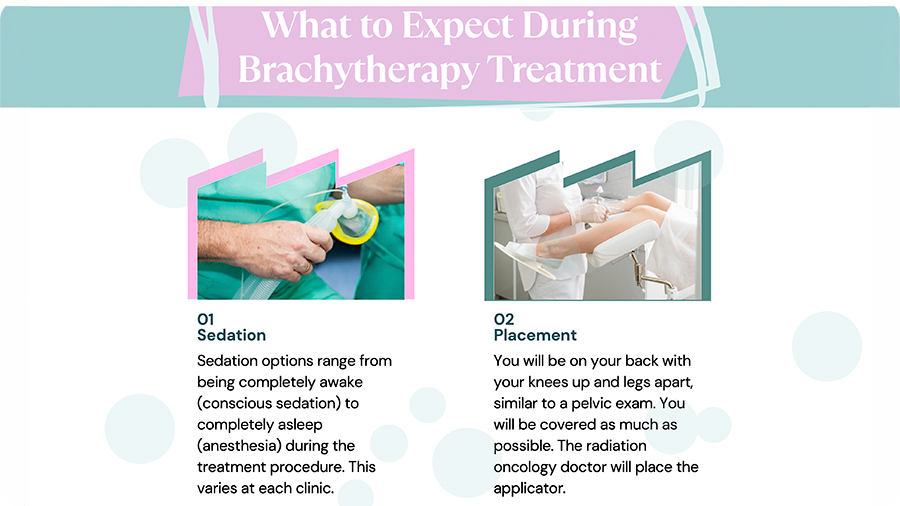
Patient website: Understanding brachytherapy for cervical cancer
HDR Brachytherapy for Cervical-Gynecologic Cancer, 2023
This website was built to help educate patients with cervical cancer who are candidates for HDR Tandem and Ring brachytherapy. It covers gynecological cancer, how brachytherapy works, the general treatment pathway and frequently asked questions.
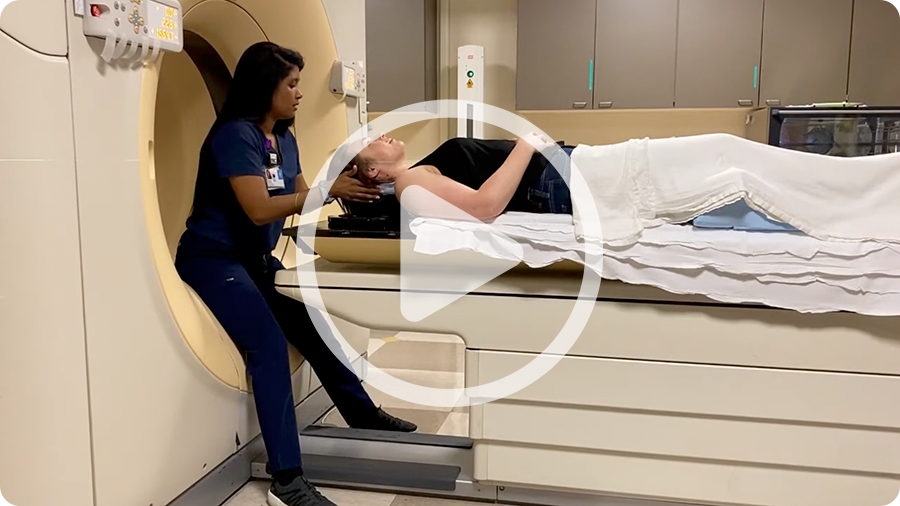
Explainer video: Preparing for head and neck radiation therapy simulation
Head and Neck Radiation Therapy, 2022
Designed for patients with head and neck cancer preparing for their simulation appointment, this video demonstrates the mask-making process and gives patients a clear picture of how to prepare and what to expect.
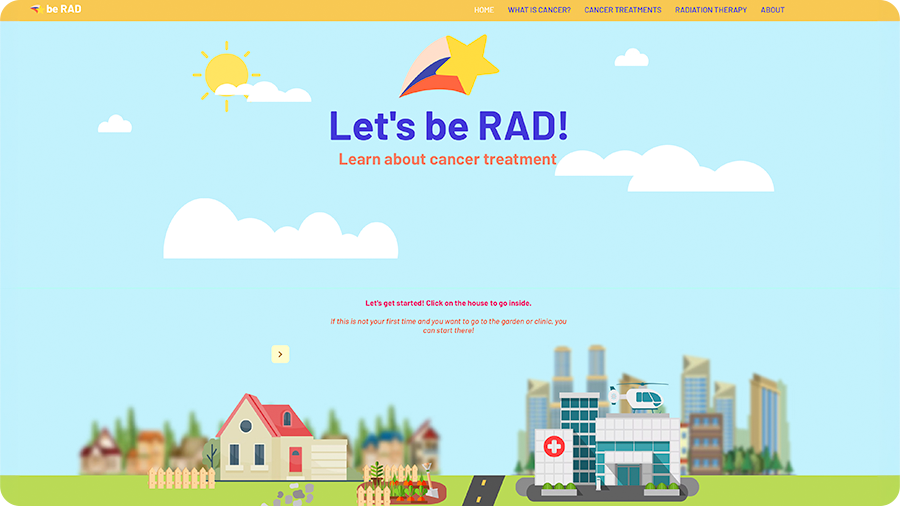
Patient website: Introducing cancer treatment to kids and caregivers
Let's Be RAD! Learn About Cancer Treatment, 2022
Built for pediatric patients and their caregivers, this interactive website walks through cancer basics, treatment types and the radiation therapy process. It helps young patients and the adults supporting them know what to expect.
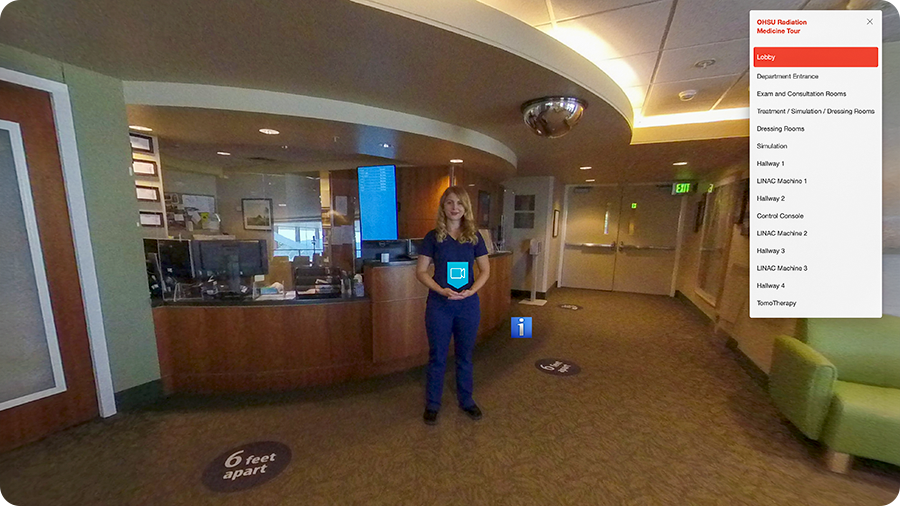
Virtual tour: Exploring the OHSU Department of Radiation Medicine
OHSU Radiation Medicine 3D Guided Virtual Tour, 2020
This guided tour walks patients through the full OHSU Department of Radiation Medicine before their simulation appointment. From the front desk and waiting areas to the simulation room and each treatment vault, every stop includes video and targeted information. The Department of Radiation Medicine now uses this tour with patients and for residency interviews.
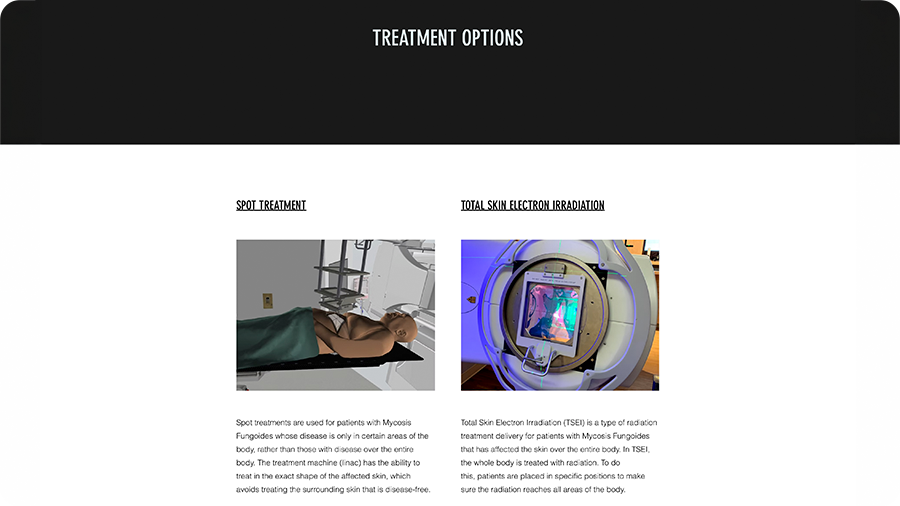
Patient website: Understanding radiation therapy for mycosis fungoides
Radiation Therapy for Mycosis Fungoides, 2020
This website was built for patients with mycosis fungoides who are candidates for radiation therapy. It covers the condition, how radiation treats it, spot treatment and TSEI options, side effects, a treatment preparation guide, a meet-the-team section, FAQs and resources. The International Lymphoma Radiation Oncology Group requested distribution rights and clinicians internationally have asked to share it with their patients.
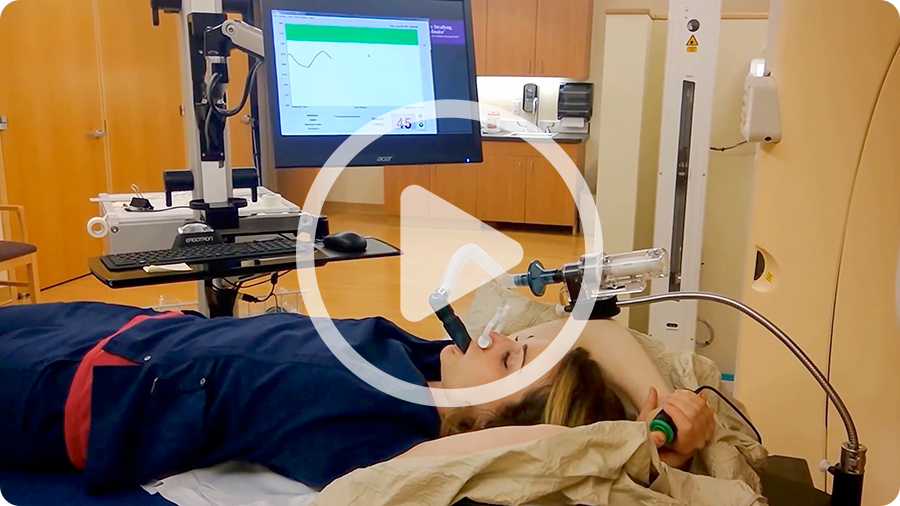
Explainer video: Understanding ABC breath-hold technique for breast cancer patients
ABC Breath-Hold, 2017
This video prepares breast cancer patients for their CT simulation appointment. It covers the ABC breath-hold technique, equipment, patient positioning and what to expect on the day of simulation. Nearly 13,000 people have watched it on YouTube.
Curriculum FAQs
-
How much clinical training do Radiation Therapy Program students receive?
Throughout the 23-month program, students complete more than 1,500 clinical hours across eight clinical rotations. Beginning in the first term, you'll split your time between classroom learning and clinical training, building skills in patient care and treatment delivery.
-
When do radiation therapy students start clinical training?
Students begin clinical training in their first term. As you progress through the program, you’ll spend more time in clinical settings.
-
Where do OHSU Radiation Therapy students complete clinical rotations?
Students complete eight clinical rotations at OHSU and partner hospitals and cancer centers across Oregon and Washington. The program's network includes more than 30 partner sites. Most rotations take place in the greater Portland area, with opportunities for summer rotations at rural sites outside the region.
-
Can students choose their own clinical placements?
No. We carefully select clinical placements to provide a well-rounded learning experience and help you meet program and accreditation requirements. In some cases, students who want to complete a summer rotation outside the Portland area can request a specific placement, depending on program approval and site availability.
View our list of partner sites.