Balance Disorders Laboratory
Helping people move better so they can live confidently and independently
Staying upright and steady might seem simple, but it’s one of the most complex tasks the brain and body perform every day.
At the Balance Disorders Laboratory, we study how sensory feedback and motor signals work together to keep people balanced. We also look at what happens when these systems break down because of conditions like Parkinson’s disease and mild traumatic brain injury.
We go beyond understanding what happens in the brain and body when balance is disrupted. We develop rehabilitation strategies, including advanced balance training. We also use leading-edge brain imaging tools like functional near-infrared spectroscopy to see what works for people with balance disorders.
On this page you can:
Lab news
Getting rehab earlier improves concussion outcomes, OHSU study suggests: Research by Laurie King, Ph.D., PT, M.C.R., shows that early rehabilitation may improve balance and recovery.
Here's how exercise improves the mobility of people with Parkinson's disease: A KATU article features an interview with OHSU’s Fay Horak, Ph.D., PT
Podcast: Freezing, moving and cueing – understanding gait and Parkinson’s disease: A podcast features OHSU’s Martina Mancini, Ph.D.
Research projects
Our research spans three interconnected areas aimed at understanding and improving balance and mobility.
Objective measures of balance and gait
Our team leads the way in developing tools to measure balance and gait in real-world settings. We were among the first to show that wearable sensors can capture gait patterns and characteristics of turning in daily life.
Our work allows precise assessment and remote monitoring so we can tailor rehabilitation to each person, improving outcomes.
Neural mechanisms underlying balance and gait control
Sophisticated tests help us clarify how cortical activity and sensorimotor integration contribute to postural control and mobility. Our goal is to guide rehabilitation.
For example, we use functional near-infrared spectroscopy to examine cortical correlates of gait and balance in older adults and in people with Parkinson’s disease.
We use a central sensorimotor integration test to understand how sensory and motor systems interact to maintain stability.
Balance and gait rehabilitation
We’re redefining rehabilitation by creating therapies that help people regain stability and confidence in everyday life. Our research focuses on practical, evidence-based interventions tailored to the unique challenges of Parkinson’s disease and mild traumatic brain injury.
Our goal is to turn leading-edge research into real-world solutions that improve quality of life.
Solutions for patients with Parkinson’s disease:
- Turning rehabilitation: Specialized training programs improve turning in people with and without freezing of gait.
- Balance telerehabilitation: Remote balance training makes therapy more accessible and convenient.
- Tactile feedback for gait: Wearable sensors provide real-time tactile cues to enhance walking performance.
Solutions for people with mild traumatic brain injury:
- Real-time biofeedback for vestibular rehabilitation: Feedback from wearable sensors supports recovery from balance problems caused by concussions.
- Sensory-versus-motor rehabilitation: We’re comparing standard sensory-based care with novel motor-focused approaches to improve balance and speed recovery.
Publications
In People with Subacute Mild Traumatic Brain Injury, Earlier Physical Therapy Improved Symptoms at a Faster Rate Than Later Physical Therapy: Randomized Controlled Trial
Oxford University Press on behalf of the American Physical Therapy Association, 2024
Campbell KR, Antonellis P, Peterka RJ, Wilhelm JL, Scanlan KT, Pettigrew NC, Chen S, Parrington L, Fino PC, Chesnutt JC, Horak FB, Hullar TE, King LA
Exercise Intolerance After Mild Traumatic Brain Injury Occurs in All Subtypes in the Adult Population
Journal of Neurotrauma, 2024
Antonellis P, Campbell KR, Wilhelm JL, Shaw JD, Chesnutt JC, King LA
Central sensorimotor integration assessment reveals deficits in standing balance control in people with chronic mild traumatic brain injury
Frontiers in Neurology, 2022
Campbell KR, King LA, Parrington L, Fino PC, Antonellis P, Peterka RJ
Personalized versus fixed tactile cueing in Parkinson's disease: Protocol for a randomized controlled trial on gait automaticity
PLOS One, 2025
Burgos PI, Liu W, Silva-Batista C, Baker-Alcalá F, Carlson-Kuhta P, King LA, Horak FB, Chung KA, Lapidus JA, Mancini M
Balance telerehabilitation and wearable technology for people with Parkinson's disease (TelePD trial)
BMC Neurology, 2023
Silva-Batista C, Wilhelm JL, Scanlan KT, Stojak M, Carlson-Kuhta P, Chen S, Liu W, García de la Huerta TN, Horak FB, Mancini M, King LA
TURN-IT: a novel turning intervention program to improve quality of turning in daily life in people with Parkinson's disease
BMC Neurology, 2022
King LA, Carlson-Kuhta P, Wilhelm JL, Lapidus JA, Dale ML, Talman LS, Barlow N, Mancini M, Horak FB
People
Laurie King, Ph.D., PT, M.C.R., and Martina Mancini, Ph.D., co-direct the Balance Disorders Lab. They study movement, advance therapies and explore new technologies to improve balance, gait and daily function.
Scientific adviser
Lab manager
Postdoctoral fellows
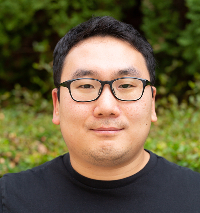
Jae W. Lee holds a BASc and a Ph.D. in biomedical engineering from the University of Toronto. His research focuses on identifying balance control systems using model-based and systems control approaches and applying those findings to improve balance for patients. He is currently involved in ongoing randomized controlled trials aimed at improving balance and gait in people with mild traumatic brain injuries and Parkinson's disease. Outside the lab, Jae enjoys long-distance running, cycling and training for triathlons.
Jumes Lira holds a master's and Ph.D. in movement sciences from the University of São Paulo in Brazil. His research interests include verifying how different therapies can affect cortical activity, cognition and gait performance in people with Parkinson's disease. Currently, he is involved in several ongoing studies with distinct objectives, including evaluating the effect of Levodopa on the time course of cortical activity during walking in people with Parkinson's disease. Outside the lab, he enjoys spending time with his family, playing guitar and exercising.
Maryam Sadeghi holds a Ph.D. in rehabilitation science from the University of Kansas Medical Center, as well as a B.S. in electronics engineering and an M.S. in applied exercise physiology from institutions in Iran. Her research focuses on using wearable sensors, digital biomarkers and machine learning to better understand real-world mobility, balance and cognition in people with neurologic conditions, including Parkinson’s disease and mild traumatic brain injury. Outside the lab, Maryam enjoys traveling, hiking and indoor rock
Carla da Silva-Batista, Ph.D., research assistant professor
Ph.D. students
Rui Lin holds a M.S. in neuroscience from Brandeis University. His research interests include the relationship between cognition and mobility outcomes. In the Balance Disorders Lab, he examines how cognitive performance relates to clinical balance and gait measures in people with Parkinson's disease. Outside the lab, Rui enjoys tennis and dystopian science fiction.

Keiko Tsuji is a fourth-year Ph.D. candidate in the Balance Disorders Lab, working under the supervision of Dr. Martina Mancini. Her thesis explores cortical activity in people with Parkinson’s disease and its implications for disease severity and rehabilitation. She holds a B.S. in neuroscience from the University of Arizona. Outside the lab, Keiko enjoys skiing, running, reading and spending time with her Pomeranian, Truffle.
Research engineers
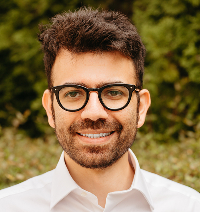
Masoud Abdollahi received a Ph.D. in mechanical and industrial engineering from Rochester Institute of Technology and an M.Sc. in mechanical engineering from Sharif University of Technology. His research combines wearable sensors and artificial intelligence to objectively measure mobility and balance in people with neurological conditions. His current work focuses on detecting freezing of gait and assessing fall risk in people with Parkinson's disease. His broader goal is to turn wearable data into digital biomarkers that support clinical decision-making.
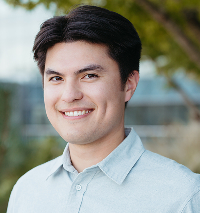
William Liu received his B.S. in bioengineering from the University of Washington and his M.S. in electrical engineering from Portland State University. He grew up in Portland, Oregon, just up the road from OHSU, and loves living in the Pacific Northwest. Outside the lab, he coaches soccer at Lincoln High School and enjoys taking Winston, his golden retriever, to the coast.
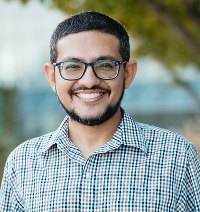
Vrutangkumar Shah holds a B.Tech. from L.D. College of Engineering and a Ph.D. from the Indian Institute of Technology in India. His work focuses on using clinical and real-world data to develop meaningful digital biomarkers. Outside of work, he enjoys spending time with family, traveling and mentoring early-career scientists.
Research associates
Graham Harker holds a B.S. from the University of Oregon and an M.P.H. in epidemiology from OHSU-PSU School of Public Health. A native Oregonian, his research focuses on the objective measurement of mobility in daily life and on identifying interventions that can reduce falls and injuries in people with mobility impairment. As a member of the Balance Disorders Lab, he has contributed to numerous projects assessing mobility, gait and cognition in people with Parkinson’s disease, ataxia and other movement disorders. Outside work, Graham enjoys spending time with his wife, two daughters and two dogs, playing early morning pickup basketball and making pizza.
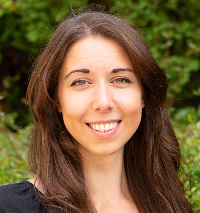
Maggie Stojak holds a B.S. in kinesiology from the University of Illinois and an M.S. in athletic training from Pacific University. Her research interests include assessment and treatment strategies for mild traumatic brain injury (mTBI) and motor control across the lifespan. In the Balance Disorders Lab, she has worked on projects related to rehabilitation for mTBI and Parkinson’s disease. Outside of the lab, Maggie enjoys hiking with her Newfoundlands and exploring new recipes.
Research coordinators
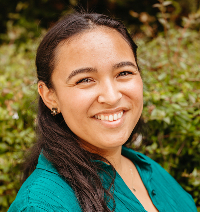
Francesca Baker-Alcalá holds a B.S. degree in biomedical engineering from George Fox University. In the Balance Disorders Lab, she coordinates various research studies and edits the lab’s quarterly newsletter. Outside the lab, Francesca enjoys reading, dancing, watching movies, trying new restaurants and, especially, spending time with her husband, Davis, and their dog, Melrose.
Brecklyn Beighle holds a B.A. in biology from Lewis & Clark College. She is interested in how degeneration disrupts neuronal pathways and manifests as specific cognitive and motor impairments. In the Balance Disorders Lab, she has worked on interventional studies aimed at the development of therapeutic treatments. Outside the lab, she enjoys playing soccer and live music.
Victor Ouellet Massicotte received his B.S. in psychology and neuroscience from Lewis & Clark College. He is interested in understanding the early, prodromal stages of Parkinson's disease from the single-cell level to clinical presentation. His prior work includes investigating glia-modulated synaptic changes during development in the Freeman Lab and studying phosphorylated alpha-synuclein propagation along the gut-brain axis in the Scott Lab. In his free time, he loves mountain biking, playing ice hockey, running, paddleboarding, cycling and bringing his two dogs on adventures.
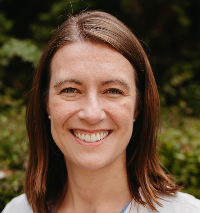
Irene Robinson holds a B.A. in history and an M.S. in occupational therapy from Indiana University. She has worked as an occupational therapist since 2014, specializing in treating individuals with neurological disorders across levels of care. She joined the Balance Disorders Lab in 2024 and has worked with Dr. Laurie King’s team on concussion rehabilitation research and a Parkinson’s disease telerehabilitation study. She is beginning a Ph.D. in health systems and policy at the OHSU-PSU School of Public Health in the fall of 2026. In her free time, she enjoys creating art, reading, hiking and climbing.
Research physical therapists
Kate Scanlan holds a B.A. and a Doctor of Physical Therapy degree from Marquette University and is a board-certified neurologic clinical specialist. Her research interests include translating research findings into clinical practice, particularly rehabilitation interventions for people with Parkinson’s disease and mild traumatic brain injury. In her free time, she enjoys rock climbing, mentoring budding trad climbers, reading and spending time outdoors with her family.
Jennifer Wilhelm received a Doctor of Physical Therapy degree from Pacific University in 2006 and became a board-certified neurologic clinical specialist in 2012. She sees patients in outpatient rehabilitation and participates in clinical intervention studies focused on Parkinson’s disease and traumatic brain injury (TBI). Her research interests include optimizing rehabilitation assessment and effectiveness for people with neurologic conditions. Outside the lab, she enjoys hiking and gardening.
Contact us
Email us at balance@ohsu.edu
For patients: Interested in joining a study?
Fill out our survey to see if you qualify for a clinical trial.
Current studies
- Concussion Rehabilitation Research: mTBI Subtype Rehabilitation Study
- Study in Parkinson Disease of Exercise (SPARX3)
- Digital Markers of Mobility in Daily Life to Track Progression in Newly Diagnosed Parkinson’s Disease
- Recruiting for a Study to Reduce Freezing of Gait and Improve Mobility!
- Balance Telerehabilitation for People with Parkinson’s Disease
- Cortical Correlates of Gait Automaticity in Parkinson’s Disease: Impact of Medication and Cueing