Ph.D. in Medical Physics
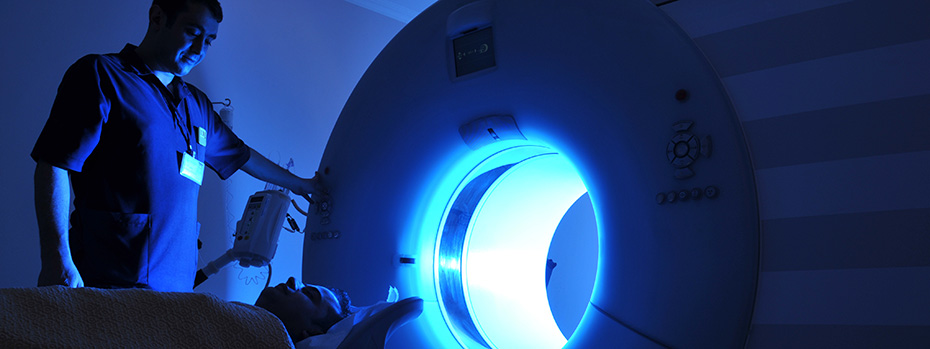
Take your study of medical physics further through advanced research and mentorship at OHSU.
Why earn your Ph.D. in Medical Physics from OHSU?
The Ph.D. in Medical Physics at OHSU builds on the foundation of the M.S. program and prepares you for advanced research in radiation therapy physics and diagnostic imaging physics. This degree is designed for students who have completed an M.S. in Medical Physics from a CAMPEP-accredited program. You’ll work closely with faculty mentors to design and carry out independent research that improves patient care.
Schedule a visit
Schedule an in-person or virtual visit to learn more. Email us at mpadmissions@ohsu.edu.
Contact us
- Email mpadmissions@ohsu.edu
- Call 503-494-7461
Admission requirements
To apply, you must have:
- A master’s degree in medical physics from a CAMPEP-accredited program.
- A 3.0 GPA or higher
Admission depends on faculty availability and research funding.
How to apply
Applications are open from September to January.
To apply:
- Create an online account and select “Medical Physics.”
- Enter past coursework.
- Submit a personal statement, resume and three letters of reference.
- Answer application questions.
- Send official transcripts to the School of Medicine graduate admissions office.
Tuition
The department waives tuition and provides a stipend to Ph.D. students.
Degree requirements
You need 135 credits to earn your Ph.D. in Medical Physics. This includes research credit hours and other relevant coursework approved by the program. Students must also pass the qualifying exam and prepare a grant application.
- Program length: 3 to 5 years
- Minimum GPA: 3.0
Student research
Ph.D. students independently design and carry out research projects with mentor support in radiation therapy physics or diagnostic imaging physics. You’ll design and complete a dissertation project that contributes to the field.
Recent dissertations and presentations
Linear system analysis for photon-counting computed tomography protocol optimization
Celeste Leary, 2020
Generating Synthetic Motion Artifacts in 4D-CT Lung Scans, presented by William Bethard at the NWAAPM chapter meeting, May 2025
Ph.D. in Medical Physics FAQs
Who can apply to the Ph.D. in Medical Physics program?
To apply, you need a master's degree in medical physics from a CAMPEP-accredited program. Most of our Ph.D. students come from OHSU's M.S. program.
What research areas are available in the Medical Physics Ph.D. program?
You’ll focus on research in radiation therapy physics or diagnostic imaging physics through faculty-mentored projects.
Learn more about our faculty and their research.
How long does it take to earn a Ph.D. in Medical Physics?
The Ph.D. in Medical Physics typically takes three to five years to complete after your master's degree.
What can you do with a Ph.D. in medical physics?
A Ph.D. in medical physics opens doors to advanced career opportunities and higher earning potential. The degree prepares you for leadership roles in hospitals, research institutions and industry, and faculty positions in academia. You can develop new imaging and treatment technologies and help advance patient care.
Hear from students
“This program has given me many opportunities for research, clinical learning and professional development. I have always felt supported and encouraged by my mentors to become the best physicist possible.”
— Will Bethard, Ph.D. in Medical Physics student