Gastroenterology Fellowship

The Gastroenterology Fellowship at OHSU provides comprehensive training in gastroenterology and hepatology within a collegial, supportive and academically rigorous environment. This three-year program is designed to develop skilled, thoughtful and adaptable gastroenterologists prepared for a wide range of career paths.
Fellowship objectives
The mission of the fellowship is to:
- Educate you and other aspiring gastroenterologists in an interdisciplinary environment with a diverse patient population
- Prepare you for a lifetime of learning, leadership and contribution
- Guide you in self-reflection and self-improvement to encourage your sustained well-being
- Train you to deliver excellent health care by emphasizing critical thinking and the creation and implementation of new knowledge and technologies
First-year fellowship curriculum
Onboarding
The program is structured to forge strong bonds between fellows and faculty members, resulting in the best teaching and patient care possible. Full-time faculty members will be available day and night to answer your questions, solve problems and explain procedures. In addition, a second-year fellow will accompany you on inpatient services the first month and share "buddy call" to ease you into the new environment.
First-year fellows kick off the year with a hands-on endoscopy bootcamp, learning equipment and endoscopy fundamentals in simulation experiences. You will also be sponsored to attend national courses, including the American Society for Gastrointestinal Endoscopy First-Year Fellows course and IBD 101: A Primer for First-Year GI Fellows, supporting both foundational learning and national networking.
During the first three months of the academic year, you’ll attend a “summer series,” a structured curriculum revisiting core concepts in gastroenterology. Sessions are led by faculty from across gastroenterology as well as surgery, radiology, pathology and anesthesiology.
Inpatient services
The first year of fellowship is dedicated to developing a strong clinical foundation in gastroenterology and hepatology, with a primary focus on inpatient consultative care at OHSU and the Portland VA Medical Center. These two inpatient services provide complementary experiences, spanning a broad range of patient populations and acuity, from general gastroenterology management to complex, quaternary care.
On the gastroenterology consult services, you’ll work closely within a multidisciplinary team that may include students, internal medicine residents and an advanced practice provider. Your responsibilities will include formulating diagnostic and management plans, performing and interpreting procedures and teaching trainees the core principles of gastroenterology. Emphasis is placed on developing clinical reasoning, efficiency and clear communication in both patient care and team leadership.
Throughout the fellowship, you will also rotate on a combined OHSU and Portland VA hepatology service, traveling between sites via the skybridge. As part of this consult service, you will gain early experience managing acute inpatient liver disease. You’ll benefit from training in transplant-capable facilities at both locations, deepening understanding of multidisciplinary collaboration at transplant selection committee meetings as well as disparities, barriers to care and advocacy in this field.
Ambulatory experiences
As a first-year fellow, you’ll also build substantial ambulatory experience, with nearly half the year devoted to outpatient services. Rotations include outpatient endoscopy at both the VA and OHSU’s ambulatory endoscopy spaces, OHSU general gastroenterology continuity and subspecialty clinics, and VA-based clinical care, particularly in an urgent-acuity clinic.
You’ll also spend one outpatient month per year at Kaiser Permanente, gaining experience in high-volume ambulatory endoscopy, hepatology, addiction medicine and ambulatory gastroenterology. This provides exposure to a range of practice models across the three sites.
Second- and third-year fellowship curriculum
Inpatient services
As you build your clinical foundation, you’ll continue to advance both cognitive and procedural skills. Though consult rotations on inpatient gastroenterology will receive less emphasis in this period, senior fellows also rotate on the inpatient pancreaticobiliary service, where you’ll develop exposure to the technical aspects of advanced endoscopic procedures and refine your clinical decision-making in complex disease and oncologic care.
Procedural experience may include:
- Endoscopic ultrasound (EUS)
- Endoscopic retrograde cholangiopancreatography (ERCP)
- Double-balloon enteroscopy
- Pancreatic necrosectomy
- Stent placement
- Advanced resection techniques such as endoscopic mucosal resection (EMR) and endoscopic submucosal dissection (ESD)
Later in your third year, you’ll serve as the “pre-attending” on the GI consult service at OHSU, with faculty backup. This unique experience is a favorite among fellows and is a significant confidence builder before entering the “real world.” It’s also an opportunity to receive feedback on your role as a preceptor and endoscopy teacher.
Ambulatory experiences
Increasing flexibility in the latter two years of the fellowship provides additional time to pursue scholarly activities and meet program requirements, while supporting the intentional curation of experiences aligned with your career goals. Additional funding for national conferences, scholarly pursuits and advanced training may be available through the Al and Sonia Ryckman Fellowship Fund.
You will partner with a faculty research mentor and engage in research or quality improvement projects on topics of shared interest, with the expectation that you’ll complete meaningful work. Clinical research is well supported through mentorship and ongoing roundtables, where projects at various stages are reviewed and advanced under guidance from nationally recognized experts across a wide range of subspecialties.
Dedicated recurring subspecialty ambulatory clinics in the third year allow you to reflect upon learning needs and focus your training on your interests. For example, you might work within the multidisciplinary integrated Digestive Health Center or the state’s leading high-volume Inflammatory Bowel Disease Center. You’ll continue building upon ambulatory clinical and endoscopy experiences, including an additional one to two months at Kaiser Permanente per year.
Elective rotation activities may include:
- Ambulatory endoscopy tailored to areas of interest and need (e.g., quality colonoscopy, IBD-focused endoscopy, EMR, dilation)
- Body radiology
- Interventional radiology
- GI pathology
- Pancreaticobiliary clinic
- Colorectal surgery clinics
- Inflammatory bowel disease
- Video capsule endoscopy (VCE)
- Esophageal motility
- Nutrition on surgical, GI and inpatient consult services
- FibroScan assessment
- Addiction medicine rotations at Kaiser Permanente and Portland VA
- Structured self-study
- Research and quality improvement projects, including investigation, national presentation and publication
Conferences
In addition to gastroenterology-focused training, the program highlights the collaborative environment at OHSU and the Portland VA, featuring regular lectures from faculty across diverse specialties. We pride ourselves on coaching fellows to become lifelong learners while cultivating the leadership, mentorship and organizational skills needed for a fulfilling and productive career.
Summer series (yearly)
- First-year fellows boot camp (week 1)
- Emergencies
- Essential learning
Core curriculum (2-year cycle)
- Threads
- Pathology
- Nutrition
- Radiology/interventional radiology
- Endoscopy
- GI case conference
- Journal Club
- M&M and QI
- Recurring multidisciplinary subspecialty conferences: benign foregut surgery, surgical oncology, IBD, pancreaticobiliary
Ambulatory curriculum
- OHSU and VA continuity clinics
- 12:30 p.m. prior to the clinic start
Wellness, personal and professional development
- Complications and unexpected outcomes
- How to be an excellent consultant
- Communication and boundaries in patient care
- Time management
Adjunctive events
- DOM grand rounds
- Quarterly Al & Sonia Ryckman Visiting Professor series with national field leaders
- Research roundtables with current and former faculty, including leading experts
How to apply
We have nine fellows in our gastroenterology program. Three fellowship positions are available each academic year.
We will accept applications for those positions through the Electronic Residency Application Service (ERAS) starting in July. Our program also participates in the National Residency Matching Program (NRMP) for gastroenterology.
Include the following supporting documents in your ERAS application:
- One letter from your internal medicine program director
- Three letters of recommendation (in addition to the letter from your internal medicine program director)
- Medical school transcript
- USMLE scores
- Photo (optional but recommended)
- Your curriculum vitae
- Personal statement describing your interests in gastroenterology and hepatology and your career goals after completing fellowship training
Eligibility requirements
International medical graduate applicants must be ECFMG certified by the NRMP ranking deadline to be considered. Applicants must be able to work in the U.S. or obtain work authorization.
Fellowship leaders
Program director
Associate program directors
Director of faculty development and education
Current fellows
First-year fellows
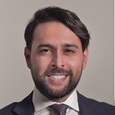
Amish Khan, M.D.
- M.D.: Washington University
- Residency: University of Pittsburgh

Vicki Tang, M.D.
- M.D.: Washington State University
- Residency: University of Washington
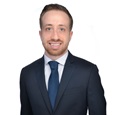
Adam Urback, M.D.
- M.D.: Ben-Gurion University of the Negev
- Residency: OHSU
Second-year fellows
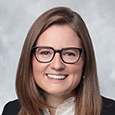
Hannah Carr, M.D.
- M.D.: University of Washington
- Residency: University of Colorado
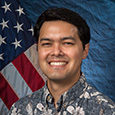
Gabriel Monti, M.D.
- M.D.: University of Hawaii
- Residency: OHSU

Tesfaye Yadete, M.D.
- M.D.: University of Nevada
- Residency: Cleveland Clinic
Third-year fellows
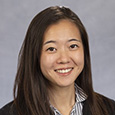
Jennifer Koh, M.D., MPH, Chief Fellow
- M.D.: University of Miami
- Residency: University of Southern California
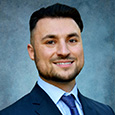
Lee James Varelas, M.D.
- M.D.: University of Pittsburgh
- Residency: University of Pittsburgh
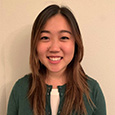
Nicole Wong, M.D.
- M.D.: Baylor College of Medicine
- Residency: OHSU
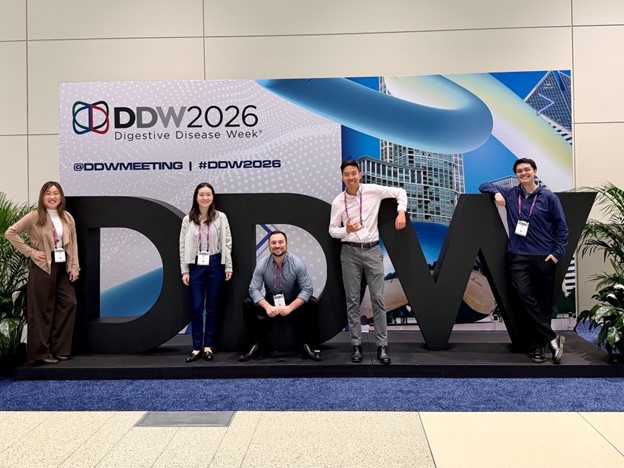
Fellowship alumni
-
Name Graduation year Post-fellowship training Current practice Eddy Leung, M.D. 2026 OHSU Claire Shin, M.D. 2026 Endeavor Health Patrick Stauffer, M.D. 2026 The Oregon Clinic Shanna Cheng, M.D. 2025 OHSU Transplant Hepatology Fellowship Program OHSU Jennifer Rodriguez, M.D. 2025 OHSU Advanced Endoscopy OHSU Jeffrey Rebhun, M.D. 2025 Sansum Clinic Pueblo Gastroenterology Rafael Ornelas, M.D. 2024 OHSU Transplant Hepatology Fellowship Program Durham VA Medical Center Ashley Thompson, M.D. 2024 Fred Hutch Cancer Center Luis Vazquez-Montesino, M.D. 2024 WakeMed Raleigh Campus Andrews Center Jenna Anderson, M.D. 2023 OHSU/Portland VA Eric Yoo, M.D. 2023 Sutter Health Santa Cruz Gastroenterology Steven Koprowski, M.D. 2023 Aurora Gastroenterology Ross Vyhmeister, M.D. 2022 The Oregon Clinic Deron Amador, M.D., M.S. 2022 The Oregon Clinic Bradford Chong, M.D. 2022 Mayo Clinic Pancreatology Fellowship University of Chicago Anil Sharma, M.D. 2021 The Oregon Clinic Kellie Young, M.D. 2021 Northwest Gastroenterology
OHSU resources and related fellowships
Apply now
Submit your application through ERAS.
Contact us
Katherine Rose Franklin
Fellowship coordinator
franklik@ohsu.edu

What you wish you knew in GI fellowship
Listen to OHSU’s Dr. Janice Jou on the American Gastroenterological Association podcast “Small Talk, Big Topics.”