Martin Lab

Ian Martin
Ph.D., Virginia Commonwealth University, 2008
Postdoctoral Fellow, Johns Hopkins University, 2009–2015
Faculty profile
martiia@ohsu.edu
503-494-9140
Ian received his B.S. degree from King's College, London and Ph.D. from Virginia Commonwealth University where he studied the impact of oxidative stress in determining life span and age-related functional declines in Drosophila. In 2009, he joined Ted and Valina Dawson's laboratory at Johns Hopkins University where he worked on molecular pathways underlying Parkinson's disease development linked to mutations in LRRK2 (leucine-rich repeat kinase 2). His work led to the discovery that mutant LRRK2 causes neurodegeneration through elevated bulk protein synthesis which is mediated by increased phosphorylation of the LRRK2 substrate ribosomal protein s15. In September 2015, Ian joined the Jungers Center as Associate Professor of Neurology with membership in the Parkinson Center of Oregon. Further Martin Lab information
Research
Role of Aging in Neurodegeneration
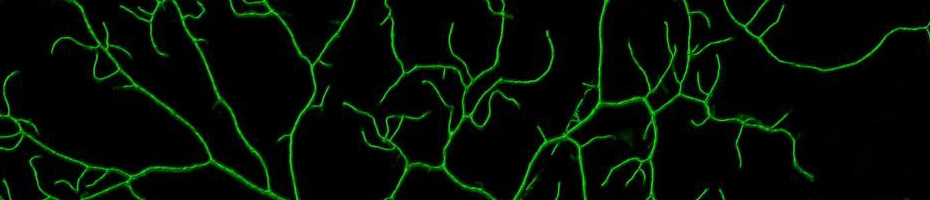
The biggest risk factor for developing Parkinson’s disease (PD) is age, suggesting that age-related changes in the brain predispose to loss of dopamine (DA) neuron health and viability. Cell stressors such as oxidative stress and metabolic dysfunction increase with age, and DA neurons are particularly vulnerable to this stress due to their elaborate neurite branching with consequent high metabolic demands and their intrinsic reactive oxygen species production through DA metabolism. While the case for macromolecular oxidative damage as a driver of cellular aging has recently been challenged, a growing body of evidence indicates that oxidative stress-responsive signaling may promote aging, although the molecular mediators are not well understood. We are actively investigating how oxidative stress-responsive signaling mediators that are important for lifespan determination intersect with neuronal health across age and, specifically, age-related maintenance of dopamine neuron viability.
Genetic susceptibility to neurotoxin-induced neurodegeneration
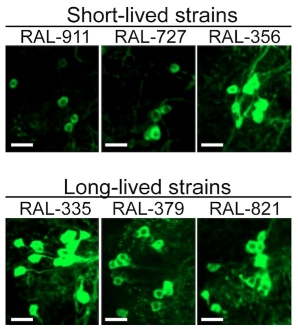
Epidemiological studies link pesticide exposure to Parkinson’s disease (PD) risk, yet human studies alone have not conclusively link PD etiology to any single pesticide. Controlled animal models play a vital role in determining whether pesticides can cause PD-related neurodegeneration and can be leveraged to gain mechanistic insight into disease etiology. We are using Drosophila to identify genes underlying susceptibility to neurotoxins such as pesticides that have been linked to PD. Genes identified through this approach will then be pursued in rodent models of neurodegeneration in order to assess their potential contribution to disease development.
Mechanisms of LRRK2-mediated neurodegeneration in Parkinson’s disease
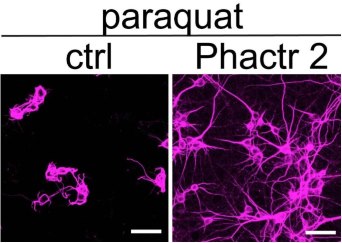
Genetic, aging, and environmental factors converge to establish a person’s lifetime risk of developing Parkinson’s disease (PD). A broad role for leucine-rich repeat kinase 2 (LRRK2) mutations in familial and idiopathic PD has emerged, elevating its status to a central therapeutic target. Ultimately, preventing LRRK2-induced neurodegeneration will require a detailed understanding of the key mechanisms driving neuronal dysfunction and death. LRRK2 has been implicated in numerous biological processes, but defining mechanisms that drive age-related neuronal death has been elusive. We performed a comprehensive screen for genetic modifiers of neurodegeneration in aged LRRK2 G2019S-expressing Drosophila, which exhibit robust age- and kinase-dependent loss of dopamine neurons (Lavoy et al., 2018). This approach identified a number of genes that regulate the morphology of neurites (axon and dendrites) which is striking considering that loss of neurite branch complexity is one of the most prevalent neuronal defects associated with pathogenic LRRK2 mutations in vitro. We are working with Drosophila and mammalian disease models to delineate the nature of these neurite defects in vivo, their underlying cause, and their relationship to dopamine neuron death.
Publications
Publications
View full list of publications on NCBI
Keating, J. and Martin, I. (2026). A role for glutathione in Parkinson’s disease modification. Neural Regeneration Research, In Press.
Villalobos-Cantor, S., Barrett, R.M., Condon, A.F., Arreola-Bustos, A., Rodriguez, K., Cohen, M.S., Martin, I. (2026) Visualizing and Profiling de novo Protein Synthesis in the nervous system. Methods in Cell Biology, 200, 119-136.
Villalobos-Cantor, S., Arreola-Bustos, A. and Martin, I. (2025) Genome-wide analysis reveals genes mediating resistance to paraquat neurodegeneration in Drosophila. Genetics, 230(3).
Villalobos-Cantor, S., Arreola-Bustos, A. and Martin, I. (2025) Genetic basis of maneb-induced dopaminergic neurodegeneration in Drosophila. G3, 15(9).
Coleman, C., Pallos, J., Arreola-Bustos, A., Wang, L., Raftery, D., Promislow, D.E.L., Martin, I. (2024) Natural Variation in Age-Related Dopamine Neuron Degeneration is Glutathione Dependent and Linked to Life Span. Proceedings of the National Academy of Sciences, 121 (42) e2403450121.
Villalobos-Cantor, S., Barrett, R.M., Condon, A.F., Arreola-Bustos, A., Rodriguez, K., Cohen, M.S., Martin, I. (2023) Rapid Cell Type-Specific Nascent Proteome Labeling in Drosophila. eLife, 12: e83545.
Coleman, C., Martin, I. (2022) Unraveling Parkinson's Disease Neurodegeneration: Does Aging Hold the Clues? Journal of Parkinson's Disease, 12 (8).
Pallos, J., Jeng, S., McWeeney, S. and Martin, I. (2021) Dopamine Neuron-Specific LRRK2 G2019S Effects on Gene Expression Revealed by Translatome Profiling. Neurobiology of Disease, 155, 105390.
Chittoor-Vinod, V.G., Villalobos-Cantor, S., Roshak, H., Shea, K., Abalde-Atristain, L. and Martin, I. (2020). Dietary Amino Acids Impact LRRK2-induced Neurodegeneration in Parkinson’s Disease Models. Journal of Neuroscience, 40(32) 6234-6249.
Kim, J.K., Yin, X., Jhaldiyal, A., Kahn, M.R., Martin, I., Xie, Z., Perez-Rosello, T., Kumar, M., Abalde-Atristain, L., Xu, J., Chen, L., Eacker, S.M., Surmeier, S.M., Ingolia, N.T., Dawson, T.M. and Dawson, V.L. (2020). Defects in mRNA translation in LRRK2-mutant hiPSC-derived dopaminergic neurons leads to dysregulated calcium homeostasis. Cell Stem Cell, 27(4) 633-645.
Lavoy, S., Chittoor-Vinod, V.G., Chow, C.Y., Martin, I. (2018) Genetic Modifiers of Neurodegeneration in a Drosophila Model of Parkinson's Disease. Genetics, 209(4) 1345-1356.
Martin, I. (2017) Resveratrol for Alzheimer's disease? Science Translational Medicine 1;9(375) pii
Kim, J.W., Abalde-Atristain, L., Jia, H., Martin, I., Dawson, V.L., Dawson, T.M. (2016) Protein translation in Parkinson’s disease. In: Verstreken P, eds. Parkinson’s Disease: Molecular Mechanisms Underlying Pathology. San Diego, CA: Elsevier.
Martin, I., Chittoor, V.G. (2016) Parkinson disease: Insect screens for PD therapies - keep the flies in. Nature Reviews Neurology, 12(6) 318-319.
Martin, I., Kim, J.W., Lee, B.D., Kang, H., Xu, J-C., Jia, H., Stankowski, J., Kim, M-S., Zhong, J., Kumar, M., Andrabi, S.A., Xiong, Y., Dickson, D.W., Wszolek, Z.K., Pandey, A., Dawson, T.M., Dawson, V.L. (2014) Ribosomal protein s15 phosphorylation mediates LRRK2 neurodegeneration in Parkinson’s disease. Cell, 157(2) 472-485.
Highlighted in Cell, 157(2) 291-293.
Highlighted in ACS Chemical Biology, 9(5) 1067-1069.
Highlighted in Movement Disorders, 29(8) 990.
Highlighted in ASBMB News, October 2014
Lab Members
Lab Members

Judit Pallos, Ph.D.
Assistant Staff Scientist
pallos@ohsu.edu
Prior to joining OHSU in 2019, Judit studied transcriptional dysregulation in a Drosophila model of Huntington's disease at the University of California, Irvine. She enjoys working with flies because she likes that we can use genetic and molecular biology techniques, detailed microscopical analyses, and behavioral essays all in the same model system, and get answers to our questions in a relatively short period of time. In Ian's lab Judit is working on two separate projects: Dissecting the role of LRRK2 in Parkinson's disease neurodegeneration, and understanding the link between oxidative stress and nervous system aging. When not in the lab, she enjoys learning languages, playing in the kitchen, and hiking with her family.

Stefanny Villalobos Cantor
Senior Research Assistant
villalos@ohsu.edu
I joined the Martin lab in 2017 in hopes of continuing to develop lab skills and to start my career in neurodegenerative disease research. Since then, I have contributed to multiple research areas within the lab with a recent focus on genomic studies identifying candidate genetic risk factors for pesticide-mediated neurodegeneration in animal models of Parkinson’s disease. On my downtime, I enjoy running, participating in fitness classes, camping and exploring the PNW.

Jessica Keating
M.D., Ph.D. Student
pallos@ohsu.edu
I completed a BA in Psychology at Mount Allison University in New Brunswick, Canada in 2013 and a MSc in Cognitive Neuropsychology at the University of Edinburgh in 2015. I later worked as an English teacher in South Korea and conducted research with young stroke survivors in Melbourne, Australia, where I made the decision to pursue physician-scientist training. After two subsequent years of pre-med and one year as a research assistant at Rutgers University in New Jersey, I joined OHSU’s MD/PhD program in 2021.
My research focus has evolved from human memory, to needs assessment and stroke service delivery, to spinal cord circuits of pain and touch. I now investigate the metabolic perturbations associated with the protein alpha-synuclein’s neurotoxic effects in the central nervous system in the Martin and Unni Labs. When not doing science you can find me on a PNW mountain or at home making a meal for friends.
Alumni
Previous Lab Members
Imtiyaz Wise
Alicia Arreola-Bustos, MS
Kaylee Ha, MS
Colin Coleman, MS
Michelle Rivera Lomeli
Laura Graham, PhD
Hanna Roshak
Vinita Chittoor, PhD
Kelsey Shea
Sierra Lavoy
Ruth Barrett, PhD
Sarah Josway