“9 is arrogant”

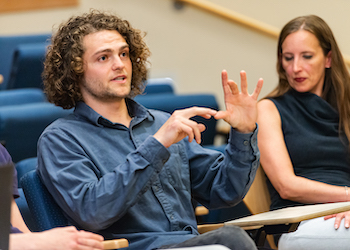
“9 is arrogant”, he calmly tells me as if we’re on the same page.

“Why do you think that?” I ask, trying to wrap my head around this alien concept.

“Obviously it has the right to be, but I don’t know the exact reason.”

“No, there’s nothing obvious about it, but what are some other examples?” I intriguingly prod this sophomore who has stayed around after class to discuss with me the recent discovery of his rare form of synesthesia. He quickly rattles them off.

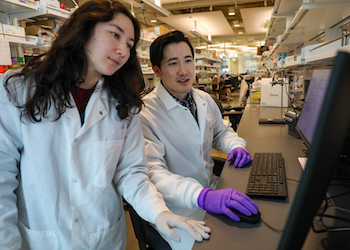
The grades are in and my first solo teaching experience is complete. Starting back in January, I embarked on a 4 month teaching odyssey at Lewis & Clark, designing, organizing and delivering a PSY280 class called “Brain & Behavior”, which can essentially be thought of as an introduction to neuroscience. Even before beginning at OHSU, I knew that I wanted teaching to play a role in my future career in science. So why not get started now? Of course, OHSU doesn’t have the undergraduate population for which our mentors, on one knee (or whip), send us off to fend for ourselves teaching their intro courses or grading their exams. Instead, luck, motivation, and more luck enabled me to score mini teaching opportunities across Portland which culminated last fall in being accepted as a visiting adjunct course instructor in the L&C Psychology Department. Yep, it came with an office… that had a window! Note: both are rare luxuries in the graduate student world.

Read more…

The inevitability of discovery

This past weekend I took two hours off from writing and lab work, drove myself to the movie theater, and saw the breathtaking wonder that is Jurassic Park in 3D. JP holds a special place in my heart because, as a little girl, it enchanted me in much the same way as Willy Wonka and the Chocolate Factory. The power of what humanity can do and not do inspired me, even at 4 years old. In fact, I credit this movie as my very first exposure to science. You might laugh at this thought, looking now at the “science” presented in the movie, but such is the naivete of youth.

Like all classic films, there are themes in JP that transcend both the early 1990′s and the idea that we can isolate dinosaur DNA from fossilized mosquitoes, do some quick pipetting and virtual simulation, and wam-bam-boom have a baby dinosaur.  BIG questions are posed in this film. What are the limits of scientific discovery? Can we control the natural world? How responsible are scientists?  And of course there is also the famous line, “God created dinosaurs. God destroyed dinosaurs. God created man. Man destroys God. Man creates dinosaurs….Dinosaurs eat man. Woman inherits the earth;” quite the commentary on human progress……I doubt Spielberg meant this movie to be a specific commentary on the scientific community.  But the scientific community is nothing more than a microcosm of society, and these are certainly ethical questions scientists, including young investigators, are met with everyday. Sitting in the theater as a second year graduate student beginning to start drafting qualifying exam materials, there were some lines that particularly struck me:

“Life finds a way.”

“God help us, we’re in the hands of engineers.”

“What’s so great about discovery? It’s a violent, penetrative act that scars what it explores. What you call discovery, I call the rape of the natural world.”

Read more…

Building myself towards a “culture of public health”

In a “former life” as an emergency preparedness specialist with the Red Cross, part of my job was to educate community members on everyday practices that can support their preparedness for disasters. A suggestion I often cited was, in order to make the task of building a “bug out bag” (emergency items to help you survive) and the magnitude of facing disasters less daunting, creating a “culture of preparedness” is crucial. A few examples for this included: picking up extra cans of food during routine grocery shopping, creating a game out of identifying emergency meeting places (or practicing fire, earthquake and other drills) and justifying card game purchases as emergency items (to stave off boredom – an incredibly important aspect of survival). Essentially, those in the classes began to view preparedness not as a chore or an insurmountable achievement once they saw that they could work within their inherent interests, tastes and schedule.

Similarly, through work in various public health capacities as I navigate through my degree, I believe a “culture of public health” can make intervention strategies towards improved wellbeing achievable…and even fun! In attempting to become a healthier individual myself and possibly spread ideas a bit further, here are a few ideas I’ve tried to build a “culture of public health” for my own sake.

  • On campus days, I take the bus then the tram to “Pill Hill.” Even if I can’t always afford the time on the way up, I’ve been making an effort to get off several stops early and walk the rest of the way home (and sometimes forgo the tram and bus completely). If that’s not possible (or for extra opportunities), opt for stairs over elevators, or better yet, get a dog so they’ll force you to walk daily!

Read more…

Passionate about nursing

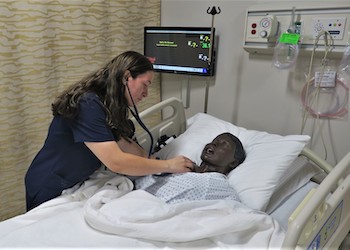
I was honored to participate in the OHSU School of Nursing video.  I am passionate and committed to the nursing profession and I am overjoyed to be a part of the one of the best nursing programs in the country.  OHSU offers a strong didactic and clinical education, and I feel prepared and excited to enter the nursing field.  I have loved working with such a diverse and experienced group of colleagues, faculty and precepting nurses.  I am looking forward to a career in pediatric oncology nursing!

- Mary

YouTube Preview Image


It be iddy biddy…

When learning a massive amount of material, it helps to have pneumonics for rote memorization. The crazier the phrase the better. Of course sometimes you remember the wacky phrase but not what it stands for. In our neuroscience class last term, we were specifically told to NOT remember a pneumonic for brain MRI findings that related the age of an intra-parenchymal hemorrhage to the findings on a T1/T2 MRI.

But it was just so darn memorable: It Be Iddy Biddy Baby DooDoo

It also doesn’t help that I have babies on the brain because my wife gave birth to our first child just a few weeks ago! I am currently in the process of adjusting to a new normal in regards to my study schedule, recreational activities, and amount of sleep. Let’s go through an exercise in exploring the dichotomous nature of parenthood and just enough medical knowledge to be dangerous, all in the context of my favorite fancy pneumonic!

-It….

Medical knowledge (0-8 hrs old, Isodense, T1): Most neonates experience jaundice soon after they are born, but a blood level of 11 before 24 hours of life could indicate a high risk situation and potential kernicterus.

Parenthood: He is so perfect that there is no way there is something wrong, and is he even that yellow? Oh my gosh, what if it it’s Crigler-Najjer or Gilbert’s!

Read more…

Healthcare in a parking garage

Somehow the gravity of the words was diminished when translated into a second-language. “Tienes diabetes” (You have diabetes). It wasn’t until after I had said them, and after I saw the empty stare of the words’ recipient, that I realized the weight of the information I had just relayed. The make-shift office of felt walls and PVC pipes in the underground parking garage felt like an odd place to give someone a diagnosis of a potentially chronic illness. In that moment, the reality of health inequity was made clear to me.

Health Care Equality Week 2013

Though an organizer for this year’s Health Care Equality Week screening fair, I had a bit of patient interaction on the day of the event when I stepped in to interpret for Spanish speakers a few times that day. The annual event, held in downtown PDX, brought in nearly 300 patrons from the surrounding area. When I arrived for set-up at 7:30 that morning, many had already started forming a line, waiting for the gates to open an hour and a half later. As a multi-disciplinary and multi-university event, the screening fair featured a variety of services including oral exams, visual acuity screenings, diabetic foot care, immunizations, veterinary care, medical consult, blood glucose checks, and hair cuts among other things. Throughout the day, a steady stream of people seeking medical attention ventured into the damp, cold underground parking garage where the fair has traditionally taken place. Held in conjunction with Potluck in the Park, patrons could head above ground in the afternoon for a meal after the fair.

Read more…

Lost in the trees

I used to write just to write, for no particular reason – it was just something I liked to do. I had one of those way-too-popular black Moleskine journals that are about the size of a back pocket, and I would sit on a bench of my undergraduate campus and write a poem or a paragraph or anything that came to mind. I don’t do that anymore. Instead, I learn. I learn all the time. And when I’m not learning, I think about learning; I plan out when and how I’m going to learn, and think about all of the things that I want and need to learn.

As a first year medical student, much of what we’re responsible for learning is hard, biological science. Our core classes are meant to teach us the background information we must understand in order to eventually treat patients. Sometimes, in the midst of all the biomedical science, as ironic as it may seem, I forget what I’m really doing here. I spend so much energy trying to master the material at hand, I forget how it fits into the big picture of what I’m trying to accomplish in medical school and beyond. When there’s a test around the corner and 200 pages of information to learn, many first-years might agree that it’s easy to miss the forest for the trees. Luckily, OHSU has found a way to attenuate the tunnel vision so many of us find ourselves slipping into by cycling our focus between our books and the clinic.

Read more…

The learning paradox

“I am slow to learn and slow to forget that which I have learned. My mind is like a piece of steel,
very hard to scratch anything on it and almost impossible after you get it there to rub it out.”
- Abraham Lincoln

Despite his demonstrated capacity for significant life accomplishments, I’m not sure how well our 16th president would have liked being a medical student in the 21st century.  Modern medicine is an expanding body of knowledge, but the brain is a relatively static piece of biomachinery.  The amount of knowledge that a medical student must acquire in order to pass the first step of the licensing exam is considerable and seems to grow daily.  The reality is that there’s not enough time to learn it to the point where one can consider the knowledge etched in steel in one’s mind. I can’t tell you how many times I’ve talked to upperclassmen, residents, and even practicing physicians who report that the learning in their careers has been matched by an equal amount of forgetting.  Like Lincoln would, most of us have to cram knowledge into our brains in order to pass exams, only to later find that our brain’s hold on it is ephemeral. 

How do most students deal with the rising tide of knowledge?  Study harder, dose themselves with stimulants, sleep less: these are some popular strategies. They’re popular because they more or less work – almost all students pass classes and exams using a combination of these three methods.  But is this the best way to learn?  What about retaining those details that might not be useful on a day to day basis, but incredibly important to treat that rare disease only encountered once in one’s career?

Read more…

Spring Equinox

What does spring equinox mean to you? For many it conjures the image of flowers, bees, bunnies and sun (unfortunately more like rain in Portland). The season that arrives right before the much awaited summer. For Persians, spring equinox is the start of a new year and the time for celebration, family and traditions. Persian New Year, known as Norouz (meaning new day), is based on the ancient Iranian religion of Zoroastrianism. The holiday has since lost its religious connotation but is still celebrated throughout the world each Spring and is deeply rooted in symbolic traditions.

MS1 classmates celebrating Persian New Year

This year Norouz fell on March 20 at 4:01 a.m. here in Portland, which marks the start of the year 1392 on the Iranian calendar. In preparation to welcome a new year of health and happiness, Iranian families begin spring cleaning of the home and prepare the traditional Haft-seen (7 S’s) table setting. In the minutes before 4:01 a.m. PST families worldwide would be taking pictures, hugging and kissing, and calling elders in their new Spring clothes. On the Tuesday night before Norouz, families welcome the new year in part by jumping over a bonfire while saying a chant translated as “I give you my disease and illness, and get your beauty and health.” Unfortunately for me as a first year medical student, I was studying for an exam during this first part of the holiday. While studying in the library, I decided that this new year was an opportunity to teach others about Norouz traditions. After hearing interest and wonderful support from my new classmates, I invited a few of them over for the traditional fish and rice dinner on the eve of the new year.

Read more…

Health and a hot meal

OHSU medical and nursing students participate at the 2012 Health Care Equality Week

Madeline is one of the sickest patients I have met in three years of medical school. Homeless, she came by ambulance to the hospital for malnutrition and frostbite after days sleeping out in a Portland area park this winter. She was resourceful: She made drinking water by melting snow in plastic bottles with her own body heat. And her physical health was surprisingly good. Her mental health was not. She thought she had magic powers, had pockets inserted in her body, that people were chasing her across country.

Madeline (not her real name) was either too addled or too afraid to give any information about her past, using a fake name and claiming she could not remember any phone numbers or any other cities where she had lived. She denied being sick, saying she was only the psych ward for “R&R” and taking her antipsychotic to gain some weight. I think her psychiatrists and I did almost nothing that helped her: her mental health was not a whit different on leaving than on coming in. But the hospital’s social workers helped her immensely. They found her a place to live and outpatient clinics for physical and mental health care.

Read more…

StudentSpeak

StudentSpeak

Ever wondered what life is like as a student at OHSU? What does it take to become a researcher? Just how gross is gross anatomy? Welcome to the blog that answers these – and many other – questions. It’s students writing first-hand about their commitment to careers in science and health care. It’s honest about the challenges as well as the joys. It’s not always pretty. But it is our story. Thank you for sharing it with us. And please, let us know what you think.

Read more

Participation Guidelines

Remember: information you share here is public; it isn't medical advice. Need advice or treatment? Contact your healthcare provider directly. Read our Terms of Use and this disclaimer for details.

News & Social Media

School of Medicine
Facebook
SoM News

School of Nursing
Facebook
Nursing News

godaddy web stats