People

William Messer, M.D., Ph.D.
Associate Professor
Molecular Microbiology and Immunology
Department of Medicine, Division of Infectious Diseases
Bill grew up in the Pacific Northwest and competed a BA in English from the University of Oregon in 1989. After teaching middle school for 8 years, he earned a PhD in Ecology from the University of North Carolina at Chapel Hill in 2003, characterizing the molecular evolution of dengue virus serotype 3. Bill then completed completed medical school (2002-2006), residency in internal medicine (2006-2009), and a fellowship in adult infectious diseases at the UNC Chapel Hill School of Medicine (2009-2012). He simultaneously trained as a post-doctoral fellow in the lab of Ralph Baric (2008-2012), developing dengue virus infectious clones and identifying antibody epitopes that shape dengue virus susceptibility to neutralization by human antibodies. In 2012 Bill took a joint position at Oregon Health & Science University in the Departments of Medicine and Molecular Microbiology and Immunology where is is currently an Associate Professor. His lab continues to study features of antibody mediated immunity to flaviviruses, including dengue virus and yellow fever virus. Bill’s wife Lynne is a Professor of Epidemiology and Community Health in the Portland State University – OHSU School of Public Health and they have 3 adult daughters.
Messer Lab
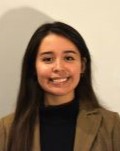
Samantha Osman
Ph.D. Candidate
B.A., Biology, Rice University
Sam is a current PhD candidate in the Biomedical Sciences program, entering the program in Fall 2021. Originally from Oklahoma, she moved to Houston, Texas and earned her BA in biology from Rice University in 2019 while working in the lab of Dr. Janet Braam studying plant derived exosomes. She then worked as a Research Associate for 2 years at the University of Texas Medical Branch in the lab of Dr. Tian Wang characterizing the immunogenicity of vaccines against emerging viruses (Chikungunya, Zika, and SARS-CoV2) in mouse models. She joined the Messer lab in 2022, where she is furthering her expertise in vaccine mediated immunology studying antibody responses to flavivirus infections/vaccinations in human cohorts. In her free time, she loves spending time with her dachshund Patches, going on long runs, and thrifting.
Research:
My thesis work has discovered the presence of antibodies directed against the viral protein (NS1) after vaccination with yellow fever 17D in ~70% of vaccinees. NS1 is a viral protein that intracellularly is required for viral replication and in a secreted form that is involved in pathogenesis. Anti-NS1 antibodies have demonstrated protection in animal models but their protective role in humans is unknown. My work seeks to characterize the influence of other flavivirus infection histories on anti-NS1 antibody titers, how these antibodies are generated, and what their potential fc effector functions are. I will leverage the Messer lab’s unique human cohorts of non-endemic arboviral infected travelers and yellow fever vaccinees to further our understanding of the potential mechanisms of protection mediated by this novel antibody population.

Courtney Micheletti, B.S.
Graduate Student
Education: B.S. biology, Portland State University
Research Interests: virus-host interactions, vaccine development, neglected tropical diseases
Growing up in Northern California, I developed a fascination with the natural world, which led me to pursue a career in the biological sciences. I earned my BS in Biology from Portland State University, where I began my research journey in Dr. Ken Stedman's virology lab, exploring the mutation tolerance of archaeal viruses. After graduating, I worked for StoneStable, Inc., applying silicification methods to stabilize heat-labile biologics and live-attenuated vaccine strains. I then joined the Nakai lab at OHSU, engineering Adeno-Associated Virus (AAV) protein interactions to enhance gene therapy vector production. I joined the Messer lab in 2021 and entered the Biomedical Engineering PhD program in Winter 2024. Outside the lab, I enjoy exploring the Pacific Northwest by bike with my husband and spending time with our tuxedo cat, Frida.
Research:
My research focuses on understanding the molecular determinants of antibody neutralization of dengue virus (DENV). My primary aim is to investigate how antigenic variability in the DENV envelope glycoprotein affects viral fitness, immune evasion, and susceptibility to antibody neutralization. Specifically, I examine the differences in neutralization susceptibility between sylvatic and epidemic DENV1 strains. Utilizing reverse genetics and site-directed mutagenesis, I create chimeric DENV1 strains that incorporate genetic components from both sylvatic and endemic viruses. This approach helps identify critical epitopes and amino acid residues responsible for viral resistance to neutralization, as well as highlight epitope targets potentially involved in the evasion of antibodies elicited by infection with endemic DENV1. My project aims to enhance our understanding of DENV pathogenesis and support the development of effective vaccines and therapies.

Abram Estrada
Senior Research Assistant
Education: B.S., Entomology, University of California, Davis
Abram is a Senior Research Assistant in the Messer Lab. He received a BS in Entomology from the University of California, Davis. Specializing in medical entomology, he is currently enrolled as a Master’s student at the University of Florida in the Entomology and Nematology department. Broadly, he is interested in the ecology and behavior of arthropods, especially those of medical and veterinary significance. In his free time, Abram enjoys hiking, flipping over logs and rocks to uncover the vast expanse of the mysterious soil and leaf litter realm that lurks beneath, watching movies, and collecting records.
Dengue virus is a mosquito-borne flavivirus with a genome that encodes three structural and seven non-structural proteins. In addition to replication, non-structural protein 1 (NS1) is thought to contribute to pathogenesis by inducing endothelial permeability via degradation of the glycocalyx, an extracellular matrix lining the endothelium. Studies with Aedes vectors have found that the concentrations of NS1 in a blood meal were positively correlated with infectivity. However, research into the mechanistic effect of NS1 on virus dissemination in mosquito vectors is lacking. The goal of our research is to determine how NS1 affects the mosquito vector and ultimately enhances infectivity. In general, pathogens must cross midgut (including the peritrophic matrix) and salivary gland barriers in a mosquito vector to be transmitted. Our hypothesis is that NS1 also serves to disrupt or damage vector membranes, allowing the virus to disseminate from the midgut to other areas of the body.
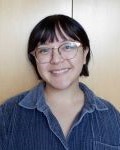
Sarah Sampouw
Research Assistant 1
B.S., Biology, Portland State University
Sarah is a Research Assistant 1 in the Messer Lab. She is originally from Southern California and graduated with her degree Biology at Portland State University in 2023. Before becoming a part of the Messer Lab, she worked with Dr. Duffield at Portland State University performing necropsies on marine mammals for conservation efforts. Sarah has research interests in microbiology and molecular biology. Currently, she is occupied with mostly processing blood samples. During the weekend, you can find her at the park, hiking, watching movies, or organizing art events with her friends.
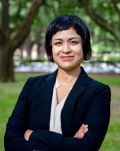
Vanessa Yataco-Marques
Senior Clinical Research Assistant
B.A., Psychology and Anthropology, McGill University
MSPH, University of Texas at Houston
Vanessa Yataco-Marquez is a research assistant at the Messer Lab. She graduated with a B.A. in Psychology and Anthropology from McGill University in 2005, a MSPH from the University of Texas at Houston in 2012 and an MD also from the University of Texas in 2020. She is currently involved in a study about memory B cell antibody specificity to nonstructural protein 1 (NS1). Vanessa is originally from Peru and Canada.
Alumni
Shuhua Luo – Research Assistant 2. Project: Dengue full genome sequencing. (2024).
Flic Coulter – PhD student. Project: Potency and breadth of yellow fever 17D neutralizing antibodies. (2018-2024).Chad Nix - lab volunteer and medical student researcher. Project: Using measles antibody levels to determine rates of antibody decay. (2016-2024)
Rebecca Parmenter - medical student researcher. Project: Optimizing Dengue1-4 NS1 ELISAs. (2024)
Shannon Young - MCR/medical student researcher. Characterizing the antibody repertoire after Chlamydia infection. (2022-2023)
Sofia Munoz - undergraduate student. Project: Performance characteristics of SARS-CoV-2 Dried Blood Spots. (2022)
David Xthona Lee – lab technician (2021-2022).
Zoe Lyski - PhD student. Project: Memory B Cell responses to RNA viruses. (2017-2022)
Bettie Kareko - lab technician and medical student researcher. Project: Breadth of Yellow Fever 17D neutralizing antibodies. (2017-2019, 2022)
Zhenchun Lu - MD PhD, Post-doctoral fellow (2021-2022)
Jana Mooster - PhD, post-doctoral fellow (2019-2020)
Lauren Fontana - DO, infectious disease fellow (2017-2020)
Jonathan Salberg - MD, infectious disease fellow (2016-2018)
Jules Weinstein – lab technician (2015-2018)
Adam Brady - MD, infectious disease fellow (2015-2016)
Sarah Gabriel - lab technician (2013-2015)
Justine Sunshine - PhD, Post-doctoral fellow (2013-2014)
Jeremy Huynh - lab technician (2012-2013)