Scholars
2026 Scholars
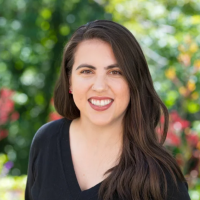
Janelle Siliezar Doyle, Ph.D.
Postdoctoral Researcher
Department of Chemical Physiology & Biochemistry
Dr. Janelle Siliezar-Doyle (she/her) is a postdoctoral researcher in Dr. Rose Hill’s lab in the Department of Chemical Physiology and Biochemistry, and an IRACDA at OHSU scholar. She currently studies brain-body interactions and is specifically looking at sensory neuron regulation of kidney physiology. Prior to OHSU, she received her PhD from Stanford University where she used cellular, molecular, and behavioral neuroscience techniques to study the role of spinal cord glia in chronic pain development. Before that, she was an undergraduate researcher in comparative animal physiology at California State University, San Bernardino studying alligator locomotion. Janelle loves all things physiology, pain biology, and sensory neurobiology, so she is excited to be here at OHSU merging many of these concepts. Her long-term goal is to lead a lab of her own at an undergraduate university where she can pursue both teaching and research. Outside of science and work, Janelle enjoys reading and exploring Portland playgrounds with her toddler.
“Over the years I have fallen in love with both research and teaching, but in all my scientific training there has been little to no emphasis on how to teach or mentor. The IRACDA program provides the resources, mentorship, and community for developing and practicing the skills needed to be an effective teacher in the lab and classroom. I applied to this program because I care deeply about creating accessible, engaging learning environments, as well as strengthening my research and technical skills. IRACDA allows me to focus on both!”
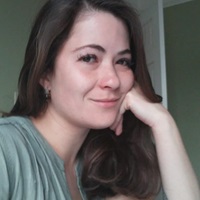
Madza Farias Virgens, Ph.D.
Postdoctoral Researcher
Department of Behavioral Neuroscience
Dr. Madza Farias Virgens is a postdoctoral researcher in Dr. Claudio Mello’s lab in the Department of Behavioral Neuroscience. Drawing on her extensive training in songbird neurobiology and genomics during her doctoral studies at UCLA and her postdoctoral work in hummingbird behavioral ecology at the University of Washington, she uses avian models to investigate the neural basis of vocal communication and learning. In the Mello Lab, she will use cellular, molecular, genomic, and behavioral approaches to study how genes and hormones influence the development of sex-specific brain circuits in zebra finches, a songbird species in which only males learn and produce song. Her research will explore how differences in brain cells and neural pathways contribute to sex-specific behaviors, with the broader goal of understanding the biological mechanisms that shape brain development and contribute to differences in neurological and psychiatric disorders.
2025 Scholars
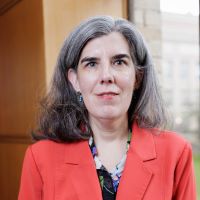
Jenn Reed, Ph.D., M.P.H.
Postdoctoral Researcher
Department of Public Health
Jenn Reed is a postdoctoral scholar at the Oregon Health & Science University Gun Violence Prevention Research Center, where she is mentored by Dr. Kathleen Carlson and researches vicarious trauma and police use of force. She earned her doctorate in Health Systems and Policy at the Oregon Health and Science University-Portland State University School of Public Health. At Portland State University, she teaches Contemporary Issues in Public Health Ethics; Health and Health Systems; Health Systems Administration; Introduction to Public Health Policy; and Public Health Law, Policy, and Ethics. Dr. Reed spent eight years as a civilian working in local law enforcement, where she became interested in how the mental health of police officers affects their interactions with the communities they serve, particularly the use of force. Her research interests include policy solutions to support police officer mental health and reduce police use of force, as well as firearm safety for people living with dementia.
“I like to think of public health as having the goal of saving the world, one small piece of the world at a time. The research mentoring and experience I gain through IRACDA will help me work towards that goal by developing evidence to support meaningful change within my own area of expertise. Even more importantly, the teaching training and mentoring I receive through IRACDA will help me gain the skills I need to prepare the next generation of public health students to go out into the workforce and impact the world in a positive way.”
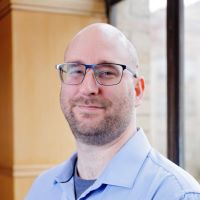
Darren Ginder, Ph.D.
Postdoctoral Researcher
Department of Behavioral Neuroscience
Darren Ginder is a postdoctoral fellow in Dr. Angela Ozburn’s lab in the Department of Behavioral Neuroscience. Darren completed his bachelor’s degree in Behavioral Neuroscience at Western Washington University. It was there he discovered how fulfilling he found academic research. While attending Eastern Washington University for a Master’s in Biology, Darren learned he enjoyed working with undergraduate students in the classroom, as both a teaching assistant and lecturer. In 2023, Darren completed his Ph.D. in Experimental Psychology at Washington State University. His experiences in both the classroom and laboratory further seated his goals of academic teaching and research. As a postdoctoral fellow at OHSU Darren’s current work is focused on how activity in the nucleus accumbens differentially impacts the rewarding effects of alcohol based on sex. Darren’s long-term research goals are to explore how altered prenatal neurodevelopment changes the rewarding effects of drugs and other compounds.
“As a first generation undergraduate and graduate student, I found classes and course work less befitting towards those with diverse backgrounds. I applied to the IRACDA program to learn how to help make the college experience more equitable inside the classroom and laboratory. College should be accessible to all individuals.”
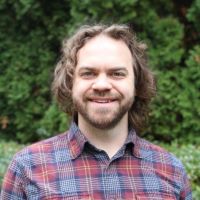
Judah Evangelista, Ph.D.
Postdoctoral Researcher
Department of Molecular Microbiology & Immunology and Chemical Physiology & Biochemistry
Judah Evangelista is a postdoctoral scholar under joint supervision of Dr. Fikadu Tafesse (Molecular Microbiology & Immunology) and Dr. Carsten Schultz (Chemical Physiology & Biochemistry). He earned a dual B.S./B.A. in Chemistry and Film, and a Ph.D. in Biochemistry in 2022, at the University of Utah. His graduate research focused on protein and peptide chemistry, new methods for making synthetic proteins, and antiviral drug discovery. As a postdoctoral researcher, he is investigating the cellular mechanisms behind viral infections—particularly the interplay between viruses and cellular lipids—aiming to uncover new therapeutic targets.
“I applied to IRACDA for the opportunity to get practical teaching experience and mentorship while training as a postdoc . I ultimately want to teach science alongside research, and the training from IRACDA will help me go forward in this career with confidence. I also appreciate the community of like-minded scholars who are here for the same goal – learning how to build up and support the next generation of scientists.”
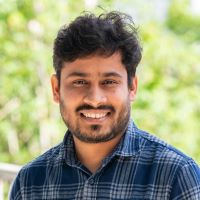
Ankit Pandeya, Ph.D.
Postdoctoral Researcher
Department of Molecular Microbiology and Immunology
Ankit Pandeya is currently a postdoctoral researcher in Dr. Isabella Rauch’s lab in the Department of Molecular Microbiology and Immunology, School of Medicine. He earned his B.Sc. degree in Biochemistry from Pokhara University, Nepal and Ph.D. degree in Biological Chemistry from University of Kentucky, KY, USA. His graduate research focused on understanding the role of inflammasomes and pyroptosis, an innate immune lytic cell death, during bacteria induced sepsis and disseminated intravascular coagulation. As a postdoctoral researcher in the lab of Dr. Rauch, he will be continuing his work on inflammasomes, but now focusing more in the context of mucosal barrier tissues such as gastrointestinal epithelium. He will be studying the role of inflammasomes in pathogen defense during enteric infection and other gastrointestinal diseases using stem cell derived organoids in vitro as well as genetic knock in/out mouse models in vivo. His long-term goal is to be an independent researcher and educator in an academic research institution working in the diverse and intricated aspects of innate immune system, host-pathogen interaction and inflammasomes.
"I applied to the IRACDA program because of its outstanding program design where we get the opportunity and resources to strengthen both research as well as non-research skills. IRACDA program focuses to develop not just a better scientist but also a better educator and mentor. Pursuing a career goal to become an academic research faculty, it’s important for me to develop these mentoring, teaching and other professional development skills together with scientific discovery." Ankit Pandeya, Ph.D.
2024 Scholars
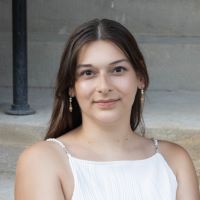
Eliana Aerts, Ph.D.
Postdoctoral Researcher
Department of Occupational Health Sciences
Eliana Aerts is a postdoctoral researcher in Dr. Matt Butler’s lab in the Department of Occupational Health Sciences. Eliana completed her bachelor’s degree in Chemistry at The College of New Jersey. She completed her Ph.D. in Cellular and Integrative Physiology at West Virginia University in 2024, where she researched the neuroendocrine basis for the timing of female puberty onset. Ellie was very involved in increasing the diversity resources available in her graduate program through advocacy in conjunction with the graduate student organization. As a postdoctoral fellow, she will examine the neuroendocrine link between mistimed feeding and infertility. Ellie’s long-term goals are to examine the link between nutrition and female reproduction.
“I am very dedicated to improving the way we as scientists treat each other: both our peers and those we consider mentees. The IRACDA program has excellent resources for improving communication and providing a more well-rounded understanding of how everyone’s needs are different. I believe that wide-spread training in these skills will lead to a healthier and more welcoming environment in academic science.” Eliana Aerts, Ph.D.
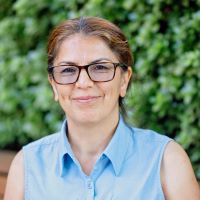
Hatun Duran Cete, M.D.
Postdoctoral Researcher
Department of Cell, Developmental and Cancer Biology
Hatun Duran Cete is a postdoctoral researcher in Dr. Pepper Schedin’s laboratory in the Department of Cell, Developmental and Cancer Biology, School of Medicine. She received her MD degree from Dicle University, School of Medicine in Diyarbakir, Turkey. She completed her pediatric surgery residency at the Pediatric Surgery Department of Dicle University, School of Medicine. As a postdoctoral fellow in Dr Schedin’s laboratory at the Knight Cancer Institute, Hatun’s research will focus on the metastatic microenvironment within the liver that facilitates breast cancer establishment in postpartum women. Hatun has been studying the immune infiltrate of weaning-induced liver involution in the postpartum liver in mouse models, with the goal of identifying an immune-based therapy targeted to the liver metastatic niche. Her long-term goals are to develop the skills and knowledge needed to set up a project of postpartum breast cancer studying a vulnerable ethnic population of women in southeast Turkey that have an increased birth rate compared to the US and developed western countries. She also aims to build her teaching skills to become more involved in scientific education and outreach, especially in her home country, with a goal of passing on her knowledge and research experience.
“After dedicating over 18 years to practicing as a pediatric surgeon in another country, I embarked on the challenging journey of establishing a new academic career from scratch in the United States. In navigating through language and cultural barriers, I have come to realize the immense value that the IRACDA program offers, particularly in enhancing the teaching skills essential for my future career aspirations.” Hatun Duran Cete, M.D.
Former Scholars
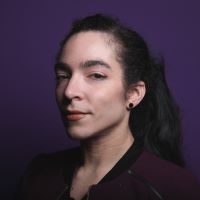
Keisha Rose Harrison, Ph.D.
Postdoctoral Researcher
Department of Medical Informatics, Division of Bioinformatics and Computational Biomedicine
Keisha Rose Harrison is a computational biologist dedicated to exploring the complex interactions between the human microbiome, health, and disease. She earned her Ph.D. in Microbiology and Biological Data Science from Oregon State University in 2023, where her research focused on microbiome analysis within fermentation food systems. As an IRACDA postdoctoral fellow at OHSU, she conducts research in the Karstens Lab, investigating the role of the urogenital microbiota in conditions such as overactive bladder (OAB) and urinary tract infections (UTIs). She is particularly committed to enhancing diversity and inclusivity in microbiome research by addressing racial and ethnic representation in publicly available datasets. Through the IRACDA program, Keisha is excited to develop her skills in mentorship and inclusive teaching, preparing the next generation of scientists in microbiology and computational biology.
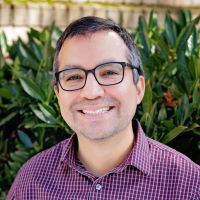
Daniel A. Lopez, Ph.D.
Epidemiologist, Clark County Public Health
Daniel A. Lopez is an Epidemiologist with Clark County Public Health and maintains an active research affiliation with Dr. Bonnie Nagel’s Developmental Brain Imaging Lab in the Department of Psychiatry at OHSU. He earned his bachelor’s degree from the University of California, Los Angeles, a Master of Public Health from the City University of New York, and a Master of Arts from Stanford University. Daniel completed his PhD in Epidemiology in 2023 at the University of Rochester. Prior to his doctoral training, he worked with the Hispanic Community Health Study/Study of Latinos. His research focuses on reward processing and cognitive development in adolescents, with an emphasis on longitudinal trajectories of cognitive development. Following his time as an OFDIR Fellow, Daniel was an IRACDA Scholar at OHSU before transitioning into his current role in public health, where he continues to engage in research alongside applied epidemiologic work.