LEND Pediatric Occupational Therapy Fellowship
About the program
Diversity is a core value of the Institute on Development and Disability at OHSU. We believe that the educational environment is enhanced when diverse groups of people with diverse ideas come together to learn. The Institute on Development and Disability Occupational Therapy (IDD-OT) Program designed a fellowship for occupational therapists who aspire to be leaders in the field of pediatric occupational therapy. The IDD-OT Fellow will gain advanced clinical skills in interprofessional collaborative evaluation and treatment of children, adolescents and young adults with neurodevelopmental disabilities. The Fellowship program also encompasses education, leadership and research.
Program details
The IDD-OT fellowship program functions within the Leadership Education in Neurodevelopmental & Related Disabilities Program (LEND) at OHSU. LEND programs are funded throughout the country by a grant by the Health Resources and Services Administration’s Maternal and Child Health Bureau. The LEND program within the IDD is recognized as one of the premier training programs within the country for training medical professionals in clinical care, research, community outreach and advocacy for children with neurodevelopmental disabilities.
OHSU hires the pediatric occupational therapy fellow within the Department of Pediatrics and School of Medicine. The OT fellow spends time in clinical care, research, program development, and leadership promotion.
Program modules
There are currently 10 modules offered within this fellowship program over the course of four rotations, each of which is two to four months long. The majority of these modules are a part of multi-disciplinary clinical teams which focus on providing intervention services that are culturally and linguistically appropriate.
Core modules
- Feeding
- Child Development
- Neurodevelopment
- LEND Clinical training
- OT Intervention
Additional modules
- Lifespan Transition Clinic
- NICU
- Early Childhood/Early Intervention
- Neuromuscular
- Academics
Note that each fellow typically completes 8-10 of these modules, based on individual interests and experience.
Program Goals
The IDD-OT Fellowship program focuses on four core areas of expertise: clinical competence, education, leadership, and research. While there is a heavy emphasis on clinical excellence, the fellow will incorporate education, leadership, and research into every day practice. Mentorship is provided in each area, facilitating the development of expertise in providing occupational therapy services to families who experience neurodevelopmental and related disabilities.
The following goals guide our program:
Program goal #1: Clinical competency: The IDD-OT Fellowship program will develop a highly skilled occupational therapist with expertise in client-centered and culturally competent treatment throughout the lifespan for youth and young adults with neurodevelopmental and related disabilities. The IDD-OT fellow will gain proficiency in domains and frameworks of occupational therapy practice and incorporate occupational therapy framework into interdisciplinary clinics and intervention programs.
Program goal #2: Education and teaching: The IDD-OT Fellowship program will provide mentorship and experience in becoming an educator in occupational therapy to students, other health professionals, and families/caregivers.
Program goal #3: Leadership: The IDD-OT Fellowship program will provide opportunities and guidance in the development of leadership skills as an occupational therapist working with children, youth, and young adults with neurodevelopmental and related disabilities.
Program goal #4: Research: The IDD-OT Fellowship program will provide the opportunity to engage in clinical research projects focused on improving participation of children with neurodevelopmental and other related disabilities.
Teaching and learning philosophy: The IDD-OT Fellowship will focus on clinic-based learning and didactic teaching through the LEND program. Clinic-based learning will occur through:
- Scheduled trainings: This involves specific trainings with mentors from all departments of CDRC and IDD. Some training will be mandatory but there will also be opportunities for the fellow to select areas of interest for additional training.
- Clinical experiences: The fellow will see a variety of patients in the interdisciplinary clinics (e.g. feeding, autism, neurodevelopment, Down syndrome) and will gain clinical and professional skills. This experience will involve observation, mentored practice, and feedback sessions.
- Self-learning: The fellow will be provided with access to books in the OT library and CDRC library. In addition, the fellow will be able to access journal articles through the OHSU library.
- Teaching/project completion: Each rotation, the fellow will have to “teach back” or present a project to either the clinical team, the OT department, or the LEND team, some more formal than others. These teaching sessions or projects could involve a case study, journal club, a novel intervention technique, a recent evidence-based practice article, or other relevant project that can help the clinical team or family seeking services.
- LEND curriculum: The Interdisciplinary Seminar serves as the foundation for the training process. It is organized around three major themes: Leadership in Clinical and Professional Practice, Leadership in Community and Health Systems, and Leadership in Policy, Advocacy, and Research that directly address the identified needs of children with autism and other neurodevelopmental disabilities and their families, revolving around MCH Competencies. The three themes are interspersed across the academic year so that the topics can be addressed in the order that the trainees need or can digest the information. The ID Seminars are presented weekly by various LEND and visiting faculty, family and community presenters, and the trainees themselves. The duration is two hours with attendance mandatory for all trainees.
How to apply
- Applicants for the fellowship program must complete an accredited program in occupational therapy before the start date. Applicants must be eligible for licensure in Oregon and have obtained licensure within one month of starting the program (by August 15).
- We require extensive experience in pediatrics (including work experience, fieldwork experience or other experience outside of the OT profession).
- We highly value applicants whose work incorporates a global perspective, and a demonstrated commitment to issues of diversity, equity and inclusion or multicultural competency.
Applications must include:
- Current CV or Resume (not to exceed two pages)
- Formal letter of intent. Please include answers to the following questions:
- How does this fellowship program fit with your career goals?
- What leadership experience do you bring to the fellowship?
- Please share any experience you have in working with individuals from backgrounds different from yours. How would this experience translate into working within a health care environment?
- 3 letters of reference, at least 1 from a clinical supervisor or recommender who has observed clinical skills (not to exceed one page):
- Please email letters directly to Erin Cochran, M.A., OTR/L at cochraer@ohsu.edu
- Letters should be from individuals who can comment on your candidacy for the fellowship
- Please provide contact information for each reference you provide
Selection Process
- Applications are reviewed blindly (personal identifying information is redacted) by all members of the fellowship committee
- Each member of the fellowship committee completes a scoring rubric to rank the applicants
- 3-4 applicants, with the highest average scores, are invited for a virtual interview with the entire fellowship committee. Additionally a Q&A with the current fellow is scheduled for the same day of the interview.
- Each fellowship committee member rates each of the interviewees and following all of the interviews, the committee meets to make a decision regarding which applicant to offer the fellowship position
- All interviewees are updated with a decision within two weeks of the interview
Important dates
- Applications for the 2026-2027 Fellowship are now closed
- Applications for the 2027-2028 Fellowship position will be opened in January 2027 and will likely remain open through mid-February 2027
- Virtual interviews typically take place in March/April of each year
- The fellowship program begins and ends each year in the end of July
Contact
For any questions related to the pediatric fellowship program, please contact Erin Cochran, MA, OTR/L at cochraer@ohsu.edu.
Q&A with our OT Fellow
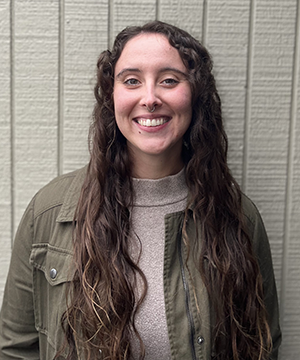
Why did you decide to pursue a fellowship?
I chose to pursue a fellowship for mentorship and education, particularly around advanced and underrepresented practice areas. As a sister of someone with Down syndrome, I have always felt driven to support children with neurodevelopmental disabilities and their families. Over the past few years, this passion has evolved to explore how children with disabilities navigate the transition to adulthood and how pediatric occupational therapists can proactively plan for this transition throughout childhood. This fellowship provided the opportunity to learn from experts in the field of pediatric occupational therapy about how to support children with neurodevelopmental disabilities while continuing to explore lifespan transitions so children can thrive into adulthood.
Can you describe a typical week for you during the fellowship program?
My weekly schedule varies depending on what rotation I’m in and what LEND projects I’m working on. In general, four days are dedicated to clinical time and patient care – two days focused on outpatient treatment with my own caseload of patients, and two days centered on evaluations and interventions for my specific rotation (feeding, autism, lifespan transition, etc.). The other day is for LEND seminars, projects, documentation, and other administrative tasks.
What has surprised you most about the fellowship?
The mentorship is above and beyond what I expected and has been invaluable for my knowledge and professional development. I have weekly meetings with my rotation and fellowship mentors and can ask for support from almost anyone in the clinic, even if they’re not an OT. I have also been surprised and grateful for the relationships I’ve formed with other trainees and how these have enhanced my learning and growth.
How do you think the fellowship aligns with your future career goals?
Regardless of where my career takes me, the evaluation techniques, intervention strategies, research opportunities, and leadership skills I have learned through this fellowship have set me up to be a highly skilled, innovative, and well-rounded clinician. I have particularly benefited from the interdisciplinary team approach because I’ve learned how to communicate the unique value of occupational therapy to other practitioners and have sparked conversations about strategies for supporting children through adolescence and into adulthood. I hope to carry this work forward after the fellowship by continuing to research and implement programs and services that will help children with neurodevelopmental disabilities achieve optimal outcomes as adults.