Questions?
Email us at deptofneuro@ohsu.edu
Faculty careers
Find professor, physician and APP faculty jobs at OHSU.
Make a gift
Support the Dotter Department of Interventional Radiology in advancing the future of minimally invasive care.
Advancing the future of minimally invasive, image-guided therapies
The Dotter Department of Interventional Radiology is a global leader in interventional radiology. We bring our legacy as IR pioneers to create new possibilities in minimally invasive treatment and image-guided medicine.
Work and train with us to improve patient care through innovation, collaboration and education.
What sets us apart
We are the first independent interventional radiology department, built on the pioneering work of Dr. Charles Dotter, who launched the field by performing the first transluminal angioplasty. Today we continue to shape the future of IR through:
- IR research leadership, with hundreds of published studies and continuous clinical trials-led discoveries
- Nationally and internationally recognized faculty across four IR department sections who collaborate to advance IR care and translational research
- Training programs that prepare the next generation of leading IR practitioners and scientists
- Multidisciplinary teams who work to improve standards of clinical care and develop research-led treatments
Breakthrough research
See peer-reviewed publications about clinical and translational IR research.
Education paths
Choose from residency and fellowship pathways to build your IR expertise.
Clinical programs
We provide image-guided specialty care for patients of all ages.
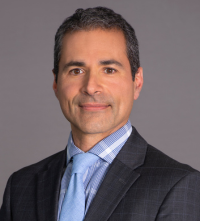
“As the birthplace of interventional radiology, we feel a responsibility to continue evolving IR patient care, research, training and collaboration to shape its future.”
About the Dotter IR department
Dotter Department of Interventional Radiology delivers minimally invasive, image-guided care while advancing the field through education, research and innovation.
We began as the Dotter Interventional Institute in 1990, a multidisciplinary division of OHSU. In 2017, we became a formal department within the OHSU School of Medicine.
Our team makes an impact in clinical care, training and research through four sections:

Dotter’s legacy of innovation
Our department is named for Dr. Charles T. Dotter, widely recognized as the father of interventional radiology. In 1964 at OHSU Hospital, he performed the world’s first percutaneous transluminal angioplasty, guided by a live X-ray.
Dr. Dotter’s breakthrough marked a turning point in medical history and laid the foundation for modern minimally invasive medicine. It also shaped the tools and techniques that define interventional radiology today, including:
- Catheter-based therapies
- Image-guided procedures
- Advances in angiographic imaging
-
Judkins and Rösch build upon Dotter’s vision
Following Dotter, other pioneering OHSU physicians expanded the department’s influence:
- Dr. Melvin Judkins developed transfemoral coronary angiography techniques and the "Cobra" catheter in the mid 1960s, working under Dr. Dotter.
- Dr. Josef Rösch advanced landmark procedures such as TIPS (transjugular intrahepatic portosystemic shunt) in 1968, and embolization for gastrointestinal bleeding and transjugular liver biopsy in the early 1970s. Dr. Rösch collaborated on expandable metallic stents and co-developed the technique for fallopian tube catheterization in the mid-1980s.
Their contributions helped solidify OHSU’s role as a global center for IR innovation.
Today interventional radiology is one of the most innovative, rapidly evolving specialties in medicine. Its minimally invasive, image-guided procedures are faster and safer than older methods and improve recovery.
60+ years of IR innovation

Research
With dedicated research staff and an internationally recognized research fellowship [link to new page], we’re shaping the future of interventional radiology.
Our research program focuses on improving clinical care by developing new minimally invasive, image-guided procedures, devices and technologies that improve patient outcomes.
Through clinical trials and translational research, we advance treatments for complex conditions such as cancer, vascular disease and portal hypertension.
Our translational research projects explore:
- Models for treating deep-vein thrombosis
- Organ-selective gene and cancer therapy using image-guided treatment platforms
- Improving angiographic image quality through artificial intelligence
Education and training
Our training program is one of the largest in the nation. Residents build clinical and technical skills across all areas of interventional radiology, including peripheral vascular disease, venous disease, interventional oncology, portal hypertension, pediatrics and musculoskeletal disease. You will be mentored directly by faculty to:
- Learn and perform the latest IR therapies
- Take part in IR research and clinical studies
- Assist with teaching to prepare future leaders in the field
Residency programs
We offer two residency programs to help you build a career in interventional radiology. Both pathways prepare you to earn board certification in interventional radiology and diagnostic radiology.
Research fellowship
The IR research fellowship invites you to explore new techniques and tools to improve IR care and publish your findings.
Neurointerventional radiology fellowship
This highly competitive program provides training in advanced neurointerventional procedures and patient care.
Training for health care business partners
We offer training to help industry partners in health care better understand the benefits of IR technologies. These two-day courses for sales representatives and engineers include presentations and hands-on practice using IR devices in models.
For information, contact us dotter@ohsu.edu.
“Our clinical programs deliver the full spectrum of interventional radiology, from routine procedures to the most complex, image-guided therapies.”
Clinical programs
Our internationally recognized research drives our advanced clinical care. We provide interventional radiology and neurointerventional patient care that reduces risk and recovery time. We diagnose and treat conditions using advanced imaging equipment in state-of-the-art suites at OHSU hospitals and clinics and Portland VA Medical Center.
We care for our community by partnering with regional hospitals to provide the same excellence in clinical care closer to home.
“One of the most consistent things we hear is how supported people feel here, and that culture matters. We’re a group of kind, collaborative people who respect the unique ideas everyone brings.”
Culture and benefits
We foster a culture of belonging, curiosity and innovation in our small but impactful department. Our values and actions reflect the commitment to equality and inclusion found across the School of Medicine and OHSU.
You’ll find leaders who support you personally and professionally and are eager to collaborate on clinical and scientific discovery.
You’ll also:
- Get generous employee benefits or benefits for graduate medical students
- Work and learn in Portland, known for its natural beauty, cultural vibrancy and outstanding food scene
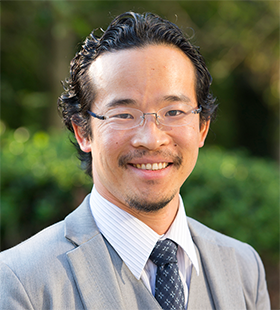
“By bringing academic interventional radiology into community hospitals, we expand access and ensure patients seamlessly transition to advanced care when needed. This strengthens the health of our entire region.”
Community impact
Philanthropy helps drive innovation through our clinical, training and research IR programs.
Many new therapies we’ve developed are used nationally and internationally, improving patient care far beyond our region. Locally, our team delivers high-level IR care to patients at OHSU, Portland VA Medical Center and community hospitals close to home.
We offer patients clinical trial participation for care they can’t access anywhere else. Every day, we support interventional radiologists who treat patients throughout Oregon — and every corner of the world.