Pediatric Neurodevelopmental Disabilities Residency Program
Message from the program director
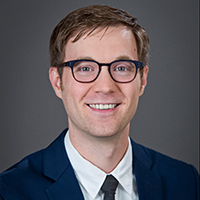
The Institute on Development and Disability and the Child Development and Rehabilitation Center at Oregon Health & Science University (OHSU) offer comprehensive residency training in neurodevelopmental disabilities. By definition, neurodevelopmental disabilities are a group of disorders that begin in childhood and affect three or more areas of life function including language, movement, the special senses, and cognition. Training in neurodevelopmental disabilities incorporates the best that pediatrics and neurology have to offer as well as the related fields of genetics, psychiatry, and allied health.
At OHSU, we are committed to training highly qualified pediatricians who desire to become leaders in clinical care, academic training, research, and advocacy for individuals with neurodevelopmental disabilities. The training program collaborates with the University Center of Excellence in Developmental Disabilities and the Leadership Education in Neurodevelopmental and Related Disabilities programs to provide a unique interdisciplinary training experience, which includes trainees in psychology, social work, physical therapy, occupational therapy, speech language pathology, special education, audiology, genetics, psychiatry, community services, and advocacy. Comprehensive training takes place in a supportive and nurturing environment while providing a curriculum tailored to the career goals of the individual trainee. The training program is closely affiliated with a complementary residency program in Child Neurology and leads to eligibility for board certification in Neurodevelopmental Disabilities and Child Neurology. The faculty from both programs have widely varied interests and are excellent, dedicated clinical, academic, and research instructors.
For more information about the OHSU Neurodevelopmental Disabilities Residency Program, please feel free to contact me by email at crowderd@ohsu.edu. I look forward to your inquiries and a chance to discuss our program with you.
Sincerely,
Daniel Crowder, M.D.
Program Director, Neurodevelopmental Disabilities Residency
-
Program aims
- To train pediatricians through the Neurodevelopmental Disabilities Residency Program at OHSU who desire to become leaders in the care of children with neurodevelopmental disabilities including cerebral palsy, intellectual disability, autism, attention deficit disorders and other neurobehavioral disorders, and other chronic neurological conditions at the local, regional, and national level by providing them the tools needed to develop their skills in academics, research, education, innovation, and quality improvement and patient safety.
- To train NDD residents through an interdisciplinary educational model established within OHSU’s Institute on Development and Disability (IDD) and the Department of Pediatrics in conjunction with the University Center of Excellence in Developmental Disabilities (UCEDD), a national network of pediatric disability care organizations.
- To provide residency training in the context of a truly interdisciplinary approach. The NDD resident will acquire expertise in the diagnosis and management of children with neurodevelopmental disabilities through individualized training and supervision from NDD and Child Neurology faculty in addition to faculty from other disciplines, including psychology, social work, physical therapy, occupational therapy, speech language pathology, special education, audiology, and psychiatry.
- To train NDD residents in the diagnosis and management of the spectrum of neurodevelopmental disabilities and related neurological and neurobehavioral conditions in a program fully integrated with Child Neurology and Adult Neurology where the fellow will acquire knowledge and skills in management of child neurological disorders, genetic and neurometabolic disorders, and psychiatric disorders.
- To train residents in the scientific method and to encourage them to develop a particular area of research interest during the course of training by taking advantage of the multiple research opportunities across the institution and its affiliates. At the conclusion of their training, residents will be well positioned to make significant long-term research contributions in the field of NDD.
- To provide a well-rounded training experience while nurturing personal well-being, building resources and skills in the training program to promote a positive work-life balance and prevent burnout, and providing institutional resources to develop skills needed to develop a well-balanced career.
-
Benefits
Please see the Department of Pediatrics fellowship page for departmental benefits available to all pediatric fellows, and the OHSU GME page for Employment and Benefits information, including salary, transportation, and insurance.
-
Curriculum
Clinical training
The Institute of Development and Disability (IDD) is a University Center of Excellence in Developmental Disabilities (UCEDD), a national network of pediatric disability care organizations. The training programs within the IDD include faculty and graduate students from a wide variety of disciplines. The programs incorporate a truly interdisciplinary approach, and the NDD resident will acquire expertise in interdisciplinary diagnosis and care. The NDD resident will become skilled in developmental assessment, medical diagnosis, and management of children with disabilities. Interviewing, family observation, and the appropriate use of behavioral strategies are also taught. The trainee will participate in many settings, both medical center based and community based, and will receive training and supervision from faculty in other disciplines, including psychology, social work, psychiatry, special education, and all the therapy disciplines. The NDD resident will routinely interact with trainees from all the other disciplines in the UCEDD training programs.
Goal areas for trainees from all disciplines:
- Development of skills in interviewing and communication
- Development of knowledge and understanding of child development and skill in its assessment
- Development of knowledge and understanding about those pathological processes which interrupt or alter neurodevelopment
- Development of knowledge and skills in patient management and treatment strategies
- Development of an understanding of interdisciplinary theory and practice, knowledge about other professional disciplines, and increased skill in working with them
- Growth in understanding of administrative functions and participation in the development of public health policy
- Development of an understanding of developmental disabilities in the community: epidemiology, prevention, community agencies, and resources
- Development of clinical research skills and the ability to critically review the research of others
- Growth in leadership skills
In addition to the above goals, there are several areas in which the NDD trainee will have the opportunity to acquire particular knowledge and skill:
- Knowledge and skill in the medical diagnosis and management of the spectrum of neurodevelopmental disabilities, related neurological conditions, and neurobehavioral disorders
- Knowledge and skill in adult and child neurology
- Knowledge and skill in clinical genetics, genetics interviewing, and genetics counseling
- Knowledge and skill in neurometabolic disorders
- Knowledge and skill in behavioral pediatrics, child psychiatry and psychopharmacology
Clinical resources
The clinical setting of the IDD is the Child Development and Rehabilitation Center (CDRC), which comprises a comprehensive array of child development clinics plus the rich offerings of the Oregon Center for Children and Youth with Special Health Needs (OCCYSHN) clinics, conducted jointly in the CDRC. The clinical programs include the following:
- Child development (behavior and learning) clinics
- Neurodevelopmental (cerebral palsy and feeding) clinics
- Child neurology clinics
- Autism clinic
- NICU follow-up clinic
- Genetics clinic
- Metabolic disease clinic
- Hemophilia clinic
- Spina bifida clinic
- Craniofacial disorders clinic
- Down syndrome clinic
- Rett syndrome clinic
Additional clinical programs on and off the OHSU campus include the adult neurology programs, Shriners Hospital clinics, physical medicine and rehabilitation clinics, psychiatry and behavioral pediatrics clinics, Eugene CDRC clinics, OCCYSHN community developmental clinics, and many others.
In the clinical arena, the trainee is given responsibility commensurate with his or her experience. Extensive observation facilities encourage unobtrusive faculty-trainee supervision and feedback as well as the appreciation for the techniques of other disciplines. Participation in community programs is considered to be a vital component, where trainees have the opportunity for further clinical experience in the context of various communities that have differing populations and different resources. Parent education programs accompany many of these programs. Individual, mentored research activity is an essential element of each NDD resident's training experience.
Didactics
Interdisciplinary seminars and conferences provide a forum for didactic instruction and discussion. The Neuroscience Seminar is the central classroom session for NDD and Child Neurology residents and is jointly organized by Child Neurology, Neuroradiology, and Neurodevelopmental Pediatrics. Neuroscience Seminar includes journal club, morbidity and mortality conference, research updates, and overview lectures on high-yield clinical topics. Trainees are invited to attend the journal clubs conducted by other disciplines. In addition, the Neurodevelopmental Disabilities trainee is encouraged to attend appropriate conferences from the wide variety offered by the OHSU Departments of Pediatrics and Neurology. At the start of the PGY-3 academic year, NDD trainees participate in Neurology Boot Camp with the adult neurology residents, when offered.
Tuesday:
- Neuroscience Seminar
Wednesday:
- Pediatric Neuroradiology Conference (1st and 3rd Wednesdays)
- Fenichel Rounds
- Pediatric Grand Rounds
- Adult Neurology Grand Rounds
Thursday:
- LEND Seminar
- Adult Neurology Weekly Resident Didactics
Friday:
- Pediatric Chair’s Friday Forum
Scholarship and mentorship
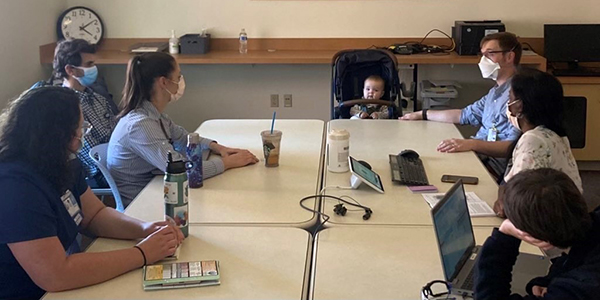
During the first year of the program, the resident is assigned a mentor with experience in the resident’s area of clinical or research interest. NDD residents have dedicated blocks and rotations set aside for research and scholarship activities. While publication or grants are not requirements for graduation from the program, all residents are encouraged to submit their research activities for publication or presentation at local and national meetings. Departmental funding is available to facilitate residents’ travel for presentation of their work at a national conference or meeting.
Teaching opportunities
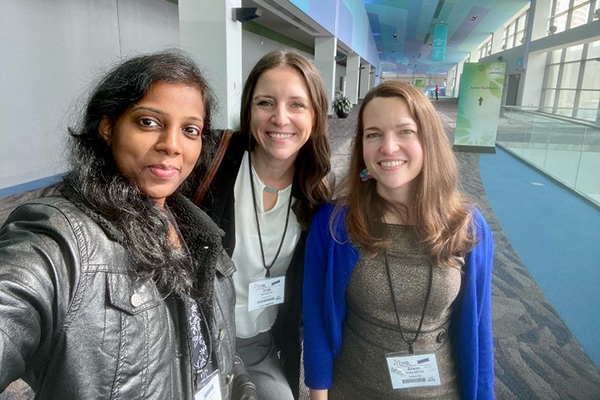
NDD residents have numerous teaching opportunities in the department and in the School of Medicine. In addition to bedside clinical teaching of medical students, residents, trainees, and professionals in allied health professions, residents also participate in formal didactic teaching experiences. Previous residents have led longitudinal clinical skills groups of medical students in their pre-clinical years, as well as formal lectures in the School of Medicine curriculum. Residents participate in presenting Neuroscience Seminar topics, and the weekly resident-led Fenichel Rounds provides ample opportunity for tailored review of topics in neurology and neurodevelopment.
-
Faculty
Our Neurodevelopmental Disabilities and Pediatric Neurology Residency Programs are educationally and clinically intertwined. As such, our excellent faculty are instrumental to the educational quality of both programs.
-
- Yoon-Jae Cho, M.D.
- Ericksen Family Endowed Professor for Research
-
- Kaitlin Greene, M.D.
- Director, Pediatric Headache
-
- Erika S. Phelps Nishiguchi, M.D. (she/her)
- Developmental Behavioral Pediatrician
-
- Colin M. Roberts, M.D., FAES
- Director, Doernbecher Childhood Epilepsy Program
-
- Kevin Senn, M.D.
- Developmental Behavioral Pediatrician
-
Residents
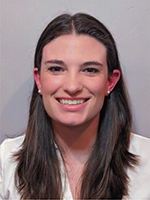
Madeleine Geisheker, M.D., Ph.D.
Neurodevelopmental Disabilities
B.S., B.A., UC San Diego, 2011
M.D., Ph.D., University of Washington, 2021Areas of interest: Genetics of neurodevelopmental disorders, early brain development and plasticity, autism spectrum disorder
Personal interests: Skiing, hiking, weight lifting, live music, playing with my cats
Why I chose OHSU: I chose OHSU so that I could do both Child Neurology and Developmental Behavioral Pediatrics while staying in the beautiful, progressive Pacific Northwest. I love the culture here, where all members of the care team are respected and valued, and we are all on first name basis. I am also excited to work in collaborative models of medical practice, such as in the LEND program, which is especially important in medically complex children with needs across multiple specialties. OHSU has been an incredibly supportive place to learn and develop as a clinician.
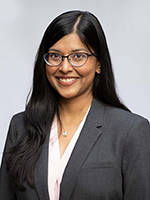
Aditi Tiwari, M.D.
Pediatric Neurology
M.B.B.S., Stanley Medical College 2015,
M.D., Pediatrics V.M.M.C. & Safdarjung Hospital, New Delhi 2020Areas of interest: Pediatric headache, General neurology
Personal interests: Harry Potter; Chai; Exploring beaches, cafes, and the PNW
Why I chose OHSU: I chose OHSU because of both the program and the people. From my very first interactions, it was clear that OHSU has a supportive and welcoming culture, where I felt valued for the experiences and perspectives I brought to the table. I was especially drawn to being part of a smaller program, where I could build close-knit relationships with my colleagues and mentors and truly feel a sense of belonging.
Portland was another big part of the decision. With its great food, beautiful surroundings, and endless opportunities to enjoy the outdoors, it is a wonderful place to live in the Pacific Northwest. For me, OHSU offered the right balance: a supportive training environment, a strong sense of community, and a great place to build a life with my family.
Seva Khambadkone, M.D., Ph.D.
Pediatric Neurology
B.S., The Ohio State University, 2012
M.D., Ph.D., Johns Hopkins School of Medicine, 2022Areas of interest: Fetal/neonatal neurology, neurodevelopmental origins and the first 1000 days, neurocritical care, CSF dynamics and the glymphatic system.
Personal interests: Reading, being outside, swimming in any body of water I can find, cooking, quality time with loved ones, and cozying up with my cats, Laura & Hardy.
Why I chose OHSU: I was originally drawn to OHSU for personal reasons after many years of long distance with my husband, Jens. I choose OHSU every day since for the incredible training environment I found, one that meets my academic interests with tailored training opportunities, tremendous mentorship, and unparalleled support. I cannot imagine a better place to grow as a pediatric neurologist and scientist, surrounded by faculty and coresidents who get excited about the same things I get excited about and dedicate themselves every day to serve our patients, field, and one another.

Shaily Patel, D.O.
Neurodevelopmental Disabilities
B.S., Neuroscience and Behavioral Biology, Emory University, 2018
D.O., Lincoln Memorial University – DeBusk College of Osteopathic Medicine, 2023Areas of interest: Learning disabilities, Autism, neonatal brain development and early interventions
Personal interests: Travel (especially to warm, tropical places), spending time with loved ones and my 7yo pup, Bollywood dance, trying all the veg/vegan PDX has to offer, and Ice cream!! (Experimenting with my ninja creami & also love Kate’s, Salt&Straw, Fifty Licks!)
Why I chose OHSU: NDD is a rare opportunity only offered at 6 other programs the year I was applying. With that being said, it was an obvious choice to apply to OHSU. All the way on the other side of the country (home is in the South East), I was hesitant at the thought of moving into a new city away from everything I knew and the people I loved, but OHSU did not fail to deliver. During my interview, every single person only had good things to say about the program, faculty and residents alike.” And that held a lot of weight in my decision making. Nestled in the beautiful PNW, I can’t imaging training anywhere besides OHSU. The program is tight knit, education is fun, and everyone is kind and supportive - a recipe for success!

Danna Garcia Guaqueta, M.D.
Pediatric Neurology
M.D., Colegio Mayor de Nuestra Senora del Rosario Facultad de Medicina, 2019Areas of interest: Neuropalliative care, neonatal neurology, and neurogenetics.
Personal interests: Travelling and trying different cuisines, biking alongside my husband (an Ironman triathlete), and sharing good Colombian coffee while convincing everyone to visit Colombia.
Why I chose OHSU: The Pacific Northwest is hard to beat, and Portland is the perfect size with an incredible food scene. I was drawn to OHSU's small program, and strong educational opportunities. Most importantly, everyone here is welcoming and supportive from the moment you arrive.
Upcoming residents
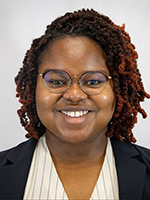
Ndidi Njoku, M.D. (Starting July 2027)
M.D., Howard University, 2025
Neurodevelopmental Disabilities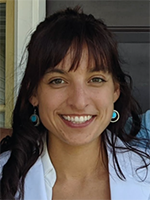
Alessandra Lajeunesse, M.D. (Starting July 2027)
M.D., University of Wisconsin School of Medicine and Public Health, 2025
Pediatric Neurology
Christine Pons, M.D. (Starting July 2028)
M.D., University of California, Davis, School of Medicine, 2026
Pediatric Neurology
Alumni
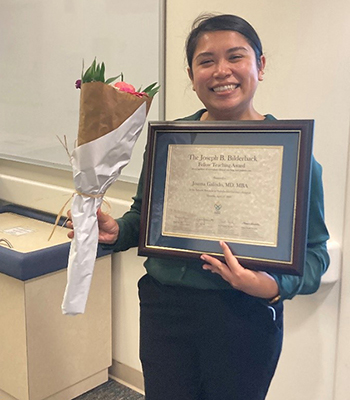
Joanna Galindo, M.D., M.S., M.B.A.
Pediatric Neurology, 2025
Current Position: Assistant Clinical Professor at UC Davis Medical Center in Sacramento, CA.
Why I chose OHSU: I felt most like myself and comfortable during my interviews with both the Pediatrics and Pediatric Neurology departments. I had always done better in smaller teaching settings, so being a part of a small to medium-sized Pediatrics program and a growing Pediatric Neurology department at a referral center like OHSU meant I would get to manage higher volumes of both bread-and-butter and more rare, unique cases that would optimize my learning. There were also multiple neurology subspecialists in both the adult and pediatric departments to learn from and work with. Lastly, the idea of moving to Portland felt perfect—it offered city life with amazing restaurants and concerts, all while having relatively less traffic and being just a short drive away from the outdoors.Emily Garavatti, M.D.
Neurodevelopmental Disabilities, 2024
Current Position: Pediatric Neurologist at CHOC Hospital in Orange County, CA.
Why I choose OHSU: The opportunity to train in various interdisciplinary clinics, such as LEND clinic, within our Child Development and Rehabilitation Center was a big motivator as I find this model to be beneficial for me as a trainee and provides superior patient care. I also was drawn to the abundance of outdoor adventure possibilities the Pacific Northwest has to offer.Dhana Angappan, M.D.
Pediatric Neurology, 2024
Current Position: Pediatric Neurologist at Phoenix Children’s Hospital in Phoenix, AZ.
Why you chose OHSU: I had a great interview day at OHSU and liked the faculty group here with expertise in various sub-specialties. I realized this was a very resident friendly program and loved the work culture here. Not to mention the beauty of Portland and Oregon which can draw anybody to this place. It’s one of the best places to live in, with a number of waterfalls, parks, and restaurants around to explore. The coast and the beach towns are the other places that can get everyone’s attention. Overall, a great program and wonderful place to be in.Mac Garrett, M.D.
Pediatric Neurology, 2024
Current Position: Pediatric Neurologist at RUSH in Chicago, IL.
Why I chose OHSU: Faculty with a wide range of experience and expertise. I had a great interview day. The culture here is casual and we get to know our attendings and the subspecialists. Portland! I wanted to be in a place with vibrant and active LGBT culture.Max Perelman, M.D.
Child Neurology, 2022
Current position: Assistant Professor, Oregon Health & Science University in Portland, OR.
Why I chose OHSU: Portland is just as fun as everyone says it is, and only half as rainy. As far as OHSU itself, I can't say enough good things about the people who work (and teach, and go to school) here. Whether on the pediatric or adult side, people are friendly, approachable, and interested in teaching. I would choose it again in a heartbeat.Mandie Wiebers Jensen, M.D., OT
Neurodevelopmental Disabilities, 2020
Current position: Assistant Professor, Oregon Health & Science University in Portland, OR.
Why I chose OHSU: I chose OHSU for residency as I knew the collaborative environment would allow me to train with multidisciplinary teams and learn how to care for my patients from a wide array of perspectives.Sophia French, M.D.
Child Neurology, 2020
Current position: Pediatric Neurologist at Lee Health in Fort Meyers, FL.
Why I chose OHSU: I ranked OHSU highly because it is a collaborative and nurturing center of excellence in a beautiful location. During my 2 years of pediatric training I formed lasting friendships with my co-residents while building a solid foundation of general pediatric knowledge. The 12 months of adult neurology training is integrated over 3 years and offer an excellent breadth of training in areas ranging from neuromuscular disease to neuro-ophthalmology. The pediatric neurology faculty was passionate in their teaching and were all incredibly invested in me. They allow progressively greater levels of autonomy and by the end of training I feel confident in my ability to practice independently.Daniel Crowder, M.D.
Neurodevelopmental Disabilities, 2019
Current position: Program Director, Neurodevelopmental Disabilities Residency Program; Associate Professor, Oregon Health & Science University in Portland, OR.
Why I chose OHSU: I was drawn to the NDD program at OHSU because I was looking for a program with flexibility, strong training in interdisciplinary care, and faculty and co-fellows that I would enjoy working with. OHSU checked all of those boxes and then some.Ittai Bushlin, M.D., Ph.D.
Child Neurology, 2018
Current position: Associate Program Director, Pediatric Neurology Residency Program; Assistant Professor, Oregon Health & Science University in Portland, OR.
Why I Chose OHSU: I immediately fell in love with OHSU the first time I visited, and am grateful for the high quality and hands-on training that I received here. Portland is a beautiful and vibrant city, and OHSU is the academic hospital for the state of Oregon, which means there are a large variety of cases here, from the bread and butter to the highly unusual. Staff, residents, and faculty at Doernbecher’s Children’s Hospital have created a tight knit, close, supportive community that works together day and night to take care of kids. There are so many opportunities to pursue your niche interests, clinically or research-wise or both, and the residency program emphasizes your individual needs. By the end of my training I felt more than fully prepared to be a pediatric neurology attending.Alison Christy, M.D., Ph.D.
Child Neurology, 2017
Current position: Clinical Director of Pediatric Neurology at Providence Health in Portland, OR.; Editor-in-chief of the Journal of Child Neurology
Why I Chose OHSU: I chose OHSU primarily for the location in Portland, Oregon – but I was really glad I did, because I found a small program that gave me a lot of personal attention, supportive faculty, and an excellent exposure to a wide variety of patients and diagnoses.Melissa Svoboda, M.D.
Neurodevelopmental Disabilities, 2014
Current position: Director, Autism Clinic; Chief of Neurology, Baylor College of Medicine/The Children’s Hospital of San Antonio
Why I chose OHSU: My training in the NDD program at OHSU was top notch! I am a very well-rounded clinician and have a strong foundation for clinical child neurology – more so than many of my friends who trained at other programs when we started out. I feel this is due to the amount of clinic exposure we are given during training and the excellent attendings who staff those clinics. I also received good research exposure and now have my own research grants because of the training I received there. The teachers at OHSU were not just limited to attendings – I learned as much from the excellent ancillary services such as the experienced speech therapists, physical therapists, etc. If it weren’t for my family being in a different place, I’d be back there now as an attending. It was a wonderful, rich, diverse place to train.Jason Coryell, M.D.
Child Neurology, 2011
Current position: Professor, Primary Children’s Hospital, University of Utah in Salt Lake City, UT; Board of Directors for PERC and Chair, Research Committee
Why I Chose OHSU: I chose OHSU because it is the most collegial place that I have worked/trained. There has never been bad blood between any of the divisions or faculty, and it makes a difference in the quality of the workday to really like the people with whom you surround yourself. And, oh yeah, Portland: great restaurants, close to coast, most affordable West coast metropolitan area, skiing, mountain biking, wineries, and evergreens!!Michael Kruer, M.D.
Neurodevelopmental Disabilities, 2011
Current position: Director, Pediatric Movement Disorders Program, Barrow Neurological Institute, Phoenix Children’s Hospital; Associate Professor, Child Health, Neurology, Genetics and Cellular & Molecular Medicine, University of Arizona College of Medicine – Phoenix
Why I chose OHSU: I chose OHSU because of the fantastic faculty and the well-balanced interdisciplinary training I received in the beautiful Pacific Northwest. NDD training at OHSU was instrumental in providing me with the skills I needed to become a successful physician-scientistKit Yeng Lim, M.D.
Child Neurology, 2010
Current position: Pediatric Neurologist at Providence Health in Portland, OR.Amy D. Harper, M.D.
Neurodevelopmental Disabilities, 2006
Current position: Professor, Department of Neurology, Division of Child Neurology; Director of Neuromuscular program, Children’s Hospital of Richmond at Virginia Commonwealth University in Richmond, VA.
Why I Chose OHSU: OHSU offers broad array of multidisciplinary neurodevelopmental clinics providing learners with an in depth teaching experience from many perspectives. -
Application process
How to apply
Welcome to the 2026-2027 recruitment cycle. Thank you so much for your interest in our program. The Neurodevelopmental Disabilities Training Program accepts applications through Electronic Residency Application Service (ERAS) and participates in the National Resident Matching Program (NRMP) Main Residency Match and Supplemental Offer and Acceptance Program (SOAP) for selecting our incoming residents each year. For the current application cycle, we ask that all items in the checklist below be submitted through ERAS:
- Personal statement: Please describe how the OHSU Pediatric Neurology Program aligns with you and your career goals. This can be included as a brief addendum to the end of your personal statement.
- A minimum of three Letters of Recommendation (we do not require a letter from the Chair of the department)
- Medical Student Performance Evaluation (MSPE) from medical school
- Medical School Transcript
- United States Medical Licensing Exam (USMLE) and/or Comprehensive Osteopathic Licensing Exam (COMLEX). ***Our program requires at least Step 1/Level 1 of USMLE/COMLEX exam to apply; Step 2/Level 2 MUST be completed and uploaded by January 31st, 2027. Please also see the OHSU GME information on applying to OHSU Residencies and Fellowships.
International graduates
In addition to the application requirements above, we require graduates of a foreign medical school, to have already completed at least one year of clinical training in the US or Canada in order to apply (observerships/externships will not be considered).
Applicants must provide a copy of a valid certificate from the Educational Commission for Foreign Medical Graduates (ECFMG), participate in the National Residency Match Program and apply through ERAS. Applicant must be legally able to work in the US, or eligible to obtain work authorization.
Invitation to Interview
Applicants are invited for an interview based on holistic review of their application and will be notified of their invite via email. We will use the Thalamus scheduling system to set up our interviews. All interviews will be conducted virtually through OHSU Webex. Unfortunately, due to the volume of applications, we are unable to interview all applicants.
Oregon Health and Science University values a diverse and culturally competent workforce. We are proud of our commitment to being an equal opportunity organization that does not discriminate against applicants based on any protected class status, including disability status and protected veteran status. To request reasonable accommodation, contact the Office of Civil Rights Investigations and Compliance at 503-494-5148 or ocic@ohsu.edu.
Interview Day
All interviews will be conducted virtually to allow equitable access for all applicants. Interview dates will range from November 2026 through January 2027. The virtual interview day will be approximately four hours in length with opportunities to meet our faculty and fellows as well as a chance to participate in one of our weekly educational experiences.
After your interview
We hope that you find your virtual interview day with us to be informative and enjoyable! Please do not hesitate to contact us with any follow-up questions.
- Program Coordinator: Melissa Gittings
- Program Director: Dan Crowder
Contact Us
Daniel Crowder, M.D.
Program Director, NDD Residency Program
503-494-4571
crowderd@ohsu.edu
Melissa Gittings
Program Coordinator
gittings@ohsu.edu