Welcome!
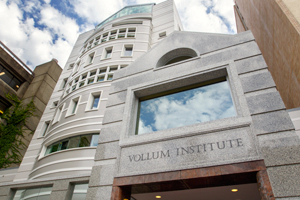
The Vollum Institute is a privately endowed research institute at Oregon Health & Science University dedicated to basic research that will lead to new treatments for neurological and psychiatric diseases. Vollum scientists have broad-ranging interests that coalesce around molecular neurobiology and cellular physiology. Their work has transformed the field of neuroscience and, in particular, has provided important advances in the study of synaptic transmission, neuronal development, neurotransmitter transporters, ion channels and the neurobiology of disease.
Learn more about the Vollum's mission
Vollum Seminar Series
Friday Work–In–Progress Talks
The Friday "work-in-progress" (WIP) seminars occur weekly during the academic year and provide an opportunity for postdoctoral fellows and graduate students to share their current research projects in an interactive and less formal environment.
Research highlights
The protocadherin-15-LHFPL5 tip link complex is a heterotetrameric assembly in hair cell stereocilia.
Clark S, Mitra J, Elferich J, Goehring A, Ge J, Ha T, Gouaux E. Biophys J. 2026 Feb 10:S0006-3495(26)00092-5. doi: 10.1016/j.bpj.2026.02.003. Online ahead of print. PMID: 41668373.
Molecular assemblies and pharmacology of cerebellar GABAA receptors.
Sun C, Jahncke JN, Wright KM, Gouaux E. Proc Natl Acad Sci U S A. 2026 Feb 10;123(6):e2524504123. doi: 10.1073/pnas.2524504123. Epub 2026 Feb 6. PMID: 41650215.
Hypoxia-inducible factor 1 protects neurons from Sarm1-mediated neurodegeneration.
Meraner P, Avetisyan A, Swift K, Cheng YC, Barria R, Freeman MR. Cell Rep. 2026 Feb 24;45(2):116873. doi: 10.1016/j.celrep.2025.116873. Epub 2026 Jan 22. PMID: 41575852.
Cryo-EM of autoantibody-bound NMDA receptors reveals antigenic hotspots in an active immunization model of anti-NMDAR encephalitis.
Kim J, Jalali-Yazdi F, Jones BE, Westbrook GL, Gouaux E. Sci Adv. 2026 Jan 16;12(3):eaeb4249. doi: 10.1126/sciadv.aeb4249. Epub 2026 Jan 14. PMID: 41533802.
Reversible lipid-mediated pH-gating of connexin-46/50 by cryo-EM.
Jarodsky JM, Myers JB, Reichow SL. Nat Commun. 2026 Jan 12;17(1):1606. doi: 10.1038/s41467-026-68311-9. PMID: 41526355.
Renal PIEZO2 is an essential regulator of renin.
Hill RZ, Nelson JW, Gyarmati G, Medrano S, Shirvan S, McCormick JA, Burquez S, Ahmed J, Eng DG, Wysocki J, Dubin AE, Servin-Vences MR, Lakshmanan A, Gomez RA, Sequeira-Lopez MLS, Shankland SJ, Batlle D, Miner JH, Peti-Peterdi J, Patapoutian A. Cell. 2025 Dec 4:S0092-8674(25)01309-1. doi: 10.1016/j.cell.2025.11.013. PMID: 41349545.
Astrocyte gap junctions and K ir channels contribute to K+ buffering and regulate neuronal excitability.
Bojovic D, Dagostin A, Sullivan SJ, Emery B, von Gersdorff H, Mishra A. Front Cell Neurosci. 2025 Nov 20;19:1571218. doi: 10.3389/fncel.2025.1571218. eCollection 2025. PMID: 41356497.
The photoswitchable cannabinoid azo-HU308 enables optical control of Ca2+ dynamics in INS-1 β-cells via off-target effects on TRPC channels.
Viray AEG, Frank JA. FEBS Open Bio. 2025 Nov 2. doi: 10.1002/2211-5463.70146. PMID: 41178137.
Targeting Tmem63b and Piezo2 in C-fiber low-threshold mechanoreceptors: Limitation of Vglut3-IRES-Cre.
Orlin DJ, Muñoz A, Berryman S, Semidey D, Murthy SE. Biophys J. 2025 Nov 1:S0006-3495(25)00733-7. doi: 10.1016/j.bpj.2025.10.043. Online ahead of print. PMID: 41176617.
Altered Primary Somatosensory Neuron Development in a Pten Heterozygous Model for Autism Spectrum Disorder.
Fernandez A, Sarn N, Eng C, Wright KM. Autism Res. 2025 Sep 12. doi: 10.1002/aur.70119. Online ahead of print. PMID: 40940651.
Human brain cell types shape host-rabies virus transcriptional interactions revealing a preexisting pro-viral astrocyte subpopulation.
Feige L, Young K, Cerapio JP, Kozaki T, Kergoat L, Libri V, Ginhoux F, Hasan M, Ben Ameur L, Chin G, Goode Z, Bourhy H, Saunders A. Cell Rep. 2025 Aug 25;44(9):116159. doi: 10.1016/j.celrep.2025.116159. Online ahead of print. PMID: 40864551.
FBXW7 regulates MYRF levels to control myelin capacity and homeostasis in the adult central nervous system.
Collins HY, Doan RA, Li J, Early JE, Madden ME, Simkins T, Lyons DA, Monk KR, Emery B. Nat Commun. 2025 Aug 21;16(1):7822. doi: 10.1038/s41467-025-62715-9. PMID: 40841354.
TMEM63A, associated with hypomyelinating leukodystrophies, is an evolutionarily conserved regulator of myelination.
Halford J, Senatore AJ, Berryman S, Muñoz A, Semidey D, Doan RA, Coombs AM, Noimany B, Emberley K, Emery B, Monk KR, Murthy SE. Proc Natl Acad Sci U S A. 2025 Jul 29;122(30):e2507354122. doi: 10.1073/pnas.2507354122. Epub 2025 Jul 21. PMID: 40694323.
A high-performance genetically encoded sensor for cellular imaging of PKC activity in vivo.
Yahiro T, Bayless-Edwards L, Jones JA, Zhuo Y, Ma L, Qin M, Mao T, Zhong H. Nat Commun. 2025 Jul 10;16(1):6378. doi: 10.1038/s41467-025-61729-7. PMID: 40640216.
Once Thought To Support Neurons, Astrocytes Turn Out To Be in Charge
The human brain is a vast network of billions of neurons. By exchanging signals to depress or excite each other, they generate patterns that ripple across the brain up to 1,000 times per second. For more than a century, that dizzyingly complex neuronal code was thought to be the sole arbiter of perception, thought, emotion, and behavior, as well as related health conditions. If you wanted to understand the brain, you turned to the study of neurons: neuroscience.
But a recent body of work from several labs, published as a trio of papers in Science in 2025, provides the strongest evidence yet that a narrow focus on neurons is woefully insufficient for understanding how the brain works. The experiments, in mice, zebra fish, and fruit flies, reveal that the large brain cells called astrocytes serve as supervisors. Once viewed as mere support cells for neurons, astrocytes are now thought to help tune brain circuits and thereby control overall brain state or mood — say, our level of alertness, anxiousness, or apathy.
Scientists identify target to treat devastating brain disease
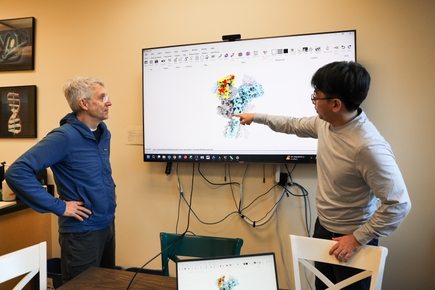
Scientists have identified a promising target for treatment of a devastating autoimmune disease affecting the brain.
The discovery could lead to the development of new therapies for a disease triggered by an attack on one of the key neurotransmitter receptors in the brain, the NMDA receptor. It also raises the potential for a blood test to detect a signal of the condition and enable earlier treatment with existing therapies.
The study from Oregon Health & Science University published today in the journal Science Advances.
Researchers identify kidney sensor that helps control fluid balance
A new study has identified a critical “pressure sensor” inside the kidney that helps the body control blood pressure and fluid levels. The finding helps explain how the kidneys sense changes in blood volume — something scientists for decades have known occurs but didn’t have a mechanistic explanation.
Marissa Co named Simons Foundation Fellow
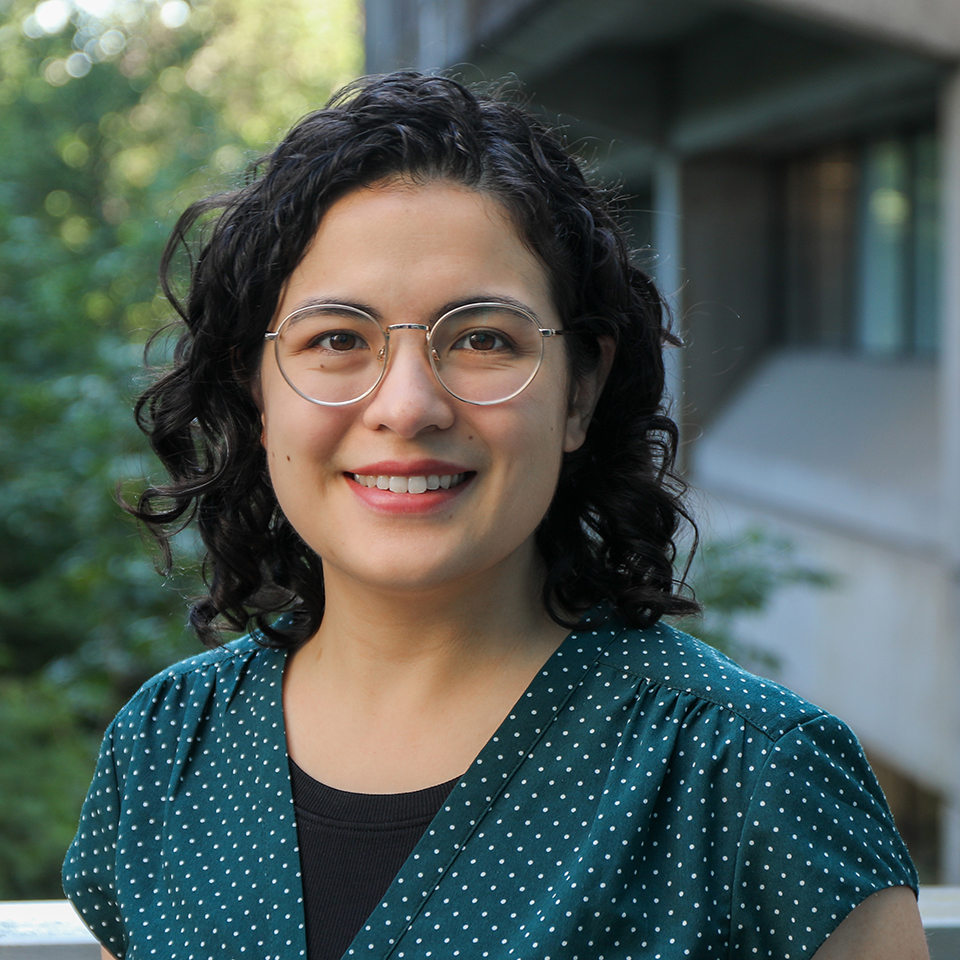
Marissa Co, Ph.D., a postdoctoral scholar in the Wright & O’Roak labs in the OHSU School of Medicine, has received a Simons Foundation fellowship. She is one of nine recipients in the 2025 Fellows-to-Faculty class, supported by the Simons Foundation Autism Research Initiative (SFARI).
Two graduate students named 2025 Lacroute Fellows
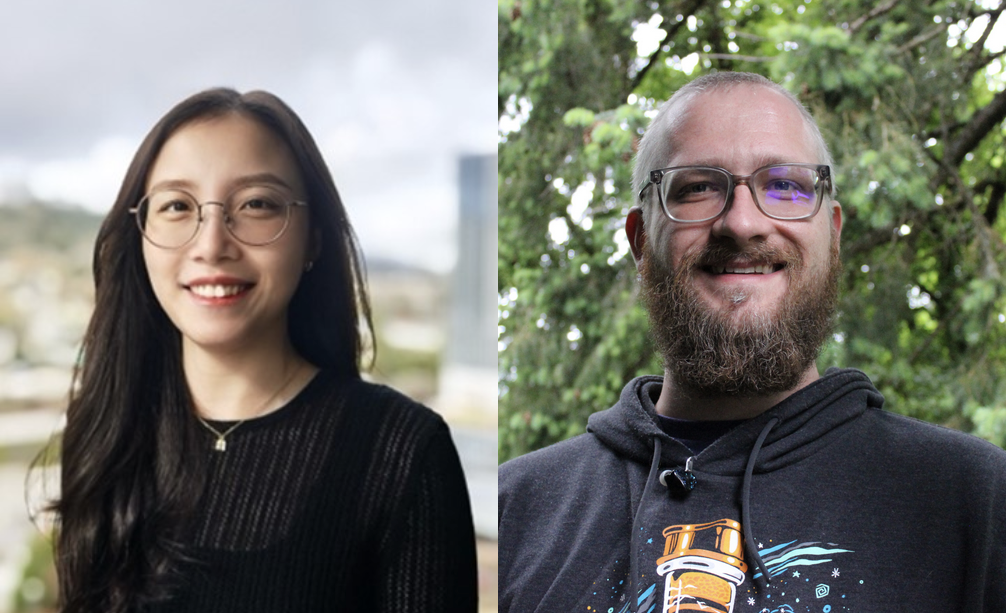
Two predoctoral students in the Neuroscience Graduate Program at OHSU were recently awarded the 2025 Lacroute Fellowship. This fellowship is made possible through the philanthropic support of a generous donor.
The Lacroute Fellows Program supports exceptional graduate students conducting innovative research in the Vollum Institute/OHSU Neuroscience Graduate Program. The one-year fellowships cover $24,000 of the students’ stipend and provide a $1,000 allowance for related academic expenses, such as attending scientific conferences or courses.
Congratulations to the 2025 fellows:
- Hoa Trinh, Freeman Lab
- Jed Syrenne, Murthy Lab and Reichow Lab
Saunders lab's Cell Reports article describes the unique role of astrocyte innate immune signaling in combating viral infection
Arpy Saunders, Ph.D., assistant scientist at the OHSU Vollum Institute, and colleagues have discovered that the rabies virus interacts with human brain cell types in unexpected ways. Using single-cell molecular analysis, they found that rabies normally stays “stealthy” by blocking the brain’s innate immune defenses. When this ability was removed, infection spiked in a rare group of astrocytes — support cells that play vital roles in brain function. The findings reveal how the brain balances protection and vulnerability during viral attack and highlight astrocytes as key players in future efforts to understand and treat brain infections. Their findings were just published in Cell Reports.
More news and accolades
- Vollum neuroscientist achieves rare distinction, earns $5.4 million award
- Researchers identify gene implicated in disorders affecting millions
- OHSU student, from Jackman lab, takes top prize in Invent Oregon competition
- OHSU researchers discover link between key protein and brain synapse development
- Sci Pol PDX hosts conversation with elected officials
Recognition for our early career awardees
Graduate students and postdoctoral fellows are usually supported by research grants to individual faculty or by institutional training grants from the NIH. However, a sought-after perk for trainees is to obtain an individual fellowship from federal sources or foundations. Such awards are an honor and also provide important financial support for the trainee and their lab. Graduate students and postdoctoral fellows in the Vollum Institute have been remarkably successful in obtaining these awards over the past few years. This is a credit to the quality of the trainees and the support they receive from their mentors. Congratulations to all.
-
Two predoctoral students in the Neuroscience Graduate Program at OHSU were recently awarded the 2025 Lacroute Fellowship. This fellowship is made possible through the philanthropic support of a generous donor.
The Lacroute Fellows Program supports exceptional graduate students conducting innovative research in the Vollum Institute/OHSU Neuroscience Graduate Program. The one-year fellowships cover $24,000 of the students’ stipend and provide a $1,000 allowance for related academic expenses, such as attending scientific conferences or courses.
Congratulations to the 2025 fellows:
- Hoa Trinh, Freeman Lab
- Jed Syrenne, Murthy Lab and Reichow Lab
2024 Lacroute Fellows
2023 Lacroute Fellows
2022 Lacroute Fellows -
- Cody Call, Ph.D., Monk Lab
NINDS K99: “A novel role for cell cycle regulators in oligodendrogenesis and myelination.” - Marissa Co, Ph.D., Wright lab
Simons Foundation Fellow - Nathaniel Ghena, Ph.D., Freeman Lab
NINDS F32: “Exploring role of astrocytic adhesion GPCR Remoulade in neuronal remodeling.” - Dongeun Heo, Ph.D., Monk/Freeman Labs
NINDS F32: "Investigating the role of diazepam binding inhibitor (DBI) in astrocytes and neural circuit maturation." - James Jones, Ph.D., Mao Lab
NIMH F32: "Intracellular signaling dynamic control of synaptic responses in the basal ganglia." - Cathy Spangler, Ph.D., Gouaux Lab
NIH Natl Cancer Inst: “Structural and functional characterization of native AMPA receptor complexes in glioblastoma.” - Colin Wakeham, Ph.D., von Gersdorff Lab
NINDS F32: "Intracellular signaling dynamic control of synaptic responses in the basal ganglia."
- Cody Call, Ph.D., Monk Lab
-
- Landon Bayless-Edwards, Mao Lab
NIDA NRSA F30: "Intracellular signaling mechanisms underlying opioid modulation of pain." - Madison Hupp, Freeman Lab
NINDS F31: "Neuronal and glial mechanisms regulating Pair1 local pruning." - Arielle Isakharov, Wright Lab
NEI F31 Predoctoral Fellowship: "Genetic analysis of the Robo3+ glycinergic amacrine cell." - Chloé Le Moing, Jackman Lab
NINDS F31: "Examining the role of synaptic facilitation in cortical network function and behavioral flexibility." - Chloé Le Moing, Jackman Lab
2025 Invent Oregon Collegiate Challenge winner - Tony Muñoz, Murthy Lab
HHMI Gilliam Fellow: "Investigating Mechanosensors Involved in Swallowing Physiology." - Melanie Piller, Monk Lab
NINDS F31: "The role of P/Q-type channels in oligodendrocyte lineage cell development." - Yessica Santana Agreda, Wright Lab
HHMI Gilliam Fellow: "Transcriptional Control of Starburst Amacrine Cell Specification and Maturation." - Erin Santos, Freeman Lab
HHMI Gilliam Fellow: "CamKII-Dependent Mechanisms of Astrocyte Ca2+ Signaling." - Frederika Sullivan, Wright Lab
National Science Foundation, Graduate Research Fellowship - Jed Syrenne, Murthy Lab and Reichow Lab
2025 Lacroute Fellow - Hoa Trinh, Freeman Lab
2025 Lacroute Fellow
- Landon Bayless-Edwards, Mao Lab
-
Congratulations to all of our graduate researchers in the Vollum/OHSU Neuroscience Graduate Program who received ARCS Foundation Scholar Awards from the ARCS Oregon Chapter!
First Year (2025–2028): Sandra Christina Salas
Second Year (2024-2027): Juliana Cuartas & Alexa Gonzalez
Third Year (2023-2026): Kayla Maanum, Melissa (Arisa) Sek & Frederika SullivanARCS Foundation Oregon is honored to present awards to these outstanding scholars chosen by the scholar selection committees at Oregon Health & Science University, Oregon State University and the University of Oregon. The ARCS Foundation Scholar Award is $18,000, payable over three years at $6,000 per year.
Learn more about these scholars and the ARCS Foundation Oregon -
Congratulations to the Neuroscience Graduate Program researchers who received 2025-2026 N.L. Tartar Trust Fellowships.:
James Jones (Mao Lab)
Milana Krush (Westbrook Lab)
Nina Luong (Wright Lab)
Joselinne Medrano (Williams Lab)
Yizhou Zhuo (Gouaux Lab)The $2,000 grants are awarded annually by the OHSU School of Medicine as a means to support research endeavors and career development. Keep up the great work!