Accommodations for OHSU Students
The Office for Student Access
The Office for Student Access (OSA) supports students at OHSU by supporting access to its programs and services by approving accommodations for disability, Title IX pregnancy and parenting, and religion.
Accommodations can be explored in various areas including:
- Classrooms
- Clinical rotations
- Research (including Graduate Research Training positions) and lab spaces
- University activities
- And more!
You can learn more about our office and the services we provide by reviewing our Student Handbook. For currently enrolled students and OHSU faculty and staff, additional accommodation resources can be found on our internal site.
OSU/OHSU Pharmacy and OIT Students
For OSU/OHSU College of Pharmacy students contact:
- Disability accommodations: OSU’s Disability Access Services
- Pregnancy and Religious accommodations: OSU’s Office of Equal Opportunity and Access
For Oregon Tech health professions programs students (other than School of Nursing) contact:
- Disability and Pregnancy accommodations: Oregon Tech’s Disability & Testing Services
- Religious Accommodations: Diversity Inclusion & Cultural Engagement (DICE) Office
How to Request Accommodations:
All requests for accommodations begin by completing our Online Application.
Once submitted, you will receive a confirmation email with important information regarding the next steps that are required to complete your request including a link to schedule an appointment with an accommodations coordinator.
Below you will find additional information regarding the specific types of accommodations.
Accommodations for Disabilities
Accommodations can be requested for students experiencing disability-related barriers to their education in accordance with Section 504 of the Rehabilitation Act of 1973, the Americans with Disabilities Act (ADA) of 1990, and as amended in 2008 (ADAAA).
In addition to submitting an application, you must also complete an initial appointment with one of our accommodations coordinators and provide documentation of your disability. Please see our Disability Documentation Form for more information regarding our documentation requirements. (If you experience a delay or difficulty in obtaining documentation, please contact OSA immediately to explore options for support.)
Accommodations for Pregnant and Parenting Students
Temporary accommodations can be requested for pregnancy-related conditions, birth, or adoption of your child in accordance with Title IX of the Education Amendments Act of 1972.
Once you have submitted an application, OSA will work with the appropriate OHSU staff (e.g., Title IX coordinator, PAL, program director) to review your request. We may reach out to you for more information to assist us as we engage in this review process. Once the request has been reviewed, you will receive an accommodation letter outlining the approved accommodations.
Students are encouraged to review OHSU’s Pregnant and Parenting Students SharePoint for additional information on their rights and resources.
If you have questions or would like additional information related to Title IX rights and protections, please reach out to our Title IX coordinator, Angela Fleischer, at TitleIX@ohsu.edu or 503-494-5148.
Accommodations for Religious Beliefs and Practices
OHSU provides accommodations based on a student’s religious beliefs and practices in accordance OHSU Policy 03-05-037.
Once you have completed an application, OSA will work with the appropriate OHSU staff to review your request. We may reach out to you for more information to assist us as we engage in this review process. Once the request has been reviewed, you will receive an accommodation letter outlining the approved accommodations.
Confidentiality Information
Protected Information
OSA maintains all accommodation information, including documentation, accommodation letters, and correspondence in accordance with state and federal laws, and OHSU policy. OSA records, including disability documentation, are protected under FERPA. Only OSA staff have access to these records.
Your OHSU student records, degree, and transcript will not reflect your registration with OSA or eligibility for accommodations.
Disclosure
In order to implement accommodations, OSA may need to share eligibility for accommodations and the list of approved accommodations, without a release, to OHSU faculty and staff with a legitimate educational need to know. OSA staff will only disclose the information that is necessary to ensure accommodations are appropriately implemented. OSA will not disclose your disability or diagnosis without your explicit written permission.
Mandatory Reporting
In some situations, OSA staff may be required to break confidentiality. OSA staff are designated reporters and must report disclosures of discrimination, harassment, and retaliation including sexual misconduct. OSA staff are also required to report imminent threats to safety and instances of abuse and neglect of vulnerable populations (i.e., children, elderly, individuals with disabilities).
If legal proceedings are initiated, OSA may also be required to disclose information to associated legal entities.
Authorizing Disclosure
Written consent is required to authorize disclosure of information outside of OHSU or with another OHSU entity that typically would not fall under a FERPA educational need to know. Please contact our office to complete a release of information form.
Contact us
Visit us
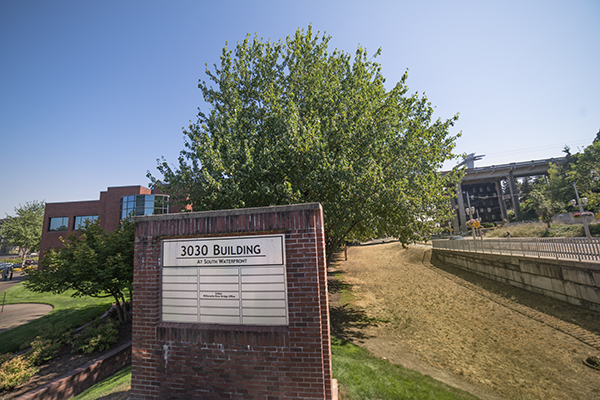
We’re here to answer your questions at the Office for Student Access in Suite 200 of the Moody Building.