Kidney and Pancreas Transplant Program
The OHSU kidney transplant program began in 1959, has been performing simultaneous pancreas-kidney (SPK) transplants since 1987, and to date has served more than 5000 patients.
For over 45 years, OHSU has been an active contributor to new transplant technologies in areas such as surgical techniques, organ retrieval and preservation, donor and recipient matching, recipient preparation, chronic immunosuppression regimens and prevention and treatment of complications.
Our experience is one of our greatest strengths. The physicians that care for kidney transplant patients at OHSU have extensive experience in nephrology and urology, the specialties most involved with diseases of the kidney. They are highly adept at providing health care for all types of kidney disease.
We take a multidisciplinary approach to care for you, which includes an expert team that includes nephrologists, urologists, surgeons, nurse coordinators, pharmacists, dieticians, social workers, financial coordinators and patient service representatives.
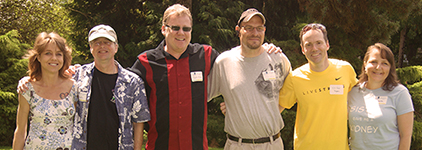
Celebrating 60 Years of Kidney Transplantation
- View the video presentations from the Celebrating 60 Years of Kidney Transplantation at OHSU.
- Hear a related story from one of our StoryCorps sessions.
Patient Story
Maddie McCoy

Maddie was born a healthy baby, or so we thought. When she was nine months old I took her to her pediatrician for her wellness visit. A few days prior, and up to the day of the visit, she had been irritable and nauseated. At this visit I voiced my concern about her becoming dehydrated and mentioned that she had not urinated since the previous day. I also noticed her legs seemed to be getting bigger. The pediatrician told us all was well and we went home.
As the day progressed, her legs became bigger and bigger, so I took her to a different pediatrician that evening. The pediatrician ran lab work and told me she would call me later that evening. That call changed our life.
We were told Maddie was in kidney failure and she was rushed to a Portland area hospital. After several days in the ICU we were told Maddie would need a kidney transplant. She was diagnosed with a very rare disease called Denys-Drash Syndrome. Maddie spent several days and weeks in and out of the hospital. She had to start dialysis, had several surgeries, and a feeding tube was implanted.
When we brought her home I had to give her dialysis 12 hours per day, she had to be on the feeding machine 10 hours per day, and she received four bolus feedings per day. Along with checking her blood pressure and weight twice daily, she was also given medications throughout the day and an Epogen shot once a week. There was not one hour in every day that went by where I wasn't caring for her or cleaning up vomit.
After being on dialysis for nine months her body cavity was finally large enough to receive my kidney. On September 30, 2005, at 18 months of age, Maddie received her kidney transplant at Doernbecher Children's Hospital. Doernbecher has been absolutely wonderful! It has been almost 10 years since her transplant, and Maddie is doing great! We know she may need another transplant in the future, but for now she continues to enjoy what she loves: Soccer, dance, basketball, and, throwing the football.
IOTA Program
OHSU Kidney Transplant Program is a participant in the CMS Increasing Organ Transplant Access (IOTA) Program.
Review this notification:
Contact Us
Clinical Transplant Services
3181 SW Sam Jackson Park Road, CB569
Portland, OR 97239
Phone: 503-494-8500
Fax: 503-494-4492
Please call us for more information on our Outreach Clinics in Springfield and Medford.
For information on pediatric kidney transplant, click here.
SRTR Interactive Reports
Learn More
OHSU Kidney Transplant in the Media

Our Providers
-
- Alexandra C. Bolognese, M.D., Ph.D., F.A.C.S.
- Transplantation and Abdominal Organ Transplantation Portland
- Accepting new patients
-
- Christopher R. Connelly, M.D., F.A.C.S.
- Transplantation, Abdominal Organ Transplantation and Surgery Portland
- Accepting new patients
-
- Angelo de Mattos, M.D., M.P.H.
- Nephrology and Hypertension and Transplantation Medicine/Kidney and Pancreas Transplantation Portland and Springfield
- Accepting new patients
-
- C. Kristian Enestvedt, M.D., FACS
- Cancer, Surgery and Transplantation Portland
- Accepting new patients
-
- Erin C. Maynard, M.D., FACS
- Cancer, Surgery and Transplantation Portland
- Accepting new patients
-
- Shehzad Rehman, MD
- Portland
- Accepting new patients
-
- Oren Shaked, M.D., FACS
- Transplantation and Abdominal Organ Transplantation Portland
- Accepting new patients
-
- David L. Scott, M.D.
- Surgery, Transplantation and Abdominal Organ Transplantation Portland
- Accepting new patients
-
- Megan N. Stack, MSN, FNP-BC
- Nephrology and Hypertension and Renal Transplantation Portland
- Accepting new patients
-
- David C. Woodland, M.D.
- Surgery, Transplantation and Kidney Disease Portland
- Accepting new patients
-
- Raghav Wusirika, M.D.
- Nephrology and Hypertension, Kidney Disease and Hypertension Portland