Pediatric Autism

OHSU is watching for updates about a new federal plan to collect autism data for research. We have not received any requests for data. Your health information is very important to us, and we follow all laws to protect your information’s privacy and security.
The autism team at OHSU’s Child Development and Rehabilitation Center takes a whole-person approach to diagnosing your child and connecting your family with services in your community. Families from Oregon, Washington, Idaho and California travel to us for our:
- Expertise in assessing autism characteristics and behaviors.
- Deep experience: we work with about 1,000 children a year, more than any other autism clinic in Oregon and southwest Washington.
- Leadership in autism research.
Families who come to our clinic may be:
- Wondering if an autism diagnosis is appropriate for their child.
- Managing autism and other chronic (ongoing) health needs.
- Planning for an older teen to get services to live as an adult with autism.
Learn more
Wait times
We have waitlists of 6-21 months, depending on age and location. We know this is frustrating, and we will see your child as soon as possible.
- Ages 0-4: Portland, 7-9 months. Eugene, 15 months.
- Ages 5-11: Portland, 12-14 months. Eugene, 19-21 months.
- Ages 12-17: Portland, 6-8 months. Eugene, 10 months.
- Ages 18+: We don't evaluate adults.
Important: We can't add your child to the waitlist until:
- We have a referral from your child's doctor.
- We've registered your child with the CDRC.
- We have received your completed intake packet.
Autism services
Our team evaluates children for autism. We are not a crisis center, nor does this team provide treatment. If we diagnose your child with autism, we can refer your child and family to services with other specialists at the CDRC; at other OHSU Doernbecher Children’s Hospital programs; and in the community.
While waiting for your evaluation, you can:
- Seek services in the community. Most often, you don’t need a diagnosis. Learn more on our Frequently Asked Questions page.
- In Portland, ask your child’s doctor for a referral to OHSU’s Project Impact parent coaching program.
How to get an appointment at OHSU
Step 1: Ask your child’s doctor for a referral to the CDRC.
Step 2: We’ll call you to register your child as a CDRC patient, even if your child is already an OHSU patient.
Step 3: We will mail you an intake packet. Fill out the packet and gather any needed school forms. If you have trouble getting forms from your child’s school, call your school district office. If you don’t get a fast reply, call us for help at 503-346-0640 (Portland) or 503-346-1640 (Eugene). If you need help completing the packet in English, contact our scheduling team. You can also find packets here:
- Intake Packet (below age 5)
Spanish: Paquete de admisión para niños más pequeños
Arabic: تناول حزمة للأطفال الأصغر سنًا
Chinese: 年幼儿童的入学包
Russian: Впускной пакет для детей младшего возраста
Vietnamese: Gói tiêu thụ cho trẻ nhỏ
- Intake Packet (age 5+)
Spanish: Paquete de admisión para niños mayores
Arabic: تناول حزمة للأطفال الأكبر سنًا
Chinese: 大龄儿童入学包
Russian: Впускной пакет для детей старшего возраста
Vietnamese: Gói tiêu thụ cho trẻ lớn hơn
Step 4: Make a copy of your packet for your records and follow the packet instructions to submit your forms.
Step 5: After we receive your packet, we will put your child on a waitlist.
- Portland: We will send you a message in MyChart to tell you where your child is on the waitlist. Wait 90 days before calling to check back on their status.
- Eugene: Wait 90 days after submitting your packet to call us for your child’s estimated wait time. You can also email us at eugenereferrals@ohsu.edu.
Step 6: Once you reach the top of the list, we will call you to set an appointment.
Evaluations for autism
Evaluations can help families understand what might drive certain behaviors. An evaluation may help if you are concerned that your child:
- Has trouble talking
- Ignores or avoids other people
- Has unusual reactions to how things or places feel, look, smell, sound or taste
- Has limited or repeated behaviors
- Is behind on the skills they should have for their age
What to expect at the evaluation
At your appointment, we will talk with you and evaluate your child. You will see specialists trained to work with your child’s age group: toddler, preschool, school age or teen up to 18.
We will discuss:
- Your goals for the evaluation
- Services and support your child and family may need
- Testing your child has had
- Possible reasons for your child’s strengths and challenges
Evaluation:
- We will use games and activities to see how your child thinks and talks.
- We will watch your child play to understand their behavior and growth.
- We will talk about whether an autism diagnosis fits your child’s needs.
Next steps
If your child is diagnosed with autism, we can refer you to OHSU or community specialists to help your child learn communication and social skills to reach their full potential. We can connect you with specialists in:
- Feeding and swallowing, for eating issues
- Gastroenterology, for stomach and digestive problems
- Genetics and birth defects
- Neurology, for care of the brain, spinal cord and nervous system
- Occupational therapy, for help with daily life
- Physical therapy, for movement and mobility
- Psychology, for mental health support
- Sleep problems
- Speech-language pathology, for communication
- Social work, for resources for your family
If we do not think your child has autism, we:
- Talk about what else may explain your child’s strengths and challenges.
- Give you resources and referrals to other specialists in children’s behavior and health.
Project Impact
Project Impact is a parent coaching program at OHSU for families with children who have autism, suspected autism or other social communication challenges. To take part, ask your child’s doctor for a referral. Project Impact uses ideas from applied behavior analysis therapy but is not ABA therapy.
The program works to improve children’s skills in:
- Communicating
- Playing
- Imitating
- Interacting with others
Families have 10 to 12 one-hour visits with an occupational therapist, speech-language pathologist or social worker. Visits can take place:
- At Doernbecher Children’s Hospital or Doernbecher’s Cornell West clinic in Beaverton.
- In a virtual visit with a secure online link.
Our research
We are among more than 30 hospitals and universities taking part in SPARK, a national research effort sponsored by the Simons Foundation Autism Research Initiative.
Our experts also do research on:
- Early autism detection and screening
- The genetics of autism
- Social factors that affect the health of people with autism
Learn more about our autism research.
Locations
Portland
OHSU Doernbecher Children’s Hospital, seventh floor
700 S.W. Campus Drive
Portland, OR 97239
Eugene
Eugene Child Development and Rehabilitation Center
74B Centennial Loop, Suite 100
Eugene, OR 97401
Free parking for patients and visitors
Refer a patient
- Fax our CDRC referral form to 503-346-6854
- See our autism referral checklist
- Get provider-to-provider advice: 503-346-0644 or 888-346-0644
Learning to connect
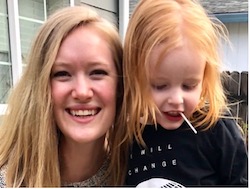
Hannah Sanford-Keller, one of the experts in our autism clinic, helped Hawk Lamb and his family form stronger connections.