PBMS Program Leadership
Program Director
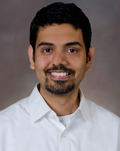
Sudarshan Anand, Ph.D. - Program Director
Dr. Sudarshan Anand graduated with a PhD in Immunology from Johns Hopkins University School of Medicine in 2007 working on TNF superfamily immune costimulation. He was a postdoctoral scholar at the Moores Cancer Center at the University of California, San Diego from 2007 to 2014 where he investigated the role of microRNAs in tumor angiogenesis. He joined the department of Cell, and Developmental Cancer Biology as an Assistant professor in March 2014. Dr. Anand became the program director of PBMS in September 2023.
Associate Director
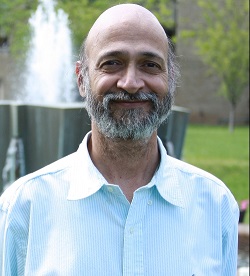
Ujwal Shinde, Ph.D. - Associate Director, Admissions
Dr. Shinde received his doctorate in Chemistry from Pune University, Pune, India in 1991, and did his postdoctoral training in Biochemistry and Molecular Biology at the Robert Wood Johnson Medical School, University of Medicine and Dentistry of New Jersey, under the guidance of Dr. Masayori Inouye. Dr. Shinde joined the faculty at Oregon Health and Science University in 2001, and is currently an Associate Professor and Graduate Program Director in the Department of Biochemistry and Molecular Biology in the OHSU School of Medicine. He has mentored several graduate and post-doctoral researchers, has received awards for excellence in teaching, and recognized by the School of Medicine for his extensive research collaborations within OHSU and worldwide. His research focuses on understanding the mechanisms of protein folding, protease activation and regulation, and the interplay between protein structure, function and evolution, using multidisciplinary approaches.
Assistant Director
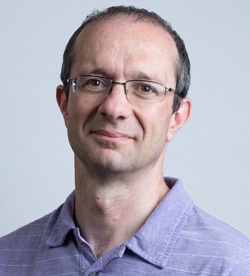
Alex Nechiporuk, Ph.D. - Assistant Director, Curriculum
Dr. Nechiporuk received his doctorate in Human Genetics from University of Utah in 2002. He did his postdoctoral training in developmental biology at University of Washington. Dr. Nechiporuk joined the faculty at OHSU in 2008. Dr. Nechiporuk is currently an associate professor of Cell, Developmental & Cancer Biology in the OHSU School of Medicine, and a member of the OHSU Knight Cancer Institute. The Nechiporuk laboratory studies development of the peripheral nervous system using zebrafish as a model. They focus on roles of collective cell migration and axonal transport during embryonic development.
Academic Coordinators
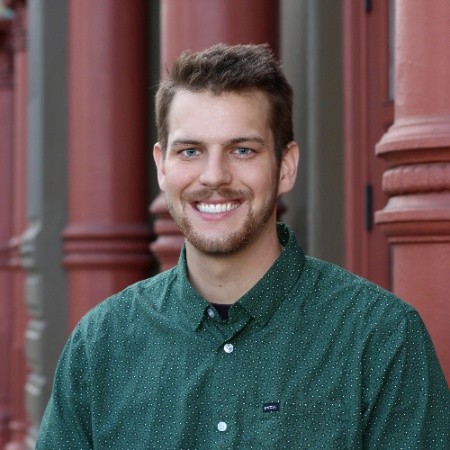
Aaron Matney MS.Ed. - Academic Coordinator
Aaron Matney has worked in higher education for more than a decade across a variety of roles. He received his Masters in Educational Leadership and Policy from Portland State University in 2020. Aaron joined OHSU in 2019. He provides academic and programmatic support to PBMS students and faculty throughout the lifecycle of the students from admissions to graduation.
Lola Bichler, B.S. - Lead Academic Coordinator
Lola received her degree from Portland State University while beginning her career in higher education. Lola joined OHSU in 2013 and has worked with seven basic science programs. She provides academic and programmatic support to advanced PBMS students and faculty.
Discover Your PhD in the School of Medicine
What Makes Our Program Unique?
The OHSU School of Medicine has outstanding PhD programs in disciplines from Behavioral Neuroscience to Medical Physics. The Program in Biomedical Sciences is a new offering that allows students to flex across disciplines to curate their training experience. It is founded on principles of scientific excellence, mentorship and community with our highly successful and collaborative faculty who participate in interdisciplinary and translational research. Academic and peer mentors strengthen the student training experience and long-term career success.
Is PBMS for You?
Do your research interests cross scientific disciplines?
Are you looking to go broad and deep?
Are you seeking the frontier of biomedical discoveries?