Resources
PSR has an Epson Expression 1600 scanner with a recessed scan bed that is ideal for imaging gels stained with visible dyes, such as Coomassie or Imperial Blue. We no longer support the imaging of florescent dyes at PSR. However if you have a gel that you need a florescence imager for let us know, and we can point you to other resources at OHSU.
Three mass spectrometers are available in the core facility.
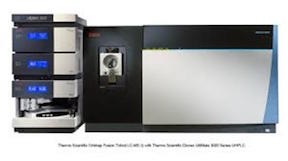
Thermo Scientific Orbitrap Fusion
In addition to increased sensitivity over previous generations of mass spectrometers the Orbitrap Fusion has much higher mass accuracy than any other instrument in the Shared Resource; not only giving a researcher the ability to detect minute mass differences caused by a neutron's association with different nuclei, but doing so in an instrument that fits nicely on a table top. The instrument is currently being used to support 10-plex TMT and SILAC based quantitative proteomics, targeted analysis of peptides using high-resolution fragment ion spectra, ETD enabled identification of disulfide bonding and chemical crosslinks in proteins, and analysis of post-translational modifications. The instrument is also interfaced with a LEAP PAL robot to support automated hydrogen/deuterium exchange experiments.
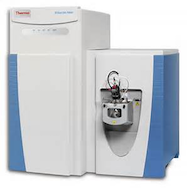
Thermo Q Exactive HF
The PSR recently added a Thermo Scientific Q-Exactive HF instrument through support from an OHSU Emerging Technology Award. This instrument, which has the same high field Orbitrap mass analyzer as the Orbitrap Fusion, is an ideal platform to perform targeted analysis of proteins using single and multiplexed fragment ion monitoring with high-resolution MS/MS scans in its Orbitrap mass analyzer. The instrument can also support newer Data-Independent Acquisition (DIA) modes, where fragment ions for all peptides are collected during an experiment, and the presence of specific peptides quarried using Skyline software.
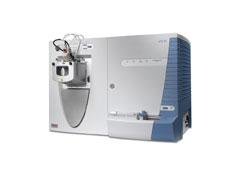
Thermo Scientific Velos
The PSR has two LTQ Velos instruments, one of which has been updated to a LTQ Velos Pro. The LTQ Velos instruments are Thermo Scientific's latest linear ion traps. They feature improved ion optics, a dual pressure ion trap, and faster scan speeds then the older LTQ models. These instruments are used to support measurements of whole protein mass, and spectral counting based label free quantitation, such as is commonly used to support protein co-IP experiments. They are significantly less expensive to use than the Orbitrap Fusion and Q-Exactive instruments and are useful platforms for less demanding proteomics experiments, such as simple gel band identifications.
A wide range of data analysis tools are supported in the core. Software for interpreting MS/MS spectra and identifying peptides include Comet, Sequest, Mascot, and X!Tandem.
Scaffold 3.0 from Proteome Software is used to validate MS/MS based peptide and protein identifications. Peptide and protein identifications are evaluated by this software which provides a statistical analysis of reported identifications. The software also produces output files that can be easily shared with users via the free Scaffold viewer.
We also utilize the PAW Pipeline developed here at OHSU by Phil Wilmarth. PAW gives superior sensitivity and quantitative options. This is especially true for complex mixtures of protein and larger datasets. It also allows us to tailor the statistical analysis to meet the needs of the client, and has the ability to produce more accurate lists of peptides containing post-translational modifications.
For targeted peptide analysis we utilize Skyline software developed by Brendan MacLean in the MacCoss Lab at the University of Washington. Skyline gives us the ability to develop and refine methods for SRM/MRM analysis and quantify the resulting data.
We also use Byonic from Protein Metrics. This software has an unrestricted PTM search option, which allows the identification of unknown post-translational modifications and glycoslyation sites. Additional supported software includes MaxQuant, which is used to process SILAC results from the Orbitrap Fusion, and Proteome Discoverer which can process data from Multi-Notch TMT analyses.
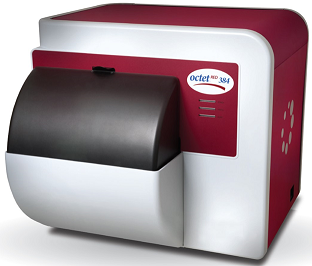
ForteBio Octet Red384
The ForteBio Octet Red384 instrument provides label-free biophysical characterization of protein:protein, protein:nucleic acid and small molecule interactions. Kinetic and quantitative analysis can be performed using the Octet’s easy-to-use format and software. The system can also be used for kinetics, cross-competition assays, epitope binning, ELISA-like applications, screening, and much more. The instrument is routinely used for antibodies, fusion proteins, structural biology, aptamers, oligos, peptides, in silico design verification, and more.
If you're interested in scheduling time on the Octet Red384 you can follow this link to sign up, or visit our core in iLab and look under the 'Schedule Equipment' tab.
A brief description with more information on the Octet Red384 can be found here. ForteBio has also provided a few relevant application notes to aid people in their use of the instrument. There is one for Biomolecular Binding, another for Label-free Detection, and finally one on Small Molecule Screening.
Other Equipment
The Proteomics Shared Resource also has a wide variety of other instrumentation as well. Notable pieces include a Biotek Epoch Microplate Spectrophotometer which is mainly used for protein assays, a Surveyor HPLC for chromatographic separations, a Jouan BR4i centrifuge, and two vacuum concentrators.
PNNL/OHSU Colaboratory
The Pacific Northwest Laboratory and OHSU entered into a cooperative agreement to facilitate mass spectrometry research in summer 2015 and formed the OHSU/PNNL colaboratory for mass spectrometry. This will provide OHSU investigators a streamlined process for initiating and managing collaborative mass spectrometry based projects with PNNL. The collaborative projects will be jointly overseen by Dr. Beth Habecker from OHSU, and Drs. Ashok Reddy and Larry David of the PSR.

The unique Pan-Omics capabilities of PNNL are described here. Please contact Beth Habecker and Ashok Reddy to discuss ideas for joint projects and collaborations in grant applications. Projects can include larger scale clinical or basic science mass spectrometry based research, or methodology that is beyond the scope of the PSR facility. Opportunities also exist for metabolomics type experiments and collaborations requiring complex informatics support not offered by the PSR. The current projects of greatest interest to PNNL are those involving cancer, diabetes, host pathogen interactions and microbiome research.
Project requests can be submitted through the OHSU iLab portal and filling out an OHSU/PNNL colaboratory project submission form.