Community Outreach and Injury Prevention
At the OHSU Trauma Center, we believe that the best way to treat an injury is to prevent you from being injured in the first place.
Our team coordinates efforts in education, research and community outreach to make sure OHSU’s injury prevention efforts to have the most impact for our patients.
We can help you:
- Avoid falls by improving your balance and cutting down on clutter.
- Gain access to gun locks and other equipment that supports firearm safety.
- Access mental health resources and peer support after a gun violence injury.
- Make your community more resilient by learning how to stop a severely injured person from bleeding.
- Find ways to lower the number of traffic deaths and severe injuries in your community.
Injury prevention
We take an evidence-based approach to injury prevention. That means our program is committed to identifying the patterns and circumstances that lead to injury and death, so we can develop strategies that lower these risks.
Review of our Trauma Center data helps us identify at the populations most at risk and guides the development of our prevention programs.
Our team partners with community groups and with other trauma centers to create and share educational resources that ease the burden of injury for all Oregonians.
Outreach programs
-
Same-level falls are the number 1 cause of injury seen at OHSU Trauma Center, and the leading cause of death and injury for Americans over the age of 65. Fall prevention education is a priority for the OHSU Trauma Center to reduce injuries and improve quality of life. We offer several programs to support this goal.
Read about Falls Prevention Awareness Week for Professionals.
Our team also developed this educational video series to help with fall prevention.
Other fall prevention resources:
- STEADI: Older Adult Fall Prevention, U.S. Centers for Disease Control and Prevention
- STEADI Provider Training, CDC
- Prevent Falls and Fractures, National Institutes of Health
- Fall-Proofing Your Home, National Institute on Aging
- Falls Prevention for Older Adults, Oregon Health Authority
- Prevenga las caídas y fracturas (fall prevention resources in Spanish), National Institute on Aging
- Exercising with Chronic Conditions, National Institute on Aging
- Get Fit For Life: Exercise and Physical Activity for Healthy Aging, National Institute on Aging
-
Public health advocacy: Since 2016, OHSU has advocated to treat gun violence as a public health issue. Our work on an advisory committee with representatives from Portland State University, the OHSU-PSU School of Public Health, county, state and city governments, mental health groups, advocacy groups and nonprofit and volunteer outreach programs laid the groundwork for this important initiative.
Gun locks and home safety resources: We partner with the Tom Sargent Safety Center at Doernbecher Children’s Hospital to connect gun owners with safety tools and education. This includes firearm lock boxes and trigger locks available for purchase, cable locks available at no cost and information about how to keep children safe with guns in the home.
-
In response to the recent increase in traumatic injuries such as gunshots and stab wounds, OHSU partners with the nonprofit Portland Opportunities Industrialization Center to offer the Healing Hurt People program.
Healing Hurt People serves people of color from ages 10 to 44 who have survived these types of injuries. The program aims to connect with participants quickly because research shows that intervening within four hours of a trauma increases the chances of preventing future violence. We then work with victims and their families for six months to a year, helping them on the road to healing.
The program offers 24/7 support. This includes trauma-informed counseling, relocation services, peer mentorship, referrals for social and emotional support, and other wraparound services.
-
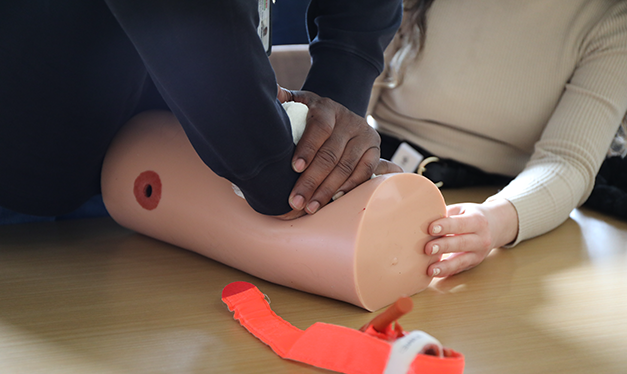
Blood loss from injuries can happen anywhere, any time. It may result from a minor injury or become a life-threatening concern. The OHSU Trauma Center offers the Stop the Bleed training course to teach bystanders to become immediate responders and save lives.
This one-hour class is available for individuals seeking additional education/training and/or corporations looking to include this in their safety training.
See the Upcoming Events and Courses below for future Stop the Bleed course dates.
To register or to find out how OHSU Trauma Center can bring this training to your facility, email stopthebleed@ohsu.edu.
Read the OHSU News story about Stop the Bleed training.
Learn more:
- May is National Stop the Bleed Month
- Stop the Bleed, American College of Surgeons
-
Trauma Survivors Network
The Trauma Survivors Network (TSN) is a community of patients and families looking to connect with one another and rebuild their lives after a serious injury. Joining this community can help ease the anxiety and frustration often experienced following a sudden injury and the resulting hospitalization.
The TSN is a program of the American Trauma Society (ATS), which is dedicated to the elimination of needless death and disability from injury. The ATS serves as an advocate for the trauma care system, trauma prevention programs, and survivors of trauma and their families throughout the United States.
You can join the TSN, it’s easy and free. Visit the TSN Website to learn more and become a member. The website provides practical information on injuries and how they are treated and connects you with other survivors and families who understand the challenges you are facing. It also provides information about additional programs and services which may be available at your hospital.
By learning more and connecting with others, you can make a difference in how you feel and better manage your life after injury. You are not alone!
Visit the OHSU Trauma Center TSN webpage for local resources, virtual support groups, online classes and other events.
-
Oregon Spinal Cord Injury Connection

Oregon Spinal Cord Injury Connection (OSCI) helps people who are affected by spinal cord injuries. They work to promote health, build community and create opportunities. OSCI’s goal is to make sure everyone with a spinal cord injury gets the care and support they need to do well in life.
OSCI’s community health workers (CHW) have spinal cord injuries themselves. They understand the difficulties people may face after an injury. Because of their own experiences and the years they have spent
helping others, they know how to find the resources and services you need to succeed.
Services provided by OSCI
Oregon Spinal Cord Injury Connection helps people who are in the hospital, in rehab, or back in the community after a spinal cord injury. Their community health workers support these patients by giving them advice, helping them understand their health care, and making sure they have a good health plan. This support continues beyond hospital discharge.
Expected benefits
• Emotional support: Patients can talk to someone who understands what they are going through.
• Personal communication: One-on-one chats with a peer who has been in a similar situation.
• Access to resources: Help finding community resources and support.
• Follow-up care: Checking in with OSCI during the next step of treatment.
• Ongoing education: Teaching patients how to avoid other health problems and reduce the chances of going back to the hospital.
Who can get help?
• Patients who have spinal cord injuries from diseases or traumatic injury.
• Patients with either complete or incomplete spinal cord injuries, including ASIA A, B, C and D.
• It is best if the patient has at least a week before leaving the hospital so the health worker can visit.
• Patients or families who agree to meet with a community health worker.
Referral process
Any patient or family member may refer themselves by emailing contact@oregonsci.org. Any OHSU health care professional in contact with the patient may make a referral to OSCI. Verbal consent must be obtained from the patient and documented in EPIC using the .OSCIREFERRAL dot phrase.• For referral, place EPIC order: IP Consult to Adult Trauma Injury Prevention. Include spinal cord injury type and level, patient activity level
• Sign the order: per independent scope
• Consult orders do not always receive same day response, so please place order early in patient’s hospital stay to give time for referral processOSCI Resource Guide
-
Along with our outreach programs and courses, the OHSU trauma team also organizes events linked to national initiatives such as:
- Burn Awareness Week (February)
- Trauma Awareness Month (May)
- National Stop the Bleed Month (May)
- Falls Prevention Awareness Week (September)
Contact us
Our team is happy to connect you with resources and information about our injury prevention programs.
You can reach us at trauma@ohsu.edu

A public health approach to reducing gun violence
OHSU hosted a roundtable discussion to raise public awareness and drive solutions to reduce gun violence. Read the OHSU News article and watch the video.
‘Credible messengers’
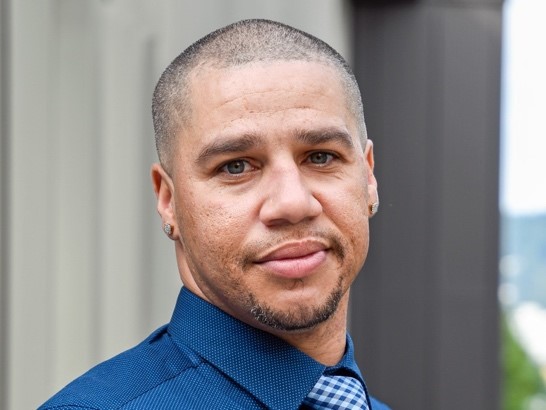
OHSU’s partnership with the Healing Hurt People program brings peer support to victims of gun violence. Listen on OPB.

OHSU experts warn of rise in accidental shootings of kids
The research team recommends safety training and secure storage to protect young children from guns in the home.
Traumatic injury and recovery
Estelle was involved in a serious bike accident and Dr. Heather Hoops was the trauma surgeon who treated her. Listen as they discuss Estelle’s accident and her recovery.