Head and Neck Surgery / Cancer
The Otolaryngology (Ear, Nose and Throat) division of Head and Neck Surgery/Cancer at OHSU is committed to excellence in research, education and clinical care and the rehabilitation of patients with diseases, cancers, and tumors, both benign and cancerous, of the head and neck region and upper aerodigestive tract. We are constantly working to improve patient care and treatment, using the most up-to-date techniques and information.
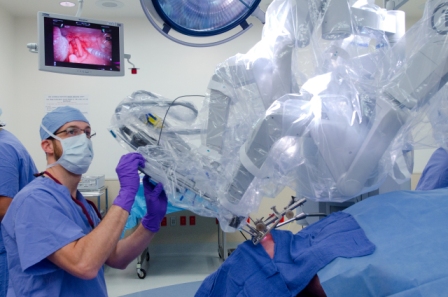
In March 2010, Dr. Neil Gross completed the first transoral robotic surgery (TORS), a less invasive surgical approach for mouth and throat cancer treatment. It is a highly specialized procedure, and we were the first in the Northwest to offer it. This ground breaking procedure allows surgeons to remove cancerous growths, repair damage, and perform other surgical tasks with a faster recovery time and less post-operative hospitalization. In November 2010, OHSU presented a CME conference - the Contemporary Use of Transoral Robotic Surgery (TORS) for Benign and Malignant Disease of the Head and Neck. This conference included a Robotics competition including several local schools, and was a great success.
Our doctors specialize in the section of the body that includes the nose, salivary glands and thyroid, as well as structures of the upper throat and aerodigestive tract such as the larynx, pharynx, oral cavity (mouth), ear and sinonasal (nose) tract. We specialize in the management of diseases and cancers of these areas, and our doctors and staff are dedicated to the care of our patients with head and neck cancer and disease.